

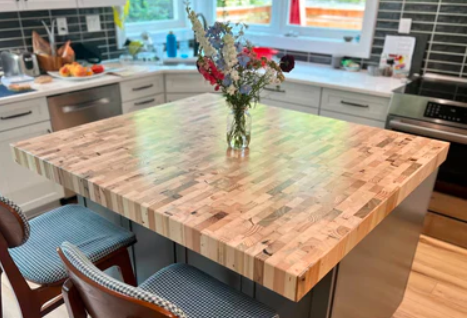

A kitchen chopping block table is a must-have addition for any home cook or professional chef looking to combine functionality with timeless style. Built from solid hardwoods like maple, walnut, or teak, these tables offer a durable, knife-friendly surface that protects your blades while keeping your workspace organized.
In this guide, we’ll explore the Types of Kitchen Chopping Block Tables and the Benefits of Kitchen Chopping Block Tables to help you choose the perfect one for your kitchen.
What Is a Kitchen Chopping Block Table?
A kitchen chopping block table is a sturdy table with a thick wooden top designed mainly for food preparation. It is commonly made from hardwood such as maple, oak, walnut, or teak because these woods are durable and safe for kitchen use. These tables are widely used in homes, restaurants, and professional kitchens.
The main purpose of a kitchen chopping block table is to provide a reliable workspace for cutting vegetables, preparing meat, kneading dough, and performing other cooking tasks. Below are the different styles and variations of chopping block tables that are commonly available today.
Types of Kitchen Chopping Block Tables
Kitchen chopping block tables come in different designs to match various kitchen sizes and cooking needs. Some are designed for heavy professional use, while others focus on portability and style for home kitchens.
Understanding the different types can help homeowners choose the perfect option according to their available space, budget, and cooking habits.
Freestanding Butcher Block Tables
Freestanding butcher block tables are independent kitchen workstations that can be placed anywhere in the kitchen. They usually include shelves or drawers underneath for additional storage.
These tables are highly practical because they offer flexibility. Homeowners can move them when redesigning the kitchen layout or cleaning the area. Freestanding tables are ideal for medium and large kitchens where additional workspace is required.
Kitchen Island Chopping Blocks
Kitchen island chopping blocks combine the features of a kitchen island and a butcher block table. They are often placed in the center of the kitchen and serve multiple purposes.
A kitchen island chopping block table can be used for food preparation, dining, serving, and storage. Many modern kitchens use these islands as decorative focal points that improve both functionality and interior design.
Mobile Chopping Block Carts
Mobile chopping block carts are compact tables equipped with wheels for easy movement. These carts are perfect for smaller kitchens where space management is important.
The mobility feature allows users to move the cart closer to the cooking area when needed and store it away afterward. Many mobile carts also include towel holders, spice racks, and storage shelves.
Professional Chef Prep Tables
Professional chef prep tables are heavy-duty kitchen chopping block tables designed for commercial kitchens and restaurants. These tables are larger, stronger, and more durable than regular household versions.
Professional tables are made to handle continuous food preparation throughout the day. They usually have thick wooden tops and strong metal or hardwood bases for maximum stability.
Antique and Vintage Chopping Blocks
Antique and vintage chopping block tables are traditional wooden tables that carry historical and decorative value. Many homeowners choose these pieces to create a rustic or farmhouse kitchen style.
These tables often feature handcrafted details and aged wood textures that give kitchens a warm and classic appearance. Vintage butcher blocks are not only functional but also collectible furniture items.
Materials Used in Chopping Block Tables
The quality and durability of a kitchen chopping block table largely depend on the type of wood used during manufacturing. Different woods offer different appearances, strengths, and maintenance requirements.
Choosing the right material helps improve the lifespan and performance of the chopping block table.
Maple Wood
Maple is one of the most popular materials for butcher block tables because it is hard, durable, and resistant to scratches. It has a smooth grain pattern and light color that suits modern kitchens.
Maple wood is also considered knife-friendly because it reduces damage to knife edges during cutting and chopping.
Oak Wood
Oak wood is known for its strength and natural grain texture. It creates a traditional and rustic kitchen appearance that many homeowners prefer.
Oak chopping block tables are highly durable and can handle heavy kitchen work. However, they may require regular maintenance to prevent moisture damage.
Walnut Wood
Walnut is a premium hardwood with a rich dark color and elegant appearance. It is commonly used in luxury kitchen chopping block tables.
Walnut tables add sophistication to kitchen interiors while providing excellent durability and strength.
Teak Wood
Teak wood contains natural oils that make it resistant to moisture and bacteria. This feature makes teak an excellent material for kitchen environments.
Teak kitchen chopping block tables are durable, attractive, and suitable for humid conditions.
Acacia Wood
Acacia wood is becoming increasingly popular because of its affordability and unique grain patterns. It is highly durable and environmentally friendly.
Acacia butcher block tables provide a natural rustic appearance while offering strong resistance to wear and tear.
Edge Grain vs End Grain vs Face Grain
Different grain styles affect the durability and appearance of a kitchen chopping block table.
| Grain Type | Features | Durability |
| Edge Grain | Long wood strips joined together | Good |
| End Grain | Wood fibers face upward | Excellent |
| Face Grain | Wide wood surface visible | Moderate |
End grain butcher blocks are considered the strongest because the wood fibers absorb knife impact more effectively.
Benefits of Kitchen Chopping Block Tables
We’ll discuss the major benefits of a kitchen chopping block table, including durability, extra workspace, natural beauty, versatility, and long-term value for modern kitchens.
- A kitchen chopping block table provides a strong and reliable surface for cutting, chopping, slicing, and preparing food.
- It adds extra workspace in the kitchen, making cooking and meal preparation easier and more organized.
- The natural wood surface creates a warm, stylish, and attractive kitchen appearance that matches many interior designs.
- High-quality hardwood chopping block tables are highly durable and can last for many years with proper maintenance.
Disadvantages and Challenges
We’ll discuss the common disadvantages and challenges of using a kitchen chopping block table, including maintenance, moisture issues, scratches, hygiene concerns, and cost factors.
- A kitchen chopping block table requires regular maintenance such as oiling and conditioning to keep the wood protected and long-lasting.
- Wood surfaces can absorb water, oils, and food liquids, which may cause stains, odors, mold, or warping if not cleaned properly.
- Daily chopping and cutting can leave knife marks and scratches on the table surface over time.
- Deep cuts in the wood may trap bacteria and food particles, creating hygiene concerns if the surface is not sanitized regularly.
- Extreme heat, humidity, and direct sunlight can cause the wood to crack, shrink, or expand.
How to Choose the Best Chopping Block Table?
Choosing the right kitchen chopping block table depends on several factors including kitchen size, budget, storage needs, and design preferences.
Understanding these factors helps buyers select a table that matches both practical requirements and kitchen aesthetics.
Size and Space
Before purchasing a chopping block table, it is important to measure the available kitchen space carefully.
Large kitchens can accommodate full-sized butcher block islands, while small kitchens may require compact mobile carts or narrow freestanding tables.
Storage Features
Many kitchen chopping block tables include additional storage features such as shelves, cabinets, baskets, or drawers.
These features help organize kitchen tools, utensils, spices, and cookware more efficiently.
Mobility Options
Some homeowners prefer mobile chopping block carts because they are easy to move around the kitchen.
Fixed tables provide better stability, while wheeled carts offer flexibility and convenience for smaller spaces.
Budget Considerations
Budget plays a major role when selecting a kitchen chopping block table.
Basic acacia or oak models are generally more affordable, while premium walnut and teak tables can be expensive due to their luxury appearance and durability.
Design and Style
The design of the chopping block table should complement the kitchen interior.
Modern kitchens often use minimalist butcher block islands, while farmhouse kitchens usually feature rustic wooden tables with vintage finishes.
Maintenance and Care Guide
Proper maintenance is essential for preserving the beauty and durability of a kitchen chopping block table. Regular cleaning and oiling help protect the wood from moisture and cracking.
Good care habits also improve hygiene and extend the lifespan of the table for many years.
Daily Cleaning
The surface should be cleaned daily using warm water and mild soap.
Avoid soaking the wood with excessive water because moisture can damage the surface over time.
Oiling and Conditioning
Wooden butcher blocks require regular oiling to maintain their natural moisture balance.
Food-safe mineral oil or beeswax conditioners are commonly used to protect the wood and prevent drying.
Preventing Cracks and Warping
Keeping the table away from excessive heat and moisture helps prevent cracks and warping.
The wood should always be dried properly after cleaning.
Removing Stains and Odors
Lemon and baking soda are natural solutions for removing stains and odors from butcher block surfaces.
These ingredients help clean the surface without damaging the wood.
Sanitizing the Surface
Proper sanitization is important for food safety.
White vinegar solutions can help disinfect the kitchen chopping block table naturally while maintaining the quality of the wood.
Safety Tips for Proper Use
Using a kitchen chopping block table safely is important for preventing accidents and maintaining hygiene.
Users should avoid cross-contamination by separating raw meat from vegetables during food preparation. Sharp knives should always be handled carefully, and the table should remain stable during use.
Regular cleaning and maintenance also help prevent bacteria buildup on the wooden surface.
DIY Kitchen Chopping Block Table
Many homeowners enjoy building their own kitchen chopping block table because it allows complete customization according to kitchen size and style.
A DIY project can also reduce costs while creating a personalized kitchen furniture piece.
Planning the Design
The first step is deciding the table size, shape, storage requirements, and overall design style.
Proper planning helps avoid mistakes during construction.
Selecting Materials
Choosing high-quality hardwood is important for durability and food safety.
Popular DIY wood choices include maple, oak, and acacia.
Building Process
The construction process includes cutting wood pieces, assembling the frame, attaching the tabletop, and securing all joints properly.
Careful assembly ensures stability and long-term durability.
Finishing and Sealing
Food-safe sealants and mineral oils are applied to protect the wood surface.
Proper finishing improves both appearance and resistance to moisture damage.
Comparison with Other Kitchen Countertops
Different countertop materials offer different advantages and disadvantages. Comparing butcher block tables with other surfaces helps homeowners make better decisions.
Each material varies in durability, maintenance, appearance, and cost.
Butcher Block vs Granite
Granite is highly heat-resistant and durable, but it can feel cold and hard.
A kitchen chopping block table offers a warmer and more natural appearance while being gentler on knives.
Butcher Block vs Marble
Marble provides a luxurious appearance but stains easily and requires high maintenance.
Butcher block tables are more practical for everyday food preparation.
Butcher Block vs Stainless Steel
Stainless steel is commonly used in commercial kitchens because it is hygienic and easy to clean.
However, wooden chopping block tables provide a more comfortable and visually appealing kitchen environment.
Butcher Block vs Laminate
Laminate countertops are affordable and low maintenance but lack the natural beauty and durability of real wood.
A kitchen chopping block table offers better long-term value and visual appeal.
Common Mistakes to Avoid
Many people damage their kitchen chopping block table by neglecting regular maintenance.
- Common mistakes include
- leaving standing water on the surface
- using harsh chemical cleaners
- skipping oil treatments
- exposing the table to excessive heat.
Ignoring deep cracks or cuts can also reduce hygiene and shorten the lifespan of the table.
FAQs
How heavy is a typical butcher block table?
The weight depends on the wood type and size. Solid hardwood kitchen chopping block tables are usually heavy because they are built for strength and durability.
Can I paint a kitchen chopping block table?
Yes, the base or legs can often be painted, but the chopping surface should remain food-safe and properly sealed for kitchen use.
Which wood color is best for modern kitchens?
Light maple and natural oak are popular choices for modern kitchens because they create a clean and bright appearance.
Is a butcher block table environmentally friendly?
Many kitchen chopping block tables made from responsibly sourced wood are considered eco-friendly and sustainable furniture options.
What thickness is best for a butcher block tabletop?
A thicker surface usually provides better durability and stability. Many kitchen chopping block tables use tops between 1.5 and 4 inches thick.
Does wood type affect food preparation performance?
Yes, harder woods such as maple and walnut are more durable and resistant to deep knife marks compared to softer woods.
Is a kitchen chopping block table suitable for baking?
Yes, many bakers prefer wooden surfaces because they are excellent for kneading dough and pastry preparation.
Conclusion
A kitchen chopping block table is a timeless kitchen furniture piece that combines beauty, durability, and practicality. Whether used in a modern apartment kitchen or a traditional farmhouse setting, it provides valuable workspace for daily cooking activities.
With proper maintenance and careful selection of materials, a high-quality kitchen chopping block table can last for many years while improving both kitchen functionality and interior style.
Related Articles
How to Get Rid of Stucco Ceilings?
Shower Door Repair: Complete Guide to Fix Common Shower Door Problems
How to Install a Curtain Rod? Complete Beginner’s Guide
How to Get Rid of Mold in the Bathroom: Complete Step-by-Step Guide
Joist Tape for Decking: The Complete Guide to Protecting Your Deck’s Substructure