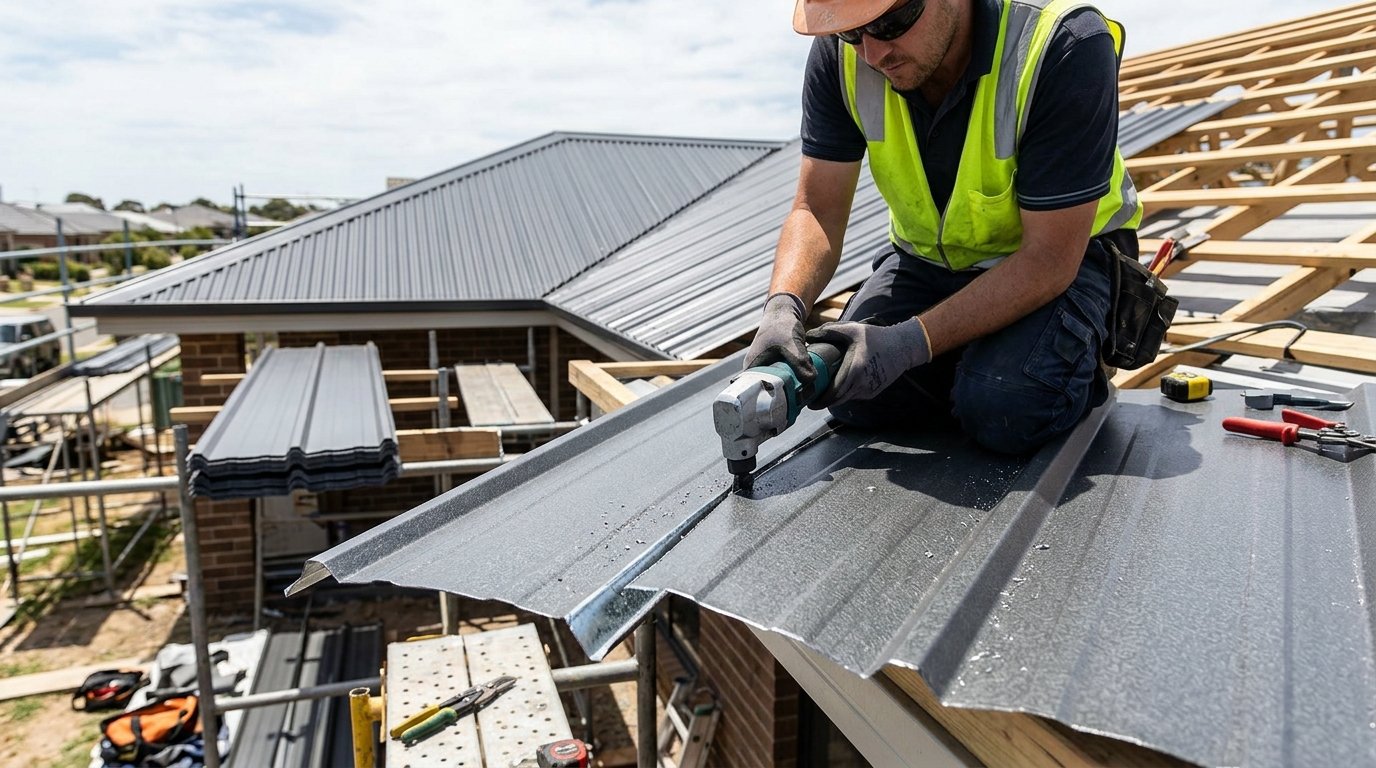

Cutting steel roofing panels correctly is one of the most important skills for anyone installing or repairing a metal roof. If the cuts are rough or inaccurate, the panels will not fit properly, water can leak through the joints, and the overall look of the roof will suffer. This guide explains every method of cutting steel roofing in simple language so that both beginners and experienced installers can get clean, safe results.
Why Proper Cutting Technique Matters
The way you cut steel roofing directly affects how long the panels last and how well they perform against weather. A poor cutting method can damage the protective coating and cause rust to form much earlier than expected.
Protecting the Panel Coating
Steel roofing panels usually have a protective zinc or paint coating that stops rust from forming. If a cutting tool overheats the edges, this coating burns away and leaves the raw metal exposed to moisture.
Avoiding Metal Burrs and Sharp Edges
Cutting tools that are too aggressive often leave burrs, which are small sharp edges of bent metal along the cut line. These burrs are dangerous to handle and can also tear through roofing underlayment if left unfiled.
Getting Accurate Panel Fitment
Roof panels need to overlap correctly to keep water out, so an inaccurate cut throws off the entire alignment of the roof. Even a small measurement error can create gaps that let rain seep underneath the panels.
Tools You Can Use to Cut Steel Roofing
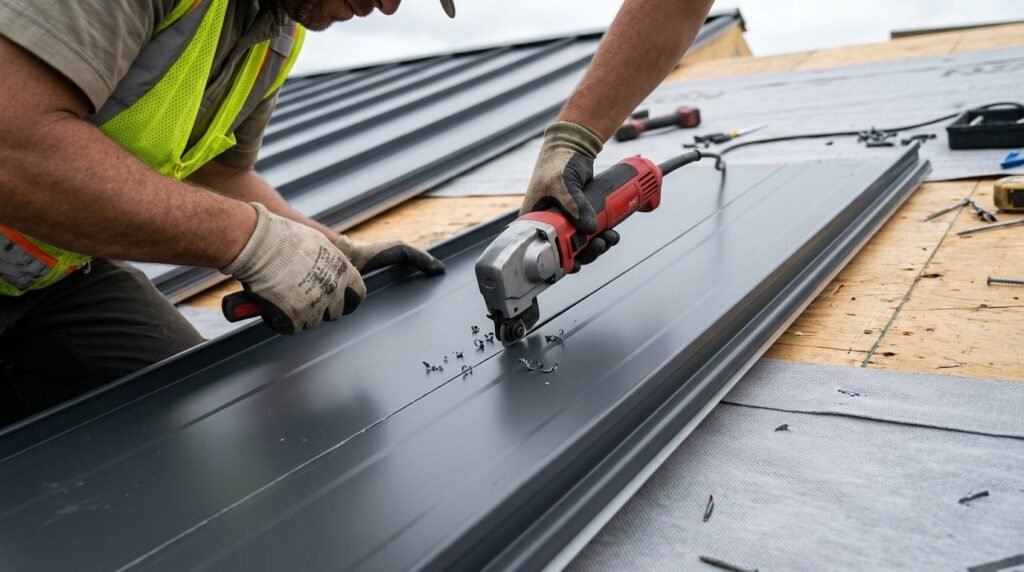
There are several tools available for cutting steel roofing, and each one works better for certain situations. Choosing the right tool depends on the thickness of the steel, the shape of the cut, and how much noise or dust is acceptable on the job site.
Tin Snips for Small and Detailed Cuts
Tin snips are hand tools that work well for short cuts, curves, and small trimming jobs around vents or edges. They do not generate heat or sparks, so the panel coating stays fully intact around the cut.
Nibbler Tool for Clean Straight Lines
A nibbler is a powered tool that removes small bites of metal along a line, leaving a smooth and burr-free edge. It is slower than other power tools but produces some of the cleanest cuts available for steel roofing.
Circular Saw with a Metal Cutting Blade
A circular saw fitted with a metal-specific blade can cut long straight lines quickly, which is useful for large roofing jobs. The blade should have fine teeth designed for thin steel to avoid excessive heat and coating damage.
Angle Grinder with a Cutting Disc
An angle grinder is fast and powerful, but it creates a lot of sparks and heat that can burn the coating along the cut edge. This method is best reserved for rough cuts that will later be covered by trim or flashing.
Jigsaw for Curved or Irregular Cuts
A jigsaw with a metal blade is ideal when the roofing needs to be cut around pipes, chimneys, or unusual shapes. It gives good control for curves but works more slowly than a circular saw on straight lines.
Comparison of Cutting Tools for Steel Roofing
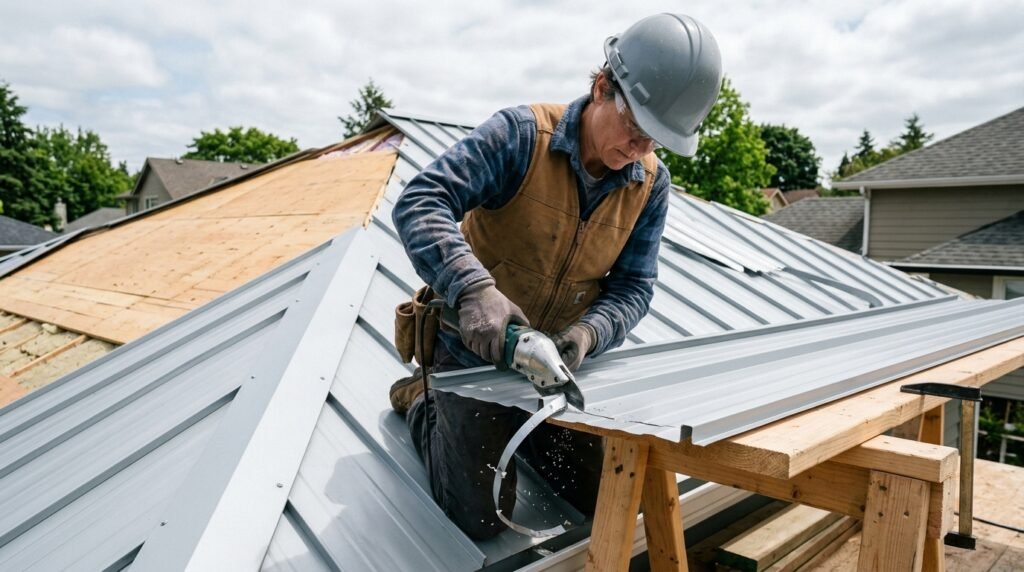
The table below gives a quick comparison of the common tools used to cut steel roofing panels, so you can pick the right one for your project.
| Tool | Best For | Heat Generated | Edge Quality |
| Tin Snips | Small trims, curves | None | Clean, may need filing |
| Nibbler | Straight and curved lines | Minimal | Very clean |
| Circular Saw | Long straight cuts | Low to moderate | Clean with right blade |
| Angle Grinder | Rough or fast cuts | High | Rough, needs touch-up |
| Jigsaw | Curved or irregular shapes | Low | Clean |
Step-by-Step Process to Cut Steel Roofing
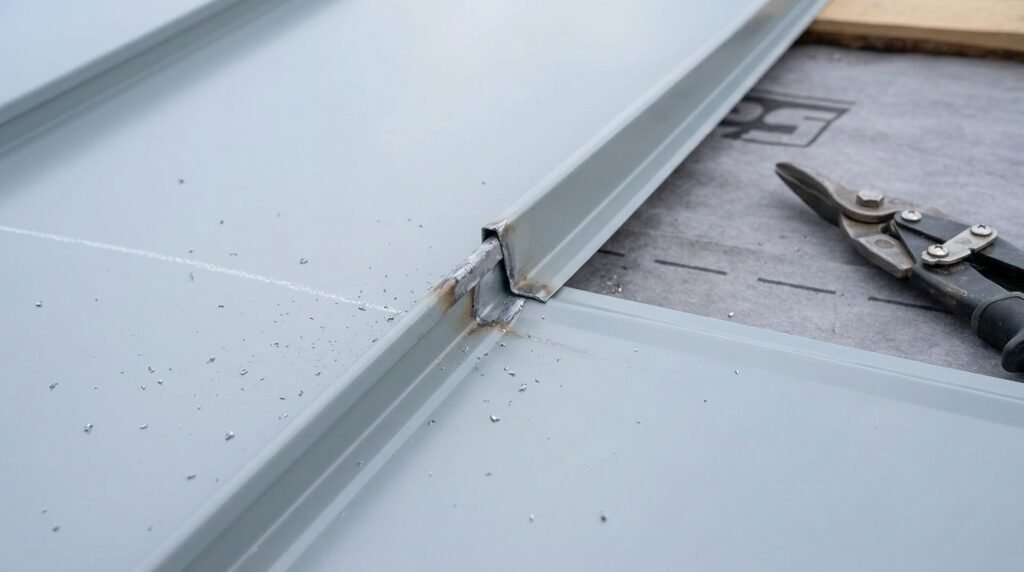
Once the right tool is chosen, following a clear step-by-step process will help you achieve accurate and safe cuts every time. This section breaks the process down into measuring, marking, cutting, and finishing stages.
Measuring and Marking the Panel
Always measure twice before marking the panel with a permanent marker or chalk line to avoid costly mistakes. Use a straight edge or framing square to keep the line perfectly straight across the panel.
Positioning the Panel Safely
Place the panel on a stable, flat surface such as sawhorses so it does not vibrate or shift while being cut. Make sure the offcut side is supported too, since unsupported edges can bend the metal during the final part of the cut.
Making the Cut
Follow the marked line slowly and steadily, letting the tool do the work instead of forcing it through the metal. Keep the cutting tool aligned with the line the entire time to prevent wandering, which causes uneven edges.
Finishing and Deburring the Edge
After the cut is complete, run a metal file along the edge to remove any burrs or sharp points left behind. Touch up the cut edge with a matching paint pen to reseal the exposed metal against rust.
Safety Precautions While Cutting Steel Roofing
Cutting metal roofing involves sharp edges, flying debris, and sometimes sparks, so proper safety gear and precautions are necessary throughout the job.
Wearing the Right Protective Gear
Always wear cut-resistant gloves, safety glasses, and long sleeves to protect against sharp edges and metal shavings. Ear protection is also recommended when using power tools like grinders or circular saws.
Managing Sparks and Fire Risk
Keep flammable materials away from the cutting area, especially when using an angle grinder that produces hot sparks. Have a fire extinguisher nearby if cutting is being done near dry vegetation or combustible material.
Handling Sharp Offcuts and Scrap
Freshly cut steel edges are extremely sharp and can cause deep cuts if handled carelessly, so gloves should stay on during cleanup. Store offcuts separately and dispose of them properly instead of leaving them scattered on the roof.
Common Mistakes to Avoid When Cutting Steel Roofing
Many installation problems trace back to mistakes made during the cutting stage, and knowing these mistakes ahead of time helps you avoid them.
Cutting From the Wrong Side
Cutting from the underside of the panel, when the tool allows it, keeps metal shavings from settling on the coated top surface. Shavings left on the surface can rust and stain the panel over time if not cleaned immediately.
Using a Dull or Wrong Blade
A dull blade or one not designed for metal will overheat the panel and create a rough, uneven edge. Always match the blade type and tooth count to the thickness of the steel you are cutting.
Skipping the Deburring Step
Leaving burrs on the cut edge is a common shortcut that leads to injuries and damage to roofing underlayment later. Deburring only takes a minute or two but prevents much bigger problems down the line.
Comparing How Other Guides Explain This Topic
Most existing guides online focus only on listing tools without explaining the reasoning behind tool choice or the finishing steps. Many of them skip safety details or the importance of deburring and edge sealing, which are covered in more depth in this guide to give readers a more complete and practical understanding of the entire cutting process.
Frequently Asked Questions
What is the best tool to cut steel roofing at home?
For most homeowners, tin snips or a nibbler attachment offer the safest and cleanest results without special skills.
Can I use an angle grinder to cut steel roofing?
Yes, but it should be used carefully since it generates heat and sparks that can damage the panel coating.
Do I need to seal the edges after cutting steel roofing?
Yes, applying a matching paint pen or edge sealant helps prevent rust from forming on exposed metal.
Is it safe to cut steel roofing panels after they are installed?
It is possible but much harder to control, so cutting panels before installation is always recommended.
Conclusion
Cutting steel roofing correctly comes down to choosing the right tool, following a careful step-by-step process, and taking safety seriously at every stage. With proper measuring, cutting, and finishing, your roofing panels will fit well and last for many years without early rust or damage.
Related articles
How to Clean and Store Kitchen Tools: The Complete Guide
How Deep Are Upper Kitchen Cabinets: Complete Guide 2026