


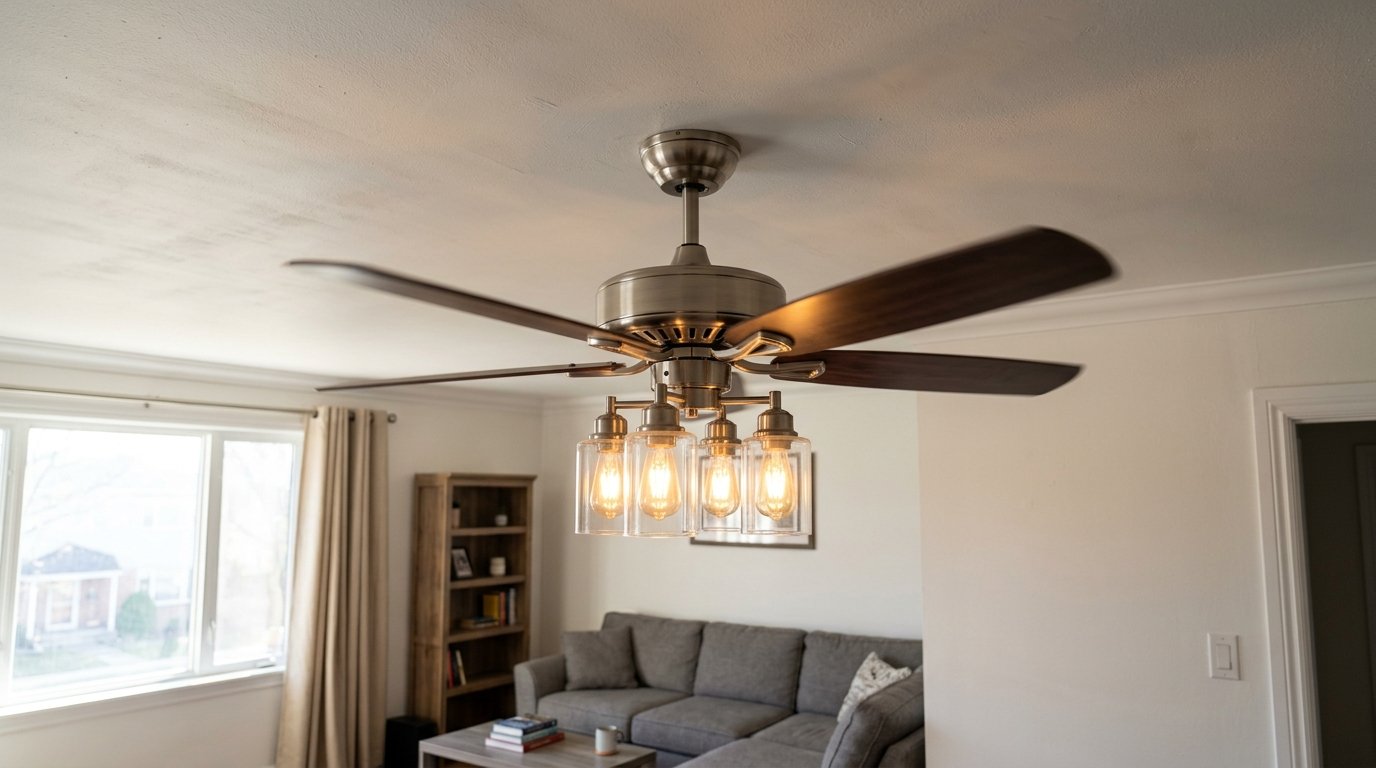

Ceiling fans are one of the most practical additions to any home, offering comfort, energy savings, and style all at once. But before buying a new fan or replacing an old one, many homeowners ask the same question: how do you measure a ceiling fan? Getting the measurements right ensures proper airflow, safe installation, and a fan that fits the room perfectly. This guide breaks down every step in simple, easy-to-follow language so you can measure your ceiling fan with confidence.
Why Measuring A Ceiling Fan Matters
Measuring a ceiling fan correctly is not just about size, it directly affects performance, safety, and comfort. A fan that is too small or too large for a room will either fail to circulate air properly or overpower the space.
The Impact Of Wrong Sizing
When a fan is undersized for a large room, it struggles to move enough air, leaving certain corners feeling stuffy and uncomfortable. On the other hand, an oversized fan in a small room can create excessive wind noise and feel overwhelming. Correct sizing keeps the airflow balanced and the room comfortable throughout the year.
Safety And Installation Concerns
Improper measurements can also lead to safety issues, such as blades that hang too low or too close to walls and furniture. This increases the risk of accidents, especially in homes with children or tall family members. Taking accurate measurements before installation helps avoid these hazards completely.
Tools You Need Before Measuring
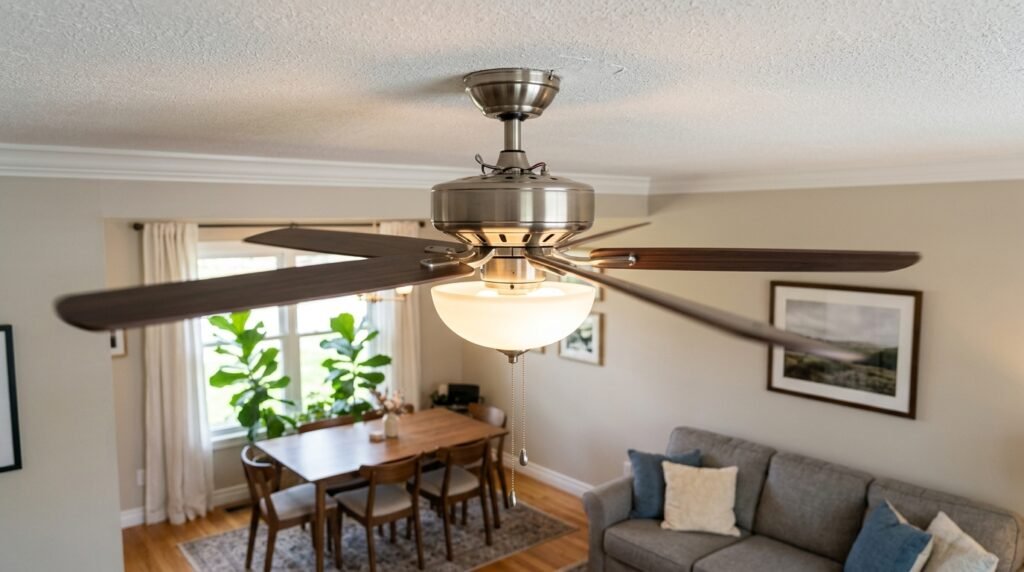
Before you start measuring your ceiling fan, gathering the right tools makes the process faster and more accurate.
Basic Measuring Equipment
A simple tape measure is the most essential tool for this task, along with a step ladder to reach the ceiling safely. A notepad or phone to record numbers is also helpful so you don’t forget the figures midway through the process.
Optional Helpful Tools
A laser measuring tool can speed things up if you have one available at home, though it is not mandatory. Having a second person hold the tape measure steady while you record the ceiling height also makes the process smoother and more accurate.
How Do You Measure A Ceiling Fan Blade Span
The blade span, also called the fan diameter, is the most common measurement people ask about when figuring out how do you measure a ceiling fan. It determines how much air the fan can circulate across a room.
Measuring From Blade Tip To Blade Tip
For fans with an even number of blades, measure from the tip of one blade straight across to the tip of the opposite blade. This distance gives you the total blade span, which is usually listed in inches on product packaging.
Measuring Fans With Odd Numbers Of Blades
If your fan has three or five blades, measure from the center of the motor to the tip of one blade, then double that number. This calculation gives you an accurate blade span even without a directly opposite blade to measure against.
Standard Blade Span Sizes
Ceiling fans typically come in a range of standard sizes depending on room dimensions. The table below shows common blade spans matched to room sizes for quick reference.
| Room Size (Square Feet) | Recommended Blade Span |
| Up to 75 sq ft | 29 to 36 inches |
| 76 to 144 sq ft | 36 to 42 inches |
| 145 to 225 sq ft | 44 inches |
| 226 to 400 sq ft | 50 to 54 inches |
| Over 400 sq ft | 56 inches or larger |
How To Measure Ceiling Height For Fan Placement
Ceiling height plays a major role in determining what type of fan mount you should use and how safely the fan will operate.
Measuring From Floor To Ceiling
Use your tape measure to record the exact distance from the floor to the ceiling in the room where the fan will be installed. This number helps determine whether you need a flush mount, standard downrod, or extended downrod fan.
Matching Ceiling Height To Mount Type
Rooms with ceilings under eight feet generally require a flush or hugger mount fan to maintain safe clearance. Ceilings between eight and nine feet typically use a short downrod, while taller ceilings need longer downrods for proper airflow distribution.
How Do You Measure A Ceiling Fan Mounting Height Correctly

Mounting height refers to the distance between the fan blades and the floor, which is different from simple ceiling height measurement.
Ideal Blade To Floor Distance
The recommended distance between fan blades and the floor is seven to nine feet for most residential rooms. This range allows for efficient air circulation while keeping the blades safely out of reach.
Adjusting For Room Type
Bedrooms and living rooms often work well with the standard seven to nine foot range, but rooms with furniture like tall bookshelves may need slight adjustments. Always double-check clearance around any tall furniture pieces before finalizing the mounting height.
Measuring Downrod Length For Your Ceiling Fan
The downrod is the metal rod connecting the fan motor to the ceiling mount, and its length depends heavily on your ceiling height.
Calculating The Right Downrod Size
To calculate downrod length, subtract the ideal mounting height of nine feet, plus the fan’s motor housing depth, from your total ceiling height. Many manufacturers provide downrod size charts based on ceiling height to simplify this calculation.
When To Use Extended Downrods
Vaulted or cathedral ceilings often require extended downrods to bring the fan down to a safe and effective height. Without an extended rod, the fan would sit too close to the peak of the ceiling and fail to circulate air properly throughout the room.
Measuring Room Size For The Right Fan Fit
Room dimensions directly influence which blade span and fan type will work best for effective air circulation.
Calculating Square Footage
Multiply the length of the room by its width in feet to get the total square footage. This number is the foundation for choosing the correct fan size, as shown in the size chart mentioned earlier in this guide.
Considering Room Shape And Layout
Irregularly shaped rooms or open floor plans may benefit from multiple smaller fans rather than one large fan. This approach ensures even air distribution across the entire space instead of concentrating airflow in just one area.
Measuring Wall Clearance For Ceiling Fan Blades
Wall clearance is an often-overlooked measurement that many people forget when installing a new ceiling fan.
Minimum Distance From Walls
Fan blades should maintain at least eighteen to twenty-four inches of clearance from any wall for safe and efficient operation. This spacing prevents air disruption and reduces the risk of blade damage over time.
Checking Clearance In Small Rooms
In smaller rooms, measure from the center of the ceiling to each wall before choosing a blade span size. If the blade span doesn’t leave enough clearance, consider a smaller fan or repositioning the installation point slightly.
Common Mistakes When Measuring A Ceiling Fan
Even with the right tools, certain measuring mistakes can lead to poor fan performance or installation issues.
Ignoring Furniture Placement
Many homeowners measure only the room and ceiling but forget to account for furniture height, especially with items like tall wardrobes or shelving units. Always factor in furniture placement to avoid blade obstruction.
Overlooking Motor Housing Size
The motor housing itself adds a few inches to the overall mounting height, which is often overlooked during initial calculations. Always check the manufacturer’s motor housing depth before finalizing your downrod length.
Conclusion
Knowing how do you measure a ceiling fan correctly makes the entire buying and installation process much smoother. From blade span and ceiling height to downrod length and wall clearance, every measurement plays a role in ensuring safe, efficient, and comfortable airflow. Taking a few extra minutes to measure accurately before installation saves time, money, and potential safety issues down the road.
FAQs
What is the standard size of a ceiling fan?
Most residential ceiling fans range between 36 and 54 inches in blade span, depending on room size.
How do you measure a ceiling fan blade span accurately?
Measure from blade tip to opposite blade tip for even-bladed fans, or from motor center to one blade tip and double it for odd-bladed fans.
What is the ideal height for ceiling fan blades from the floor?
The recommended distance is seven to nine feet from the floor for safe and effective circulation.
Do vaulted ceilings need special measurements?
Yes, vaulted ceilings typically require extended downrods to bring the fan to a safe and functional height.
Related Articles
Wet Floor Sign: A Complete Guide 2026
Kitchen Chopping Block Table: Complete Guide, Types, Benefits, Care & Buying Tips
Can You Paint Metal Roofing? The Complete Guide for Homeowners & Pros
How to Get Rid of Gnats in Bathroom Fast
What Are Styrofoam Ceiling Tiles? Discover their benefits & tips.