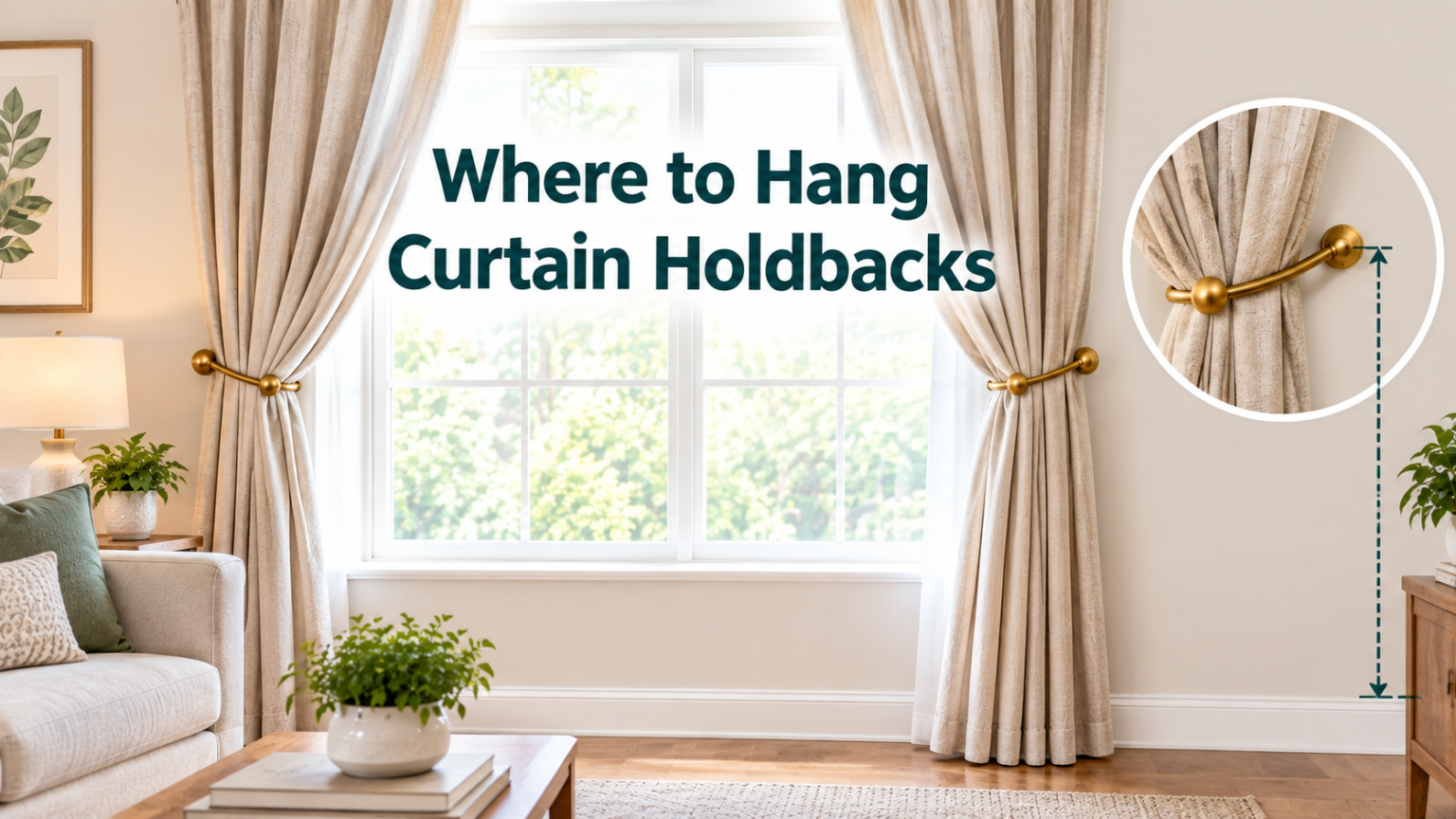

Getting the placement of curtain holdbacks right can completely change how a room feels, yet most homeowners install them without any real plan. Knowing where to hang curtain holdbacks is not just about screwing a hook into the wall; it involves height, distance from the frame, curtain type, and even the shape of the window.
A holdback placed too high or too low can make curtains look unbalanced, block natural light, or ruin the drape of the fabric. This guide breaks the entire process into simple, easy-to-follow sections so that anyone can achieve a professional, tailored look at home. By the end, you will know exactly how to measure, mark, and mount holdbacks for any window in your house.
Types of Curtain Holdbacks
Different holdback styles suit different curtain weights and room aesthetics. The type you choose can slightly affect the ideal mounting position.
Wall-Mounted Hook Holdbacks
These are the most traditional style, consisting of a metal or wooden arm fixed to the wall with a hook or curved end. They work well with medium to heavy curtains and are usually mounted using screws directly into a stud or anchor.
Rosette and Knob Holdbacks
A rosette or knob holdback is a decorative round piece mounted flat against the wall, with the curtain tucked behind or looped around it. These are popular in classic and vintage-style interiors and tend to sit slightly lower than hook-style holdbacks.
Magnetic Holdbacks
Magnetic holdbacks use two magnetic discs, one on each side of the fabric, to hold the curtain in place without any wall drilling. They are a flexible, damage-free option but work best with lightweight or sheer curtains rather than heavy drapes.
Swing-Arm and Decorative Holdbacks
Swing-arm holdbacks pivot outward from the wall, allowing more flexibility in how far the curtain is pulled back. Decorative holdbacks, shaped like leaves, stars, or other ornaments, are chosen mainly for visual appeal and are typically placed at the same height as standard hook holdbacks.
Tools and Materials Needed
Before marking anything on the wall, gathering the right tools makes the entire process faster and far more accurate.
Basic Measuring Tools
A measuring tape, a pencil, and a spirit level are the essential items for this task. The measuring tape helps determine the correct height and distance, the pencil marks the spot, and the level ensures both sides of the window match perfectly.
Mounting Hardware
Depending on the wall type, you will need either a drill with screws or wall anchors for hollow walls, plus a stud finder if you want extra support for heavier curtains. Most holdback sets already include the necessary screws, but stronger anchors may be required for thick fabric.
General Rule of Thumb for Height Placement
The most common question people ask is simply where to hang curtain holdbacks in terms of height. There is a widely used guideline that works for most standard windows.
The Two-Thirds Rule Explained
The general rule is to place the holdback about two-thirds of the way up the curtain panel, which usually falls around one-third of the distance down from the top of the window. This height allows the fabric to fold naturally and creates a balanced, elegant drape on either side.
Measuring From Floor vs Top
For floor-length curtains, many people prefer measuring from the floor upward instead of from the top of the window. In this case, the holdback typically sits around 36 to 44 inches above the floor, depending on the total curtain length and the look you want to achieve.
Adjusting for Curtain Length
Shorter, sill-length curtains need a slightly different approach since there is less fabric to gather. For these, the holdback is often placed close to the midpoint of the curtain rather than following the standard two-thirds rule used for longer drapes.
Placement Based on Curtain Style
Not every curtain hangs the same way, so the fabric type should influence exactly where the holdback goes.
Sheer Curtains
Sheer, lightweight fabrics gather easily and look best with the holdback placed slightly higher than usual, since the thin material tends to slip lower once bunched. A higher placement keeps the sheer curtain looking airy rather than dragging near the floor.
Heavy or Blackout Drapes
Thick, heavy drapes need sturdier support and typically sit better with the holdback placed at or slightly below the standard two-thirds mark. This helps manage the weight of the fabric without straining the hardware or the wall.
Layered Curtains
When sheer and heavy panels are layered together, it is common to use two holdbacks at slightly different heights, one for each layer, so both fabrics fall naturally without tangling into one another.
Café Curtains
Café curtains, which only cover the lower half of a window, require a much lower holdback placement, generally centered around the midpoint of the shorter panel rather than following full-length curtain rules.
Horizontal Distance From the Window Frame
Height is only half the equation; how far the holdback sits from the window frame is equally important for both light and appearance.
The Standard 4 to 6 Inch Rule
Most interior designers recommend mounting holdbacks around 4 to 6 inches outward from the edge of the window frame. This spacing allows the curtain to pull back fully, letting in maximum light while still looking neatly gathered.
Adjusting for Wide Windows
For extra-wide windows or windows with thick trim, the distance may need to increase to 6 to 8 inches so the curtain does not overlap the glass when pulled open. Measuring the fully open curtain width beforehand helps avoid this mistake.
Step-by-Step Measuring Process
Following a clear sequence removes guesswork and ensures both sides of the window match.
Step 1: Hang the Curtains First
Always install the curtain rod and curtains before marking any holdback position. This allows you to see exactly how the fabric falls naturally, rather than guessing the placement on a bare window.
Step 2: Find the Natural Pull-Back Point
Gently gather the curtain by hand and pull it to the side until it looks balanced. Hold it there and take note of where your hand naturally rests, as this is usually the ideal spot for the holdback.
Step 3: Mark and Level the Wall
Once you find the right spot, mark it lightly with a pencil, then use a spirit level to transfer the exact same height to the opposite side of the window. This step is what keeps the final result symmetrical.
Adjusting Placement for Room Type
The purpose of a room can slightly change how curtains are used, which affects ideal holdback height too.
Living Room and Bedroom Windows
These rooms typically use the standard two-thirds height rule since curtains are opened and closed daily for light control and privacy, and a balanced classic look is usually preferred.
Kitchen Windows
Kitchen curtains are often shorter and simpler, so holdbacks here are usually placed lower and closer to the window, keeping fabric away from stoves, sinks, or countertops for safety.
Short and Floor-to-Ceiling Windows
Very short windows need a lower holdback height, almost centered on the panel, while floor-to-ceiling windows can follow the standard rule but may benefit from a slightly higher placement to emphasize the height of the room.
Installation Tips
A few practical tips can prevent common installation problems before they happen.
Studs vs Wall Anchors
Whenever possible, mount into a wall stud for maximum strength, especially with heavy drapes. If a stud is not available at the ideal spot, use a properly rated wall anchor instead of relying on drywall alone.
Keeping Both Sides Symmetrical
Always measure and mark both sides at the same time using consistent reference points, such as the floor or the top of the window frame, rather than eyeballing one side separately from the other.
Common Mistakes to Avoid
Even small placement errors can noticeably affect the final appearance of a window treatment.
Placing Holdbacks Too Low
A holdback mounted too close to the floor makes curtains look heavy and unbalanced, often dragging the eye downward instead of framing the window nicely.
Placing Too Close to the Frame
Mounting too near the window edge restricts how far the curtain can open, reducing natural light and making the fabric look cramped rather than gracefully draped.
Uneven Left and Right Placement
Mismatched heights on either side of the window are one of the most noticeable mistakes in a room, so double-checking with a level before drilling is essential.
Style and Design Considerations
Beyond function, holdback placement also plays a role in the overall design language of a room.
Matching Finishes
Choosing a holdback finish that matches or complements the curtain rod, such as brass, matte black, or brushed nickel, creates a more cohesive and intentional look throughout the window setup.
Formal vs Casual Looks
A higher, tighter holdback placement tends to look more formal and structured, while a slightly lower, looser placement creates a relaxed, casual drape that suits informal living spaces.
Quick Reference Table
| Curtain Type | Recommended Height | Distance From Frame |
| Sheer Curtains | Slightly above two-thirds mark | 4 to 5 inches |
| Heavy or Blackout Drapes | At or below two-thirds mark | 5 to 6 inches |
| Layered Curtains | Two heights, one per layer | 4 to 6 inches |
| Café Curtains | Midpoint of the short panel | 3 to 4 inches |
| Floor-to-Ceiling Curtains | Standard two-thirds, slightly higher | 6 to 8 inches |
Conclusion
Deciding where to hang curtain holdbacks does not need to be complicated once the basic rules are understood. Height, fabric type, window size, and room purpose all play a role in getting the placement right.
Following the two-thirds rule for height and the 4 to 6 inch rule for distance from the frame will work well for most homes, while small adjustments can be made based on curtain style. With careful measuring and a level, anyone can achieve a neat, professional-looking result without hiring outside help.
FAQs
How high should curtain holdbacks be placed?
Most curtains look best with holdbacks placed around two-thirds of the way up the panel, though shorter or café-style curtains sit better with a lower, more centered placement.
How far should holdbacks be from the window frame?
A distance of 4 to 6 inches from the frame is standard for most windows, allowing curtains to open fully without blocking light.
Do heavier curtains need different placement than sheer ones?
Yes, heavy drapes usually sit better slightly lower than the standard mark, while sheer curtains often look neater when placed a bit higher to prevent sagging.
Related Posts
How to Install an Interior Door: Step-by-Step DIY Guide
How to Keep Kitchen Sponges from Smelling ( Fixes That Work)
How Often to Clean Bathroom: Daily, Weekly & Monthly Guide
What Gets Hair Dye Off Sink? Easy & Effective Removal Guide
Can You Install Laminate Flooring Over Tile? Complete Guide 2026