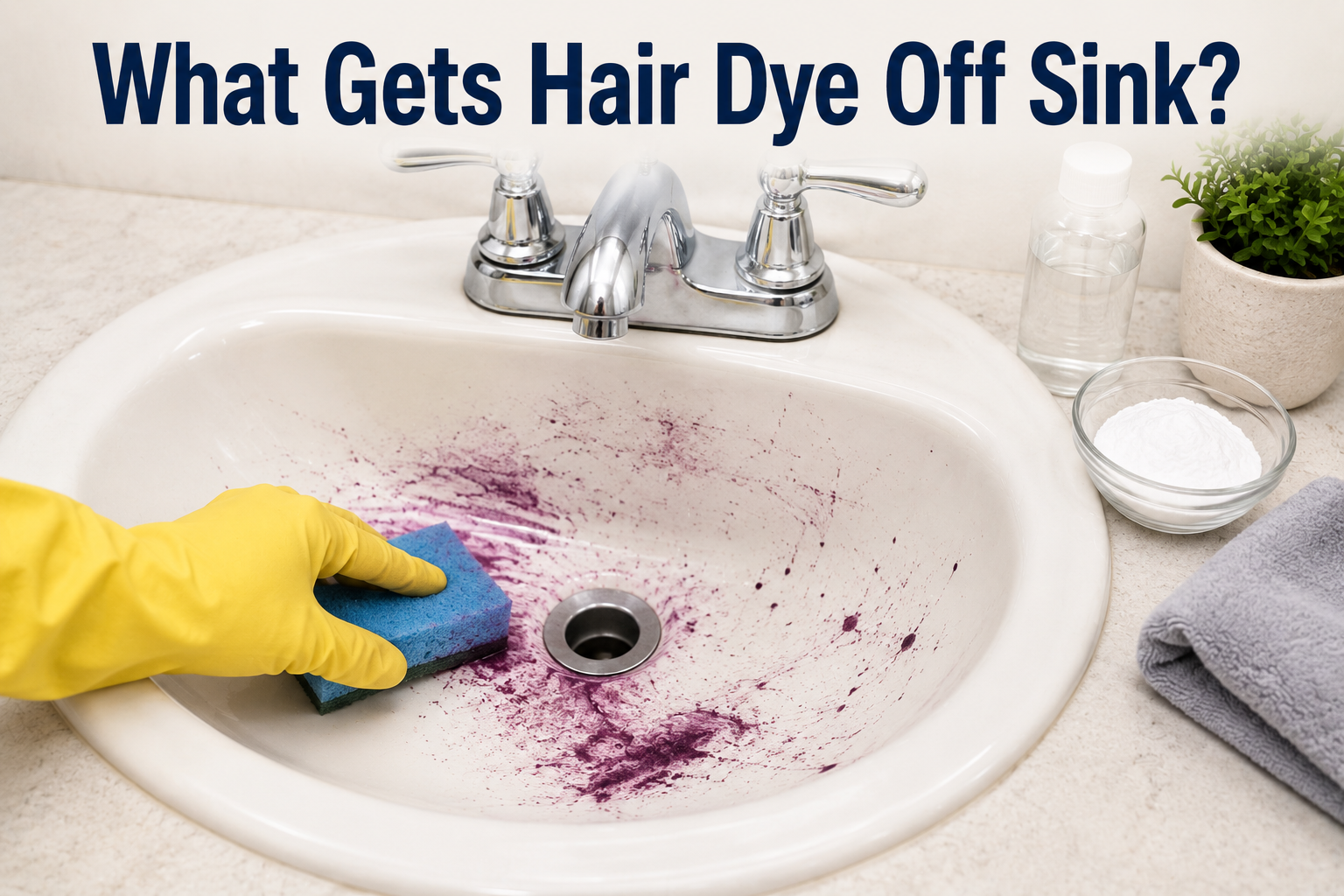

Hair dye stains on a sink can look scary at first, but most of them can be removed with items already sitting in your kitchen or bathroom cabinet.
Rubbing alcohol, baking soda paste, magic erasers, and hydrogen peroxide are among the most reliable answers to what gets hair dye off sink surfaces without damaging them. The right method depends on how fresh the stain is and what material your sink is made of.
Acting quickly always gives better results than waiting for the dye to dry and set into the surface. This guide walks through every practical method, sink-specific advice, and prevention tips in one place.
Why Hair Dye Stains Sinks So Easily?
Hair dye contains strong pigments and chemical agents designed to bond permanently with hair strands, and unfortunately these same pigments do not care whether they land on a countertop or a bathroom sink. The moment dye touches a porous or lightly textured surface, the color molecules begin soaking within minutes.
The Role of Pigment Bonding
Hair dye pigments are built to penetrate deep into a surface rather than sit on top of it. This is why a splash that seems minor at first can leave a noticeable mark once it dries. The longer the dye sits, the deeper it bonds, making early action far more effective than delayed cleanup.
Why Sink Material Matters?
Not every sink reacts to hair dye the same way. Porcelain and stone-based sinks are more porous and absorb stains faster, while stainless steel and acrylic surfaces tend to resist deep staining. Knowing your sink’s material helps you choose a cleaning method that removes the stain instead of damaging the finish.
What You Will Need Before You Start?
Before attempting any removal method, gathering the right supplies saves time and prevents unnecessary scrubbing. Most items required are common household products rather than specialty cleaners.
A simple checklist includes rubbing alcohol, baking soda, dish soap, hydrogen peroxide, a soft cloth or sponge, a melamine sponge, and rubber gloves for skin protection. Keeping a small brush on hand also helps for corners and edges where dye tends to collect.
Best Methods for What Gets Hair Dye Off Sink Surfaces
Several household solutions work well, but their effectiveness depends on stain freshness and sink material. Testing on a small hidden area first is always recommended before applying any method to the visible stain.
Rubbing Alcohol Method
Rubbing alcohol is one of the fastest answers to what gets hair dye off sink basins when the stain is still fresh. Pour a small amount onto a clean cloth and gently wipe the stained area in circular motions. Within a few minutes, the pigment usually starts lifting away from the surface.
Baking Soda and Dish Soap Paste
Mixing baking soda with a few drops of dish soap creates a gentle scrubbing paste that works on both fresh and slightly set stains. Apply the paste directly onto the dye mark, let it rest for about ten minutes, then scrub lightly with a sponge before rinsing with warm water.
Magic Eraser for Porcelain and Ceramic
A melamine sponge, commonly sold as a magic eraser, works exceptionally well on hard, non-porous surfaces like porcelain and ceramic. Simply dampen the sponge and rub the stained area using light pressure, allowing the micro-abrasive texture to lift the color without scratching the finish.
Acetone or Nail Polish Remover
Acetone-based nail polish remover can break down stubborn hair dye pigments, but it should only be used on porcelain or ceramic sinks since it can damage acrylic or plastic surfaces. Apply a small amount to a cloth, dab the stain, and rinse thoroughly afterward.
Hydrogen Peroxide and Baking Soda Combination
For stains that have already dried and set into the surface, a paste made from hydrogen peroxide and baking soda offers stronger lifting power. Spread the mixture over the stain, leave it undisturbed for fifteen to twenty minutes, then wipe and rinse clean.
Choosing the Right Method by Sink Material
Different sink materials respond differently to cleaning agents, so matching the method to the surface prevents accidental damage while still removing the stain effectively.
| Sink Material | Recommended Method | Method to Avoid |
| Porcelain or Ceramic | Magic eraser, acetone, baking soda paste | Harsh metal scrubbers |
| Stainless Steel | Rubbing alcohol, dish soap paste | Undiluted bleach |
| Acrylic or Plastic | Baking soda paste, mild dish soap | Acetone or nail polish remover |
| Granite Composite | Hydrogen peroxide paste, gentle scrubbing | Strong acidic cleaners |
| Natural Stone | Mild soap solution, soft cloth | Vinegar or acidic products |
Porcelain and Ceramic Sinks
These sinks handle most cleaning agents well, including acetone and baking soda combinations, because their hard glazed surface resists chemical damage. A magic eraser paired with light water pressure usually clears even set-in stains within a few passes.
Stainless Steel Sinks
Stainless steel is naturally stain-resistant, so a simple rubbing alcohol wipe or dish soap paste is often enough. Avoid abrasive powders here since they can dull the metallic finish over time.
Acrylic and Plastic Sinks
Acrylic surfaces scratch and discolor easily, so gentle baking soda paste is the safest option. Acetone should never be used on this material since it can soften or cloud the plastic permanently.
Removing Stains from Fixtures and Surrounding Areas
Hair dye rarely stays confined to the sink basin alone, often spreading onto faucets, countertops, and nearby grout lines. Wiping faucets immediately with rubbing alcohol prevents the metal finish from absorbing color.
For countertops and grout, a baking soda paste left for a few minutes followed by gentle scrubbing usually restores the original appearance without needing harsh chemicals.
Common Mistakes to Avoid While Removing Hair Dye
Mixing bleach with ammonia-based cleaners creates dangerous fumes and should never be attempted under any circumstance. Using abrasive scrubbers on acrylic or plastic sinks often causes permanent scratching rather than stain removal.
Allowing a stain to sit for days before treatment also makes the pigment bond deeper, turning an easy fix into a stubborn, time-consuming task.
Preventing Hair Dye Stains Before They Happen
Prevention remains far easier than removal, and a few small habits can save significant cleanup time later. Laying an old towel or plastic sheet around the sink edge before dyeing catches accidental drips before they touch the surface.
Applying a thin layer of petroleum jelly along the sink rim also creates a barrier that keeps dye from soaking into the material. Rinsing the sink immediately after each use during the dyeing process prevents pigments from ever getting the chance to set.
When Professional Help Becomes Necessary
Some stains, particularly on natural stone or older porcelain sinks with hairline cracks, may resist all home remedies.
In such cases, a professional cleaning service familiar with sink materials can apply specialized treatments without risking further damage to the surface.
FAQs
Does hair dye stain sinks permanently? Most stains are not permanent if treated within the first few hours, though older, set-in stains on porous materials may require repeated treatment.
Can bleach be used on colored sinks? Bleach can fade colored porcelain or damage acrylic finishes, so it is best reserved only for plain white, non-porous surfaces.
How long does hair dye stain removal typically take? Fresh stains often clear within ten to fifteen minutes, while dried stains may need multiple applications over a day or two.
Is rubbing alcohol safe for all sink types? Rubbing alcohol is generally safe for porcelain, ceramic, and stainless steel, but it should be tested first on acrylic surfaces.
Conclusion
Knowing what gets hair dye off sink surfaces comes down to matching the right household solution with your sink’s material and acting before the stain has time to set.
Rubbing alcohol, baking soda paste, and hydrogen peroxide cover nearly every situation, while simple prevention habits keep future dyeing sessions mess-free. With the right approach, even the toughest hair dye stains rarely stand a chance against a well-matched cleaning method.
Related Posts
Why Is My Toilet Water Yellow? Causes, Fixes & When to Worry
How to Measure Room for Furniture: Step-by-Step Guide for Perfect Fit
How to Install a Curtain Rod? Complete Beginner’s Guide
Half Round Gutter Installation: Complete Guide
How to Change Kitchen Countertops Without Replacing Them: A Complete Guide