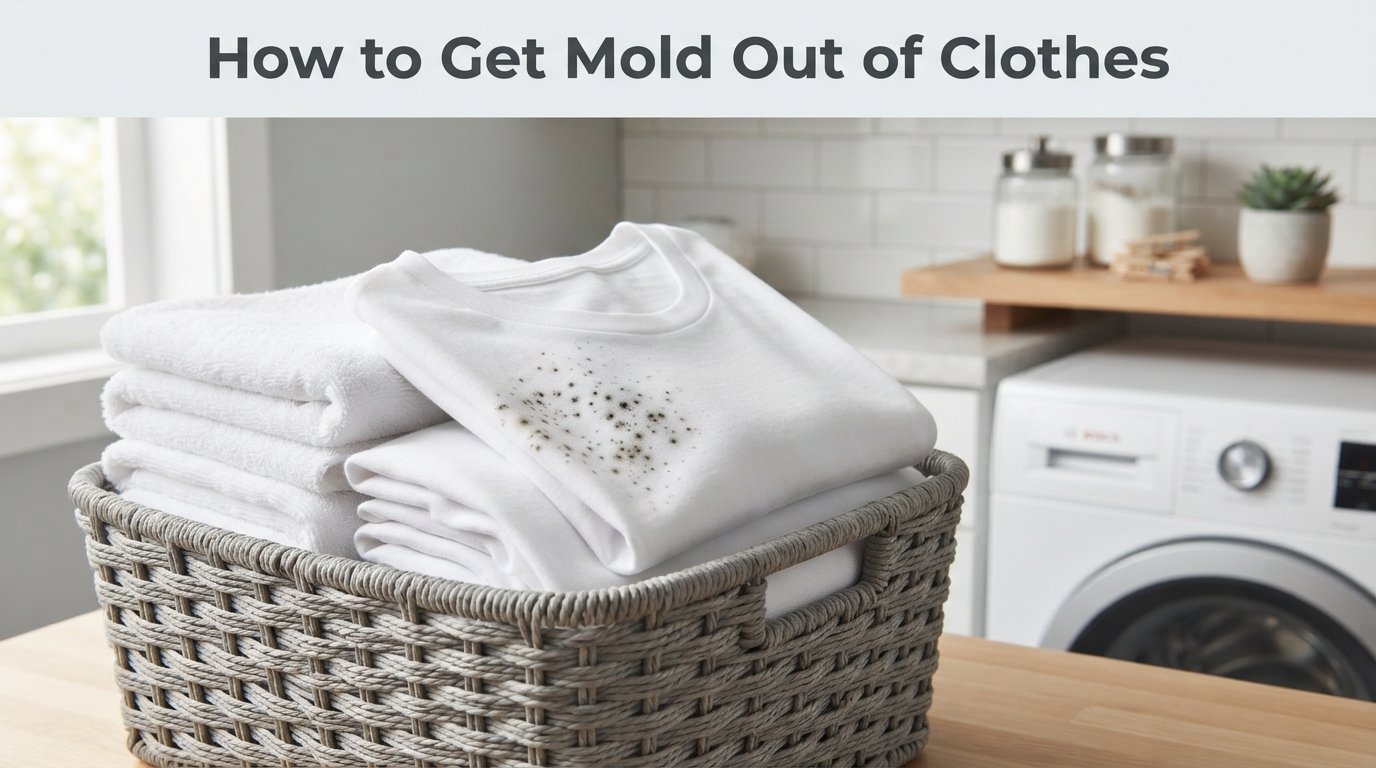

The quickest way to get mold out of clothes is to brush off the loose growth outdoors, treat the stained areas with diluted white vinegar, and wash the garment on the hottest setting its fabric allows. Finish by drying it fully in direct sunlight, because UV rays help destroy any spores that survived the wash.
Most cotton, linen, and synthetic items recover well when you act within a day or two of spotting the problem. Delicate fabrics, leather, and old set-in stains need gentler or more specialised care, which this guide explains. You will also learn what causes mold, which products work best, and how to stop it from returning. Everything here uses ordinary household items, so you can start today.
Why Mold Grows on Clothes
Mold needs moisture, mild warmth, and a food source, and clothes that stay damp supply all three. The two causes below explain most cases.
Trapped Moisture and Poor Airflow
Wet laundry left in the drum, damp towels in a basket, and clothes squeezed into a shut cupboard keep humidity high for hours. Spores are always floating in the air, so they multiply once dampness lasts longer than a day. Basements, bathrooms, and storage units are the usual trouble spots.
Fabrics and Residue That Feed Mold
Cotton, linen, wool, and leather soak up water and break down slowly, which gives mold something to eat. Sweat, body oil, and leftover detergent add extra fuel. That is why gym wear and swimsuits often show spots first.
How to Spot Mold on Clothes
Mold usually appears as white, green, gray, or black patches that look fuzzy or powdery. A musty, earthy smell often shows up before the marks do, and affected areas may feel damp or slightly slimy.
Check folds, seams, collars, underarms, and pockets first, since moisture hides there. Flat white growth is often mildew, the early stage of the same problem, and it responds to the same treatment. Look through nearby garments too, because spores travel between items stored together.
Is Moldy Clothing Harmful?
Wearing moldy clothes can trigger sneezing, coughing, itchy skin, or watery eyes, especially in people with allergies or asthma.
Babies, older adults, and anyone with a weakened immune system are more sensitive, so clean the items before anyone wears them. If symptoms continue after the source is gone, speak with a doctor, since this article offers general guidance and not medical advice.
What to Prepare Before You Start
Spores spread easily, so set up your space before touching the garment. Wear gloves and a mask, work outdoors or near an open window, and keep moldy items away from clean laundry. Read the care label and test any product on a hidden area first. Gather these supplies:
- A soft brush or old toothbrush
- White vinegar and baking soda
- Lemon and salt
- Oxygen bleach (plus chlorine bleach for whites)
- Laundry detergent and a bucket
How to Get Mold Out of Clothes Step by Step
Follow these five steps in order for the best results on most washable fabrics. Each step builds on the one before it.
Step 1: Brush Off Loose Mold Outdoors
Take the garment outside and shake it gently, away from your face. Brush the spots with a dry soft brush to remove surface growth. Doing this outdoors keeps spores out of your home and away from other laundry.
Step 2: Pre-Treat the Stained Areas
Choose one treatment from the methods explained below and apply it directly to the marks. Let it sit for 30 to 60 minutes so it can loosen the mold from the fibres. Do not rinse it off, since it keeps working once the garment goes into the wash.
Step 3: Wash on the Hottest Safe Setting
Wash the garment alone or with similar colours at the highest temperature the care label allows. Add your usual detergent plus half a cup of vinegar or baking soda for extra cleaning strength. Heat and agitation lift the stains and kill many remaining spores.
Step 4: Inspect Before Drying
Hold the wet garment up to bright light and look closely at seams and folds. If any marks or smell remain, repeat the treatment and wash again. Dryer heat can lock in leftover stains permanently, so this check matters.
Step 5: Dry Completely in the Sun
Hang the clothes in direct sunlight, since UV rays weaken leftover spores and freshen the fabric. Turn pockets inside out so every part dries. Store the garment only when no dampness is left anywhere.
Natural Ways to Remove Mold From Clothes
Natural products suit light to moderate mold and are gentle on most fabrics. Pick one method per soak rather than mixing several.
White Vinegar
Soak the garment for 30 to 60 minutes in one part vinegar to four parts water, or pour it straight onto small spots. Its acidity breaks down mold and reduces odour. Spot test dark or delicate fabrics first.
Baking Soda
Mix baking soda with a little water into a thick paste, rub it into the stains, and leave it for 30 minutes. It lifts marks gently and absorbs odours without harsh chemicals. It is a good choice for people who dislike vinegar’s smell.
Lemon Juice and Salt
Cover small spots with salt, squeeze lemon juice over it, and dry the item in the sun. The citric acid and light abrasion lighten marks on white and pale fabrics. Skip it on dark colours, which may fade.
Hydrogen Peroxide
Dab 3 percent hydrogen peroxide onto colourfast, light-coloured fabric and wait 10 minutes before washing. It acts as a mild bleach on stubborn spots. Test a hidden area first, because it can lighten dyes.
Stronger Methods for Stubborn Mold
Use these when natural options leave stains behind, and follow package directions closely. Never mix bleach with vinegar or ammonia, because the fumes are toxic.
Oxygen Bleach
Products such as OxiClean are safe for most colourfast fabrics and gentler than chlorine bleach. Dissolve the powder in warm water, soak the garment for a few hours, then wash as normal. It removes both stains and lingering odours.
Chlorine Bleach for White Fabrics
Reserve this for sturdy white cotton or linen and dilute it exactly as the label says. Soak briefly, then rinse and wash straight away. Never use it on wool, silk, coloured clothes, or stretch fabrics.
Borax as a Laundry Booster
Adding about half a cup of borax to a hot wash improves mold removal on cottons and linens. It is milder than bleach and works alongside regular detergent. Keep it away from children and pets, and rinse clothes well.
Removing Mold From Different Fabrics
Each fabric reacts differently to water, heat, and chemicals. Matching the method to the material prevents damage.
Cotton, Linen, and Denim
These sturdy fibres handle hot water and most treatments well. A vinegar soak followed by a hot wash usually clears the mold. Dry denim seams thoroughly, since thick stitching holds moisture longest.
Wool and Silk
Use cool water and mild detergent, and skip bleach entirely because it damages protein fibres. Press water out gently instead of wringing, then lay the item flat to dry in shade. Take valuable silk pieces to a professional cleaner.
Polyester and Synthetics
Synthetics resist mold better but can trap odours. Wash them in warm water with detergent and a splash of vinegar. Avoid high dryer heat, which can warp the fabric and set stains.
Leather and Suede
Wipe leather with a cloth dampened in equal parts vinegar and water, dry it away from direct heat, and apply conditioner. Suede is far more delicate and needs a specialist. Never soak either material.
How to Remove Mold Smell From Clothes
A musty odour can linger after the marks disappear because spores and residue stay in the fibres. Soak the clothes overnight in water with a cup of baking soda, or wash them again with vinegar, then air them outdoors in wind and sunlight. If the smell returns after drying, the mold is not fully cleared, so repeat the treatment before storing.
Clean the Washing Machine Afterward
Spores can stay in the drum, rubber door seal, and detergent tray, and they will settle on your next load. Clean the machine as soon as you finish washing moldy laundry:
- Run an empty hot cycle with two cups of white vinegar.
- Run a second empty cycle with half a cup of baking soda.
- Wipe the door seal and detergent drawer with a vinegar-dampened cloth.
- Leave the door open so the drum dries fully.
When to Throw Clothes Away or Call a Professional
Some garments cannot be saved. Fabric that feels weak or crumbly, deep stains that survive two treatments, and a smell that keeps coming back are signs to let go.
Dry-clean-only, expensive, or sentimental items deserve a professional cleaner before you try anything at home. If mold keeps appearing in a closet or on walls, fix the damp problem first, or new clothes will suffer the same fate.
How to Prevent Mold on Clothes
Prevention comes down to controlling moisture. These three habits make the biggest difference.
Dry Everything Fully Before Storing
Feel thick seams, waistbands, and pockets before folding anything away. Take laundry out of the machine within a few hours of the cycle ending. Even slight dampness can start mold quickly inside a sealed drawer.
Give Your Closet Room to Breathe
Leave space between hangers and open closet doors regularly for fresh air. Silica gel packs, moisture absorbers, or a small dehumidifier help in humid seasons. For long-term storage, use breathable cotton bags instead of sealed plastic.
Wash Damp Items Quickly
Gym clothes, swimsuits, and towels should never sit in a basket overnight. If you cannot wash them right away, hang them to dry first. A ventilated laundry basket also keeps air moving around them.
Mold Removal Methods Compared
| Method | Best For | Safe For | Time Needed |
| White vinegar | Light to moderate mold, odour | Most fabrics | 30 to 60 minutes |
| Baking soda paste | Small stains, odour | Most fabrics | 30 minutes |
| Lemon and salt | Small spots on pale fabric | White and light cotton | 30 minutes plus sun |
| Hydrogen peroxide | Stubborn spots on light colours | Colourfast light fabrics | 10 minutes |
| Oxygen bleach | Heavy stains and odour | Most colourfast fabrics | A few hours |
| Chlorine bleach | Severe mold on whites | White cotton and linen only | Brief, per label |
| Borax | Boosting a hot wash | Cotton and linen | One wash cycle |
FAQs
Does vinegar kill mold on clothes?
Yes, white vinegar helps kill many common molds and reduces odour. For heavy growth, pair it with a hot wash or oxygen bleach for a better result.
Can I wash moldy clothes with other laundry?
It is safer to wash them alone in a hot cycle. Sharing a load can spread spores and odours to clean garments.
Can mold be removed from clothes without washing?
Small surface spots can be brushed off, treated with vinegar or hydrogen peroxide, and sun-dried. Anything widespread or smelly still needs a proper wash to be fully clean.
Conclusion
To get mold out of clothes, brush the spots off outdoors, pre-treat them, wash hot, and dry in sunlight. Choose vinegar or baking soda for light cases and oxygen bleach for tougher ones, adjusting for the fabric. Keep laundry dry and closets ventilated so mold has no reason to return. Act early, and mo t clothes can be saved.
Related Articles
Basement Crawl Space Waterproofing: Complete Guide
How Much Cost to Do Water Remediation in Small Bathroom
Crack in Basement Wall: Everything You Need to Know