


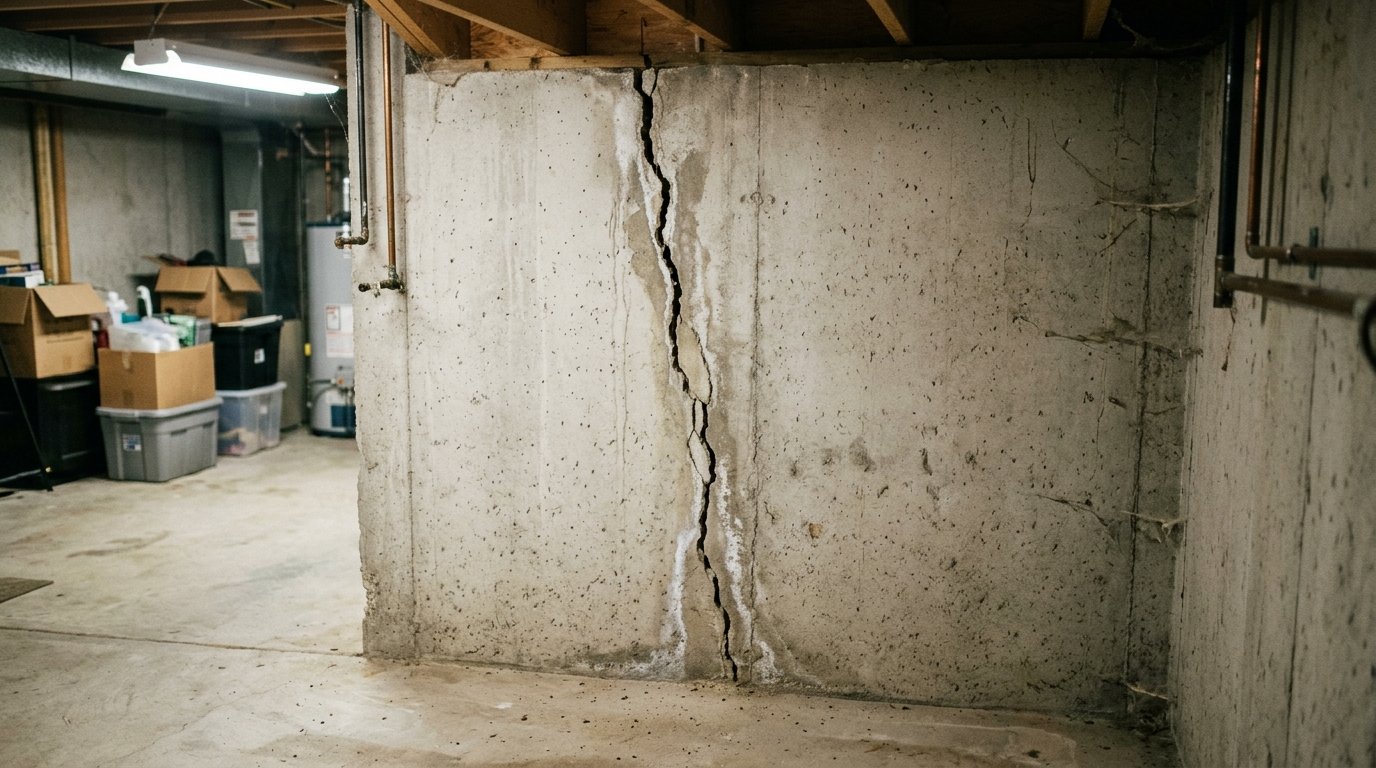

A crack in a basement wall is one of the most common yet most misunderstood problems homeowners face. Some cracks are completely harmless and simply the result of concrete curing over time.
Others signal serious structural failure that, if ignored, can compromise the entire foundation of your home. The key is knowing the difference early so you can respond with the right solution at the right time.
Most homeowners discover basement wall cracks during routine cleaning, renovation, or after a heavy rainstorm when moisture begins seeping through.
The crack itself is not always the emergency, but what caused it and how it is behaving over time absolutely matters. This guide walks you through every type, cause, risk level, and repair option clearly and practically.
Types of Cracks in Basement Walls
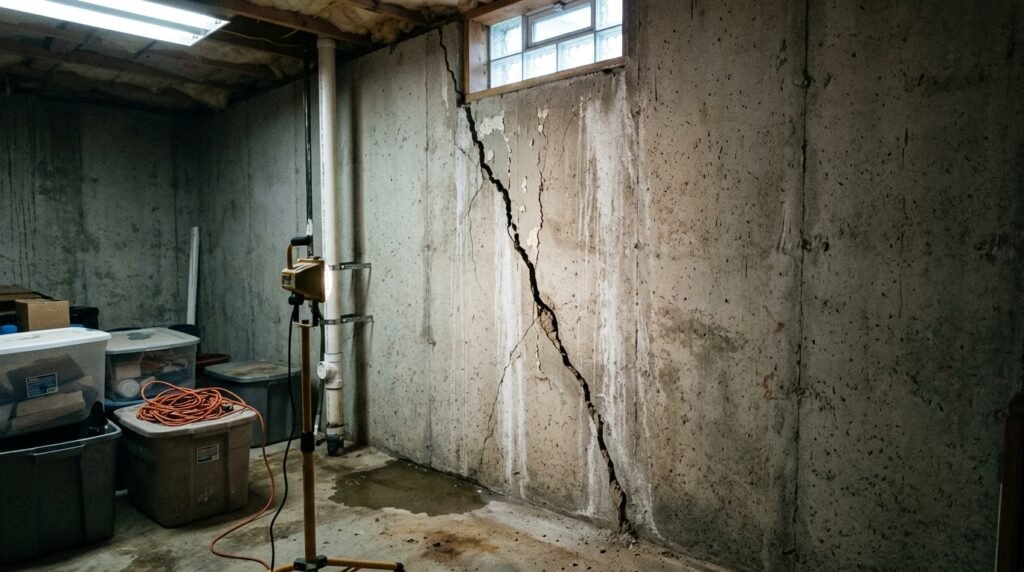
Not every crack in a basement wall is created equal. The shape, direction, location, and width of a crack all tell a different story about what is happening inside your foundation. Understanding the type you are dealing with is the first step toward choosing the correct fix.
Vertical Cracks
Vertical cracks run straight up and down along the basement wall and are the most common type found in poured concrete foundations.
They typically form as concrete shrinks during the curing process, which is a natural occurrence in new construction. While they usually do not indicate structural danger, they are a direct pathway for water infiltration, especially during heavy rainfall or snowmelt seasons. A vertical crack that is wider than 1/4 inch or is actively leaking should be professionally evaluated without delay.
Horizontal Cracks
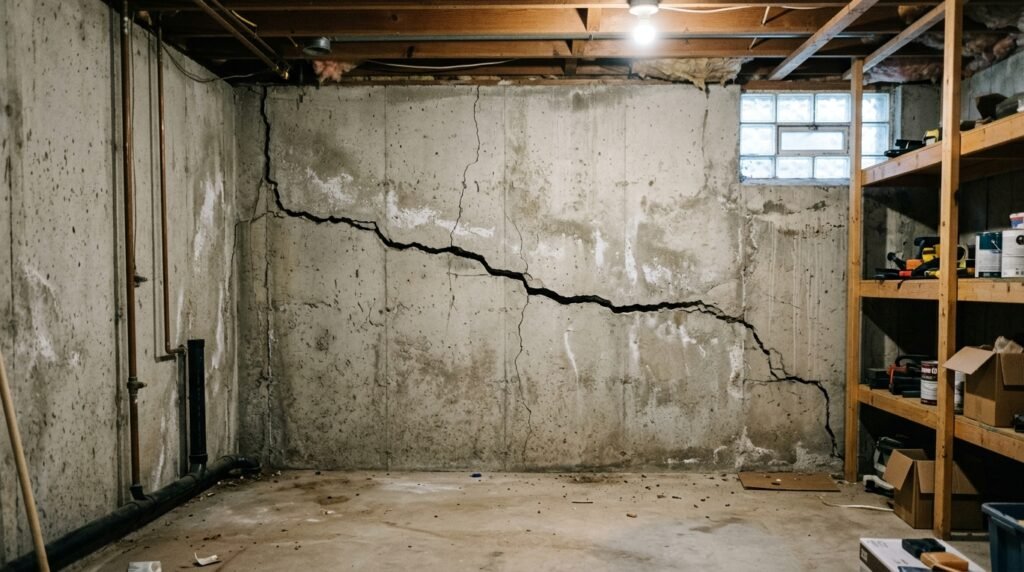
Horizontal cracks are the most serious type of crack in a basement wall and should never be dismissed or delayed.
They form when lateral soil pressure from outside the foundation pushes inward, often made worse by saturated soil, frost heave, or poor drainage. A horizontal crack is a structural warning sign indicating that the wall may be bowing inward under pressure.
Left unaddressed, horizontal cracks can lead to complete wall failure and require expensive repair methods like wall anchors or full replacement.
Diagonal Cracks
Diagonal cracks run at an angle, typically from a corner of a window or door opening, and are often caused by differential settlement, meaning one section of the foundation is sinking faster than another.
Minor diagonal cracks from small settlement are often stable and low-risk. However, diagonal cracks that are wider at one end than the other, or that are growing over time, indicate ongoing movement and require professional assessment to determine whether underpinning or other stabilization is needed.
Stair-Step Cracks
Stair-step cracks appear in block or brick basement walls and follow the mortar joints in a stair-like pattern.
They are almost always caused by foundation settlement or soil movement beneath the wall. The danger level depends on how wide the gaps are and whether the wall shows any bowing or displacement.
Small stair-step cracks with tight joints may be stable for years, but larger ones with visible separation or wall movement need structural repair promptly.
Common Causes of Basement Wall Cracks
Understanding why a crack in a basement wall forms helps you address not just the crack but the underlying condition driving it. Treating a crack without fixing its cause means the problem will return.
| Cause | Type of Crack Typically Caused | Risk Level |
| Concrete shrinkage during curing | Vertical, hairline | Low |
| Hydrostatic water pressure | Horizontal, diagonal | High |
| Soil settlement or shifting | Diagonal, stair-step | Medium to High |
| Frost heave | Horizontal, diagonal | High |
| Poor drainage around foundation | Horizontal, vertical | Medium to High |
| Tree root pressure | Diagonal, irregular | Medium |
| Overloaded soil or added weight | Horizontal | High |
Hydrostatic pressure is the most common serious cause.
When soil surrounding your foundation becomes saturated with water, it expands and pushes against the wall with tremendous force. Over time, even a well-built foundation wall will develop cracks under that constant pressure if drainage is not properly managed.
How to Identify a Serious Crack vs. a Minor One
Not every crack demands an immediate contractor call, but knowing which ones do can save your home from serious structural failure. Here is how to evaluate the crack you are looking at.
- Width matters — Hairline cracks under 1/8 inch are typically minor. Cracks wider than 1/4 inch need professional attention.
- Direction matters — Horizontal cracks are almost always structural. Vertical cracks are usually less severe.
- Active leaking — Any crack actively letting water into the basement needs sealing immediately, regardless of size.
- Crack growth — Mark both ends of the crack with a pencil and date it. Check it monthly. If it grows, call a professional.
- Wall bowing — If the wall curves inward at any point along the crack, this is a structural emergency requiring urgent repair.
- Multiple cracks — Several cracks appearing together, especially near corners, suggest significant foundation movement.
Risks of Ignoring a Crack in Basement Wall
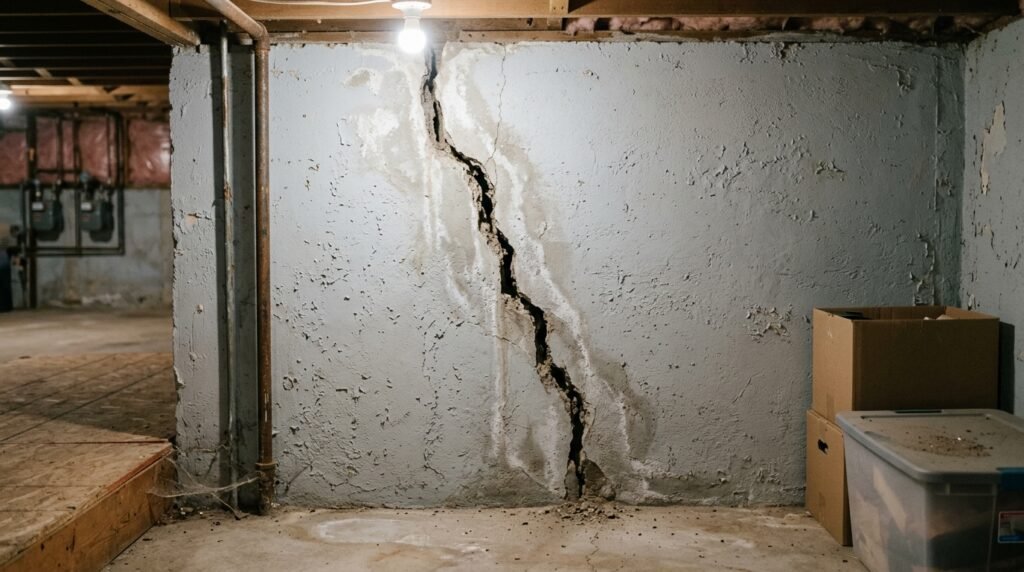
Leaving a crack in a basement wall unrepaired does not make the problem pause. In almost every case, cracks worsen progressively, and the cost of repair grows alongside the damage.
Water that enters through even a hairline crack saturates insulation, promotes mold growth, and degrades concrete further through a process called freeze-thaw cycling. Every winter, water inside the crack freezes, expands, and forces the crack wider. By spring, the crack is measurably larger than it was the previous fall.
Beyond moisture damage, structural cracks that are ignored can eventually lead to wall failure. A bowing wall that is not reinforced will continue to move inward until it collapses.
At that point, the repair is not a $500 injection job but a $20,000 to $50,000 foundation reconstruction. Mold resulting from water entry through cracks also poses direct health risks, particularly for children, elderly residents, and anyone with respiratory conditions.
Repair Methods and Costs
The method used to repair a crack in a basement wall depends entirely on the type, size, cause, and severity of the crack. Below is a practical overview of the most common repair approaches.
| Repair Method | Best For | Average Cost |
| Epoxy Injection | Structural vertical/diagonal cracks, dry conditions | $300 – $1,200 per crack |
| Polyurethane Foam Injection | Leaking cracks, wet or damp conditions | $300 – $1,000 per crack |
| Carbon Fiber Straps | Bowing or horizontal cracks needing stabilization | $4,000 – $8,000 total |
| Wall Anchors | Severe bowing walls | $5,000 – $12,000 total |
| Hydraulic Cement | Minor active leaks, temporary fix | $50 – $300 DIY |
| Exterior Waterproofing Membrane | Severe water infiltration through cracks | $8,000 – $15,000+ |
| Full Wall Reconstruction | Collapsed or severely compromised walls | $20,000 – $50,000+ |
Epoxy and Polyurethane Injection
These are the two most common professional crack repair methods, and both involve injecting material directly into the crack under pressure to fill the void completely.
Epoxy is rigid after curing and restores some structural strength, making it ideal for dry cracks. Polyurethane foam expands as it cures, which makes it far better suited to wet or actively leaking cracks where moisture is present. A professional injection job typically takes a few hours per crack and carries warranties ranging from 5 to 25 years depending on the contractor.
Carbon Fiber Straps and Wall Anchors
When a crack in a basement wall is accompanied by bowing or inward movement, simply filling the crack is not enough.
Carbon fiber straps are bonded to the interior wall surface to halt any further movement, though they do not push the wall back to its original position. Wall anchors go one step further by anchoring into stable soil away from the foundation and, when tightened seasonally, can gradually straighten a bowed wall over several years.
Both methods are installed by structural specialists and carry long-term or lifetime warranties in most cases.
DIY Crack Repair: When Is It Appropriate?
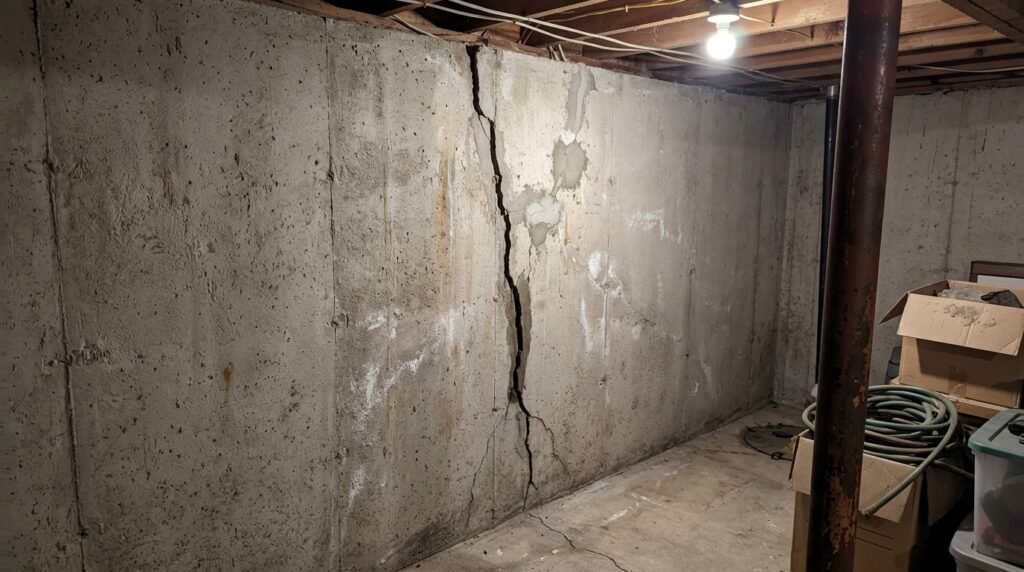
For small, stable, non-structural cracks that are not leaking and have shown no growth over several months, a DIY repair using hydraulic cement or a ready-to-use crack filler can be a reasonable option.
These products are available at most hardware stores and cost between $20 and $100 for the materials needed to fill several small cracks.
However, DIY repair is only appropriate under a specific and narrow set of conditions. If the crack is horizontal, if the wall is bowing, if the crack is wider than 1/4 inch, or if water is actively entering the basement, professional repair is not optional.
Filling a structural crack with surface-only products while ignoring the underlying cause is the equivalent of painting over rust. The problem continues beneath the surface and typically returns larger and more expensive to fix.
When to Call a Structural Engineer
A structural engineer provides an independent assessment that goes beyond what a waterproofing contractor or foundation repair company will typically offer. Engineers have no financial interest in recommending a specific product, which makes their evaluation particularly valuable for serious or ambiguous situations.
You should consult a structural engineer if any of the following conditions are present:
- The wall is visibly bowing or leaning inward
- Multiple cracks have appeared within a short period
- You are preparing to buy or sell a home with known foundation cracks
- A contractor has recommended a repair costing more than $5,000, and you want a second opinion
- Cracks are accompanied by doors or windows that no longer close properly, which suggests whole-house settlement
Structural engineering inspections typically cost between $300 and $700, and that fee is almost always worthwhile given the cost of the repairs being considered.
Preventing Future Cracks in Basement Walls
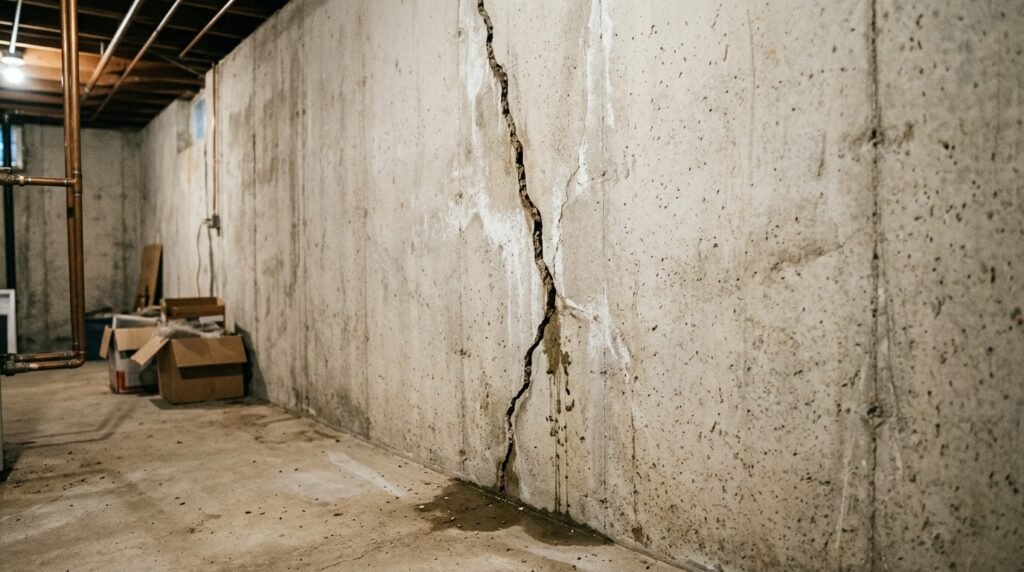
The most cost-effective approach to any crack in a basement wall is preventing new ones from forming. Most basement wall cracks are directly related to water management around the foundation, which means improving drainage is the single most impactful preventive step you can take.
- Keep gutters clean and ensure downspouts direct water at least 6 feet away from the foundation.
- Regrade the soil around your home so the ground slopes away from the foundation at a rate of 6 inches per 10 feet.
- Install a sump pump if your basement is in a high water table area or experiences seasonal flooding.
- Waterproof the exterior foundation wall during any major landscaping or renovation project near the foundation.
- Inspect your basement walls at least twice a year, once in spring after freeze-thaw season and once in fall before winter begins.
Frequently Asked Questions
Is a crack in a basement wall covered by homeowners insurance?
Usually not. Standard homeowners insurance covers sudden and accidental damage but excludes gradual deterioration and foundation settling. Flood insurance may cover water damage resulting from cracks but not the structural repair itself. Always review your specific policy.
How quickly do basement wall cracks worsen?
It varies. A stable shrinkage crack may remain unchanged for decades. A crack caused by active soil pressure or water intrusion can widen measurably within a single season. Monitoring with pencil date marks every 30 days gives you the clearest picture of whether a crack is active or stable.
Can a crack in a basement wall affect my home’s resale value?
Yes, significantly. Buyers and home inspectors take foundation cracks seriously. A repaired crack with a transferable warranty typically has far less impact on resale value than an unrepaired one, because documented repairs show the problem was properly addressed.
Conclusion
A crack in a basement wall ranges from a completely harmless cosmetic issue to a serious structural emergency, and the difference lies in the type, direction, size, and behavior of the crack over time.
Vertical hairline cracks from concrete curing are low concern. Horizontal cracks from soil pressure are high concern and demand professional attention quickly.
The most important things any homeowner can do are monitor cracks actively, address drainage problems around the foundation, and call a professional engineer or contractor the moment a crack shows signs of growth, leaking, or wall movement. Early action is always cheaper than delayed repair.
Related Articles
18 Inch Deep Base Cabinets: A Smart Storage Solution for Every Kitchen
Can Gutter Hangers Prevent Gutter Damage from Roof Avalanche?
Can You Use Ceiling Paint on Walls? The Surprising Benefits and Drawbacks
Pot Lights in Cathedral Ceiling: A Complete Planning and Installation Guide