

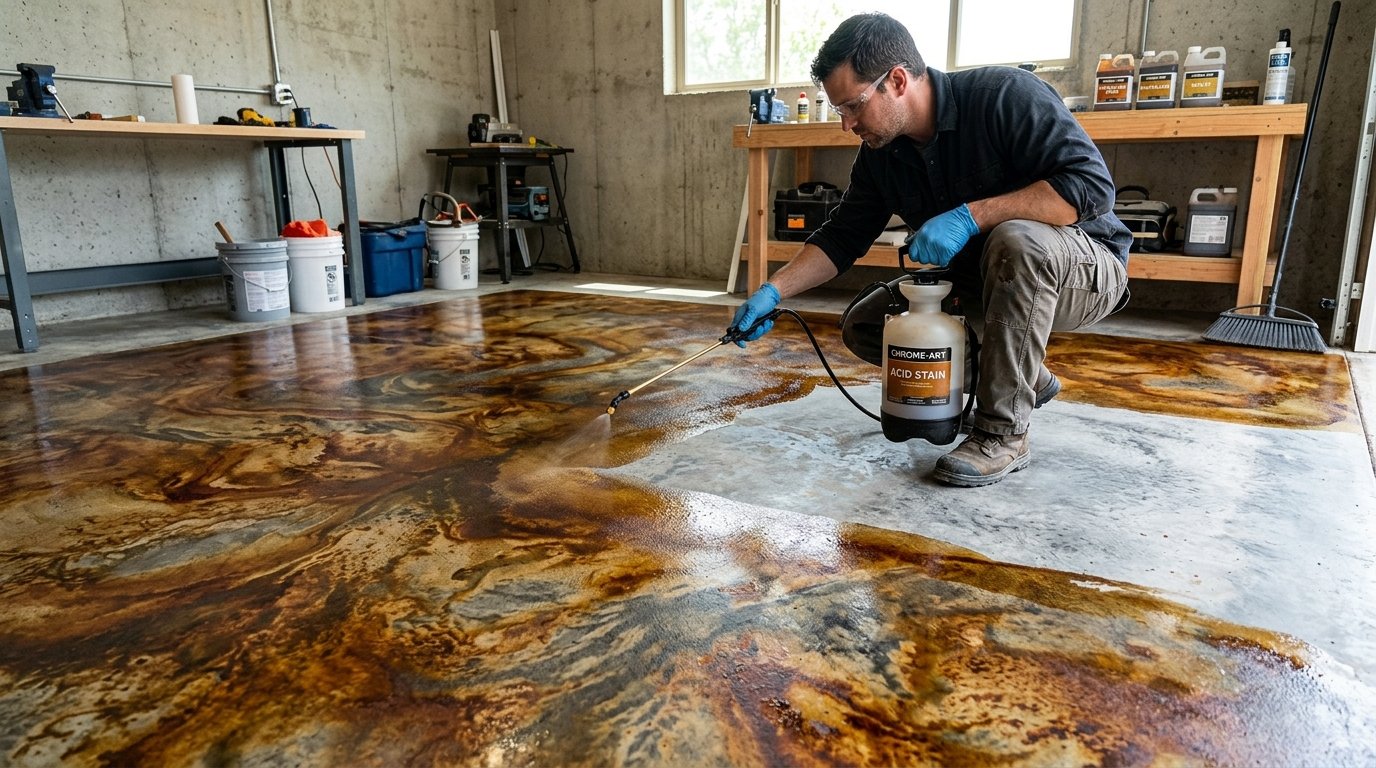

Acid staining concrete floor surfaces has become a popular way to transform plain, gray concrete into a rich, marbled finish that looks like natural stone. Unlike paint or coatings that sit on top of concrete, acid stains chemically react with the surface to create permanent, translucent color variations. This guide explains the entire process along with the benefits and considerations involved.
What Is Acid Staining
Acid staining is a chemical process that uses metallic salts dissolved in an acidic solution to react with the minerals naturally present in concrete. This reaction produces mottled, variegated color tones that give each floor a unique, one-of-a-kind appearance.
How the Chemical Reaction Works
When acid stain is applied to concrete, the acid opens up the surface pores while the metallic salts react with calcium hydroxide found within the concrete itself.
This reaction forms new compounds embedded into the surface, which is why the resulting color becomes a permanent part of the floor rather than a topical layer.
Why It Differs from Paint or Dye
Unlike paint, which simply coats the surface and can peel or chip over time, acid stain becomes chemically bonded to the concrete, making it far more durable.
Concrete dyes, on the other hand, offer more uniform and vibrant colors but lack the natural, translucent variation that acid staining provides.
Popular Color Options for Acid Staining Concrete Floor
Acid stains typically come in earth-tone shades since the coloring depends on the natural chemical reaction rather than added pigments. The table below highlights common color options and their typical appearance.
| Color Name | Typical Appearance | Best Suited For |
| Amber | Warm golden-brown tones | Living rooms, offices |
| Terracotta | Reddish-brown, earthy tones | Patios, rustic interiors |
| Charcoal | Deep gray to black tones | Modern, minimalist spaces |
| Sage | Soft greenish-gray tones | Garden rooms, sunrooms |
Warm Tone Options
Warm-toned stains like amber and terracotta mimic natural materials such as leather or aged stone, creating a cozy and inviting atmosphere. These tones work particularly well in residential spaces where a rustic or traditional look is desired.
Cool Tone Options
Cooler tones such as charcoal and sage are often chosen for modern or industrial-style interiors where a more subdued and contemporary look is preferred. These shades also tend to hide dirt and minor imperfections better than lighter warm tones.
Preparing Concrete for Acid Staining
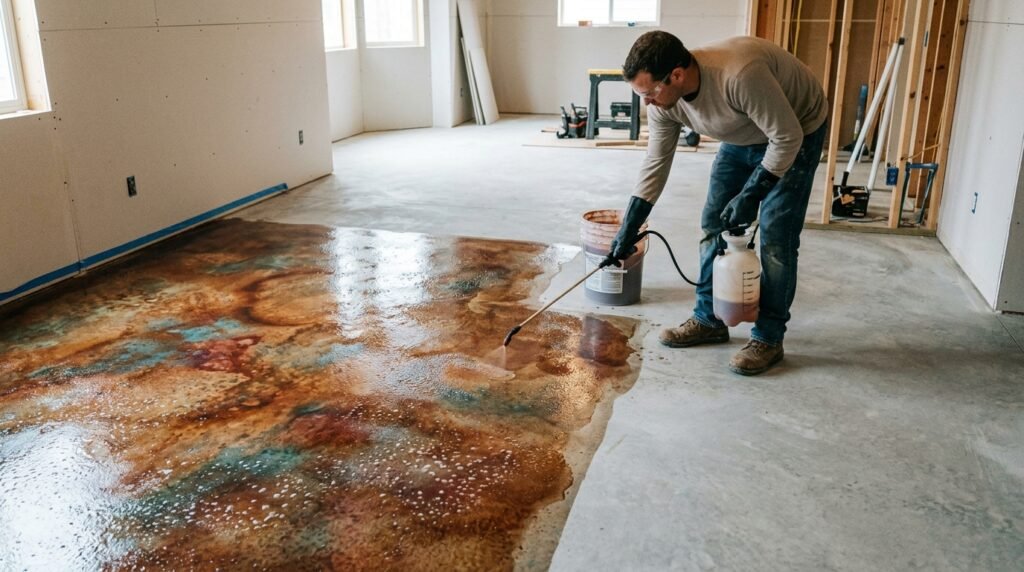
Proper surface preparation is one of the most important steps in achieving a successful acid staining concrete floor project. Skipping or rushing this stage often leads to uneven color absorption and disappointing results.
Cleaning the Surface Thoroughly
Before staining, the concrete must be completely free of grease, sealers, paint, or other contaminants that could block the acid from reacting properly. A degreaser followed by a thorough rinse is typically used to ensure the surface is completely clean and ready for treatment.
Checking for Existing Sealers
Since acid stain needs direct contact with raw concrete to react chemically, any existing sealant must be removed through grinding or chemical stripping. Failing to remove sealers results in patchy, inconsistent coloring since the acid cannot penetrate the surface evenly.
Testing on a Small Area
Because concrete composition varies even within the same slab, testing the stain on a small, inconspicuous area helps predict how the color will develop across the entire floor. This step also allows adjustments to application technique before committing to the full space.
The Acid Staining Process Step by Step
The actual staining process involves several careful steps to ensure even coverage and the desired color outcome. Each stage plays a role in how the final floor will look once completed.
Applying the Acid Stain
The stain is typically applied using a low-pressure sprayer, working in circular motions to encourage natural, marbled patterns to form. Multiple light coats are often preferred over one heavy application, as this allows better control over color depth and variation.
Allowing Reaction Time
After application, the stain needs time to chemically react with the concrete, which usually takes several hours depending on temperature and humidity conditions. During this period, the surface should remain undisturbed to allow the color development process to complete naturally.
Neutralizing and Cleaning Residue
Once the reaction is complete, the surface must be neutralized with a mixture of water and baking soda or ammonia to stop the chemical process and remove any residue. This step is essential, as leftover acid residue can interfere with sealer adhesion later on.
Sealing and Protecting Acid Stained Floors
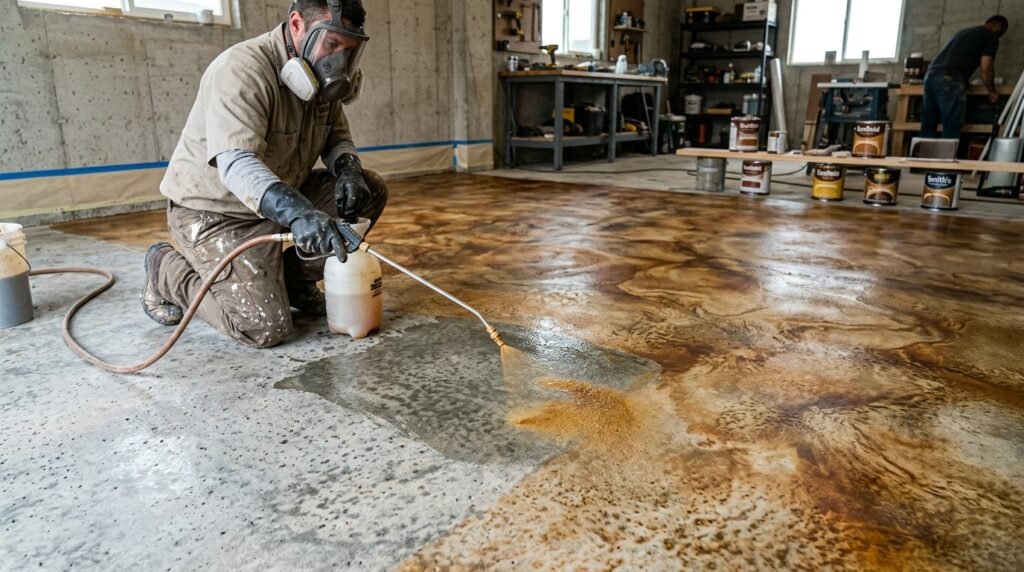
After staining, sealing the concrete is a necessary final step to protect the color and add durability to the finished surface. Without proper sealing, the stained floor remains vulnerable to stains, moisture, and physical wear.
Choosing the Right Sealer
Sealers come in different finishes, including matte, satin, and high-gloss options, each affecting the final appearance of the acid staining concrete floor differently. Epoxy and polyurethane sealers are common choices due to their durability and resistance to foot traffic wear.
Applying Wax for Extra Shine
Some homeowners choose to apply a finishing wax over the sealer to enhance shine and provide an additional layer of protection. This step is optional but can extend the time between resealing while giving the floor a polished, glossy look.
Benefits of Acid Staining Concrete Floor
Acid staining offers several advantages that make it an appealing choice compared to other flooring options. These benefits explain why the technique remains popular for both residential and commercial spaces.
Unique and Natural Appearance
Since the coloring process depends on natural chemical reactions rather than uniform pigments, no two acid-stained floors ever look exactly alike. This creates a distinctive, artistic quality that mass-produced flooring materials simply cannot replicate.
Long-Lasting Durability
Because the stain chemically bonds with the concrete rather than sitting on the surface, it resists peeling, chipping, and fading far better than painted floors. With proper sealing and maintenance, acid-stained concrete can last for decades without needing reapplication.
Cost-Effective Flooring Solution
Acid staining is often more affordable than installing new flooring materials like tile, hardwood, or natural stone, especially in spaces that already have a concrete slab. This makes it a practical option for renovations where existing concrete can simply be enhanced rather than replaced.
Maintenance of Acid Stained Concrete Floors
Maintaining an acid stained concrete floor is relatively simple compared to other flooring types, though a few practices help preserve its appearance long-term. Regular care keeps the surface looking vibrant and well-protected.
Routine Cleaning Practices
Sweeping regularly and mopping with a pH-neutral cleaner helps prevent dirt buildup without damaging the sealer or affecting the stain’s color. Harsh chemical cleaners should be avoided, as they can degrade the protective sealer over time.
Resealing Schedule
Depending on foot traffic and wear, resealing every few years helps maintain the floor’s protective layer and keeps the color looking fresh. High-traffic commercial spaces may require more frequent resealing compared to residential areas with lighter use.
Acid Staining vs Other Concrete Finishing Methods
Comparing acid staining to alternatives like concrete dyes or paint helps clarify why many choose this method for a natural, long-lasting finish. Each option offers different trade-offs in terms of color range, durability, and application complexity.
Acid Staining vs Concrete Dye
Concrete dyes offer a much wider range of vibrant colors and more uniform coverage compared to the earth-toned, variegated look of acid stains. However, dyes typically fade faster under UV exposure, while acid stains remain stable and long-lasting even in sunlit areas.
Acid Staining vs Epoxy Coatings
Epoxy coatings provide a thick, glossy surface with a wide range of color and design options, including metallic finishes. Acid staining, in contrast, offers a more natural, subtle look that highlights the concrete’s inherent texture rather than covering it completely.
Frequently Asked Questions
Is acid staining safe for indoor use?
Yes, acid staining concrete floor projects are safe for indoor use as long as proper ventilation is maintained during application and neutralization.
How long does acid stained concrete last?
With proper sealing and maintenance, acid stained concrete floors can last for several decades without significant fading or damage.
Can acid staining be done on old concrete floors?
Yes, older concrete can be acid stained as long as it is properly cleaned and free of existing sealers or coatings.
Does acid staining work on colored concrete?
Acid staining works best on natural gray concrete, as existing color can interfere with how the chemical reaction develops.
Conclusion
Acid staining concrete floor surfaces offers a unique, durable, and cost-effective way to transform plain concrete into a visually striking finish that mimics natural stone. With proper preparation, application, and maintenance, this technique provides a long-lasting flooring solution that few other methods can match in terms of natural beauty and longevity.
Related Articles
Soft Wash Roof Cleaning: The Safe Way to Clean Your Roof
How Do You Wash Walls Before Painting? (Step-by-Step Guide)
How Much Does It Cost to Waterproof a Basement?
Basement Drainage: Complete Guide to Systems, Costs & Solutions
How to Get Rid of Mold in the Bathroom: Complete Step-by-Step Guide