


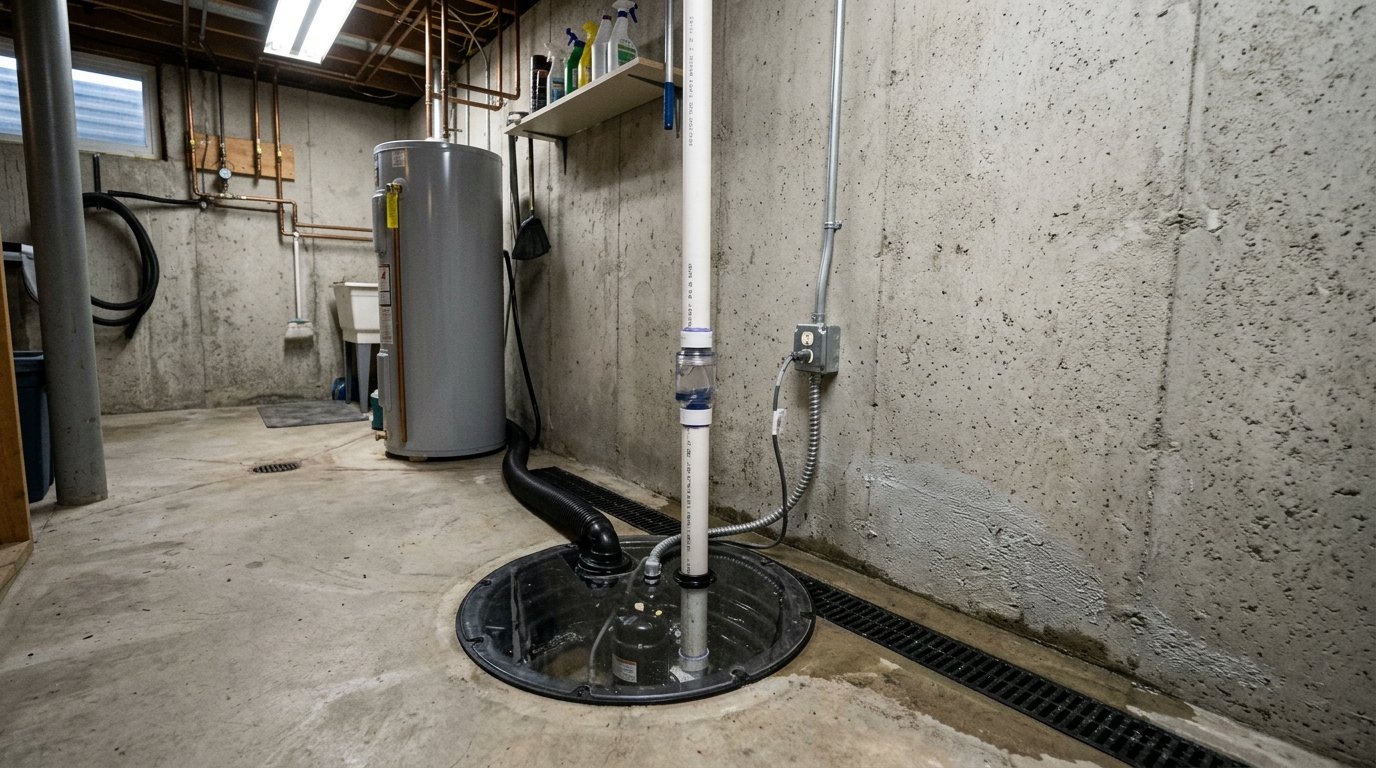

Basement drainage is the foundation of any effective water management strategy for your home. Without a properly functioning drainage system, water has nowhere to go, and it finds its own path, usually through your walls, floor joints, and foundation cracks.
The result is moisture damage, mold growth, structural deterioration, and thousands of dollars in repair costs that could have been avoided.
Understanding how basement drainage works, which systems exist, and what each one costs puts you in a position to make informed decisions rather than reactive ones.
Whether you are dealing with an actively wet basement or simply want to protect a finished space from future water intrusion, this guide covers every aspect of basement drainage clearly and practically.
What Is Basement Drainage and Why Does It Matter?
Basement drainage refers to any system designed to collect, redirect, and remove water from the basement area before it can cause damage.
It is the primary defense against hydrostatic pressure, groundwater seepage, surface water infiltration, and plumbing leaks that accumulate at the lowest point of your home. Without it, even a well-waterproofed basement will eventually succumb to water intrusion because water follows gravity relentlessly.
The reason basement drainage matters beyond the obvious issue of a wet floor is the chain of consequences that water triggers when left unmanaged.
Standing water leads to mold within 24 to 48 hours. Persistent moisture weakens concrete, corrodes steel reinforcement inside foundation walls, and causes wooden framing elements to rot. Over time, the structural integrity of the entire home is at risk. A functional basement drainage system interrupts that chain at the very beginning.
Types of Basement Drainage Systems
There are several distinct types of basement drainage systems, and each one addresses a different source or pattern of water entry. Choosing the right type depends on where your water is coming from, how severe the problem is, and what your long-term goals are for the space.
Interior Drainage Systems
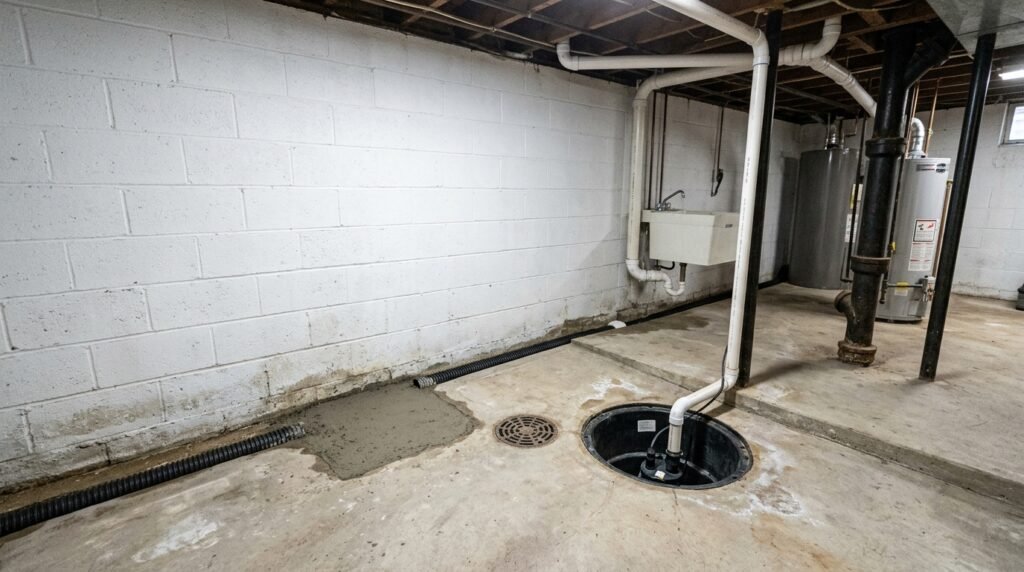
Interior basement drainage systems are installed inside the basement along the perimeter of the floor, typically beneath a thin layer of concrete. They work by capturing water that seeps through the walls or up through the floor and channeling it to a sump pit where a pump expels it away from the home. Interior systems are the most commonly installed solution because they are less disruptive and less expensive than exterior alternatives while still being highly effective for most water intrusion scenarios. They do not stop water from entering the wall itself but manage it so efficiently that no damage occurs.
Exterior Drainage Systems
Exterior basement drainage systems address water before it ever reaches the foundation wall. They involve excavating the soil around the perimeter of the home down to the footing level, applying a waterproof membrane to the exterior wall, and installing a drainage board and perforated pipe that directs water away from the foundation. Because the work happens entirely outside, the basement interior is left untouched during installation. Exterior systems are the most comprehensive solution available but also carry the highest cost and disruption due to the excavation required.
French Drain Systems
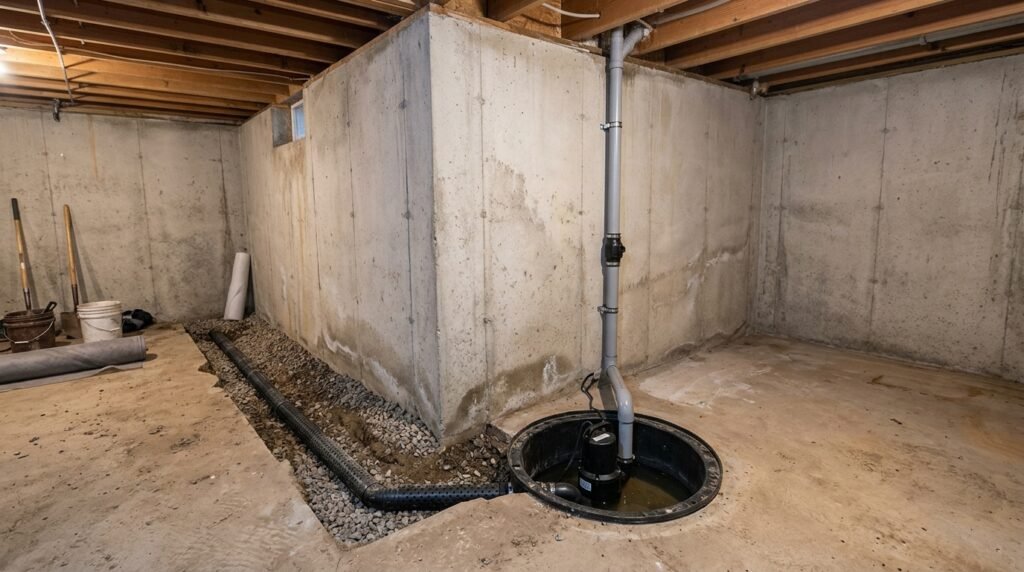
A French drain is a perforated pipe surrounded by gravel that is installed either inside or outside the basement to intercept groundwater before it builds up pressure against the foundation. Interior French drains run along the perimeter of the basement floor and feed into a sump pit. Exterior French drains are buried in a trench around the outside of the foundation and slope away from the home to daylight or a storm drain.
The name often causes confusion because it is applied to both systems, but the principle is the same regardless of location: intercept water underground and redirect it harmlessly away.
Sump Pump Systems
A sump pump is not a drainage system on its own but an essential component of almost every interior basement drainage solution. It sits inside a pit dug into the lowest point of the basement floor and automatically activates when water reaches a certain level, pumping it through a discharge pipe that releases it well away from the foundation.
Without a sump pump, any water collected by an interior drainage system would have nowhere to go. Most professional drainage installations include sump pump installation as part of the package, but the pump can also be added as a standalone upgrade to existing drainage.
Comparison of Basement Drainage Systems
| System Type | Water Source Addressed | Average Cost | Disruption Level | Lifespan |
| Interior Perimeter Drain | Wall seepage, floor seepage | $3,000 – $8,000 | Low to Medium | 20 – 30 years |
| Exterior Drainage System | Groundwater, soil pressure | $8,000 – $20,000+ | High (excavation) | 25 – 50 years |
| French Drain (Interior) | Groundwater, hydrostatic pressure | $3,000 – $8,000 | Low to Medium | 20 – 30 years |
| French Drain (Exterior) | Surface water, groundwater | $5,000 – $15,000 | High | 25 – 40 years |
| Sump Pump Only | Collected water removal | $1,000 – $3,000 | Low | 7 – 10 years per pump |
| Window Well Drain | Window well flooding | $500 – $2,500 | Low | 15 – 25 years |
How Interior Basement Drainage Is Installed
The installation process for an interior basement drainage system follows a structured sequence that most professional contractors complete within one to three days depending on the basement size and complexity.
- Perimeter trenching — Contractors jackhammer a trench approximately 6 to 12 inches wide around the interior perimeter of the basement floor, just where the floor meets the wall.
- Drainage channel placement — A perforated pipe or proprietary drainage channel is laid in the trench at a slight slope, ensuring gravity pulls water toward the sump pit location.
- Gravel bed — The pipe is surrounded and covered with clean washed gravel, which filters debris while allowing water to flow freely.
- Sump pit excavation — A hole is dug at the lowest point of the basement, typically in a corner, and a sump basin is installed to receive all collected water.
- Concrete repour — The trench is covered with fresh concrete that is poured and finished to blend with the existing floor.
- Sump pump installation — A submersible pump is placed inside the pit with a float switch that activates automatically when water levels rise.
- Discharge line routing — A PVC discharge pipe is routed through the wall or up through the rim joist and directed at least 10 feet away from the foundation outside.
Signs Your Basement Needs a Drainage System
Many homeowners wait until visible water damage occurs before considering basement drainage solutions. Recognizing the earlier warning signs allows you to act before damage becomes extensive and expensive.
- Damp or wet spots on basement walls or floors, particularly after rainfall
- White chalky mineral deposits on walls, known as efflorescence, indicating ongoing moisture movement through concrete
- Musty or earthy odors that persist regardless of cleaning or ventilation
- Visible mold or mildew on walls, floor, or stored items
- Peeling paint or bubbling drywall in the basement area
- Rust stains around floor drains or at the base of metal appliances stored in the basement
- Cracks in foundation walls, particularly horizontal ones with moisture around them
- Flooding or standing water following heavy rain or snowmelt
If three or more of these signs are present simultaneously, a professional drainage assessment is overdue. The longer water is allowed to affect a basement without management, the more the repair scope and cost expand.
Basement Drainage Cost Breakdown
Understanding what drives the cost of basement drainage installation helps you evaluate quotes accurately and avoid being overcharged or undersold on a solution that will not last.
| Cost Factor | Details | Typical Range |
| Labor | Per linear foot for perimeter drainage | $30 – $70 per linear foot |
| Sump Pump Unit | Submersible, 1/3 to 1/2 HP | $150 – $500 |
| Battery Backup System | Protects during power outages | $200 – $600 |
| Concrete Repair | Repour after trenching | Included or $500 – $1,500 |
| Discharge Line | PVC pipe routing outside | $100 – $400 |
| Permits | Local municipality requirement | $100 – $500 |
| Mold Remediation (if needed) | Pre-installation treatment | $500 – $6,000 |
The total cost for most interior basement drainage projects in an average-sized home falls between $4,000 and $10,000 when a sump pump and battery backup are included. Exterior projects are considerably more expensive due to excavation equipment, labor hours, and the volume of materials involved.
Sump Pumps: The Heart of Any Basement Drainage System
A sump pump is the active component that makes any passive collection system functional. Water that flows into the drainage channel or pit must be actively expelled, and that is exactly what a sump pump does around the clock whenever water is present.
Submersible vs. Pedestal Sump Pumps
Submersible pumps sit entirely inside the sump pit submerged in water, which keeps them quieter and generally more powerful than pedestal models.
They are the preferred choice for most residential basement drainage applications. Pedestal pumps have the motor mounted above the pit on a stand, which makes them easier to service but louder in operation and less capable of handling high water volumes.
Submersible pumps cost between $150 and $400, while pedestal models run $100 to $200, but the submersible option is worth the premium for most homeowners.
Battery Backup Sump Pumps
The most dangerous time for a basement is during a heavy storm, which is precisely when power outages are most likely to occur.
A battery backup sump pump is a secondary unit that activates automatically if the primary pump fails or loses power. It connects to a dedicated battery that provides several hours of pumping capacity during an outage.
For any finished basement or home in a flood-prone area, a battery backup is not optional. It adds $200 to $600 to the project but can prevent tens of thousands of dollars in flood damage during a single storm event.
Maintaining Your Basement Drainage System
Even the best-installed basement drainage system requires routine maintenance to function at full capacity over its intended lifespan. Neglected systems become clogged with sediment, mineral deposits, and debris, which reduces their effectiveness and can lead to pump burnout or drainage channel blockage.
- Test your sump pump quarterly by pouring water into the pit and confirming the float switch activates and the pump expels water through the discharge line.
- Clean the sump pit annually by removing the pump, rinsing the pit, and clearing any sediment or debris that has accumulated.
- Check the discharge line seasonally, particularly in early spring, to confirm it is not blocked by ice, debris, or soil shifting.
- Inspect the drainage channel if accessible for any visible signs of clogging or concrete damage around the channel opening.
- Replace sump pump every 7 to 10 years proactively rather than waiting for failure during a storm event.
- Ensure the battery backup is charged and test it at least once per year by disconnecting the primary pump and running the backup unit.
DIY Basement Drainage vs. Professional Installation
For minor surface drainage improvements like regrading soil, cleaning window well drains, or extending downspouts, DIY work is entirely reasonable and cost-effective.
However, interior perimeter drainage systems and sump pump installations involve concrete demolition, precise slope calculations, and waterproofing integration that make professional installation the strongly preferred approach for most homeowners.
A poorly sloped drainage channel will not move water to the sump pit effectively. An undersized sump pit fills too quickly and causes pump burnout. Discharge lines routed incorrectly can return water to the foundation they are supposed to protect.
These are not problems a contractor warranty covers when the work was self-performed, and correcting a failed DIY drainage attempt typically costs more than a professional installation would have cost originally.
Frequently Asked Questions
How long does a basement drainage system last?
A professionally installed interior perimeter drainage system typically lasts 20 to 30 years with proper maintenance. The sump pump itself should be replaced every 7 to 10 years, and the battery backup battery requires replacement every 3 to 5 years depending on usage and discharge cycles.
Can basement drainage systems handle heavy rainfall?
Yes, if properly sized. A quality submersible sump pump rated at 1/2 HP with a battery backup can handle significant water volumes. Homes in areas with heavy seasonal rainfall or high water tables may benefit from a two-pump system for redundancy during extreme events.
Does a basement drainage system increase home value?
It does, particularly when the work is documented and transferable warranties are provided to the buyer. A dry, protected basement is a meaningful selling point, and buyers are far more confident purchasing a home where water management has been professionally addressed rather than ignored.
Is basement drainage the same as waterproofing?
They are related but not identical. Waterproofing prevents water entry through membranes, sealants, and coatings. Basement drainage manages water that does enter or accumulates underground, redirecting it safely away. The most complete protection combines both approaches together.
Conclusion
Basement drainage is not a luxury upgrade but a practical necessity for any home where water management is a concern, which includes the vast majority of residential properties. The right system depends on where your water is coming from, how severe the problem is, and your budget. Interior perimeter drainage with a sump pump and battery backup handles most residential scenarios effectively and at a reasonable cost.
Exterior systems offer the most comprehensive protection but require a larger investment. Whatever system you choose, professional installation with a transferable warranty and a consistent maintenance schedule ensures your basement stays dry for decades and your home’s foundation remains structurally sound.
Related Articles
486 Gelney Kitchen Exhaust Hood System: How It Works and Why It Matters
Roof Leaks in Heavy Rain: Causes, Signs & Fixes
How to Clean Shower Tiles: Step-by-Step Guide for a Spotless Bathroom
486 Gelney Kitchen Exhaust Hood System: How It Works and Why It Matters




