

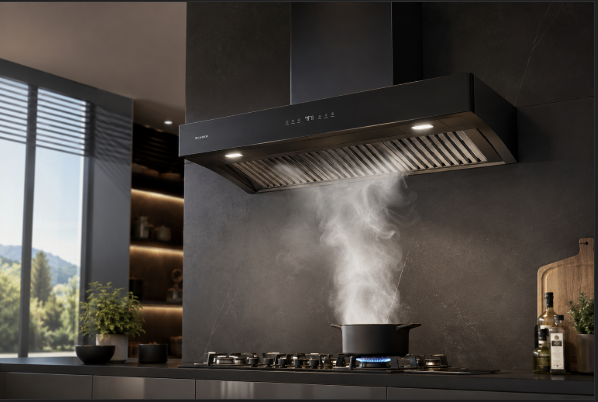

A kitchen without proper ventilation quickly becomes uncomfortable — filled with smoke, grease mist, and strong cooking odours. The 486 Gelney kitchen exhaust hood system is built specifically to solve this problem by managing air quality at the source. Understanding how this system operates helps you use it correctly, maintain it well, and get the best performance over time.
How the 486 Gelney Kitchen Exhaust Hood System Controls Kitchen Air
The 486 Gelney kitchen exhaust hood system works on a straightforward but highly effective principle: it creates controlled negative pressure above the cooking surface, which pulls contaminated air upward before it has a chance to spread across the room. Rather than waiting for smoke to fill the kitchen, the system captures it at the point of origin.
The Physics Behind Air Capture
When cooking begins, heat naturally causes air to rise. Smoke, steam, and grease particles travel upward in this thermal column. The exhaust hood is positioned directly above the stove to intercept this rising airflow. The moment the hood is switched on, the internal motor creates suction that strengthens this upward movement and draws everything into the system’s intake area.
This means the hood works with natural air behaviour, not against it, making the entire process energy-efficient and highly responsive to cooking intensity.
How the Motor Controls Airflow Speed
The motor is the central component that determines how aggressively air is pulled into the hood. At lower settings, it maintains a gentle and consistent draw suitable for simmering or boiling. At higher settings, it generates stronger suction needed during frying or grilling when smoke production increases rapidly.
The speed selection directly affects both performance and noise output, which is why most units offer two to three speed levels rather than a single fixed mode.
Why Airflow Direction Matters Inside the Hood
Once air enters through the hood’s intake, its path inside the unit is carefully designed to slow down the flow slightly before it reaches the filters. This reduction in speed is intentional — it allows heavier grease particles to separate from lighter air molecules through a process similar to gravity-assisted settling.
If air moved too fast through the entire system without this change in velocity, grease would bypass the filters and coat the internal motor components, leading to mechanical damage over time.
Filtration Stages in the 486 Gelney Kitchen Exhaust Hood System
The filtration system is what separates a basic fan from a proper kitchen ventilation unit. The 486 Gelney kitchen exhaust hood system uses multiple filtration layers to process air effectively before it is either exhausted outside or recirculated into the kitchen.
| Filtration Stage | Function | Maintenance Requirement |
| Grease mesh filter | Traps oil particles from cooking smoke | Clean every 2–4 weeks |
| Baffle plates (if present) | Redirects airflow to increase grease separation | Monthly inspection |
| Carbon/activated charcoal filter | Absorbs odours in recirculating models | Replace every 3–6 months |
| Motor housing barrier | Protects fan from residual grease | Annual deep clean |
Grease Filter Layer and Its Role
The grease filter is the first line of defence. It is typically constructed from aluminium mesh or stainless steel baffle panels, both of which are designed to allow airflow while physically blocking oil droplets. As air passes through the mesh, grease sticks to the surface and accumulates over time.
When these filters become heavily coated, the restriction in airflow forces the motor to work harder, which increases electricity consumption and reduces suction noticeably. Cleaning them regularly is not optional if you want consistent performance.
Odour Control Through Carbon Filtration
In kitchens where the exhaust hood does not vent outside through a duct, carbon filtration becomes essential for controlling cooking smells. Activated carbon works by adsorbing odour molecules onto its surface as air passes through. Unlike grease filters that can be washed and reused, carbon filters absorb until they are saturated and then need full replacement.
Ignoring this replacement schedule means the recirculated air carries more and more odour back into the kitchen, defeating the purpose of the system entirely.
How Clean Filters Directly Affect Suction Power
A clogged filter does not just slow airflow — it creates back pressure inside the hood, which forces the motor to compensate. Over time, this extra strain heats up the motor unnecessarily and shortens its operational lifespan.
A well-maintained filter set allows air to flow freely, keeps the motor running at designed capacity, and ensures that the 486 Gelney kitchen exhaust hood system delivers the suction it was built to provide.
Two Operating Modes of the 486 Gelney Kitchen Exhaust Hood System
One of the most important aspects of this system is that it can operate in two fundamentally different ways depending on how it is installed. The choice between these modes affects both performance and kitchen design requirements.
Ducted (External Venting) Mode: In this configuration, air captured by the hood travels through a duct pipe that leads outside the building. This completely removes smoke, grease particles, and odours from the indoor environment. It is the most effective method available and requires no odour filtration inside the unit because air is not recirculated.
The limitation is that duct installation requires structural planning and may not always be possible in every kitchen layout.
Ductless (Recirculating) Mode: In this setup, there is no external pipe. Air is drawn in, cleaned through grease and carbon filters, and then released back into the kitchen. This makes installation far simpler and more flexible in apartment kitchens or spaces where external ducting is not an option.
However, it relies heavily on high-quality carbon filters and a strict maintenance schedule. Without proper filter replacement, odour control degrades significantly over time.
Correct Installation and Its Effect on System Performance
Even the highest-quality exhaust hood delivers poor results if it is installed incorrectly. The 486 Gelney kitchen exhaust hood system has specific placement requirements that must be respected to achieve its rated performance.
The recommended installation height above a gas stove is typically between 65 and 75 centimetres, while above an electric or induction cooktop it can be slightly higher at 75 to 85 centimetres. Installing the hood too high creates a gap that allows smoke to disperse sideways before reaching the intake, reducing capture efficiency noticeably.
Duct routing also plays a major role. Every bend added to the duct path increases airflow resistance. A straight, short duct path performs better than a long, bent one of the same diameter. Using the correct duct diameter as specified in the product manual prevents bottlenecks that reduce suction at the hood opening.
Maintenance Schedule to Keep the System Running Efficiently
Long-term performance of the 486 gelney kitchen exhaust hood system depends entirely on how consistently it is maintained. Neglect leads to reduced airflow, increased energy consumption, motor wear, and eventually a complete loss of effective ventilation.
The following maintenance routine covers all key areas:
- Weekly wipe-down of the hood exterior and underside to prevent grease build-up on visible surfaces.
- Grease filter cleaning every 2 to 4 weeks using warm water and a degreasing agent, or dishwasher cleaning where the filter material allows.
- Monthly inspection of the fan blades for visible grease coating that may cause imbalance and increased noise.
- Carbon filter replacement every 3 to 6 months in ductless systems, depending on cooking frequency and intensity.
- Annual motor housing inspection to check for grease accumulation near the fan shaft that may affect rotation speed.
Energy Consumption and Smart Usage of the System
The 486 Gelney kitchen exhaust hood system is designed to operate efficiently across different power settings, which means how you use it has a direct effect on your electricity bill and system longevity.
Running the hood at maximum speed continuously when light cooking does not require it wastes energy and accelerates filter loading. The correct approach is to match the fan speed to the actual cooking activity.
Light cooking tasks such as reheating or gentle simmering work well on low speed. Medium settings handle everyday frying, while high speed should be reserved for heavy grilling, wok cooking, or any situation involving large amounts of smoke or steam.
Turning the hood on a minute before cooking begins and letting it run for a few minutes after cooking ends also improves performance because it clears residual steam and odours from the air while the thermal column above the stove is still active.
Safety Benefits That Go Beyond Air Quality
The protective value of the 486 Gelney kitchen exhaust hood system extends beyond comfort and air quality. Kitchens that cook regularly without ventilation accumulate grease on surfaces over time — walls, cabinets, and ceiling areas closest to the stove.
This build-up is not just a cleaning problem. Accumulated grease near heat sources increases fire risk, and it degrades painted and finished surfaces permanently over time.
By capturing grease particles at the source before they settle anywhere in the kitchen, the system provides a practical layer of fire prevention. It also protects cabinetry finishes, reduces the frequency of deep kitchen cleaning, and maintains a healthier breathing environment for everyone who spends time in the kitchen.
Common Signs That the System Needs Attention
When the 486 gelney kitchen exhaust hood system is not performing as expected, the issue usually points to one of a few predictable causes rather than a mechanical failure.
- Reduced suction despite the motor running at high speed almost always indicates clogged grease filters that are restricting airflow.
- Increased noise at standard operating speeds suggests grease build-up on fan blades causing rotational imbalance.
- Persistent cooking odours in a ductless system signal that the carbon filters are saturated and need replacement.
- Visible smoke spreading sideways past the hood instead of being captured points to either an installation height problem or severely restricted airflow from dirty filters.
Addressing these signs promptly extends the system’s operational life and prevents more serious issues from developing.
FAQs
1. What is the main purpose of the 486 Gelney kitchen exhaust hood system?
The main purpose of this system is to remove smoke, grease particles, and cooking odors from the kitchen. It captures contaminated air directly above the cooking area, keeping the kitchen environment clean, fresh, and comfortable.
2. Can this system be installed in any type of kitchen?
Yes, but it depends on the installation mode. If external ducting is possible, a ducted system works best. In apartments or enclosed spaces where ducting is not possible, the ductless (recirculating) mode is used instead.
3. How often should the filters be cleaned or replaced?
Grease filters should be cleaned every 2 to 4 weeks depending on usage. In ductless systems, carbon filters should be replaced every 3 to 6 months to maintain proper odor control and airflow efficiency.
4. Why is the suction power of the exhaust hood reduced?
Reduced suction is usually caused by clogged grease filters. In some cases, grease buildup on fan blades or duct blockage can also restrict airflow, leading to weaker performance.
5. Does the exhaust hood consume a lot of electricity?
No, it is generally energy-efficient when used correctly. Using low or medium speed for normal cooking and reserving high speed for heavy smoke situations helps control electricity consumption and improves long-term performance.
Final Thoughts
The 486 Gelney kitchen exhaust hood system is a simple ventilation solution that works through airflow, filtration, and correct installation. It doesn’t rely on complex technology but on basic physical principles. When used and maintained properly, it ensures a cleaner, safer, and more comfortable kitchen environment every day.
Related Articles
Joist Tape for Decking: The Complete Guide to Protecting Your Deck’s Substructure
How to Clean Vinyl Floors: The Complete Step-by-Step Guide
Kitchen Chopping Block Table: Complete Guide, Types, Benefits, Care & Buying Tips