

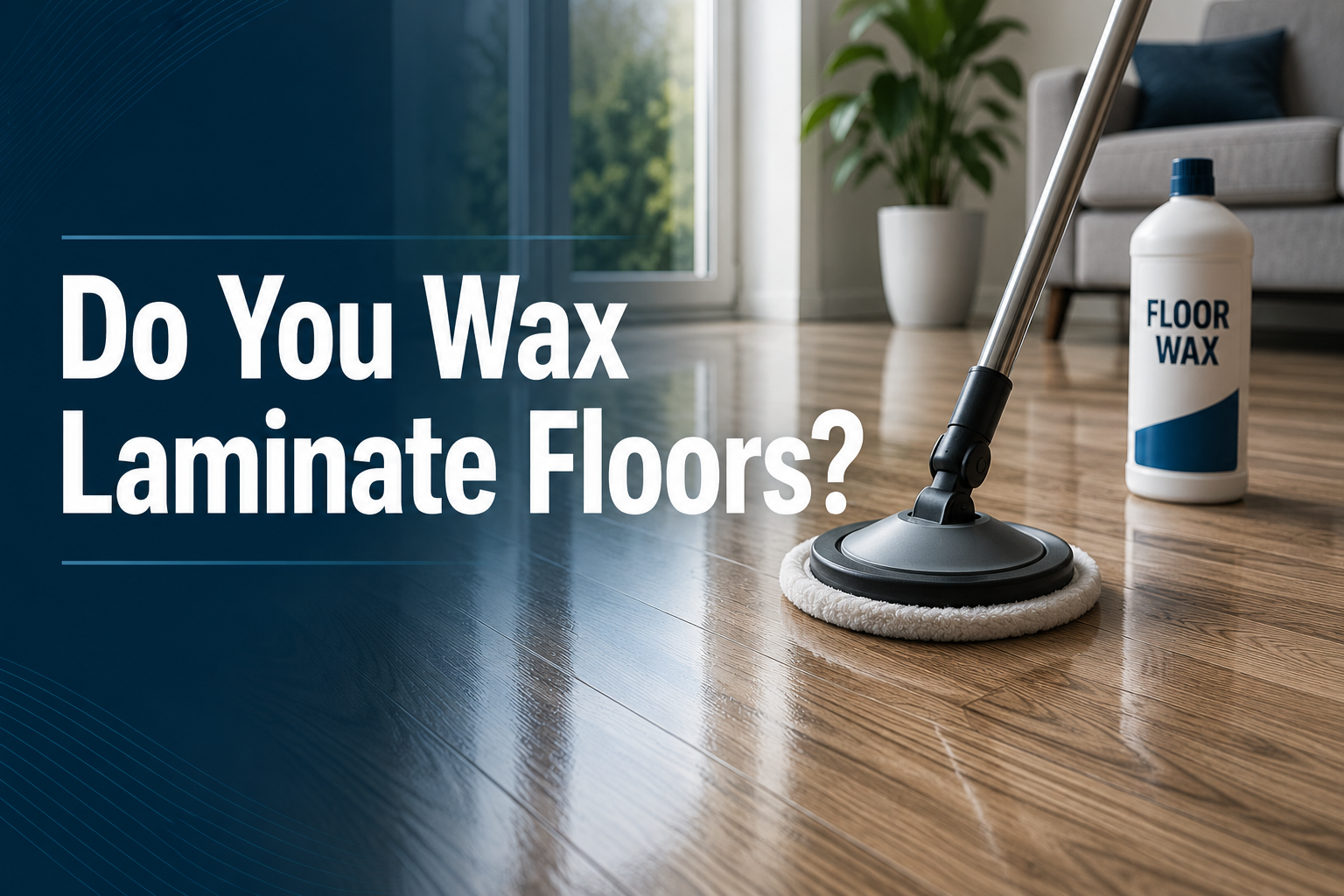

If you’re asking whether you wax laminate floors, the short answer is no — and applying wax is one of the fastest ways to damage a laminate floor rather than protect it. Laminate is manufactured with a factory-sealed wear layer that’s meant to be cleaned, not coated, and wax sits on top of that layer instead of soaking in or bonding to it. The result is usually a hazy, sticky, or slippery floor rather than the glossy finish homeowners are hoping for.
This guide goes beyond the basic “don’t wax it” advice you’ll find elsewhere. Below, you’ll learn exactly why wax and laminate don’t mix, what to do if your floor already looks dull, how to remove wax if someone already applied it, and the specific products and routines that keep laminate looking new for years.
Why You Don’t Wax Laminate Floors
To understand why waxing backfires, it helps to know what laminate flooring is actually made of. Laminate isn’t solid wood — it’s a manufactured product built from four layers fused together under heat and pressure:
- A backing layer that adds stability and moisture resistance
- A high-density fiberboard (HDF) core for structural strength
- A decorative image layer — a high-resolution photograph of wood, stone, or tile
- A wear layer, typically made of melamine resin or aluminum oxide, that’s sealed at the factory to resist scratches, stains, and fading
That wear layer is the key. It’s non-porous and already glossy right out of the box — it doesn’t have the open wood grain that hardwood floors have, which is what allows traditional floor wax to soak in, harden, and build a protective sheen over time. Wax has nowhere to go on laminate, so it just sits on the surface. Over days and weeks, that leftover film:
- Builds up in cloudy, uneven layers instead of curing into a clean coat
- Attracts and traps dirt, dust, and pet hair, making floors look dirtier faster
- Creates a slippery surface, which is a real safety hazard on high-traffic floors
- Can void your flooring’s manufacturer warranty, since most laminate warranties explicitly exclude damage caused by wax, polish, or oil-based cleaning products
In short, wax doesn’t add protection to laminate — the factory finish is already doing that job.
What to Use Instead of Wax on Laminate Floors
If your goal is a cleaner, shinier floor, skip the wax aisle and reach for these instead:
1. A pH-Neutral, Laminate-Specific Cleaner
Look for cleaners labeled specifically for laminate flooring. These are formulated to lift dirt without leaving residue or breaking down the wear layer’s finish. Avoid all-purpose cleaners, oil soaps, and anything marketed for wood floors — they’re built for a completely different surface.
2. A Laminate Floor “Shine Restorer” or “No-Wax Polish”
If your laminate floor genuinely looks dull, the product you want is a no-wax laminate floor polish or shine restorer, not traditional floor wax. These are thin, water-based formulas designed to sit safely on sealed laminate surfaces without the buildup and stickiness that regular wax causes. Apply sparingly and always test in a small, hidden area first.
3. A Microfiber Flat Mop
Microfiber traps fine dust and grit far more effectively than a traditional string mop, and it won’t scratch the surface. A dry microfiber mop for daily dust control and a barely-damp one for weekly cleaning covers most maintenance needs.
How to Clean and Maintain Laminate Floors the Right Way
A consistent, simple routine does more for your floor’s appearance than any wax ever could.
Daily and Weekly Care
- Sweep or dust-mop daily in high-traffic areas to prevent grit from grinding into the surface underfoot.
- Vacuum weekly using the bare-floor or hard-floor setting so the beater bar doesn’t scratch the finish.
- Damp-mop weekly with a well-wrung microfiber mop and a laminate-approved cleaner — never a soaking-wet mop.
Monthly Deep Cleaning
- Mix a laminate-specific cleaner (or a teaspoon of unscented dish soap per gallon of water) and mop lightly, drying immediately with a clean microfiber towel.
- Avoid steam mops for regular use; the heat and moisture can seep into the seams and cause swelling over time, even though laminate resists everyday spills.
What to Avoid
- Wax, polish, or oil-based furniture cleaners
- Vinegar or ammonia-based solutions, which can dull the finish over time
- Steel wool, scouring pads, or abrasive scrub brushes
- Excess standing water of any kind
How to Remove Wax If It’s Already on Your Laminate Floor
If wax was applied before you knew better — a common scenario in older homes or after a well-meaning DIY project — it can be removed without replacing the flooring.
- Mix a mild solution of warm water with a few drops of dish soap.
- Damp-mop the affected area, letting the solution sit for one to two minutes to loosen the wax.
- Wipe with a clean microfiber cloth, applying light pressure in small sections rather than scrubbing the whole floor at once.
- Rinse with a barely damp mop of plain water to remove any soap residue.
- Dry immediately with a clean towel to prevent moisture from sitting on the seams.
- Repeat as needed for stubborn buildup — for heavier wax layers, a specialty “floor wax remover” safe for laminate can help, but always spot-test first.
If the finish looks scratched or hazy even after the wax is gone, that usually means the wear layer itself was damaged, and a shine restorer (mentioned above) is your best next step.
Laminate vs. Hardwood vs. Vinyl: Why the Confusion Happens
Much of the “should I wax my floor” confusion comes from mixing up flooring types that look similar but require completely different care.
| Flooring Type | Wax It? | Why |
|---|---|---|
| Laminate | No | Factory-sealed wear layer; wax sits on top and causes residue |
| Solid Hardwood (unfinished/oil-finished) | Sometimes | Porous wood can absorb and hold traditional wax |
| Luxury Vinyl Plank (LVP) | No | Sealed wear layer similar to laminate; wax causes the same buildup issues |
| Prefinished Hardwood | Rarely | Factory finish usually makes wax unnecessary and potentially damaging |
If you’re not sure what’s underfoot, check the manufacturer’s care guide or the original purchase paperwork before applying anything — the wrong product on the wrong floor is the single biggest cause of avoidable flooring damage.
Frequently Asked Questions
Do you wax laminate floors to make them shinier? No. Waxing doesn’t improve shine on laminate — it often causes streaking, haze, or a slippery film. For a shinier floor, use a no-wax laminate polish designed specifically for sealed surfaces.
Can you use Murphy Oil Soap on laminate floors? It’s not recommended. Oil-based cleaners like Murphy Oil Soap are formulated for wood and can leave a dull, streaky residue on laminate’s sealed wear layer.
Why does my laminate floor look dull even after cleaning? Dullness is usually caused by cleaner residue buildup, oil-based products, or fine surface scratches from grit and dirt. Switching to a pH-neutral laminate cleaner and a microfiber mop typically restores the shine within a few cleanings.
Is it safe to use a Swiffer WetJet on laminate floors? Yes, as long as you use the laminate-safe cleaning solution and avoid oversaturating the floor. Excess liquid is the main risk with any wet-mopping tool on laminate.
Will waxing void my laminate flooring warranty? In many cases, yes. Most laminate manufacturers exclude damage caused by wax, polish, or oil soap from their warranty coverage, so it’s worth checking your specific product’s care guide before using anything beyond water and a manufacturer-approved cleaner.
How often should I deep clean laminate floors? Most homes do well with a deep clean every two to four weeks, though high-traffic households or homes with pets may need it weekly.
Final Thoughts
So, do you wax laminate floors? No — and now you know exactly why: the sealed wear layer that makes laminate durable and low-maintenance is also what makes wax counterproductive, leading to residue, slipperiness, and even voided warranties. The good news is that keeping laminate looking its best doesn’t require wax at all.
A simple routine of regular sweeping, weekly microfiber mopping, and an occasional laminate-specific shine restorer will keep your floors looking new for years — no wax, buffing, or specialty equipment required.
If your laminate floors are already looking dull, scratched, or sticky from a past waxing mistake, start with the wax-removal steps above, then switch to a laminate-approved cleaning routine going forward. Your floors — and your warranty — will thank you.
Related Articles
How to Clean and Store Kitchen Tools: The Complete Guide
How Deep Are Kitchen Counters? Standard Depths for Every Counter Type
How to Build Sloped Basement Doors: Step-by-Step Guide
Kitchen Chopping Block Table: Complete Guide, Types, Benefits, Care & Buying Tips