Tin roofing sheets are popular for their light weight and durability, but cutting them the wrong way can waste material and weaken the finished roof. This guide walks through practical methods to cut tin roofing sheets neatly, along with the tools and safety steps that make the job easier for both beginners and professionals.
Understanding Tin Roofing Before Cutting
Tin roofing sheets are usually thin and lightweight compared to other metal roofing types, which makes them easier to cut but also easier to bend accidentally. Knowing the sheet thickness and coating type before starting helps you pick the right cutting approach.
Checking Sheet Thickness
Thinner tin sheets can be cut with simple hand tools, while thicker gauges may need a powered cutting tool for a smooth result. Always check the gauge number printed on the sheet packaging or supplier invoice before choosing your tool.
Identifying the Coating Type
Most tin roofing has a galvanized or painted finish that protects it from rust, and this layer should be kept intact during cutting. Rough cutting methods can peel or crack this coating, which shortens the life of the roofing sheet.
Best Tools for Cutting Tin Roofing
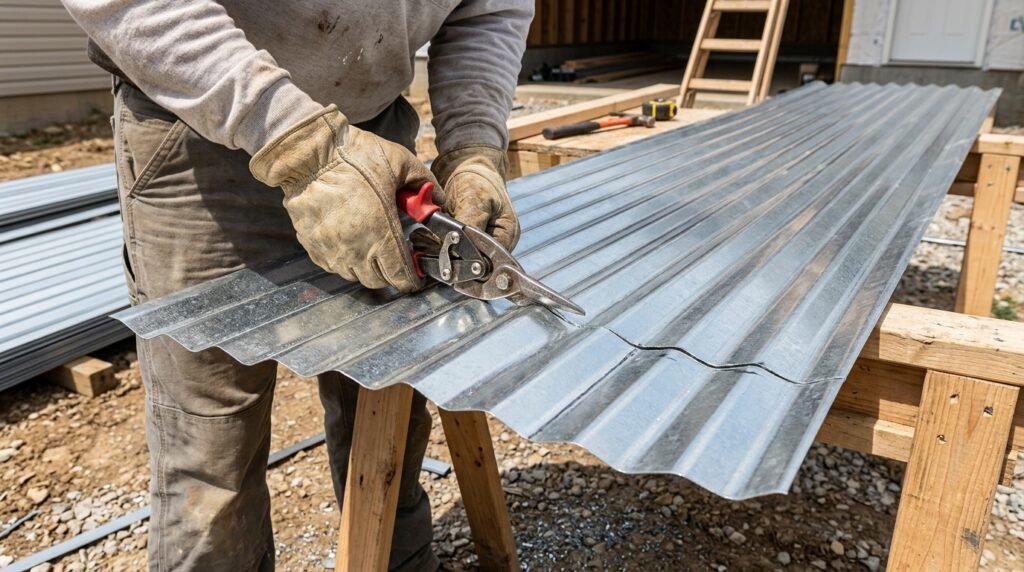
Selecting the correct tool for tin roofing depends on the sheet thickness, the shape of the cut needed, and how quickly the job needs to be finished. Below are the most common tools used by roofers for this task.
Aviation Snips for Precision Trimming
Aviation snips come in straight, left, and right-cutting versions, making them ideal for detailed trims and curved cuts. They are manual tools, so there is no risk of heat damage to the tin sheet’s protective coating.
Electric Shear Tool for Fast Cutting
An electric shear tool is designed specifically for cutting thin metal sheets quickly while leaving a smooth, burr-free edge. It works well for large tin roofing projects where speed and consistency are important.
Circular Saw with Metal Blade
A circular saw fitted with a fine-tooth metal blade can handle long, straight cuts across large tin sheets in a short amount of time. Proper blade selection is important here, as a wood-cutting blade will tear and damage the tin instead of slicing cleanly.
Angle Grinder with Thin Cutting Wheel
An angle grinder works fast on tin roofing but produces sparks that can scorch the coating near the cut line. This tool is more suitable for rough cuts in areas that will later be hidden under flashing or trim.
Utility Knife for Very Thin Tin Sheets
For extremely thin tin sheets, scoring the surface with a utility knife and then bending along the line can create a clean break. This method works only on light-gauge tin and is not suitable for thicker roofing panels.
Tool Comparison Table for Cutting Tin Roofing
The table below summarizes the strengths of each tool so you can match the right one to your specific tin roofing project.
| Tool | Best Use Case | Speed | Edge Finish |
| Aviation Snips | Detailed and curved cuts | Slow | Smooth |
| Electric Shear | Large straight or curved cuts | Fast | Very smooth |
| Circular Saw | Long straight cuts | Fast | Smooth with right blade |
| Angle Grinder | Rough or hidden cuts | Very Fast | Rough |
| Utility Knife | Thin gauge tin sheets | Slow | Clean if scored well |
Step-by-Step Method to Cut Tin Roofing
Following an organized process reduces waste and helps achieve accurate cuts on every sheet. This section covers the full process from marking to finishing the cut edge.
Marking the Cutting Line
Use a chalk line or marker along with a straight edge to mark the exact cutting path on the tin sheet. Double-check all measurements against the roof layout before cutting to avoid wasting material.
Securing the Tin Sheet
Place the sheet on a flat, stable surface and clamp it down so it cannot shift or vibrate while being cut. Support both sides of the cutting line so the metal does not sag or bend as the cut progresses.
Performing the Cut
Move the cutting tool steadily along the marked line, keeping consistent pressure and avoiding sudden jerky movements. Rushing the cut often leads to wandering lines and uneven edges that are hard to fix afterward.
Smoothing the Cut Edge
File down any sharp burrs left along the edge to make the sheet safer to handle and install. Apply a small amount of matching paint or sealant on the cut edge to protect the exposed metal from rust.
Safety Measures When Cutting Tin Roofing
Tin roofing has sharp edges once cut, and power tools add further risk, so safety gear and careful handling are essential throughout the job.
Using Protective Equipment
Wear thick gloves, safety glasses, and long sleeves to guard against sharp edges and flying metal shavings. Hearing protection is also recommended when working with loud power tools like grinders or shears.
Controlling Sparks and Heat
Keep the cutting area clear of flammable materials, especially when using an angle grinder that throws hot sparks. Work in a well-ventilated space if cutting indoors to avoid breathing in metal dust.
Safe Handling of Cut Pieces
Freshly cut tin edges can slice skin easily, so always carry sheets with gloves and avoid sliding your hand along the edge. Stack offcuts neatly and away from walking paths to prevent accidental injuries on the job site.
Mistakes to Avoid While Cutting Tin Roofing
Small errors during cutting can lead to bigger problems once the roofing is installed, so it helps to know what to watch out for.
Choosing the Wrong Blade Type
Using a blade meant for wood or plastic on tin roofing causes tearing, overheating, and a poor-quality cut. Always confirm the blade or disc is rated specifically for thin sheet metal before starting.
Ignoring Sheet Support
Cutting a sheet without proper support underneath causes it to flex, resulting in a wavy and inaccurate cut line. Always place support directly beneath the cutting path, not just at the sheet’s outer edges.
Not Cleaning Metal Shavings
Leftover metal shavings on the sheet surface can rust and leave permanent stains if not cleaned off right after cutting. A quick wipe down or magnetic sweep after each cut keeps the surface looking new.
How This Guide Compares to Other Resources
Many existing articles on tin roofing cuts only mention one or two tools without explaining when each one is actually useful for different sheet thicknesses. This guide addresses that gap by pairing tool choice with sheet thickness, coating care, and a complete finishing process that most competing guides leave out.
Frequently Asked Questions
What is the easiest way to cut tin roofing sheets?
Aviation snips are the easiest option for most homeowners since they require no power source and give good control.
Can tin roofing be cut with a regular saw?
A regular wood-cutting blade will damage tin roofing, so a metal-specific blade must be used instead.
Is it necessary to seal the edges after cutting tin roofing?
Yes, sealing exposed edges with paint or sealant prevents rust from forming over time.
Does cutting tin roofing require any special safety gear?
Yes, gloves, safety glasses, and hearing protection are recommended whenever cutting tin roofing sheets.
Conclusion
Cutting tin roofing sheets accurately depends on picking the right tool for the sheet thickness and following a careful, step-by-step process. With proper support, steady cutting, and edge finishing, tin roofing sheets will fit correctly and stay protected from rust for years to come.
Related Articles
How Deep Are Upper Kitchen Cabinets: Complete Guide 2026