


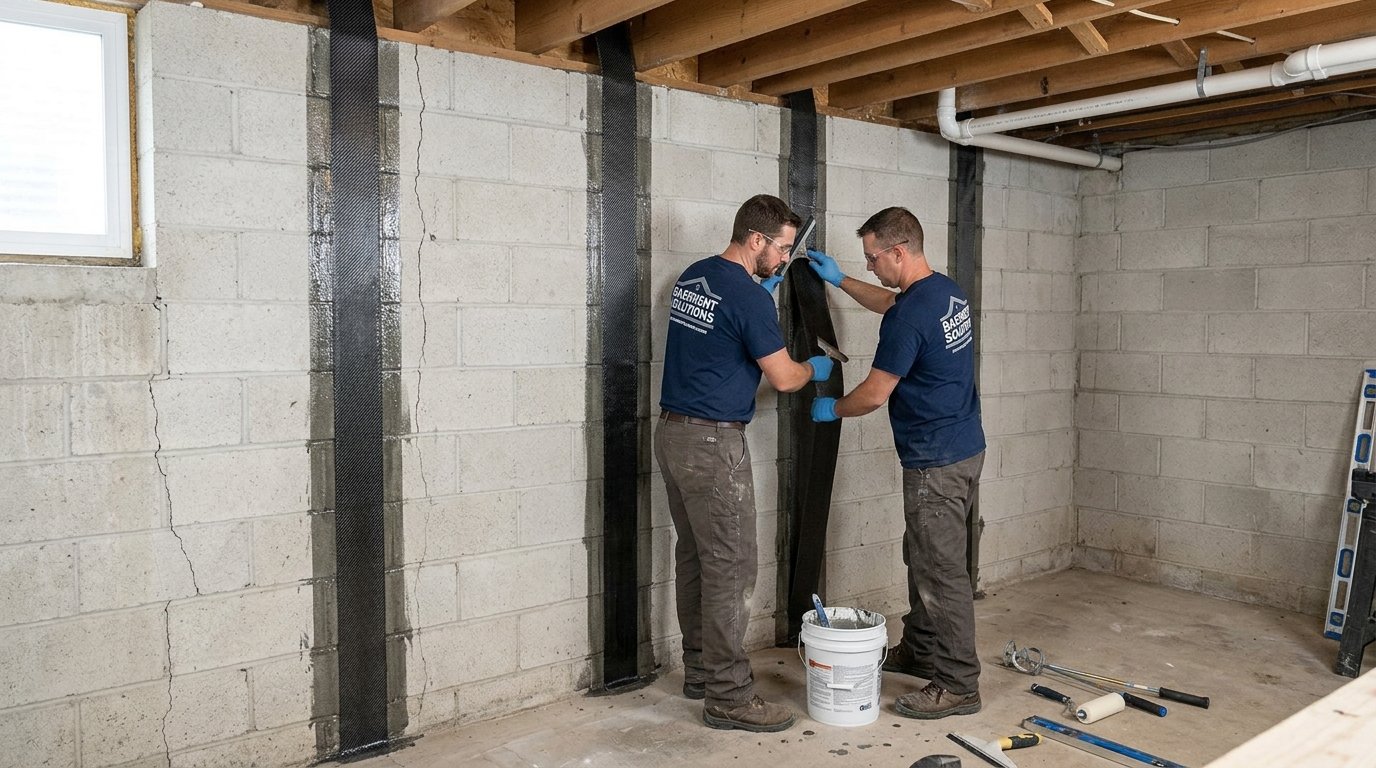

Basement walls take constant pressure from soil, water, and shifting ground, and over time this pressure can cause cracks, bowing, or leaning. Carbon fiber straps for basement walls have become one of the most trusted solutions for homeowners who want a strong, long-lasting fix without tearing apart their foundation.
This guide explains what these straps are, how they work, and why so many contractors now recommend them over older repair methods.
What Are Carbon Fiber Straps for Basement Walls
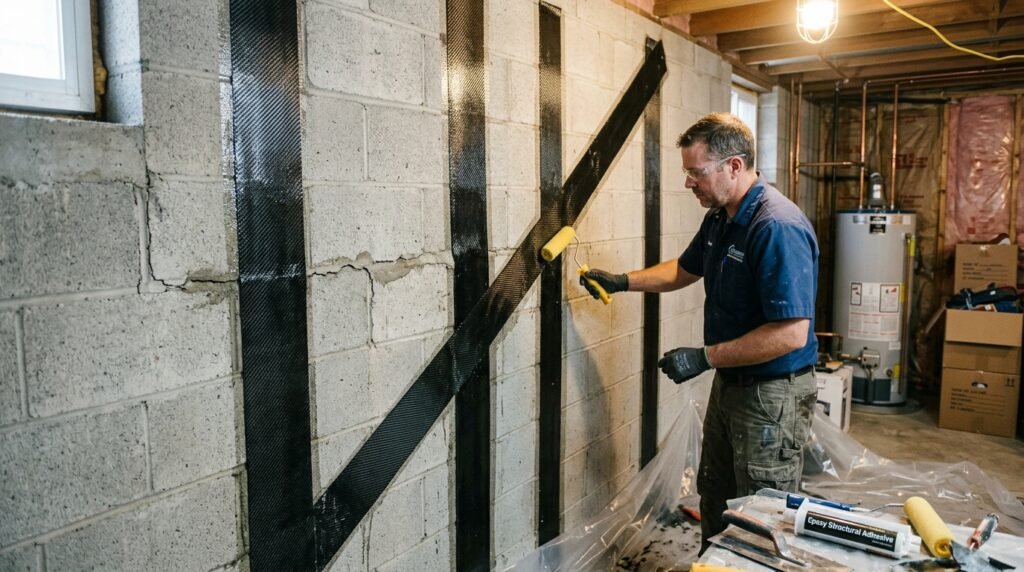
Carbon fiber straps for basement walls are thin, extremely strong reinforcement strips bonded directly onto the surface of a basement wall to stop further movement.
They are made from woven carbon fiber material that has a tensile strength far higher than steel of the same weight, which makes them ideal for resisting the lateral pressure that causes walls to crack or bow.
How They Work
The straps act like a structural skeleton attached to the inside of the wall, spreading pressure evenly across the surface instead of letting it concentrate at one weak point. Once bonded with a strong epoxy resin, the carbon fiber becomes part of the wall system itself.
This stops cracks from widening and prevents bowing walls from pushing inward any further over time.
Materials Used
A typical installation uses woven carbon fiber fabric, a two part epoxy resin, and sometimes a top coat for surface protection.
The epoxy is what bonds the carbon fiber to the concrete or block wall, creating a rigid connection that does not stretch or loosen under pressure. Some systems also use steel brackets at the top and bottom of the strap for extra anchoring strength.
Why Basement Walls Need Reinforcement
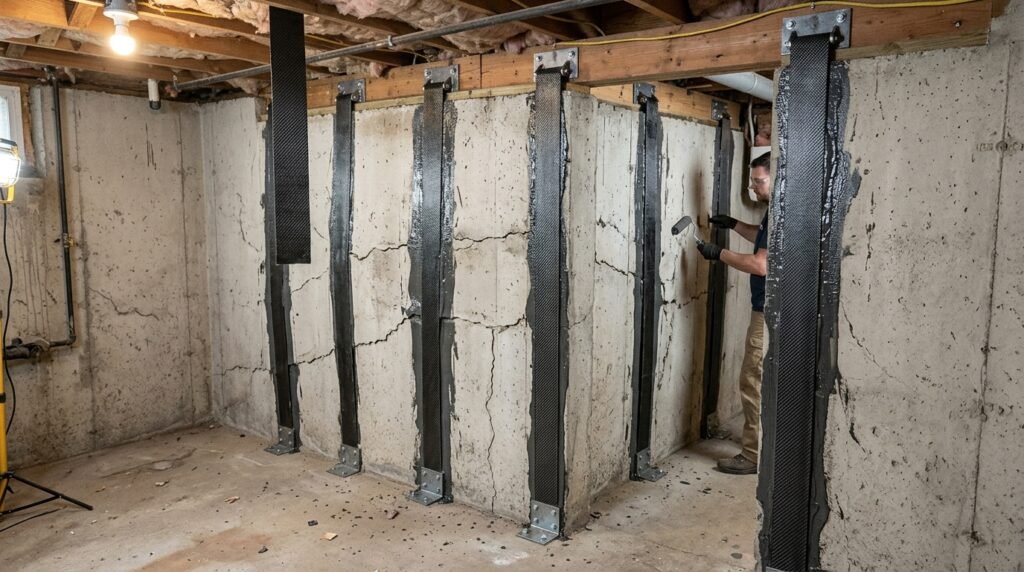
Basement walls are constantly exposed to soil pressure, moisture, and freeze thaw cycles that weaken concrete and masonry over the years. Without reinforcement, even small cracks can grow into serious structural problems that affect the entire home.
Common Wall Problems
Horizontal cracks, stair step cracks in block walls, and visible bowing are the most common warning signs that a basement wall needs attention.
These issues usually start small but worsen with seasonal soil expansion, heavy rainfall, or poor drainage around the foundation. Homeowners often notice these signs years before the problem becomes severe enough to threaten the structure.
Risks of Ignoring Damage
Ignoring early wall damage can lead to water intrusion, mold growth, and eventually a collapsed or unsafe wall that requires full replacement.
Repair costs increase significantly the longer a problem is left untreated, since soil pressure keeps pushing on the weakened area. Addressing the issue early with carbon fiber straps for basement walls is almost always cheaper than waiting for the damage to spread.
Benefits of Carbon Fiber Straps
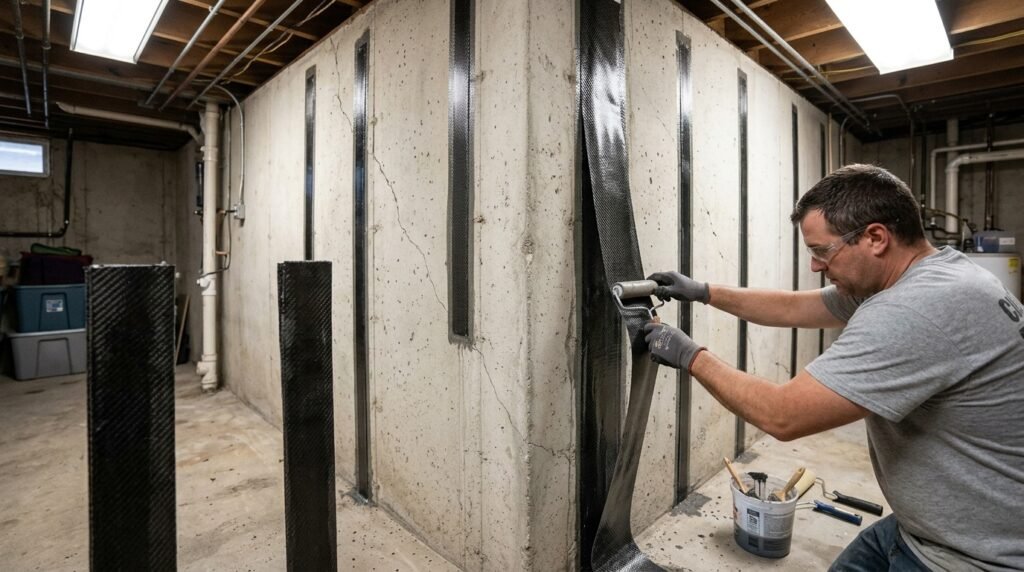
Carbon fiber straps offer a combination of strength, affordability, and convenience that older repair methods simply cannot match. They have become the preferred choice for many foundation repair companies because they solve the problem without major construction work.
Strength and Durability
Carbon fiber has a strength to weight ratio that outperforms steel, meaning a thin strap can resist forces that would normally require a much bulkier support system.
Once properly installed, these straps do not rust, rot, or degrade the way metal or wood reinforcements can over time. This makes them a long-term solution rather than a temporary patch.
Cost Effectiveness
Compared to full wall replacement or steel beam installation, carbon fiber straps are significantly more affordable since they require less labor, less material, and far less excavation. Most installations can be completed in a single day, which also reduces labor costs tied to extended project timelines.
For many homeowners, this cost difference is the main reason they choose carbon fiber over traditional underpinning methods.
Minimal Space Loss
Because the straps are bonded flat against the wall surface, they take up only a few millimeters of space, unlike bulky steel I beams that can intrude several inches into a basement room.
This makes carbon fiber straps especially useful in finished basements or homes where every inch of usable space matters. Homeowners can paint over the straps or cover them with drywall once the repair is complete.
Installation Process
Installing carbon fiber straps is a precise process that requires proper surface preparation and careful resin application to achieve a strong, lasting bond.
Skipping any step in this process can weaken the final result.
Wall Preparation
Before installation begins, the wall surface must be cleaned, ground smooth, and free of dust, paint, or loose material so the epoxy can bond properly.
Any active water leaks should be addressed first, since moisture interferes with epoxy curing and can cause the bond to fail later. Contractors often use a grinder to roughen the surface slightly for better adhesion.
Strap Application
Once the wall is prepared, epoxy resin is applied to the surface and the carbon fiber strap is pressed firmly into place, running vertically across the cracked or bowing section.
A roller is typically used to remove air bubbles and ensure even contact between the strap and the wall. Multiple straps are usually installed at intervals depending on the length and severity of the wall damage.
Curing and Finishing
After application, the epoxy needs time to cure fully, which usually takes about 24 to 72 hours depending on temperature and humidity conditions. Once cured, the straps form a permanent bond that becomes part of the wall’s structural system.
A finishing coat or paint can then be applied so the repair blends in with the rest of the basement.
Carbon Fiber Straps vs Other Reinforcement Methods
Homeowners often compare carbon fiber straps with steel beams, wall anchors, and full wall replacement before deciding on a repair method. Each option has different costs, installation requirements, and long-term outcomes.
| Reinforcement Method | Average Cost | Space Required | Installation Time | Best For |
| Carbon Fiber Straps | Low to Moderate | Minimal, flush to wall | One day | Minor to moderate bowing or cracking |
| Steel I-Beams | Moderate to High | Several inches into room | One to two days | Severe bowing requiring heavy support |
| Wall Anchors | Moderate | Requires exterior yard access | Two to three days | Walls with available outdoor space |
| Full Wall Replacement | Very High | Major excavation needed | Several days to weeks | Walls that have already collapsed |
This comparison shows why carbon fiber straps for basement walls are often the first recommendation for moderate damage, since they balance strength, cost, and convenience better than most alternatives.
Steel beams and wall anchors still have their place for severe structural failure, but they come with higher costs and more disruption to the property.
Choosing the Right Contractor
The success of a carbon fiber strap installation depends heavily on the skill and experience of the contractor performing the work, not just the materials used.
Experience and Certification
Look for contractors who are certified by the specific carbon fiber system manufacturer they use, since proper training affects how well the epoxy bonds and how accurately the straps are spaced. Ask to see examples of previous basement wall repairs and read reviews from homeowners with similar wall problems.
Experienced contractors will also conduct a thorough inspection before recommending a repair plan.
Warranty Considerations
A reputable contractor should offer a written warranty covering both the materials and the labor involved in the installation.
Warranties typically range from ten years to a lifetime guarantee, depending on the manufacturer and the severity of the original damage. Always request warranty details in writing before signing a contract, since verbal promises are difficult to enforce later.
Frequently Asked Questions
Do carbon fiber straps stop a bowing wall completely?
Carbon fiber straps stop further inward movement once properly installed, but they do not push a wall back to its original position, so severely bowed walls may need additional support methods.
How long do carbon fiber straps last?
When installed correctly, carbon fiber straps are designed to last the lifetime of the structure since the material does not corrode or break down like metal reinforcements.
Can carbon fiber straps be installed on any wall material?
Carbon fiber straps work well on poured concrete and concrete block walls, but brick walls may require additional evaluation since mortar joints behave differently under pressure.
Will I need to address drainage issues separately?
Yes, carbon fiber straps reinforce the wall structurally but do not solve water drainage problems, so exterior grading or drainage improvements may still be necessary.
Conclusion
Carbon fiber straps for basement walls offer a strong, affordable, and space-saving way to stop cracking and bowing before it turns into a major structural problem. Compared to steel beams, wall anchors, or full replacement, they require less labor, less space, and less disruption to daily life while still providing long-term strength.
Choosing an experienced, certified contractor and addressing any underlying drainage issues will help ensure the repair lasts for decades to come.
Related Articles
Basement Drainage: Complete Guide to Systems, Costs & Solutions
How to Clean Shower Tiles: Step-by-Step Guide for a Spotless Bathroom
How to Measure Room for Furniture: Step-by-Step Guide for Perfect Fit
Can You Paint Metal Roofing? The Complete Guide for Homeowners & Pros
Can You Use Ceiling Paint on Walls? The Surprising Benefits and Drawbacks