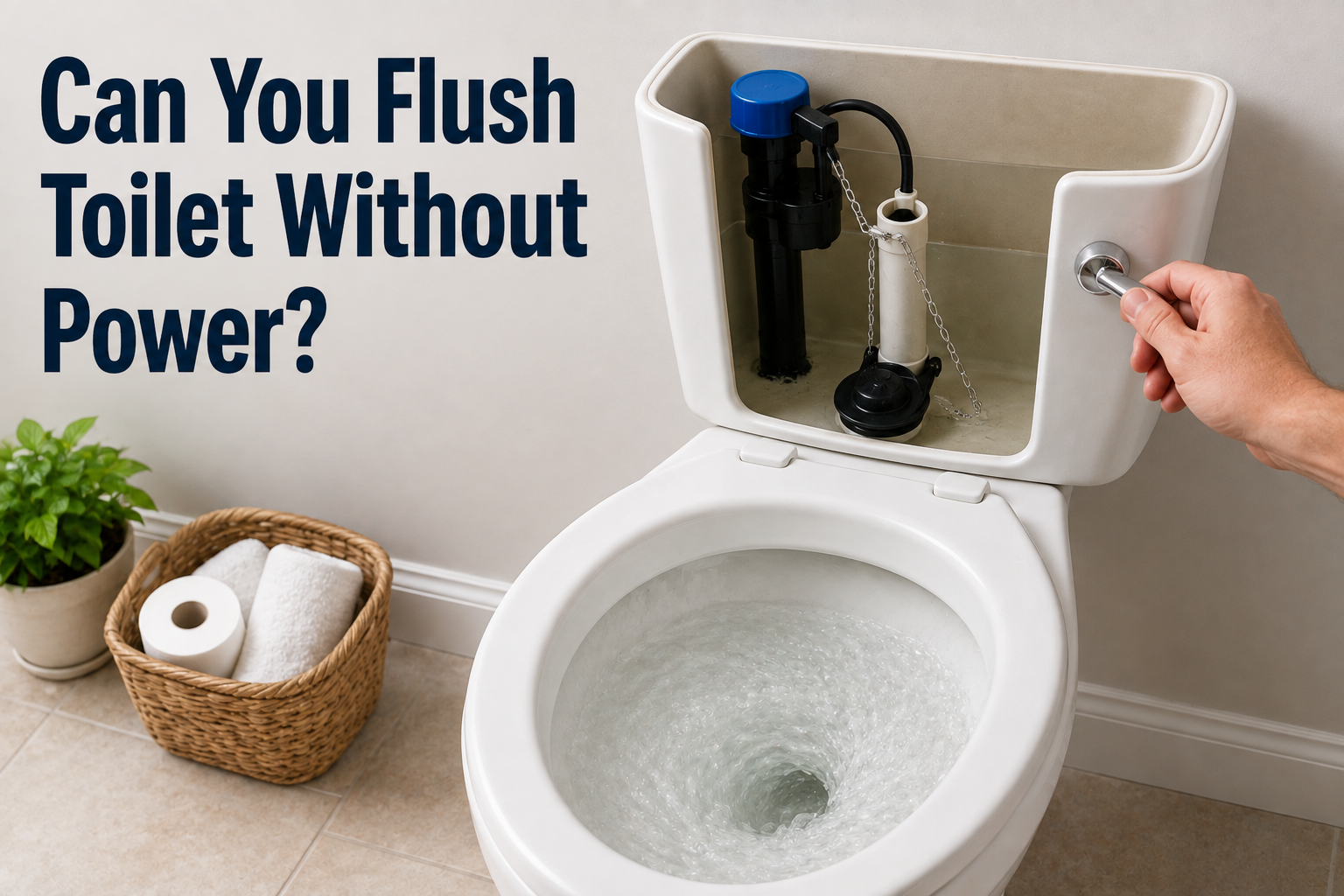

When the lights go out, one of the first questions that pops into most people’s minds isn’t about food or Wi-Fi — it’s about the bathroom. If you’ve ever sat through a storm-related blackout or a planned power cut, you’ve probably wondered, can you flush toilet without power, and whether your bathroom routine is about to become a lot more complicated.
The short answer is reassuring: yes, in most homes, you absolutely can flush a toilet without power. Toilets are, for the most part, simple mechanical devices that rely on gravity and water pressure rather than electricity. That said, there are exceptions, and knowing which type of toilet you have can save you a lot of stress the next time the power flickers off.
This question matters more than people realize. Power outages happen for all kinds of reasons — severe storms, hurricanes, heatwaves that strain the grid, scheduled maintenance, or even accidental cuts during construction work nearby. Whatever the cause, understanding how your toilet functions without electricity means one less thing to worry about during an already stressful situation.
How a Toilet Actually Works?
To understand why most toilets don’t need electricity, it helps to look at what’s actually happening inside that porcelain fixture every time you flush.
A standard toilet is essentially a gravity-powered machine. When you push the handle, a chain lifts a rubber flapper valve at the bottom of the tank. This releases the water stored in the tank, letting it rush down into the bowl through small holes around the rim. That sudden surge of water creates enough force and volume to push waste through the trapway and into the siphon, which pulls everything down and out into your home’s drainage system.
None of this requires a single watt of electricity. Gravity does the heavy lifting, quite literally. Once the tank empties, the flapper valve closes again, and a fill valve slowly refills the tank using your home’s water supply, getting it ready for the next flush.
This is why the question “can you flush toilet without power” almost always comes back to one thing: it depends on the type of toilet you have, not on whether your house has electricity at that moment. As long as water can reach the tank or bowl, gravity takes care of the rest.
Types of Toilets and Power Dependency
Not every toilet works exactly the same way, and this is where the real answer to “can you flush toilet without power” gets more detailed. Here’s a breakdown of common toilet types and how each one behaves during an outage.
| Toilet Type | Needs Electricity? | Works During Power Outage? |
|---|---|---|
| Standard gravity-flush toilet | No | Yes, works normally |
| Pressure-assisted toilet | No (uses water pressure, not electricity) | Yes, usually works fine |
| Macerating toilet | Yes | No, will not flush without power |
| Upflush/pump toilet | Yes | No, cannot push waste upward without power |
| Smart toilet / bidet-combo toilet | Partially or fully | Sometimes, depends on model |
Standard Gravity-Flush Toilets
This is the toilet found in the vast majority of homes. It relies entirely on gravity and stored tank water, so it works exactly the same whether the power is on or off.
Macerating Toilets
Macerating toilets use an electric grinder to break down waste into a slurry before pumping it through narrow pipes, often used in basements or additions where connecting to the main sewer line isn’t practical. Since the grinding and pumping mechanism runs on electricity, these toilets simply will not function during a power outage.
Upflush or Pump Toilets
Similar to macerating systems, upflush toilets use an electric pump to push waste upward and into the main drainage line, usually in below-grade bathrooms. Without power, that pump can’t operate, meaning the toilet won’t flush at all.
Smart Toilets and Bidet-Combo Toilets
Modern smart toilets often include heated seats, automatic lids, built-in bidets, and sometimes even auto-flush sensors. Depending on the model, the core flushing mechanism might still be a standard gravity system, but many of the added features — and sometimes the flush trigger itself — depend on electronics. It’s worth checking your specific model’s manual, since some retain manual flush handles as a backup while others don’t.
Tankless or Pressure-Assisted Toilets
These toilets use your home’s water line pressure to create a more powerful flush, rather than relying purely on gravity from a tank. Since they depend on water pressure and not electrical power, they generally continue working fine during outages, as long as water is still flowing into your home.
What You Need for a Toilet to Flush Without Power?
If you have a standard gravity-flush toilet, flushing without power comes down to just a few basic requirements.
First, you need a working water supply, since without water coming into the tank, you won’t be able to refill it for repeated flushes. Second, having a full tank or even a bucket of water on hand as backup makes a big difference if your water supply is also disrupted. Third, the manual flush handle itself needs to be in working condition, since this is the mechanical trigger that starts the entire flushing process.
As long as these three basics are covered, your toilet should flush normally regardless of whether the power is out.
How to Flush a Toilet Manually During an Outage?
Flushing during a power outage isn’t much different from flushing on a normal day, but it helps to know your options depending on the situation.
Using the Tank Normally
If your water supply is still working, you can simply flush the toilet the usual way. Press the handle, let gravity do its job, and the tank will refill on its own once water pressure returns the flow. This works because your home’s water supply typically runs on a separate system from your electricity, often relying on municipal water pressure or a well pump that may have its own backup power.
The Manual Bucket-Flush Method
If your water supply is also cut off, you can still manually flush the toilet using stored water. Here’s how the process generally works:
- Remove the lid from the toilet tank.
- Pour water directly and quickly into the tank until it reaches roughly the fill line, mimicking a normal refill.
- Let the flapper valve do its job as it would during a regular flush, or manually lift it briefly to release the water into the bowl.
- Alternatively, pour water directly into the bowl in one fast, forceful motion, which can trigger the siphon effect even without using the tank at all.
Generally speaking, a single flush requires somewhere between one and one and a half gallons of water, though older toilets may use more. Pouring the water quickly rather than slowly makes a noticeable difference, since a slow trickle won’t create enough force to trigger the siphon.
What If the Water Supply Is Also Out?
A power outage and a water outage don’t always happen together, but when they do, flushing becomes a bit more of a planning exercise.
Stored water is your best friend here. Many households keep jugs of water on hand for emergencies, and this stored water can double as flush water when needed. Rainwater collected in buckets, or even water siphoned from a swimming pool, can also work for this purpose, since flush water doesn’t need to be drinkable.
To conserve water while flushing manually, many people follow the old but effective rule: “if it’s yellow, let it mellow” during genuine emergencies, only flushing when necessary rather than after every use. This isn’t glamorous advice, but it stretches a limited water supply much further during an extended outage.
If water is completely unavailable, alternative options include portable camping toilets, toilet bags designed for emergency use, or even a simple bucket lined with a heavy-duty trash bag as a temporary solution until services are restored.
Special Cases Where Power Is Required
While most homes can answer “can you flush toilet without power” with a confident yes, there are specific situations where that’s simply not true.
Homes that rely solely on macerating or upflush toilet systems, often in finished basements, converted spaces, or additions far from the main sewer line, will find those toilets completely non-functional during an outage. Basement bathrooms positioned below the main sewer line frequently depend on these pump-based systems for the same structural reason, since gravity alone can’t push waste upward to meet the main line.
Smart toilets with electronic-only bidet seats or sensor-based flush mechanisms may also stop working properly, particularly if they don’t include a manual override or backup flush handle.
Safety and Hygiene Tips During Power Outages
A few precautions go a long way toward keeping things sanitary and stress-free during an extended outage.
Avoid overloading your septic or sewer system by spacing out flushes when possible, especially if you’re relying on stored water rather than your normal supply. Keep a manual water source, such as filled buckets or jugs, ready near the bathroom before an outage even happens, since scrambling for water mid-emergency is far more stressful than being prepared in advance.
And if your toilet won’t flush at all despite your best efforts, it’s worth checking whether you have a macerating or upflush system, since no amount of manual water pouring will fix a toilet that fundamentally requires electricity to operate.
How to Prepare in Advance?
Being prepared ahead of time turns a stressful situation into a minor inconvenience.
Storing a reasonable supply of water specifically for flushing purposes, separate from your drinking water reserves, is one of the simplest steps you can take. Knowing your toilet type before an outage happens, rather than during one, saves valuable time and confusion. And keeping a basic emergency plumbing kit on hand — including a bucket, work gloves, and a few gallons of stored water — means you’ll be ready no matter how long the outage lasts.
Conclusion
So, can you flush toilet without power? For the overwhelming majority of homes with standard gravity-flush toilets, the answer is a clear yes. Electricity simply isn’t part of the basic flushing process, which relies instead on gravity, stored tank water, and a functioning water supply.
The exceptions are worth knowing, though. Macerating toilets and upflush pump systems genuinely need electricity to function, and certain smart toilets may lose some features — or occasionally the flush mechanism itself — without power.
The best approach is simple: know your toilet type, keep some backup water on hand, and don’t panic the next time the lights go out. With a little preparation, flushing without power is rarely more than a minor inconvenience.
Related Articles
How to Vent a Toilet: Complete Guide 2026
How to Clean Outside Windows Complete Guide 2026
24 Inch Kitchen Sink Drop In Complete Guide: Types, Benefits, Installation