


Basements are naturally cooler and sit closer to the ground than the rest of a home, which makes them far more likely to trap moisture in the air. Many homeowners never think about humidity until they notice a musty smell, damp walls, or mold spots creeping along the corners.
Understanding what your basement humidity should be is the first step toward protecting your foundation, your belongings, and your family’s health. The right humidity level keeps the air comfortable while preventing the damp conditions that mold, mildew, and pests thrive on.
This guide walks through the ideal humidity range, the warning signs of imbalance, and simple ways to keep your basement in check throughout the year. By the end, you will know exactly what should your basement humidity be and how to maintain it with minimal effort.
Why Does Basement Humidity Matters?
Basements sit below ground level, so they are naturally exposed to more moisture from soil, groundwater, and limited airflow. Because of this constant contact with dampness, humidity control matters more here than in any other part of the house.
Basements Are More Prone to Moisture
Basement walls and floors sit in direct contact with soil, which holds moisture and slowly releases it indoors through concrete. Poor drainage, small cracks, or nearby groundwater can add even more dampness to the air over time. This constant exposure means basements almost always carry higher humidity than the upper floors of the same home.
Risks of Poor Humidity Control
When humidity stays too high for too long, it creates the perfect environment for mold, mildew, and wood rot to develop. Excess moisture can also warp furniture, damage stored items, and attract pests such as silverfish and dust mites. On the other end, overly dry air can crack wood, damage instruments, and make the space uncomfortable to spend time in.
Ideal Basement Humidity Range
Most experts agree on a specific humidity window that keeps a basement safe from mold while still feeling comfortable. Knowing this range makes it easier to recognize when your basement actually needs attention.
Recommended Percentage (30–50%)
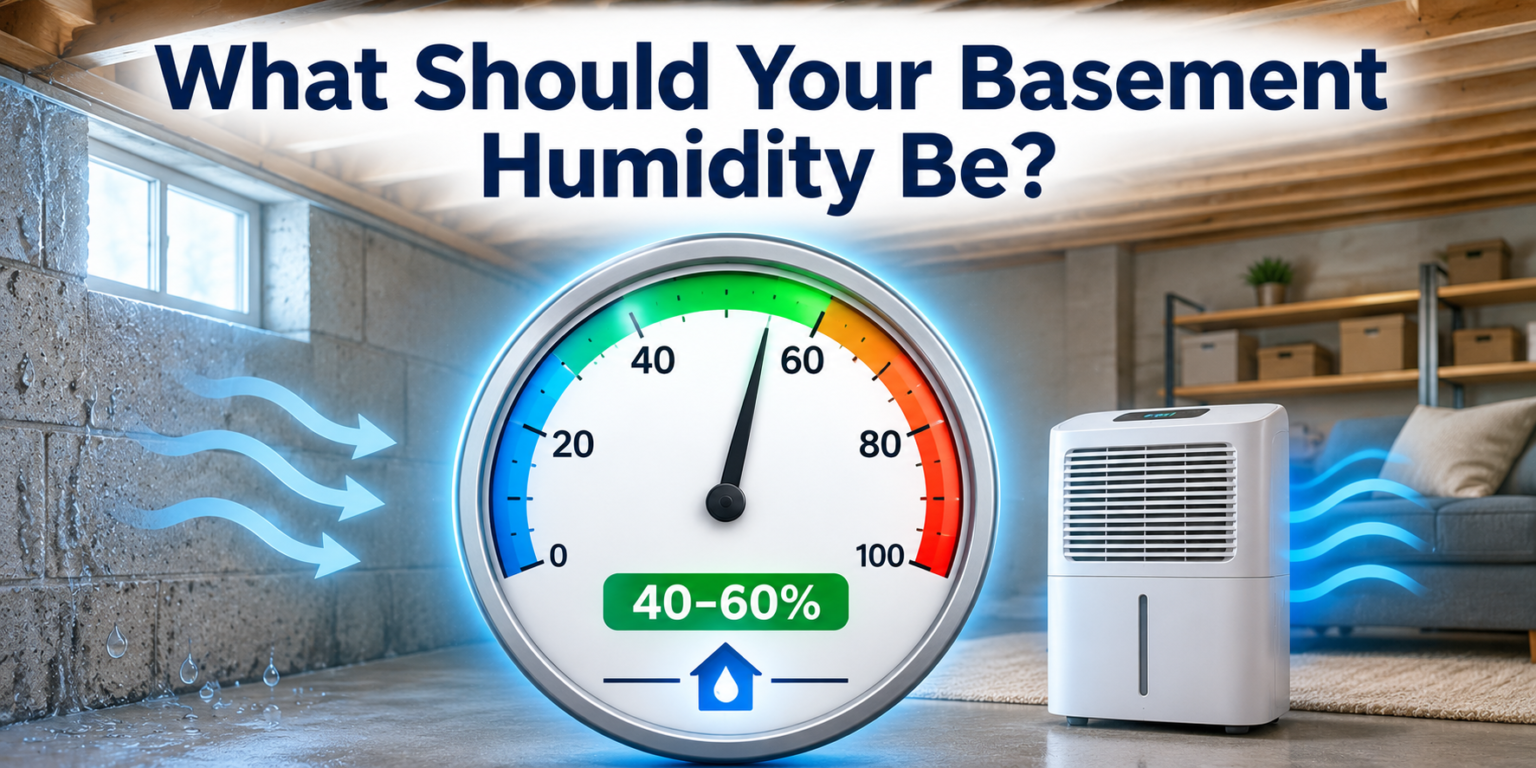
The generally recommended basement humidity level falls between 30 percent and 50 percent, measured with a simple hygrometer. Staying inside this range keeps the air comfortable without creating the damp conditions mold needs to grow. Many building and health organizations point to this same range as the healthy target for indoor spaces overall.
Seasonal Variations (Summer vs Winter)
Humidity levels naturally shift with the seasons, so what feels normal in winter might be too high in summer. During warmer months, basements often creep closer to 50 percent or higher because of increased outdoor moisture and heat. In winter, indoor heating tends to dry the air out, sometimes pushing humidity below the ideal range.
What Happens Above 60% Humidity?
Once basement humidity climbs past 60 percent, the risk of mold and mildew growth increases significantly within just a day or two. Wood furniture, cardboard boxes, and fabric items stored in the basement become especially vulnerable at this level. Long-term exposure above this threshold can also worsen indoor air quality and affect anyone with allergies or respiratory sensitivities.
Signs Your Basement Humidity Is Too High
High humidity often shows itself through your senses long before a hygrometer confirms it. Recognizing these signs early can help you act before mold has a real chance to spread.
Musty Smell
A persistent musty odor is usually one of the earliest signs that humidity levels are climbing too high in your basement. This smell often comes from mold spores or mildew growing in hidden areas like behind furniture or inside wall cavities. If the smell lingers even after cleaning, it is a strong signal that moisture control needs attention.
Condensation on Walls/Pipes
Beads of water forming on cold surfaces like pipes, windows, or concrete walls point directly to excess moisture in the air. This condensation happens when warm, humid air meets a cooler surface and releases its moisture as liquid droplets. Left unaddressed, this trapped moisture can slowly damage building materials and encourage mold growth nearby.
Visible Mold or Mildew
Dark spots or fuzzy patches on walls, ceilings, or stored items are a clear indication that humidity has been too high for some time. Mold often appears in corners, behind boxes, or near any area with limited airflow and consistent dampness. Spotting mold early allows for quicker cleanup before it spreads to larger sections of the basement.
Signs Your Basement Humidity Is Too Low
While less common, overly dry basement air brings its own set of problems worth watching for. These signs typically show up during colder months when heating systems reduce indoor moisture.
Cracking in Wood/Furniture
Wood furniture, flooring, and trim can crack or split when the surrounding air becomes too dry for extended periods. This happens because wood naturally absorbs and releases moisture, and low humidity pulls that moisture out faster than it can be replaced. Musical instruments and antique furniture are especially sensitive to this kind of damage.
Static Electricity
Noticeably more static shocks when touching doorknobs or fabric are a common sign that basement air has become too dry. Low humidity reduces the natural moisture in the air that normally helps dissipate static charge. This is usually more of an annoyance than a structural concern, but it still signals an imbalance worth correcting.
Dry, Irritated Air
Dry basement air can leave skin feeling tight, lips chapped, and throats slightly irritated after spending time in the space. This happens because low humidity draws moisture from exposed skin and airways more quickly than normal. People with asthma or sensitive respiratory systems may notice these effects more strongly than others.
How to Measure Basement Humidity?
Guessing at humidity levels is unreliable, which is why a proper measuring tool is worth keeping in any basement. A few simple habits make tracking humidity easy and consistently accurate.
Using a Hygrometer
A hygrometer is a small, inexpensive device that measures the percentage of moisture in the air and displays it clearly. Digital versions are widely available and often include a built-in thermometer for added convenience. Checking the reading every few days helps you catch humidity changes before they become a bigger problem.
Ideal Placement for Accurate Readings
Placing the hygrometer near the center of the basement, away from vents, windows, or exterior walls, gives the most accurate reading. Avoid areas with direct airflow from a dehumidifier or HVAC vent, since this can produce a falsely low reading. Checking multiple spots occasionally can also reveal if certain corners of the basement trap more moisture than others.
How to Control Basement Humidity?
Once you know your basement’s humidity level, a few practical adjustments can bring it back into the ideal range. These methods work well together and require little ongoing effort once set up.
Using a Dehumidifier
A dehumidifier is the most direct and reliable way to pull excess moisture out of basement air, especially during humid months. Choosing a unit sized appropriately for your basement’s square footage ensures it works efficiently without running constantly. Emptying or draining the collected water regularly keeps the unit working at its best.
Improving Ventilation
Better airflow helps prevent moisture from settling and stagnating in enclosed basement corners and closets. Running an exhaust fan, cracking a window on dry days, or using a small circulating fan can all help move damp air out. Good ventilation works alongside a dehumidifier rather than replacing the need for one entirely.
Sealing Leaks and Cracks
Small cracks in the foundation or gaps around windows allow outside moisture to seep directly into the basement. Sealing these openings with waterproof caulk or hydraulic cement reduces the amount of moisture entering in the first place. This step addresses the source of dampness rather than just managing it after it has already appeared.
Insulating Pipes
Cold water pipes often collect condensation when they come into contact with warmer, humid basement air. Wrapping pipes with foam insulation sleeves helps prevent this moisture from dripping onto floors or nearby materials. This simple fix also helps reduce the overall dampness contributing to higher humidity readings.
Basement Humidity Comparison Table
The table below breaks down what different humidity readings mean and the action each level calls for.
| Humidity Level | What It Means | Recommended Action |
| Below 30% | Air is too dry; wood, static, and skin irritation may occur | Add a humidifier or reduce excess ventilation |
| 30% – 50% | Ideal range for a healthy, comfortable basement | Maintain with regular monitoring |
| 50% – 60% | Borderline; moisture is building up | Increase ventilation or run a dehumidifier |
| Above 60% | High mold and mildew risk | Use a dehumidifier and address moisture sources immediately |
FAQs
What should your basement humidity be in summer?
Basement humidity should still stay within the 30 to 50 percent range in summer, even though outdoor moisture makes this harder to maintain. A dehumidifier is usually necessary during the warmest months to keep readings from creeping past 50 percent.
Is 55% humidity too high for a basement?
A reading of 55 percent is on the higher end and worth addressing before it climbs further, though it is not yet in the high-risk zone above 60 percent. Improving ventilation or running a dehumidifier can bring it back into the ideal range.
Can basement humidity affect the whole house?
Yes, since basement air often rises into upper floors through vents, stairwells, and small gaps, so unmanaged basement humidity can affect indoor air quality throughout the home.
Conclusion
Knowing what your basement humidity should be makes it much easier to protect your home from mold, moisture damage, and poor air quality. Keeping readings between 30 and 50 percent, checking them regularly with a hygrometer, and using a dehumidifier or better ventilation when needed will keep your basement safe and comfortable all year round.
Related Posts
Can You Put Bleach on Hardwood Floors? Safe Cleaning Guide
Shower Door Repair: Complete Guide to Fix Common Shower Door Problems
Cedar Fence Panels: Complete Buying and Installation Guide
How to Strip Floors: A Complete Step-by-Step Guide for Every Floor Type