

Can You Use Ceiling Paint on Walls? Yes, you can technically use ceiling paint on walls, since its thick, ultra-matte formula hides surface flaws and goes on without much fuss. That said, “can” and “should” are two different questions when it comes to painting your home. Ceiling paint and wall paint are built for different jobs, and swapping one for the other comes with trade-offs worth understanding before you grab a roller.
This guide walks through what separates the two products, where ceiling paint genuinely works on walls, and where it falls short.
What Is Ceiling Paint and What Is Wall Paint?
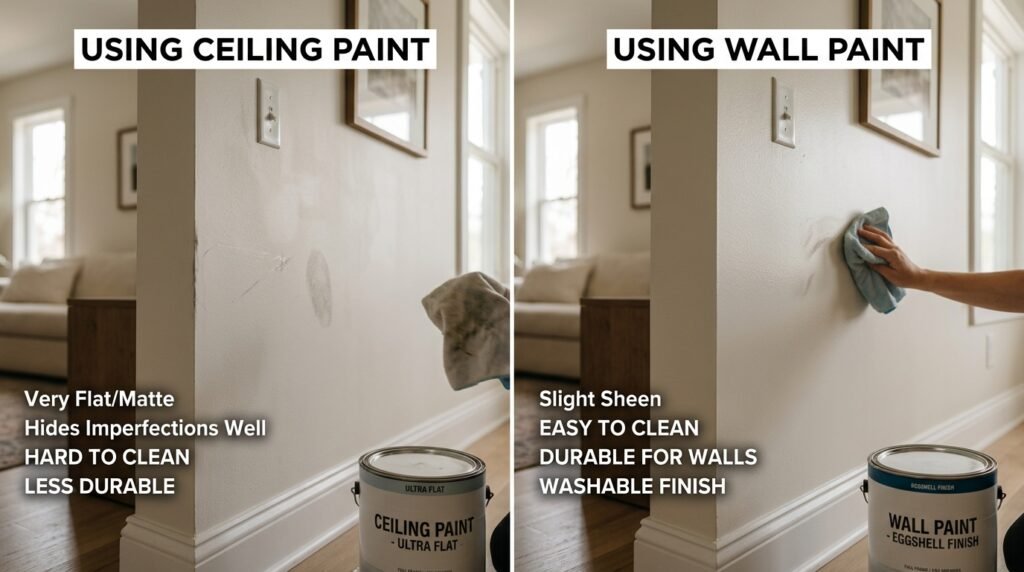
Before deciding whether to switch one for the other, it helps to know what each product is actually formulated to do. Here’s a quick look at both paints and the jobs they were built for.
Understanding Ceiling Paint
Ceiling paint is built specifically for overhead surfaces, with a heavier, thicker formula that resists dripping as you roll it on. It almost always comes in a flat, non-reflective finish so light doesn’t bounce off and highlight every bump or seam overhead.
Most ceiling paint also goes on with a faint pink or blue tint that fades to white once dry, making missed spots easy to catch.
Understanding Wall Paint
Wall paint is formulated to be thinner and easier to spread across large vertical surfaces without leaving heavy roller marks. It’s available in a huge range of finishes, from flat to high-gloss, along with an even bigger range of colors and custom tints.
Because walls get touched, bumped, and cleaned far more than ceilings, wall paint is built with extra binders that make it more durable and easier to wipe down.
Key Differences Between Ceiling Paint and Wall Paint
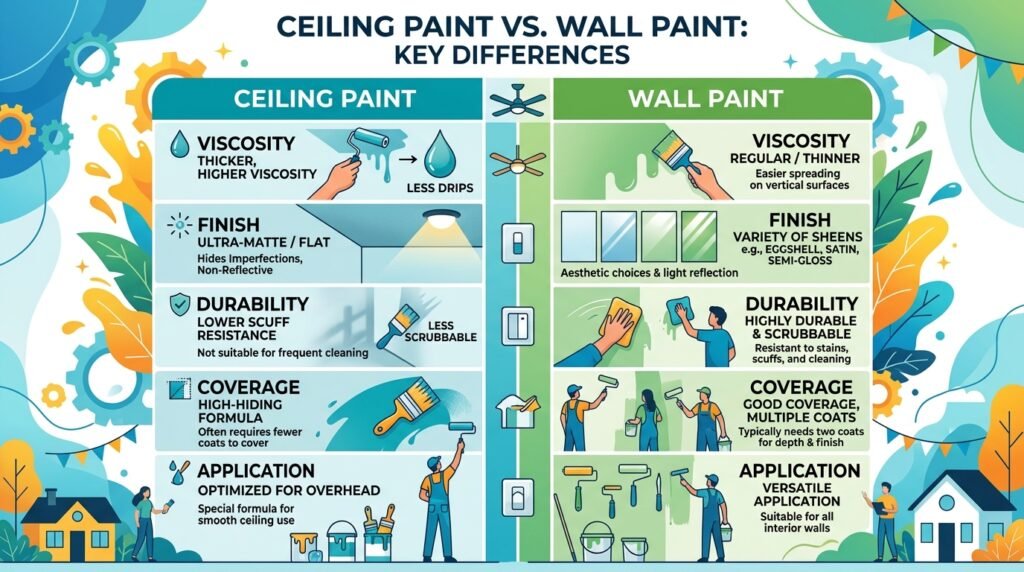
Ceiling paint and wall paint may look similar sitting on a shelf, but several real differences set them apart.
The breakdown and table below cover the factors that matter most when deciding which one belongs on your walls.
Sheen and Finish
Ceiling paint almost always has a flat, matte sheen designed to scatter light rather than reflect it. Wall paint typically comes in eggshell or satin finishes that add a touch of shine while still resisting glare.
This difference in sheen is one reason ceiling paint can look noticeably duller once it ends up on a vertical wall.
Thickness and Viscosity
Ceiling paint has a much higher viscosity, meaning it’s noticeably thicker than standard wall paint straight out of the can.
That thickness helps it cling to a roller without dripping onto your face or floor while you work overhead. Wall paint, by comparison, is thinner so it spreads smoothly across long stretches of wall without leaving heavy ridges.
Coverage and Coats Needed
Because ceiling paint carries more solids, it tends to cover stains, patches, and discoloration in a single coat. Wall paint usually needs two coats to reach the same even, opaque coverage, especially over a darker existing color.
This is one reason homeowners are sometimes tempted to reach for ceiling paint when they want a fast, one-coat fix.
Durability Against Daily Wear
Wall paint is formulated with binders that hold up against bumps, furniture scrapes, and the general wear walls take on every day.
Ceiling paint skips those reinforced binders, since ceilings rarely get touched or leaned against. Used on a wall, ceiling paint tends to mark and wear down faster than a product made for that purpose.
Washability
Most wall paints, especially those made for kitchens and bathrooms, are designed to handle gentle scrubbing with soap and water.
Ceiling paint is meant to be dusted occasionally rather than washed, since its formula isn’t built to resist moisture or scrubbing. Wiping down a ceiling-painted wall can sometimes dull the finish or leave streaks behind.
Color Variety
Wall paint comes in thousands of colors and custom tints, making it easy to match existing decor or create a specific look. Ceiling paint is almost always sold in white or off-white, with far fewer tinting options at most retailers.
Some stores can tint ceiling paint on request, but the range will still be far narrower than standard wall paint offers.
Cost Comparison
Ceiling paint is often a few dollars cheaper per gallon than wall paint, partly because it skips the extra durability additives. That lower price can be tempting for budget projects, especially in rooms that won’t see much use.
However, if a ceiling-painted wall needs repainting sooner because it scuffs or stains easily, any upfront savings can disappear quickly.
| Factor | Ceiling Paint | Wall Paint |
| Finish | Flat, matte | Eggshell, satin, or glossy |
| Viscosity | Thick, drip-resistant | Thinner, spreads easily |
| Coverage | Often one coat | Usually two coats |
| Durability | Lower | Higher |
| Washability | Dust only | Can be gently scrubbed |
| Color options | Mostly white | Wide range of colors |
| Average cost | Slightly lower | Slightly higher |
When Is It Okay to Use Ceiling Paint on Walls?
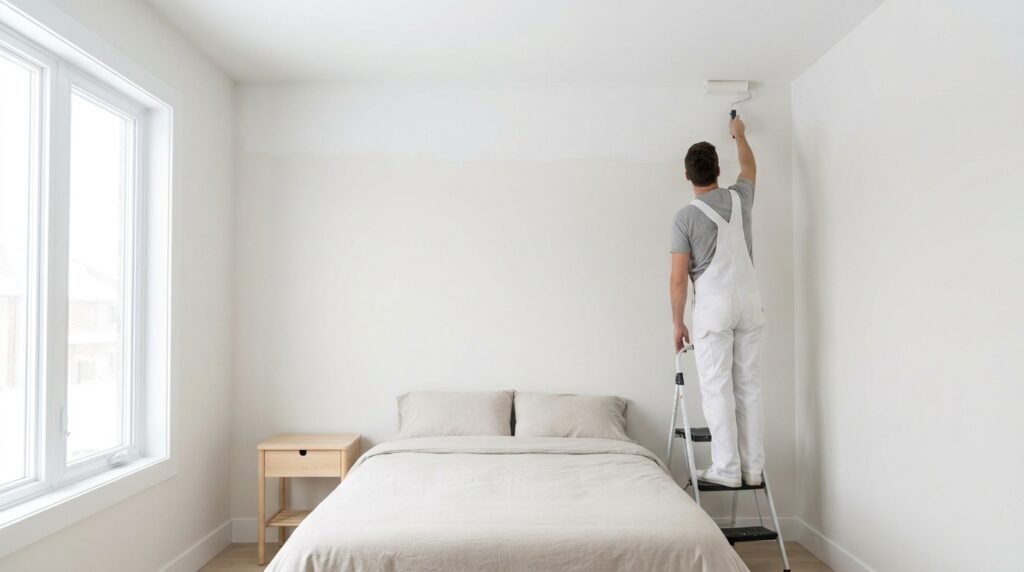
There are a handful of situations where reaching for ceiling paint instead of wall paint actually makes sense. The cases below cover the most common scenarios where this swap works out fine.
Closets and Storage Spaces
Closets, pantries, and other storage areas see very little foot traffic or physical contact compared to living spaces. Since these spots rarely need scrubbing or touch-up repairs, the lower durability of ceiling paint usually isn’t an issue.
Many painters use it in closets simply to save time, since one coat is often enough.
As a Primer Coat
Ceiling paint’s thick, flat formula makes it a reasonable stand-in for primer when you have leftover paint and need to seal a wall before a final coat.
It blocks stains and old colors fairly well, giving your topcoat a clean, even surface to bond to. Just remember it still needs a proper wall paint topcoat afterward for lasting durability.
Low-Visibility or Temporary Areas
Garages, basements, and other utility spaces that aren’t meant to look polished are good candidates for ceiling paint on the walls.
The same goes for short-term spaces or rooms you plan to repaint again soon, where long-term durability isn’t a priority. In these lower-stakes settings, the cost savings of ceiling paint often outweigh its weaker performance over time.
Pros and Cons of Using Ceiling Paint on Walls
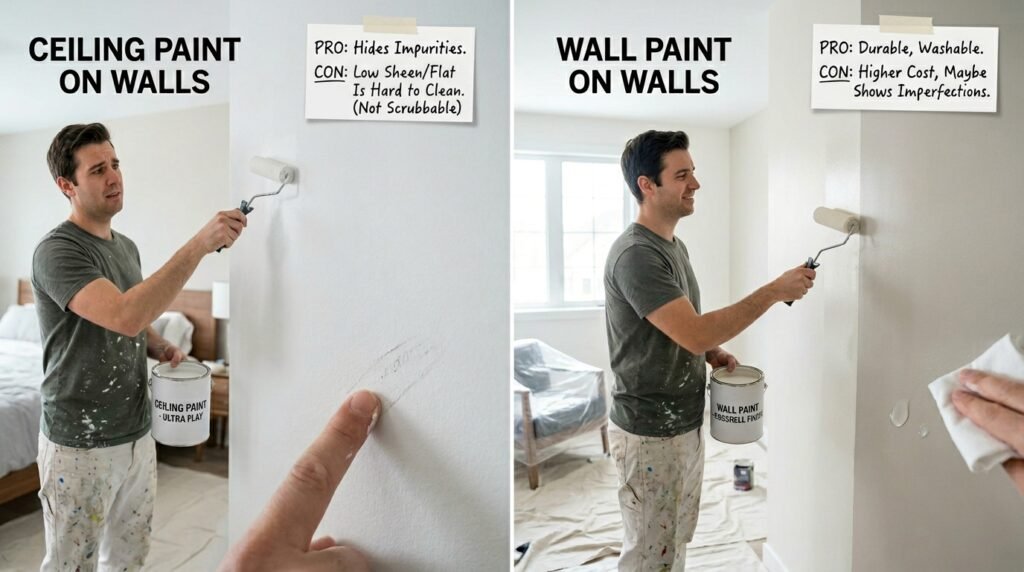
Like most shortcuts in home improvement, painting walls with ceiling paint comes with real upsides and real downsides. Weighing both sides helps you decide if it’s worth it for your specific room.
Advantages
Ceiling paint often needs just one coat, which can save time and money on larger painting projects. Its flat finish does a strong job hiding small dents, patch jobs, and uneven texture on older walls. It also tends to cost less per gallon than most premium wall paint lines.
Drawbacks
On the downside, ceiling paint scuffs and shows wear much faster than wall paint once exposed to daily bumps.
It also can’t handle scrubbing, so stains, fingerprints, and marks become harder to clean off. Its limited color range means you’re largely stuck with white unless you pay extra for custom tinting.
Can Wall Paint Be Used on a Ceiling Instead?
Going the other direction isn’t a great idea either. Wall paint’s thinner consistency makes it prone to dripping and splattering when rolled overhead, often leaving an uneven, streaky finish. It also lacks the flat, light-scattering quality that hides ceiling imperfections so well.
While a satin or eggshell wall paint will technically dry and stick to a ceiling, you’ll likely need extra coats and extra patience to get a result that looks anywhere near as smooth as a dedicated ceiling paint.
Choosing the Right Paint for Your Walls
For most rooms, sticking with a paint actually designed for walls gives the best long-term results. Eggshell and satin finishes strike a good balance between durability, easy cleaning, and a subtle, attractive sheen.
If you’re shopping for wall paint, keep these finish options in mind depending on the room:
- Flat or matte: best for low-traffic rooms like formal living rooms or bedrooms with minimal wall contact
- Eggshell: a solid all-around choice for hallways, living rooms, and bedrooms
- Satin: easier to wipe clean, ideal for kids’ rooms, hallways, and family rooms
- Semi-gloss or gloss: best reserved for trim, doors, and high-moisture areas like bathrooms and kitchens
Frequently Asked Questions
Will ceiling paint look the same as wall paint once it dries?
Not exactly. Ceiling paint’s flat sheen looks duller and less polished than the eggshell or satin finishes typically used on walls.
Can I tint ceiling paint to match my wall color?
Yes, most paint stores can add custom tint to ceiling paint, though the color selection is still more limited than standard wall paint.
Does ceiling paint need a topcoat when used on walls?
It’s a good idea, especially in spaces that get touched or cleaned often, since ceiling paint alone won’t hold up as well over time.
Is ceiling paint cheaper than wall paint?
Generally yes, ceiling paint costs a little less per gallon, though that savings can disappear if the wall needs repainting sooner.
Conclusion
Ceiling paint can technically go on walls, and in low-traffic spots like closets or as a primer coat, it works just fine.
For rooms that see daily wear, regular cleaning, or need a wide range of color choices, a paint made specifically for walls will hold up better and look sharper for longer. Match the paint to the room, and either choice can serve you well.
Related Articles
Garage Door Bottom Seal Replacement: Complete Guide for Homeowners
Roof Repairs Worcester: Your Complete Local Guide to a Safe and Lasting Roof
How to Clean Vinyl Floors: The Complete Step-by-Step Guide