

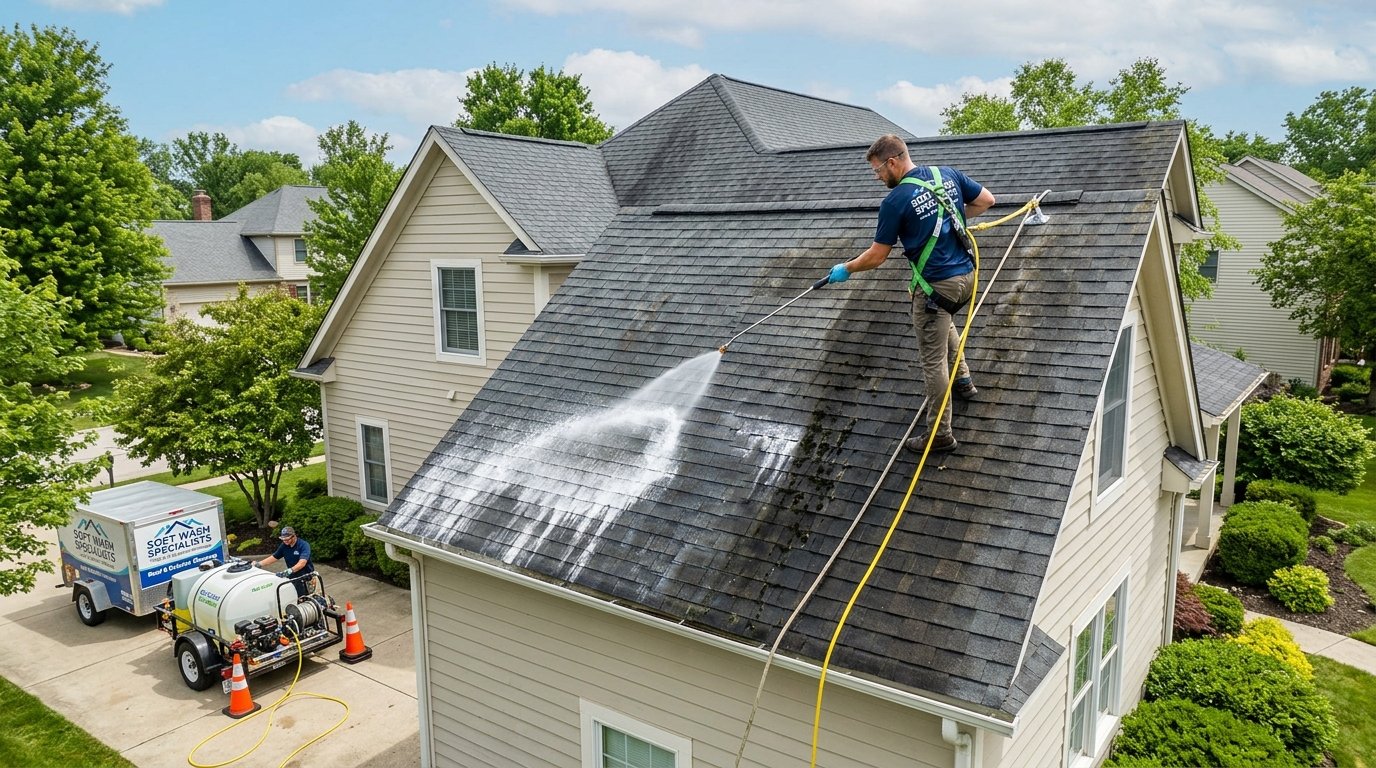

Soft wash roof cleaning is a low-pressure cleaning method that uses specialized cleaning solutions instead of harsh water pressure to remove dirt, algae, moss, and stains from a roof. Unlike traditional pressure washing, this technique protects shingles while still delivering a deep, lasting clean.
How the Soft Washing Process Works
The process begins with a thorough inspection of the roof to identify problem areas such as algae growth, moss patches, or black streaks.
A biodegradable cleaning solution is then applied using low-pressure equipment, allowing the chemicals to break down organic growth gently. After the solution sits for a few minutes, the roof is rinsed with low-pressure water to wash away the loosened debris.
Difference Between Soft Wash and Pressure Wash
Soft washing relies on chemical cleaning agents combined with minimal water pressure, while pressure washing depends purely on high-force water streams to remove buildup. This difference matters because high pressure can strip protective granules from shingles, shorten roof lifespan, and even cause leaks.
Soft washing avoids these risks entirely by working with chemistry rather than force.
Why Soft Wash Roof Cleaning Is Important
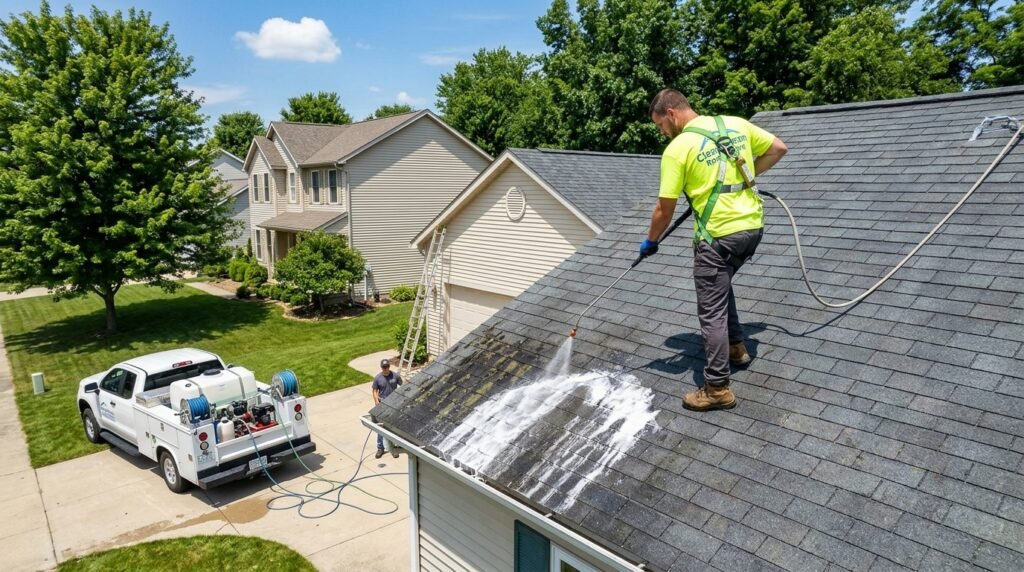
Roofs accumulate algae, moss, lichen, and dirt over time, which can damage roofing materials if left untreated. Soft wash roof cleaning helps maintain the roof’s structural integrity while improving the home’s overall appearance.
Protecting Roof Material and Lifespan
Algae and moss growth can trap moisture against shingles, leading to rot, mold, and premature aging of roofing materials.
Soft washing removes these organisms at the root without damaging the shingle surface, helping homeowners avoid costly early roof replacement. This makes soft wash roof cleaning a preventive maintenance step rather than just a cosmetic fix.
Improving Curb Appeal and Property Value
A clean roof significantly enhances a home’s overall look, especially when black streaks or green moss patches are removed.
Many real estate experts note that roof condition plays a noticeable role in first impressions and resale value. Regular soft wash roof cleaning keeps the property looking well-maintained year-round.
Preventing Health and Safety Hazards
Algae, mold, and moss buildup can create slippery surfaces on roofs, increasing the risk of accidents during inspections or repairs.
These organic growths can also release spores that affect indoor air quality if they spread near vents. Soft washing eliminates these hazards safely without introducing high-pressure risks to the roof structure.
The Soft Wash Roof Cleaning Process Step-by-Step
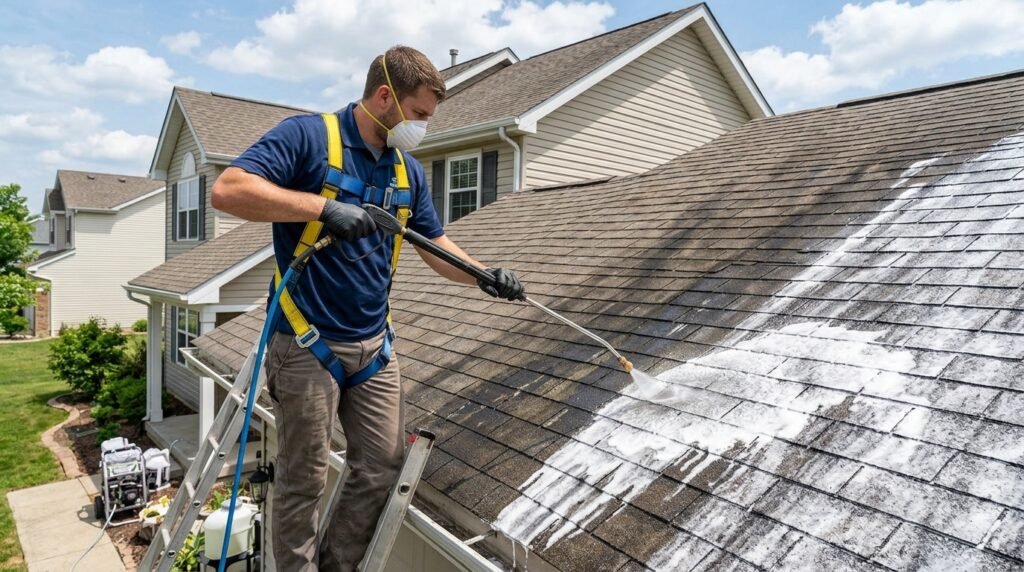
Understanding the cleaning process helps homeowners know what to expect and why each step matters for safety and effectiveness. The procedure typically follows a structured sequence from inspection to final rinse.
Roof Inspection and Preparation
Before any cleaning begins, professionals examine the roof for loose shingles, existing damage, or sensitive areas like skylights and vents. Surrounding plants, gutters, and outdoor furniture are usually covered or protected from cleaning chemicals. This preparation step ensures the soft wash roof cleaning process doesn’t cause unintended damage to the property.
Application of Cleaning Solution
A specially formulated solution, often containing sodium hypochlorite or similar agents, is applied evenly across the roof surface.
The solution is designed to kill algae, moss, and lichen at the root level rather than just removing surface stains. This step is what gives soft washing its long-lasting results compared to simple rinsing.
Dwell Time and Rinsing
After application, the solution is left to sit for several minutes so it can fully penetrate and break down organic growth. Once the dwell time is complete, the roof is rinsed using low-pressure water to wash away the solution along with loosened debris.
This gentle rinse keeps shingles intact while leaving the roof visibly clean.
Benefits of Soft Wash Roof Cleaning
| Benefit | Explanation |
| Extends Roof Lifespan | Removes harmful organic growth without stripping protective granules |
| Cost-Effective | Reduces need for premature roof replacement or repairs |
| Safe for All Roof Types | Works well on asphalt, tile, metal, and wood shingles |
| Long-Lasting Results | Kills algae roots, slowing regrowth compared to pressure washing |
| Eco-Friendly Options | Biodegradable solutions minimize environmental impact |
Long-Term Cost Savings
Because soft wash roof cleaning prevents shingle damage, homeowners avoid the higher expenses associated with frequent roof repairs or early replacement.
The treatment also slows down algae regrowth, meaning roofs need cleaning less often compared to other methods. Over time, this makes soft washing a more economical choice despite sometimes costing slightly more upfront than pressure washing.
Safe for Different Roofing Materials
Soft washing works effectively across various roofing materials including asphalt shingles, clay tiles, metal panels, and wood shakes.
Since the process relies on chemical action rather than force, it minimizes the risk of cracking, loosening, or eroding delicate materials. This versatility makes it a preferred method recommended by many roofing manufacturers.
When Should You Schedule Soft Wash Roof Cleaning?
Timing plays an important role in maintaining a roof’s condition and maximizing the benefits of cleaning. Most professionals recommend scheduling cleaning based on visible signs of growth or a regular maintenance interval.
Signs Your Roof Needs Cleaning
Dark streaks, green patches, or a noticeable buildup of debris in roof valleys are common indicators that cleaning is overdue.
These signs often point to algae or moss growth that, if ignored, can spread and cause more serious damage. Identifying these signs early helps homeowners schedule soft wash roof cleaning before problems worsen.
Recommended Cleaning Frequency
Most experts suggest cleaning a roof every one to two years, depending on climate, tree coverage, and humidity levels in the area.
Homes in humid or shaded regions may require more frequent cleaning due to faster algae growth. Sticking to a consistent schedule helps maintain the roof’s appearance and structural health over time.
Choosing a Professional Soft Wash Roof Cleaning Service
Selecting the right service provider ensures the job is done safely and effectively without risking roof damage. Homeowners should look for specific qualifications and practices when comparing companies.
What to Look for in a Service Provider
A reliable company should carry proper insurance, use industry-approved cleaning solutions, and have documented experience with various roof types. It’s also worth checking customer reviews and asking about the specific products used during the cleaning process.
These factors help ensure the soft wash roof cleaning service delivers safe and lasting results.
Questions to Ask Before Hiring
Homeowners should ask about the cleaning solution’s ingredients, the company’s experience with similar roofing materials, and whether they offer any service guarantees.
It’s also helpful to confirm if surrounding landscaping will be protected during the cleaning process. Asking these questions upfront helps avoid miscommunication and ensures expectations are clearly set.
DIY vs Professional Soft Wash Roof Cleaning
Some homeowners consider cleaning their roof themselves, while others prefer hiring trained professionals for safety and quality assurance.
Risks of DIY Roof Cleaning
Climbing onto a roof without proper safety equipment poses serious fall risks, and incorrect chemical mixtures can damage shingles or harm surrounding plants.
Without professional-grade equipment, achieving even, effective coverage across the entire roof can also be difficult. These risks often outweigh the cost savings of attempting a DIY soft wash roof cleaning project.
Advantages of Hiring Professionals
Professional cleaners bring specialized equipment, safety training, and proven cleaning formulas that ensure consistent results without damaging the roof.
They also carry insurance, which protects homeowners from liability in case of accidents during the job. This expertise makes professional service a safer and more reliable choice for most homeowners.
Conclusion
Soft wash roof cleaning offers a safe, effective, and long-lasting solution for removing algae, moss, and stains without damaging roofing materials. By choosing this gentle yet powerful cleaning method, homeowners can protect their roof’s lifespan, improve curb appeal, and avoid costly repairs down the line.
Whether scheduling routine maintenance or addressing visible buildup, soft washing remains one of the smartest choices for roof care.
FAQs
Is soft wash roof cleaning safe for all roof types?
Yes, it is safe for asphalt, tile, metal, and most other common roofing materials due to its low-pressure approach.
How long do soft wash results last?
Results typically last one to two years, depending on climate and environmental conditions affecting algae regrowth.
Does soft washing harm plants or landscaping?
Professional services protect surrounding plants and use biodegradable solutions to minimize environmental impact.
Can soft washing remove all roof stains?
Most algae, moss, and organic stains can be removed, though some deep-set discoloration may require additional treatment.
Related Articles
Can You Use Ceiling Paint on Walls? The Surprising Benefits and Drawbacks
How Deep Are Kitchen Counters? Standard Depths for Every Counter Type
486 Gelney Kitchen Exhaust Hood System: How It Works and Why It Matters
Joist Tape for Decking: The Complete Guide to Protecting Your Deck’s Substructure