


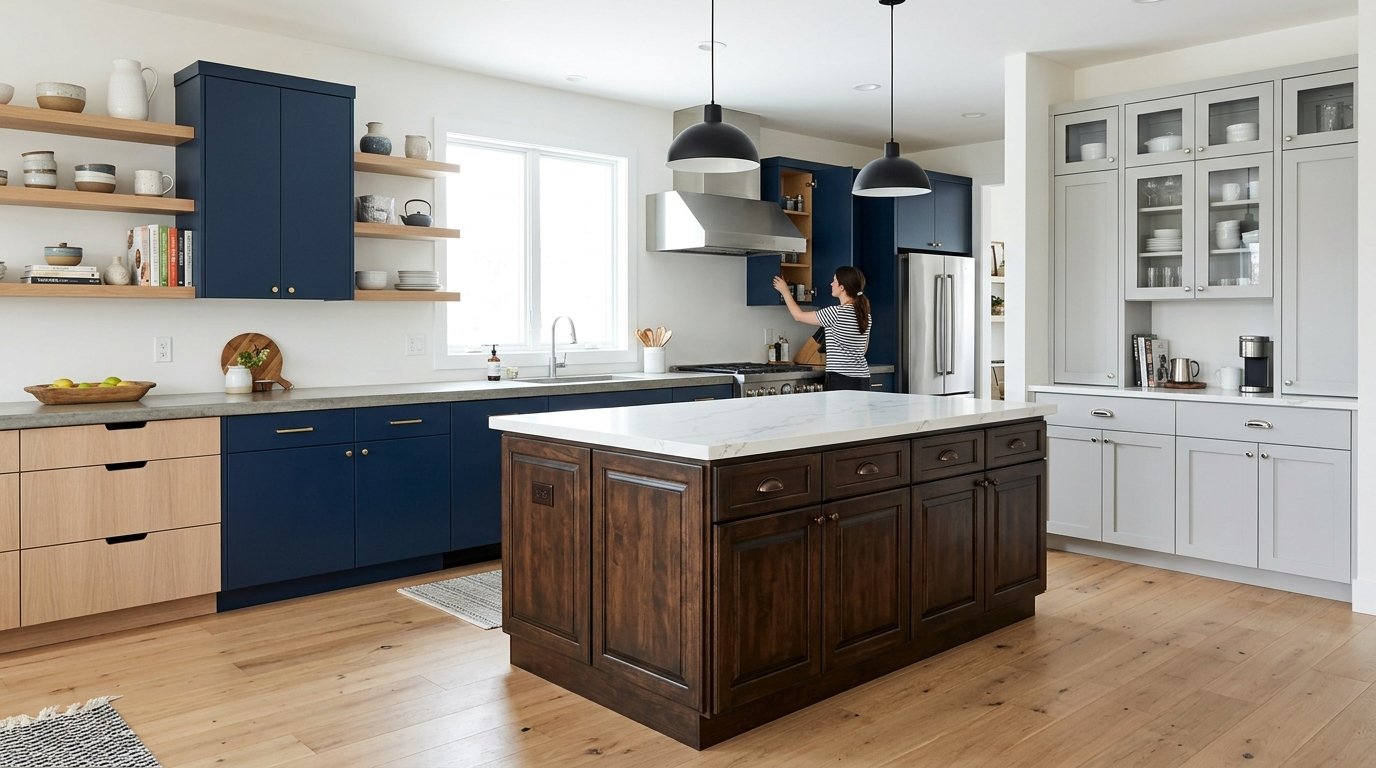

Choosing the right cabinets for your kitchen tile floor can feel overwhelming because both elements are permanent and expensive to change later. The good news is that once you understand a few simple pairing principles, matching cabinets with tile flooring becomes much easier and far less stressful.
Understanding Why Cabinet and Tile Pairing Matters
Cabinets and tile floors together make up the largest visual surfaces in any kitchen, so their combination sets the tone for the entire room. When they are paired thoughtfully, the kitchen feels intentional, balanced, and welcoming rather than mismatched or chaotic.
The Role of Color Balance
Color balance means making sure the cabinets and tile do not compete for attention, but instead support one another visually. If the tile floor has strong patterns or bold veining, cabinets should stay simpler so the room does not feel overcrowded with detail. This balance keeps the eye moving smoothly through the space instead of getting stuck on clashing elements.
The Role of Undertones
Undertones are the subtle background colors hidden within a material, such as warm beige tile having a hint of pink or yellow beneath the surface. Matching cabinet undertones to tile undertones prevents an awkward clash that often happens when a cool gray cabinet sits above a warm terracotta floor. Paying attention to undertones is one of the most overlooked yet important steps in kitchen design.
Best Cabinet Colors for Light Tile Floors
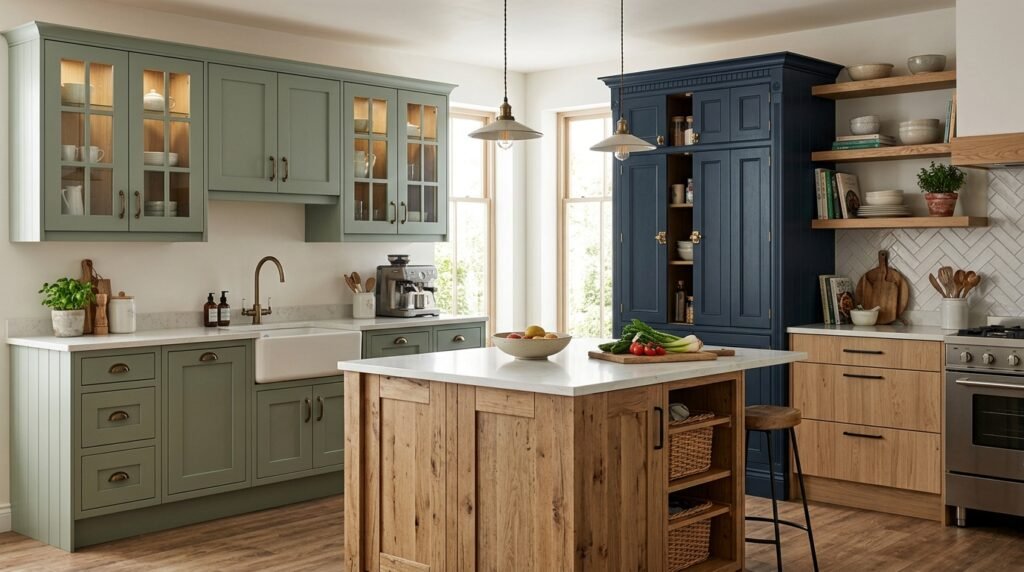
Light tile floors, such as white, cream, or pale gray, offer a flexible base that works with almost any cabinet shade. This flexibility makes light tile a favorite choice among homeowners who want room to experiment with cabinet color later on.
Pairing Light Tile With Dark Cabinets
Dark cabinets such as navy, charcoal, or espresso brown create a striking contrast against light tile floors. This combination gives the kitchen a bold, modern look while still keeping the space feeling open because the floor reflects plenty of natural light. It is a popular choice for kitchens that want a dramatic, high-end appearance without feeling closed in.
Pairing Light Tile With Neutral Cabinets
Neutral cabinets in soft white, cream, or light gray create a calm and airy kitchen when paired with light tile. This monochromatic approach works especially well in smaller kitchens because it avoids harsh contrast and makes the room appear larger. It is also a timeless option that rarely goes out of style compared to trendier color choices.
Pairing Light Tile With Wood Cabinets
Natural wood cabinets bring warmth to a kitchen that has light, cool-toned tile flooring. The wood grain adds texture and organic character, balancing out the smoothness of the tile surface below. This pairing is especially popular in farmhouse and transitional kitchen styles where warmth and texture are key design goals.
Best Cabinet Colors for Dark Tile Floors
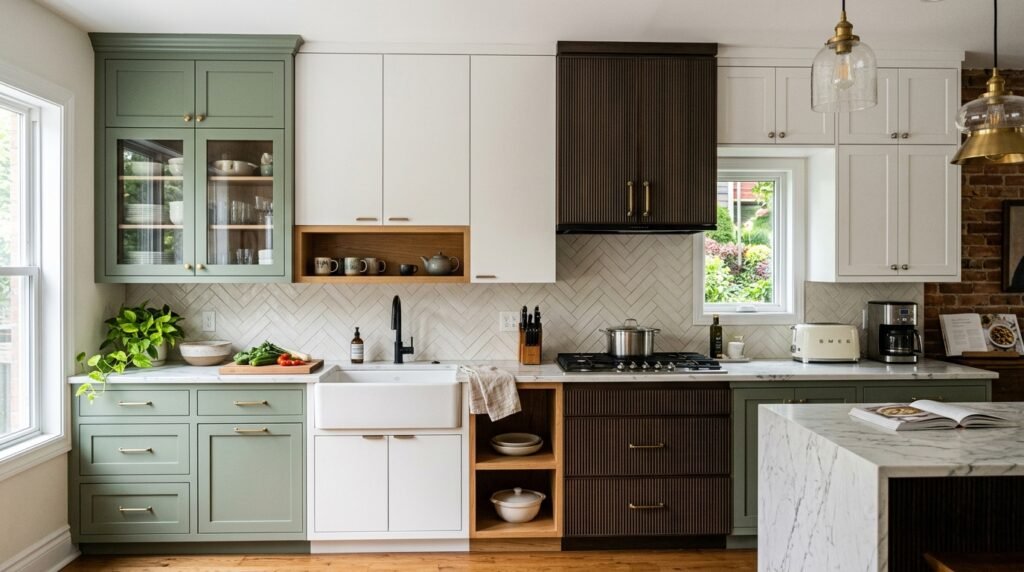
Dark tile floors, including charcoal, black, or deep slate tones, create a grounded and dramatic foundation for the kitchen. Choosing the right cabinet color here is important because dark floors can make a room feel heavy if not balanced correctly.
Pairing Dark Tile With White Cabinets
White cabinets are one of the most reliable choices for dark tile floors because they create strong visual contrast without overwhelming the space. This pairing keeps the kitchen bright and airy while the dark floor grounds the room and hides everyday scuffs. It is a classic combination seen frequently in both modern and traditional kitchen designs.
Pairing Dark Tile With Light Wood Cabinets
Light wood cabinets, such as oak or ash tones, soften the boldness of dark tile flooring while adding natural warmth. This combination works particularly well in Scandinavian or minimalist kitchens that aim for a clean yet cozy feel. The lighter wood tone prevents the kitchen from feeling too dark or cave-like.
Pairing Dark Tile With Pastel Cabinets
Soft pastel cabinet colors like sage green, dusty blue, or blush pink can create a surprisingly elegant contrast against dark tile floors. This unexpected pairing adds personality and softness to an otherwise bold flooring choice. It works best when paired with simple hardware and minimal patterns elsewhere in the kitchen.
Cabinet and Tile Pairings by Style
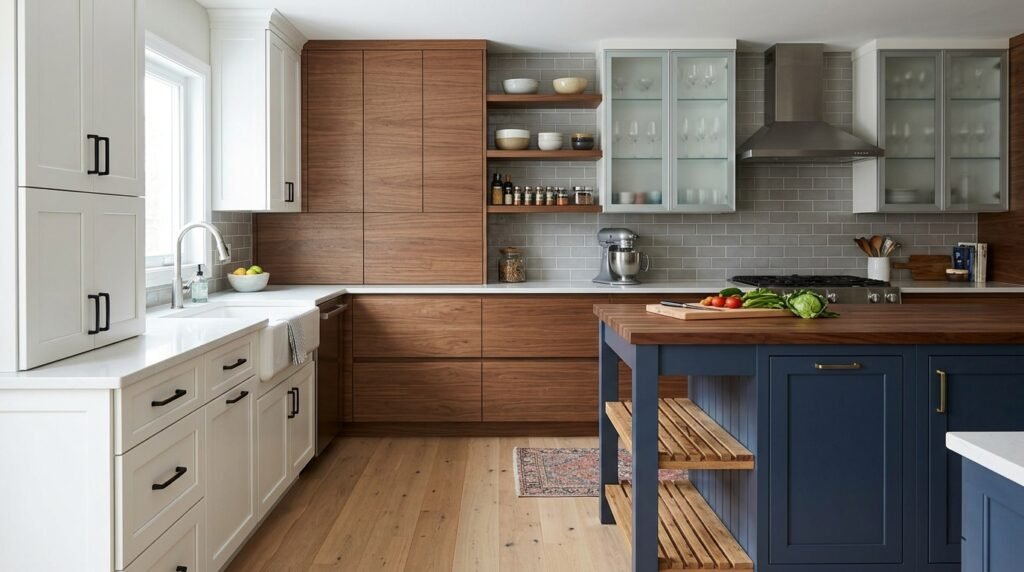
Different kitchen styles call for different cabinet and tile combinations, and understanding these style-based pairings can simplify the decision-making process significantly.
Traditional Kitchen Pairings
Traditional kitchens often feature warm wood cabinets paired with classic tile patterns like checkerboard or terracotta flooring. This combination creates a cozy, timeless atmosphere that feels familiar and inviting. Detailed cabinet moldings also complement the intricate patterns often found in traditional tile designs.
Modern Kitchen Pairings
Modern kitchens typically pair flat-panel cabinets in bold or neutral colors with large-format tile in gray, white, or concrete-inspired finishes. The clean lines of both elements work together to create a sleek, uncluttered appearance. Minimal hardware and handleless cabinet designs further enhance this modern aesthetic.
Farmhouse Kitchen Pairings
Farmhouse kitchens usually combine painted wood cabinets, often in white or soft sage, with textured or patterned tile flooring. This pairing balances rustic charm with practicality, since patterned tile can hide dirt and wear in busy households. Open shelving and vintage-style hardware often accompany this cabinet and tile combination.
Quick Reference Table for Cabinet and Tile Pairings
| Tile Floor Color | Recommended Cabinet Colors | Overall Effect |
| Light Gray or White | Navy, Charcoal, Natural Wood | Bright and balanced |
| Beige or Cream | White, Sage Green, Warm Wood | Soft and cohesive |
| Dark Charcoal or Black | White, Light Wood, Pastels | Grounded yet airy |
| Terracotta or Warm Brown | Cream, Olive Green, Dark Wood | Warm and traditional |
| Patterned or Bold Tile | Simple White or Muted Solid Colors | Balanced and calm |
Common Mistakes to Avoid When Matching Cabinets and Tile
Many homeowners unintentionally create visual clutter by choosing cabinets and tile that are both busy or highly patterned at the same time. Another common mistake is ignoring undertones, which can make even similarly colored materials look mismatched once installed. It also helps to view physical samples together in natural lighting before making a final decision, since lighting can dramatically change how colors appear.
Final Thoughts
Matching cabinets with a kitchen tile floor does not require complicated design knowledge, just an understanding of contrast, undertones, and overall style. By considering the tile’s color and pattern first, homeowners can confidently choose cabinets that complement rather than compete with their flooring. A little planning at this stage leads to a kitchen that feels cohesive, comfortable, and visually pleasing for years to come.
Frequently Asked Questions
Do cabinets need to match the tile floor exactly?
No, cabinets do not need to match the tile floor exactly, since a slight contrast often creates a more visually interesting kitchen.
What cabinet color is safest for most tile floors?
White or off-white cabinets are generally the safest choice because they complement almost any tile color or pattern.
Should cabinet undertones match tile undertones?
Yes, matching undertones, whether warm or cool, helps prevent an awkward clash between the cabinets and the flooring.
Can patterned tile work with patterned cabinets?
It is best to avoid combining two patterned elements, since this can make the kitchen feel overly busy and visually chaotic.
Related Articles
How to Clean Cork Flooring: A Complete Guide 2026
How Much Does a Retaining Wall Cost? Complete Guide 2026
How to Get Rid of Gnats in Bathroom Fast
Cedar Fence Panels: Complete Buying and Installation Guide
Glow in the Dark Epoxy Floor: The Ultimate Guide for Homeowners & Contractors




