


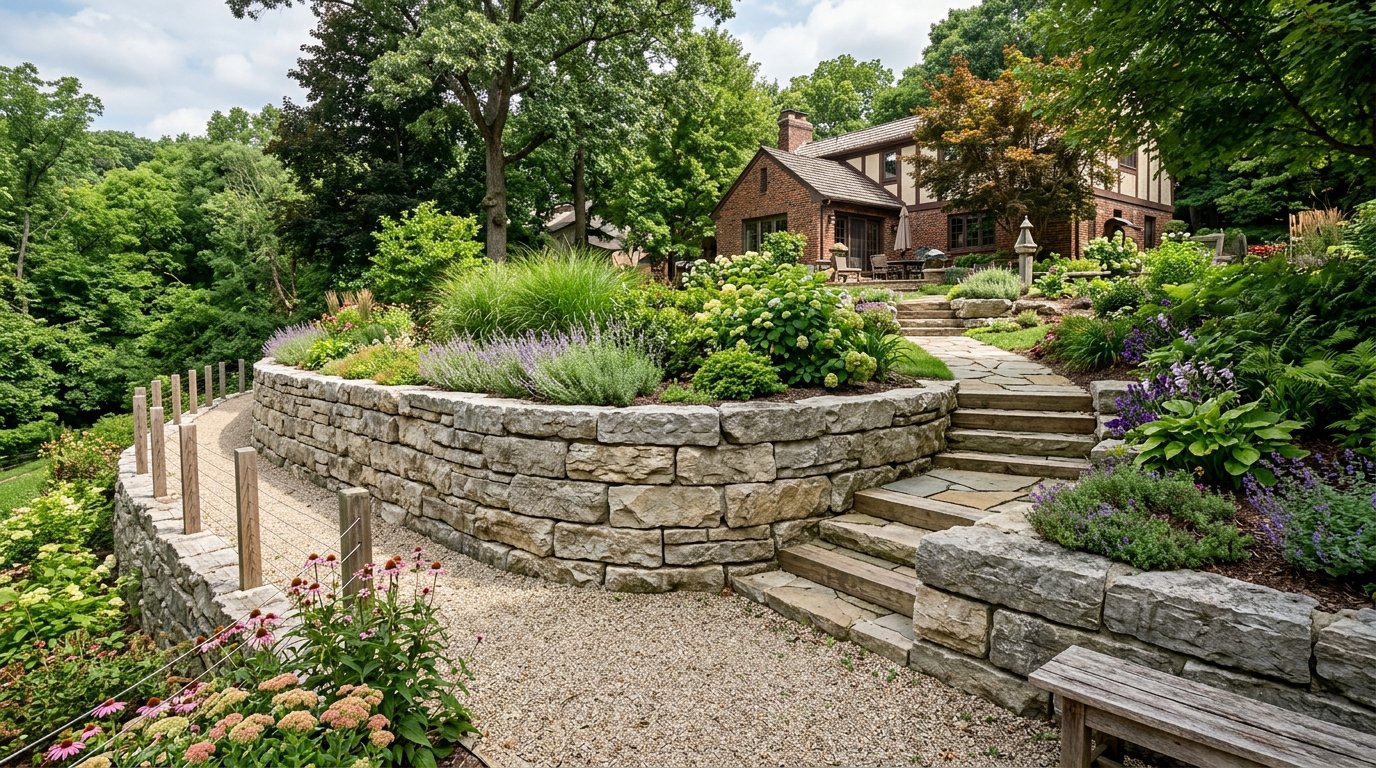

Homeowners dealing with a sloped yard, soil erosion, or a hillside that keeps creeping toward the foundation often start their research with one simple question: how much does a retaining wall cost? On average, a professionally installed retaining wall costs between $20 and $65 per square foot, with most residential projects landing somewhere between $3,500 and $10,000 total.
The exact number depends heavily on the material, the height of the wall, labor rates in your area, and how much site preparation the project requires.
Average Retaining Wall Cost Overview
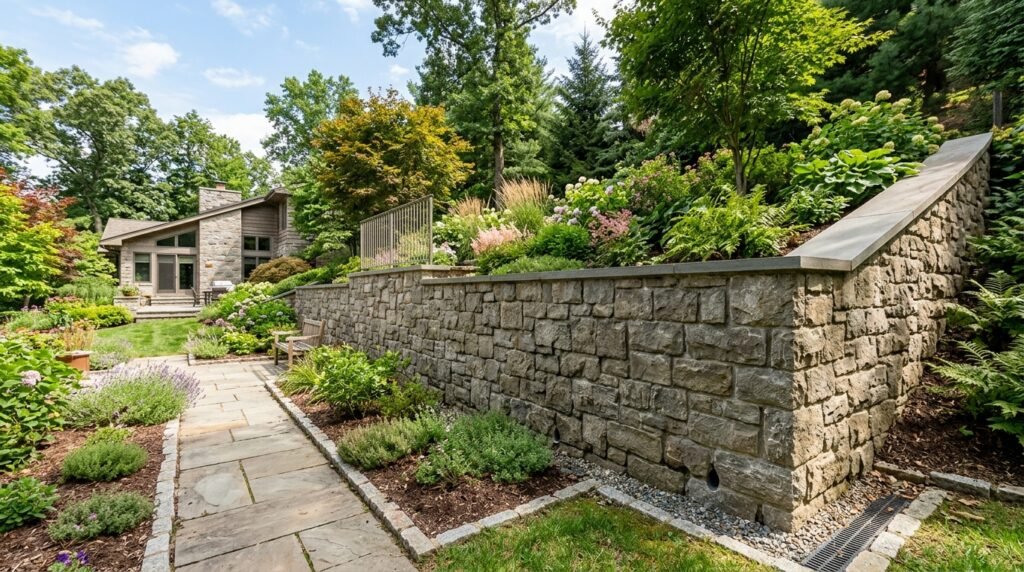
Before getting into materials and labor, it helps to understand the national averages contractors are quoting in 2026. Most homeowners spend a predictable amount once the wall size and material type are locked in.
National Average Cost Per Square Foot
A standard retaining wall installed by a professional runs $20 to $65 per square foot, which already includes materials, labor, and basic drainage work behind the wall. Cheaper materials like vinyl or basic timber sit toward the lower end of that range, while natural stone or steel sheet piling push costs much higher.
This per-square-foot figure is the most reliable way to compare quotes from different contractors, since it normalizes for both the length and height of the wall.
Typical Total Project Cost
Most homeowners end up paying between $3,500 and $10,000 for a complete retaining wall project, which usually covers a wall around 25 to 50 feet long and 3 to 4 feet tall built from concrete block.
A small garden wall under 3 feet might only cost $1,500 to $4,000, while a large structural wall over 4 feet that needs engineering, permits, and reinforced footings can climb to $15,000 to $25,000 or more. The size of the project is the single biggest driver of the final invoice.
Retaining Wall Cost By Material
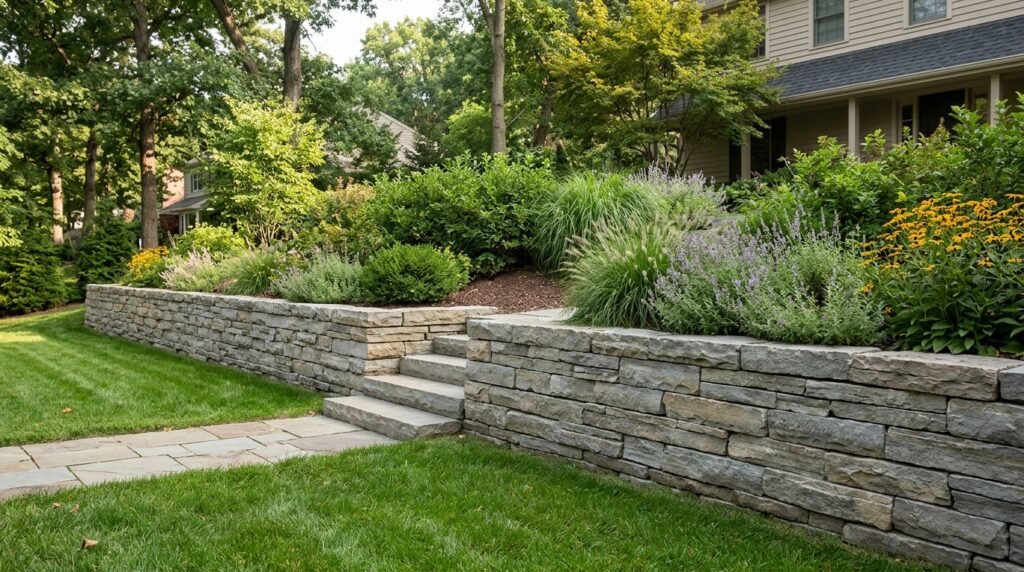
The material you pick affects both the upfront price and how long the wall will last, so it’s worth weighing cost against lifespan rather than just choosing the cheapest option available.
Concrete Block Walls
Concrete block, also called segmental block, is the most common residential choice and typically costs $20 to $55 per square foot installed.
It comes in interlocking styles that don’t require mortar, which keeps labor time down, and it can last 30 to 50 years with proper drainage. This is generally considered the best overall value because of its durability and wide range of finishes.
Natural Stone Walls
Natural stone is priced between $15 and $95 per square foot depending on whether you choose granite, limestone, or a premium stacked-stone style. It is the most visually distinctive option and can last over 100 years, but the labor involved in cutting and fitting irregular stones drives the price well above concrete or timber.
Homeowners who want a wall to double as a landscaping feature often accept this premium.
Timber and Railroad Tie Walls
Timber retaining walls are among the cheapest options, generally costing $15 to $30 per square foot, with railroad ties landing around $20 to $25 per square foot.
They are easy to install and work well for short, decorative walls, but wood typically only lasts 15 to 25 years even with a sealant applied every few years. This makes timber a budget-friendly short-term solution rather than a permanent structure.
Brick, Vinyl, and Steel Options
Brick walls cost $20 to $40 per square foot and offer a classic, tiered look that suits traditional landscaping. Vinyl is the most affordable choice at $10 to $15 per square foot and works well for short, lightweight walls, while steel sheet piling sits at the top of the price scale at $65 to $150 per square foot because of its strength and use in shoreline or heavy-load applications.
Each of these materials serves a different purpose depending on wall height and site conditions.
Retaining Wall Cost By Wall Height
Height has a bigger impact on price than most homeowners expect, since taller walls need deeper footings, added reinforcement, and sometimes a structural engineer’s sign-off.
Walls Under 3 Feet
A retaining wall under 3 feet is generally the simplest and least expensive build, often falling in the $2,000 to $4,000 total range for a modest residential project.
These shorter walls usually don’t require a permit or engineering review in most areas, and they are also the most realistic option for a confident do-it-yourself homeowner. Drainage is still necessary, but the footing depth and reinforcement needs stay minimal.
Walls Between 3 and 4 Feet
Once a wall approaches the 4-foot mark, many municipalities start requiring permits and a more substantial footing, which raises both material and labor costs.
Pricing in this range commonly falls between $4,000 and $12,000 depending on material and length, since contractors need to account for added soil pressure behind the wall. This height range is the most common for typical backyard slope corrections.
Walls Over 4 Feet
Retaining walls taller than 4 feet almost always require a licensed structural engineer, building permits, and reinforced footings with rebar or geogrid fabric, pushing total costs to $15,000 to $25,000 or more.
The added engineering and inspection fees, combined with deeper excavation, are what separate this category from smaller residential projects. Skipping permits on a wall this size is risky, since it can complicate a future home sale or trigger costly corrections.
Hidden and Additional Costs to Budget For
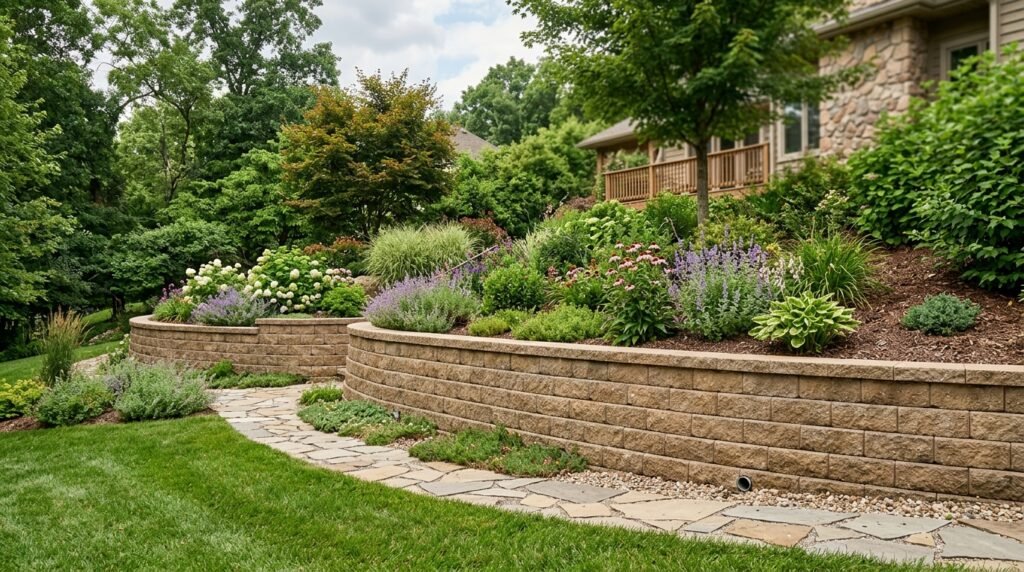
Beyond the base price per square foot, several add-on costs catch homeowners off guard if they aren’t accounted for early in the planning process.
Drainage Systems
Every retaining wall needs a drainage system behind it to prevent water from building up and pushing the wall outward over time.
A French drain typically adds $10 to $85 per linear foot depending on complexity, and skipping this step is one of the leading causes of wall failure within just a few years. Most reputable contractors will not skip drainage even if a homeowner asks them to in order to save money.
Permits and Engineering Fees
Permit costs generally range from $40 to $450 depending on local regulations, and taller walls requiring an engineer’s stamped design can add several hundred dollars more on top of that.
These fees vary widely by city and county, so it’s worth checking with the local building department before finalizing a budget. Unpermitted walls can become a real problem during a home inspection or resale.
Site Preparation and Excavation
Sloped or rocky yards require extra grading, excavation, and sometimes terracing, which can increase total project costs by 50 percent or more compared to a flat, accessible site. Land grading alone runs about $0.40 to $2.00 per square foot, and demolition of an old, failing wall adds another $15 to $30 per linear foot.
These site-specific costs are why two homes with identical wall sizes can still receive very different quotes.
DIY vs Professional Installation
Many homeowners weigh the savings of a DIY build against the risks of getting it wrong, since a retaining wall failure isn’t just cosmetic.
Cost of DIY Installation
Building a retaining wall yourself using materials alone costs roughly $8 to $20 per square foot, which is close to half the price of hiring a professional crew.
This option only makes sense for short walls under 3 feet, since taller structures involve soil engineering calculations that are easy to get wrong without experience. Renting compaction equipment and sourcing proper gravel backfill are also part of the real DIY cost that beginners often underestimate.
Why Professional Installation Often Pays Off
Professional installation includes proper engineering knowledge, correct drainage placement, and warranty coverage that protects the homeowner if something goes wrong after the project is finished.
A wall that leans, bulges, or collapses can damage property or injure someone, so the extra cost often functions as insurance against a much larger future expense. For any wall over 3 to 4 feet, hiring a licensed contractor is the safer and often more cost-effective long-term choice.
Quick Reference Cost Table
| Wall Type or Factor | Typical Cost |
| Average cost per square foot | $20 – $65 |
| Typical total project cost | $3,500 – $10,000 |
| Concrete block wall | $20 – $55 per sq ft |
| Natural stone wall | $15 – $95 per sq ft |
| Timber wall | $15 – $30 per sq ft |
| Vinyl wall | $10 – $15 per sq ft |
| Steel wall | $65 – $150 per sq ft |
| Drainage installation | $10 – $85 per linear ft |
| Permit fees | $40 – $450 |
| DIY material-only cost | $8 – $20 per sq ft |
Frequently Asked Questions
How much does a retaining wall cost on average?
Most homeowners pay between $20 and $65 per square foot, with total projects typically ranging from $3,500 to $10,000 depending on size and material.
Is a cheaper material always a worse choice?
Not necessarily, since vinyl or timber can be perfectly suitable for short decorative walls, while only taller structural walls truly need premium materials like stone or steel.
Do all retaining walls need a permit?
No, walls under 3 to 4 feet usually don’t require one, but anything taller almost always needs both a permit and an engineer’s approval.
Can I really save money building it myself?
Yes, DIY can cut costs nearly in half, but it’s only advisable for short walls since taller ones carry real structural risk if built incorrectly.
Conclusion
So, how much does a retaining wall cost in 2026? The honest answer is that it depends on material, height, and site conditions, but most homeowners can expect to budget $3,500 to $10,000 for a typical residential project.
Comparing competitor pricing guides shows fairly consistent numbers across the industry, with small variations based on region and labor rates rather than any major disagreement on the core figures. Getting at least two or three local quotes remains the best way to confirm an accurate, site-specific price before committing to a contractor.
Related Articles
18 Inch Deep Base Cabinets: A Smart Storage Solution for Every Kitchen
How to Measure Room for Furniture: Step-by-Step Guide for Perfect Fit
Can You Paint Metal Roofing? The Complete Guide for Homeowners & Pros
How to Clean Shower Tiles: Step-by-Step Guide for a Spotless Bathroom
Basement Drainage: Complete Guide to Systems, Costs & Solutions




