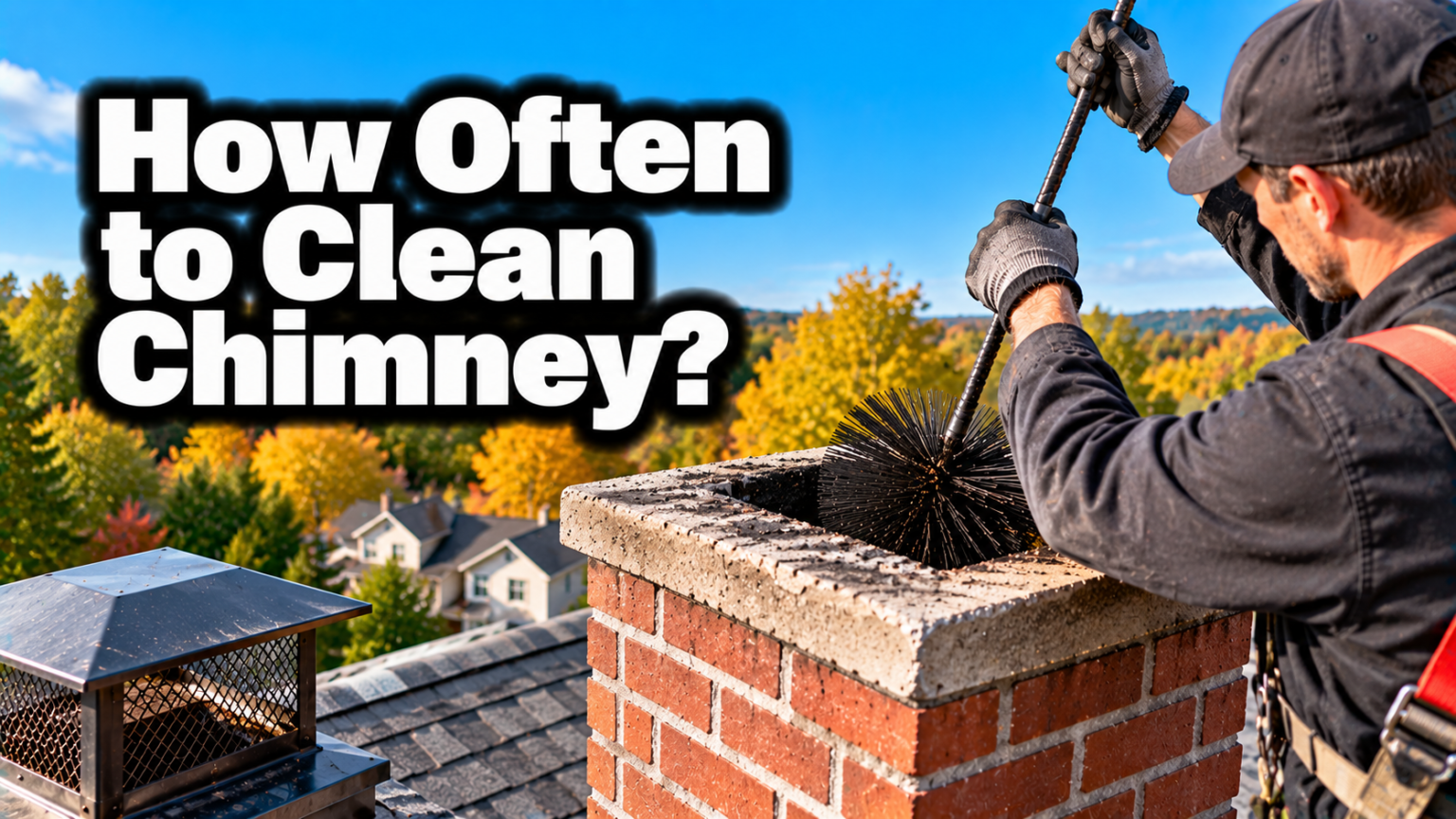

Clean your chimney whenever the creosote or soot inside reaches about 1/8 inch thick, and have it inspected at least once a year no matter how much you use it. For most people who burn wood through the colder months, that works out to one cleaning a year. Burn a lot, or burn the wrong wood, and you may need two. Here is how to tell what your own chimney actually needs, and when to book the sweep.
How often should you clean your chimney?
Once a year is the safe baseline, and the trigger for a full sweep is 1/8 inch of buildup. Two separate things drive the schedule: a yearly inspection that every chimney needs, and a cleaning that happens as often as the buildup demands.
The annual inspection is the fixed part. The national fire safety standard sets a once-a-year check for every chimney, flue, and vent, whether you burn wood, gas, oil, or pellets, and even if the fireplace sat cold all year. That yearly look is cheap insurance. It catches cracks, blockages, and buildup before any of them turn into a real problem.
The cleaning is the variable part. A chimney gets swept when the coating of creosote and soot on the flue walls reaches roughly 1/8 inch, about the thickness of a nickel standing on its edge. Below that line, a sweep usually is not urgent. At or above it, the layer is thick enough to feed a chimney fire, so it needs to come out before you light another fire.
The simple rule: inspect every year, and clean whenever the creosote reaches about 1/8 inch thick.
For a typical wood-burning household, those two things land on the same answer: one inspection and one cleaning a year. The rest of this guide shows what pushes that number up or down for your home.
Does it depend on what you burn?
Yes, and the fuel you burn is the single biggest factor. Wood makes the most mess, gas the least, with pellets and oil sitting in between. Here is the quick version before the detail:
| Fuel type | Typical cleaning need | Inspection |
| Wood fireplace or stove | Once a year, sometimes twice for heavy use | Every year |
| Pellet stove | Usually once a year | Every year |
| Gas fireplace | Rarely needs a full sweep | Every year |
| Oil appliance | As buildup requires, often yearly | Every year |
Wood is dirty by nature. Every fire sends smoke up the flue, and as that smoke cools it leaves creosote, a tar-like residue, on the walls. The more wood you burn, the faster that layer grows, which is why wood users are the ones who most often need a mid-season second cleaning.
Gas burns clean, so a gas fireplace almost never coats its flue with creosote. It still earns a yearly inspection, though, because vents can clog with debris, birds’ nests, leaves, or rust. A blocked gas flue is dangerous in a different way: it can push carbon monoxide back into the house instead of venting it outside.
Pellet stoves burn efficiently but still make ash and a little buildup, so once a year is the norm. Oil-fired appliances leave a soot of their own that is best checked every year and cleaned once it starts to accumulate.
The appliance itself matters too. An open masonry fireplace loses a lot of heat and often burns cooler, which leaves more creosote than a modern, sealed wood stove that burns hot and controlled. If you upgraded from an open fireplace to an efficient stove, you may find your flue stays cleaner for longer, though the yearly inspection stays the same.
How much you use it changes the schedule?
The 1/8 inch rule is really about how much you burn, so a light user and a heavy user end up in very different places. If your fireplace or stove is a main heat source and runs most days all winter, one cleaning a year may not be enough.
A rough guide many chimney sweeps use is one cleaning for every cord to cord and a half of wood you burn. A cord is a stacked pile about 4 feet by 4 feet by 8 feet. Burn three or four cords in a season and you are realistically looking at two or three cleanings, not one. Keeping a rough tally of how much wood you go through is the easiest way to predict your own schedule.
A handful of habits speed up creosote and pull your cleaning date forward:
- Burning unseasoned or wet wood. Damp wood burns cool and smoky, and cool smoke leaves far more creosote behind.
- Burning softwoods like pine or spruce. They carry more resin, which adds to the buildup.
- Damping the fire down low for long, slow overnight burns. A smoldering fire coats the flue quickly.
- Using the fireplace several times a week rather than the odd weekend evening.
Dry, well-seasoned hardwood burned hot and bright is the opposite. It leaves far less behind and stretches the time between sweeps. If you want fewer cleanings, better wood is the cheapest fix there is.
What creosote is, and why the 1/8 inch line matters?
Creosote is the dark, flammable residue that smoke leaves on the inside of a flue, and it is the whole reason chimneys need cleaning at all. When wood burns, the smoke carries unburned particles and moisture upward. As that smoke cools near the top of the chimney, the particles condense and stick to the walls, then harden over time.
It builds in stages. Early on it is a light, flaky soot that a brush lifts off easily. Left alone, it thickens into a sticky, tar-like layer. In the worst case it becomes a hard, shiny glaze that clings to the flue and is very difficult to remove. Each stage is harder to clean and burns hotter than the last.
The danger is simple: creosote is fuel. Once the layer passes 1/8 inch, a stray spark or an over-hot fire can set it alight, and a chimney fire can climb well past 1,000 degrees Fahrenheit. That kind of heat cracks the flue liner and can spread into the walls and roof. Clearing the buildup before it reaches that thickness is the entire point of a regular sweep.
A clean flue also does its main job better. A smooth, clear chimney pulls smoke up and out with a strong draft, so fires light easily and burn bright. As creosote and soot narrow the passage, that draft weakens, the fire smolders, and, because a cooler smoky fire makes even more creosote, the problem feeds itself. Regular cleaning breaks that cycle before it starts.
Signs your chimney needs cleaning now
Sometimes the flue tells you it is due before your yearly appointment comes around. Watch for these signs:
- A strong, smoky or barbecue-like smell from the fireplace, often worst in warm, damp weather.
- Smoke pushing back into the room instead of drawing cleanly up the flue.
- Fires that are hard to light, or that burn slow and lazy no matter what you do.
- A black, oily, or flaky coating you can see on the damper or the visible flue.
- Soot dropping into the firebox, or a thick black film on the back wall instead of a light gray dusting.
You can also do a quick check yourself. Shine a flashlight up the flue from inside the firebox, or look down from the top of the chimney. The Chimney Safety Institute of America points to that same 1/8 inch mark as the line to act on. If you can scrape off a solid layer around that thick, book a sweep before your next fire.
Inspection and cleaning are not the same thing
An inspection checks the chimney’s condition, while a cleaning removes the buildup. You need the first every year and the second as often as the buildup calls for. Inspections come in three levels, and knowing which one you need saves both money and worry.
- Level 1 is the standard yearly check for a chimney in regular use with no changes. The technician looks over the readily accessible parts of the flue and structure.
- Level 2 is more thorough and adds a video scan of the flue. It is used after you change the appliance or liner, after a chimney fire or an earthquake, or when a home is bought or sold.
- Level 3 is the most involved and is used only when a serious hidden hazard is suspected. It can mean removing parts of the chimney or wall to reach the trouble spot.
Most homeowners only ever need a Level 1 each year, plus a cleaning when the buildup is there. The higher levels are for specific events, not routine care.
What if you barely use your fireplace?
A chimney you rarely light still needs a yearly inspection, even if it does not need a sweep. The reason is not creosote, it is everything else. Over a quiet year, birds and squirrels build nests in the flue, leaves and twigs collect, moisture works into small cracks, and the cap or liner can quietly rust or crumble.
Any of those can block the chimney or let water and fumes into the house the next time you light a fire. So the once-a-year check holds no matter how little you burn. The cleaning, by contrast, tracks your actual use, and a lightly used flue may go a couple of seasons between full sweeps as long as each inspection shows the buildup is still under 1/8 inch.
When to book it, and what it costs?
Book your cleaning in late spring, summer, or early fall, before the heating season starts. Sweeps get busy the moment the cold sets in, so an off-season slot is easier to grab and leaves time for any repairs before you actually need the fire. A pre-season visit also clears out anything that settled over the summer, like nests, leaves, or loose debris.
The cost is modest for the safety it buys. A standard sweep and inspection usually runs from about $130 to $380, depending on where you live, the type of chimney, and how much buildup is waiting. A heavily glazed or hard-to-reach flue costs more, simply because it takes longer to clean properly.
Doing it yourself is possible with a brush and rod kit, and for a straight, easy-to-reach flue it can work. A professional sweep, though, inspects as they go and catches problems a brush never will, like a cracked liner or a loose cap. For most homes, the once-a-year professional visit is worth the price.
Conclusion
Clean your chimney whenever the creosote inside reaches about 1/8 inch, and have it inspected once a year no matter what you burn. For most wood-burning homes that means a single yearly sweep, booked before winter. Burn heavily, burn wet or soft wood, or notice smoky smells and poor draft, and you may need it more often. A clean flue drafts better, heats better, and takes the fire risk off the table.
Frequently asked questions
Can I clean my chimney myself?
Yes, with a chimney brush and rod kit you can handle a straight, accessible flue. A professional sweep also inspects for cracks and blockages while cleaning, which a DIY brushing misses, so many people still book one visit a year.
How do I know if my chimney has too much creosote?
Shine a flashlight up the flue. If the black coating is about 1/8 inch thick, roughly a nickel on edge, or you can scrape off a solid layer, it needs cleaning before your next fire.
Does a gas fireplace need its chimney cleaned?
Gas rarely leaves creosote, so a full sweep is seldom needed. The vent still needs a yearly inspection, because a blocked flue can send carbon monoxide back into the house.
How much does a chimney cleaning cost?
A standard sweep and inspection usually costs about $130 to $380. Heavily glazed or hard-to-reach flues cost more because they take longer to clean.
What happens if I never clean my chimney?
Creosote keeps building until it is thick enough to catch fire, and a chimney fire can crack the flue and spread to the house. A dirty flue also drafts poorly, making fires smoky and hard to light.
Related Articles
Can You Stain Wood Cabinets If They’ve Been Painted Complete Guide 2026
How Much Does a Plumber Cost? 2026 Complete Pricing Guide