

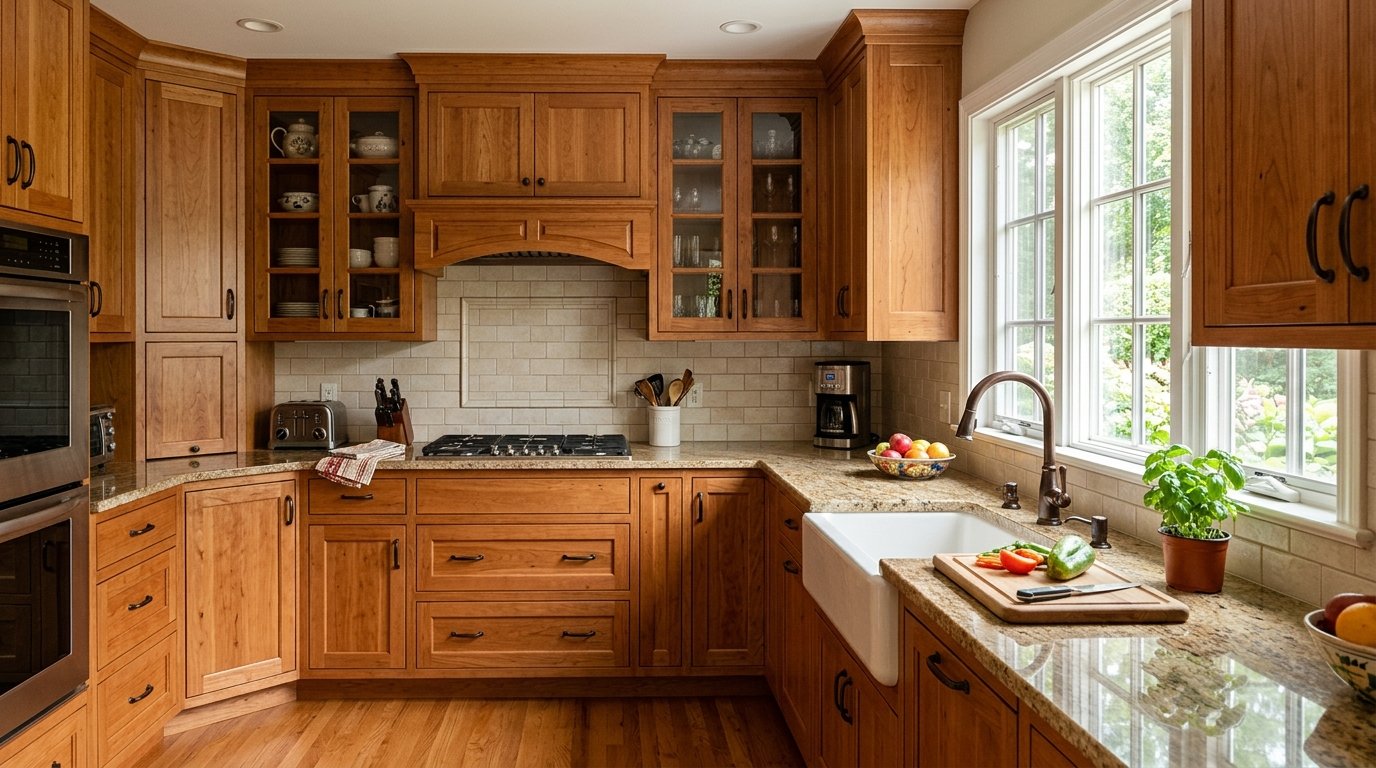

Many homeowners eventually grow tired of painted cabinets and wonder if they can bring back a natural wood look through staining. The honest answer is that staining over painted cabinets is technically difficult and rarely achieves the result people are hoping for.
Understanding Why Paint and Stain Behave Differently
Paint and stain interact with wood in completely different ways, which is the main reason switching from one to the other is not simple. Paint sits on top of the wood as a solid coating, while stain is designed to soak into open wood grain to show its natural texture.
How Paint Blocks Wood Absorption
Paint forms a sealed film across the surface of the cabinet, which prevents any liquid stain from reaching the actual wood underneath. Because stain relies on penetration into open pores, painted wood simply will not absorb it the way raw wood does. This is the core reason why staining directly over paint almost always fails to produce a natural finish.
How Stain Relies on Open Grain
Stain color depends heavily on the wood’s natural grain pattern being visible and unobstructed by any prior coating. Once cabinets have been painted, that grain is completely hidden beneath layers of pigment and primer. Without visible, open grain, stain cannot create the warm, natural variation people usually want from a stained finish.
What Happens If You Stain Directly Over Paint
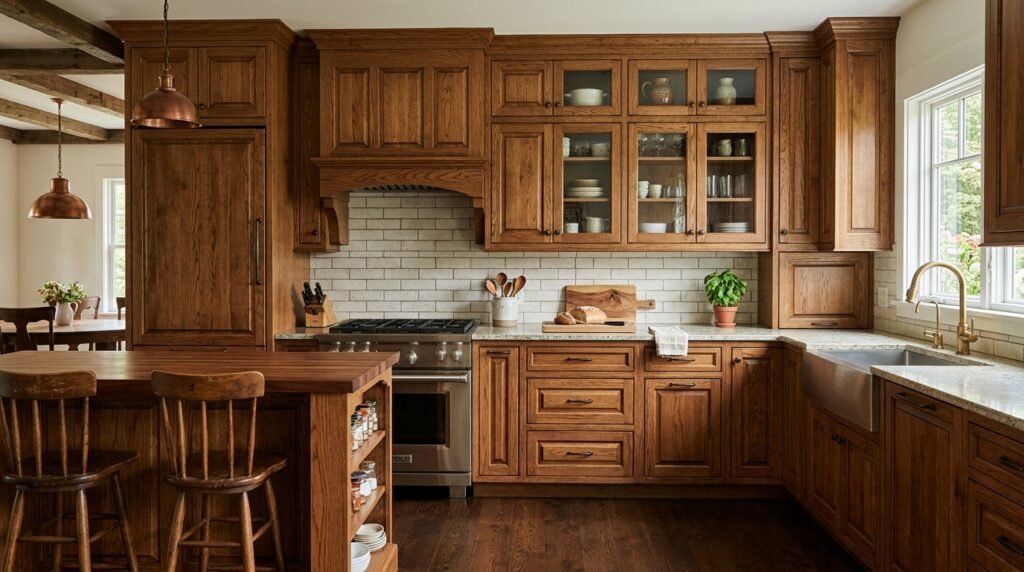
Attempting to apply stain directly over an existing painted surface generally leads to disappointing and uneven results. Understanding these outcomes helps explain why proper preparation is always necessary before staining painted cabinets.
Uneven and Blotchy Appearance
Stain applied over paint tends to sit unevenly, creating a blotchy, streaky appearance rather than a smooth wood-like finish. This happens because the stain has nothing to soak into and instead pools or slides across the slick painted surface. The final look often appears more like a stain-colored film than genuine stained wood.
Poor Durability and Peeling
Since stain is not designed to bond with painted surfaces, it often fails to adhere properly and can peel or wear away quickly. This creates a cabinet finish that looks patchy within a short period of time, especially in high-touch areas like handles and edges. Poor durability is one of the biggest reasons professionals discourage stain-over-paint attempts.
The Real Way to Stain Previously Painted Cabinets
To achieve an authentic stained finish, the painted layer must be completely removed first so the natural wood grain is exposed again. This process takes more time and effort, but it is the only reliable way to get true stained results.
Stripping the Paint Completely
Paint stripping involves using chemical strippers or heat guns to break down and remove every layer of old paint from the cabinet surface. This step must be thorough, since any leftover paint residue will interfere with stain absorption later on. Proper ventilation and protective gear are important during this process due to the fumes involved.
Sanding Down to Raw Wood
After stripping, cabinets need to be sanded down to smooth, bare wood to fully expose the natural grain pattern. Sanding also removes any remaining primer or paint residue that stripping alone may not fully eliminate. This step is essential because stain can only look natural when applied to clean, unfinished wood.
Applying Stain to Bare Wood
Once the cabinets are fully stripped and sanded, stain can finally be applied the way it is intended to be used. At this stage, the wood grain absorbs the stain evenly, producing the rich, natural color variation that people typically expect. A protective topcoat is usually added afterward to seal and protect the newly stained surface.
Table Comparing Paint Removal Methods
| Method | Time Required | Effort Level | Best For |
| Chemical Stripper | Moderate | Medium | Detailed cabinet doors |
| Heat Gun | Moderate | High | Flat cabinet surfaces |
| Sanding Only | Long | High | Thin paint layers |
| Combination Method | Shorter Overall | Medium | Most cabinet types |
Alternatives If Full Paint Removal Is Not Practical
For homeowners who do not want to strip cabinets entirely, there are other realistic options that can still refresh the kitchen’s appearance. These alternatives avoid the complications of trying to stain over paint directly.
Repainting With a New Color
Repainting is far easier than stripping and staining, since paint bonds well to existing painted surfaces with proper priming. This option allows homeowners to update their kitchen’s look without dealing with the challenges of exposing raw wood again. It is often the most practical choice when full wood grain restoration is not a priority.
Replacing Cabinet Doors Only
Some homeowners choose to keep their existing cabinet boxes but replace just the doors with new, unfinished wood ones. This allows for genuine staining on the new doors while avoiding the labor-intensive process of stripping the entire cabinet set. It can also be a more cost-effective solution than a full cabinet replacement.
Common Mistakes to Avoid
A frequent mistake is assuming a light sanding alone is enough before staining, when in fact all paint must be fully removed first. Another mistake is skipping a test area, which can lead to unpleasant surprises once the entire cabinet set has been treated. Rushing the drying time between stripping, sanding, and staining stages can also compromise the final finish quality.
Final Thoughts
Staining wood cabinets that have already been painted is possible, but only after the paint is fully stripped and the natural wood grain is exposed again. Attempting to stain directly over paint will not produce the warm, authentic wood look most homeowners are hoping for. With proper preparation, though, previously painted cabinets can be successfully transformed into a beautifully stained finish.
Frequently Asked Questions
Can you stain cabinets without removing all the paint first?
No, any remaining paint will block stain absorption and prevent a natural, even finish from forming.
Is it cheaper to stain or repaint previously painted cabinets?
Repainting is usually cheaper and faster since it does not require full paint removal or sanding down to bare wood.
How long does it take to strip and stain painted cabinets?
The process can take several days, depending on the number of paint layers and drying time between each step.
Do all wood types stain well after paint removal?
Not all wood types absorb stain evenly, so testing a hidden area first is recommended before staining the entire cabinet set.
Related Articles
Glow in the Dark Epoxy Floor: The Ultimate Guide for Homeowners & Contractors
How to Get Rid of Gnats in Bathroom Fast
Cedar Fence Panels: Complete Buying and Installation Guide