


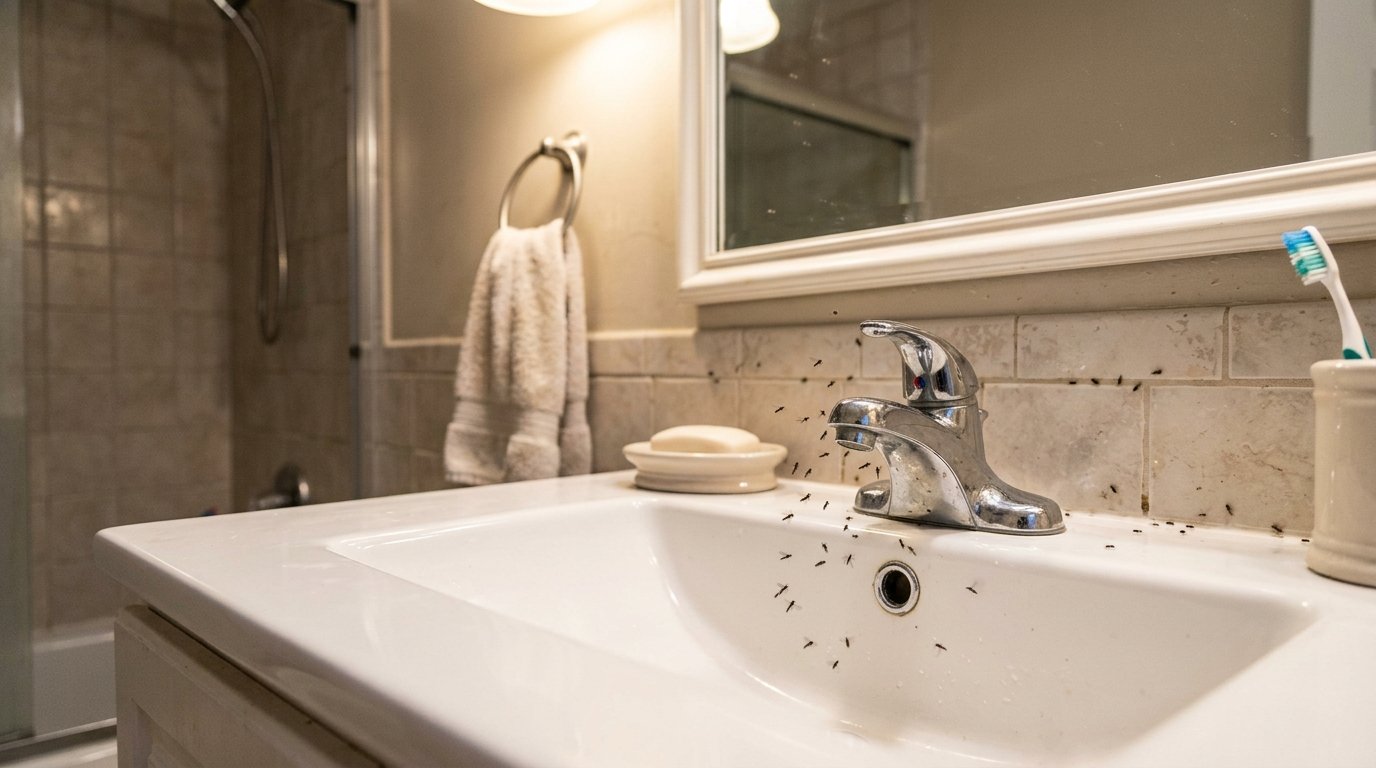

Small flying insects buzzing around your sink or shower are one of the most annoying bathroom problems, and most people don’t know where they’re coming from. This guide explains exactly how to get rid of gnats in bathroom spaces, covering the root causes, effective home remedies, and long-term prevention so they don’t keep coming back.
Why Gnats Appear in Bathrooms
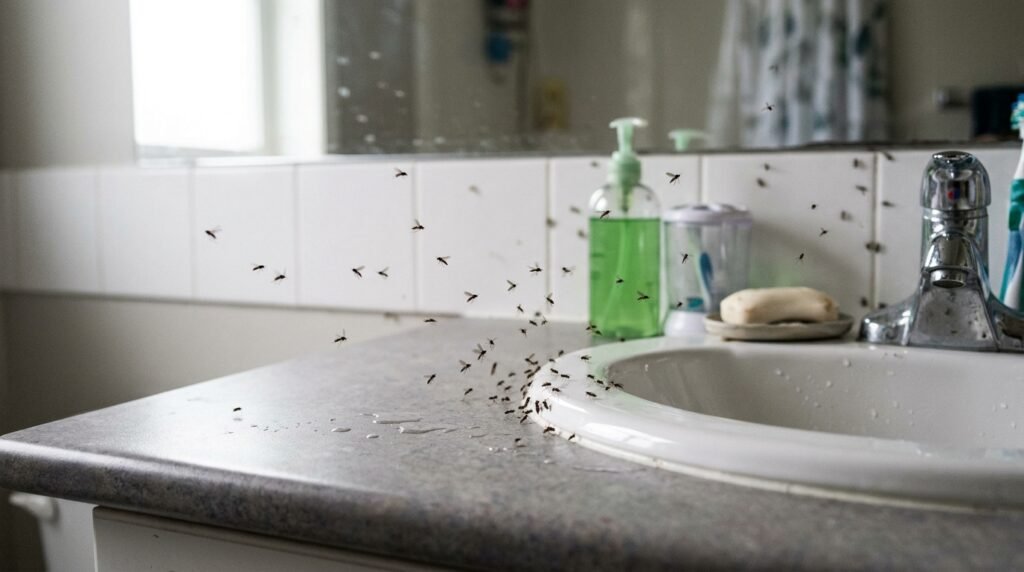
Gnats are drawn to bathrooms because of standing water, organic buildup, and moisture, which give them everything they need to breed. Understanding what attracts them makes it much easier to target the actual source instead of just swatting them away.
Drain Buildup and Organic Matter
Bathroom drains collect hair, soap scum, and skin cells over time, creating a thick layer of organic gunk inside the pipe.
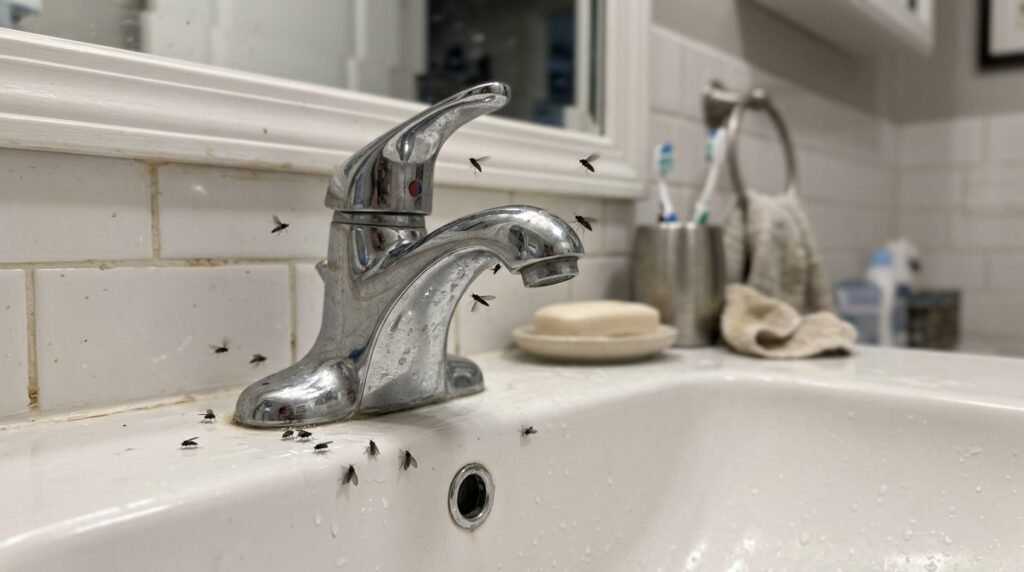
This buildup becomes a perfect breeding ground for drain flies and gnats, since it stays moist and provides food for larvae. Even if the bathroom looks clean on the surface, a dirty drain underneath can be the main source of an ongoing gnat problem.
Excess Moisture and Humidity
Damp areas such as around the base of the toilet, under the sink, or near a leaking pipe create ideal conditions for gnats to lay eggs. These insects are strongly attracted to consistently wet surfaces because their larvae need moisture to survive.
If your bathroom stays humid for long periods after showers, this moisture alone can be enough to invite gnats in.
Nearby Plants or Organic Waste
If you keep potted plants in or near the bathroom, overly wet soil can attract fungus gnats, which are often mistaken for drain gnats. Leftover organic waste, such as a trash bin without a lid, can also draw gnats looking for a food source.
Removing or better managing these items often reduces gnat activity significantly.
Effective Home Remedies to Get Rid of Gnats
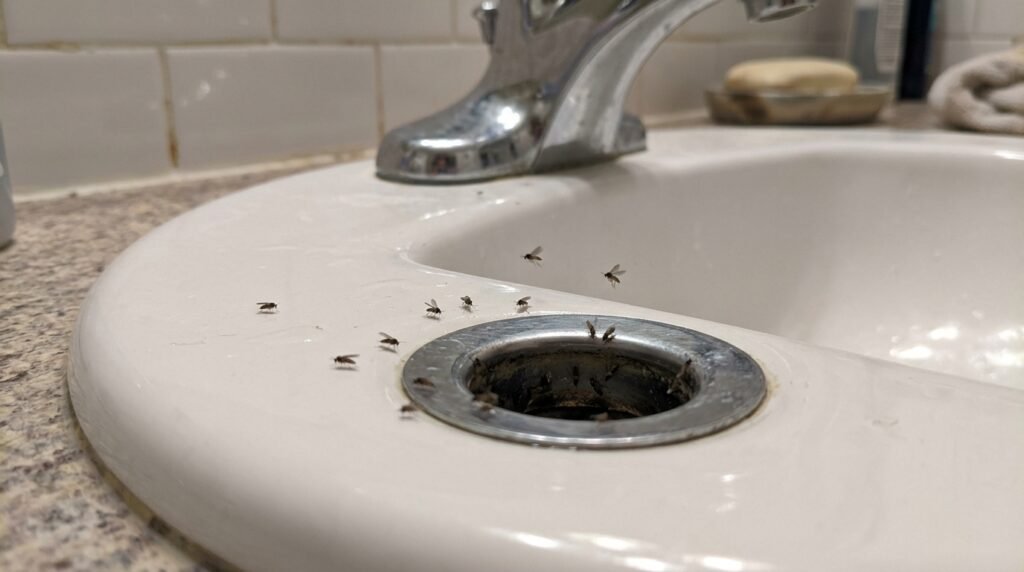
Once you know what’s attracting them, several simple home remedies can eliminate gnats without needing harsh chemicals or professional help.
Boiling Water Down the Drain
Pouring boiling water directly down the drain helps loosen and wash away the organic buildup where gnat larvae live. This should be done slowly and repeated over a few days for the best results, especially if the buildup is thick.
It’s one of the easiest first steps because it requires no special ingredients and works on most standard bathroom drains.
Baking Soda and Vinegar Solution
A mixture of baking soda followed by vinegar creates a fizzing reaction that helps break down grime stuck to the inside of the pipe. After pouring the baking soda in, letting the vinegar sit for about thirty minutes before rinsing with hot water improves the results.
This combination is gentle on pipes while still being strong enough to disrupt the environment gnats need to survive.
Apple Cider Vinegar Trap
Setting out a small bowl of apple cider vinegar covered with plastic wrap and a few tiny holes poked in the top attracts adult gnats, who then get trapped inside.
This trap works well for catching gnats that are already flying around the bathroom rather than those breeding in the drain. It won’t solve the root cause alone, but it’s useful for reducing the visible gnat population quickly.
Drain Cleaning Brush or Snake
Using a small drain brush or plumber’s snake to physically scrub out the buildup inside the pipe removes what home remedies alone might miss. This method reaches deeper into the drain than pouring liquids and pulls out hair and gunk directly.
It’s especially effective when combined with a hot water flush afterward to clear out any loosened debris.
Comparison of Gnat Removal Methods
| Method | Effectiveness | Effort Required | Best For |
| Boiling Water | Moderate | Low | Light buildup |
| Baking Soda & Vinegar | High | Low | Regular maintenance |
| Apple Cider Vinegar Trap | Moderate | Low | Catching flying gnats |
| Drain Brush/Snake | High | Medium | Thick, stubborn buildup |
| Professional Drain Cleaning | Very High | Low (for you) | Severe infestations |
Preventing Gnats From Coming Back
Getting rid of gnats once is only half the job, since they can return quickly if the underlying conditions aren’t addressed.
Regular Drain Maintenance
Cleaning your drains at least once a week with hot water or a baking soda rinse prevents organic matter from building up again.
Consistent maintenance is far more effective than waiting until gnats reappear and starting the whole process over. This small habit takes only a few minutes but saves a lot of frustration later.
Improving Bathroom Ventilation
Running an exhaust fan during and after showers helps reduce the lingering humidity that gnats are drawn to. Keeping a window open when possible, or wiping down wet surfaces after use, also limits the moisture available for breeding.
Better airflow makes the bathroom a much less appealing environment for gnats to settle in.
Sealing Cracks and Checking for Leaks
Small cracks around pipes or fixtures can let moisture collect in hidden spots where gnats can breed undisturbed. Checking under the sink and around the toilet base for leaks, and sealing any gaps you find, removes these hidden sources.
This step is often overlooked but can be the reason gnats keep returning even after cleaning the visible areas.
Conclusion
Getting rid of gnats in the bathroom mainly comes down to tackling drain buildup and controlling moisture, since these two factors create the environment gnats need to thrive. Simple remedies like boiling water, baking soda with vinegar, and vinegar traps handle most cases without needing chemical sprays.
Pairing these methods with regular maintenance and better ventilation keeps gnats from coming back for good.
FAQs
What causes gnats to suddenly appear in the bathroom?
Gnats usually appear due to organic buildup in the drain combined with excess moisture, which together create ideal breeding conditions.
Can gnats in the bathroom be harmful?
They are not typically dangerous to health, but they can carry bacteria from the drain and are simply unpleasant to have around.
How long does it take to get rid of bathroom gnats?
Most home remedies show noticeable results within three to five days if applied consistently, though severe infestations may take longer.
Do I need chemical drain cleaners to remove gnats?
No, natural methods like baking soda, vinegar, and boiling water are usually enough and are safer for pipes than harsh chemicals.
When should I call a professional for a gnat problem?
If gnats persist after two weeks of consistent home treatment, it may indicate a deeper plumbing issue that requires professional drain cleaning.
Related Articles
How to Clean a Shower Curtain? Everything You Need to Know
Acid Staining Concrete Floor: Complete Guide
Roof Leaks in Heavy Rain: Causes, Signs & Fixes
How to Get Rid of Mold in the Bathroom: Complete Step-by-Step Guide
How Deep Are Kitchen Counters? Standard Depths for Every Counter Type