

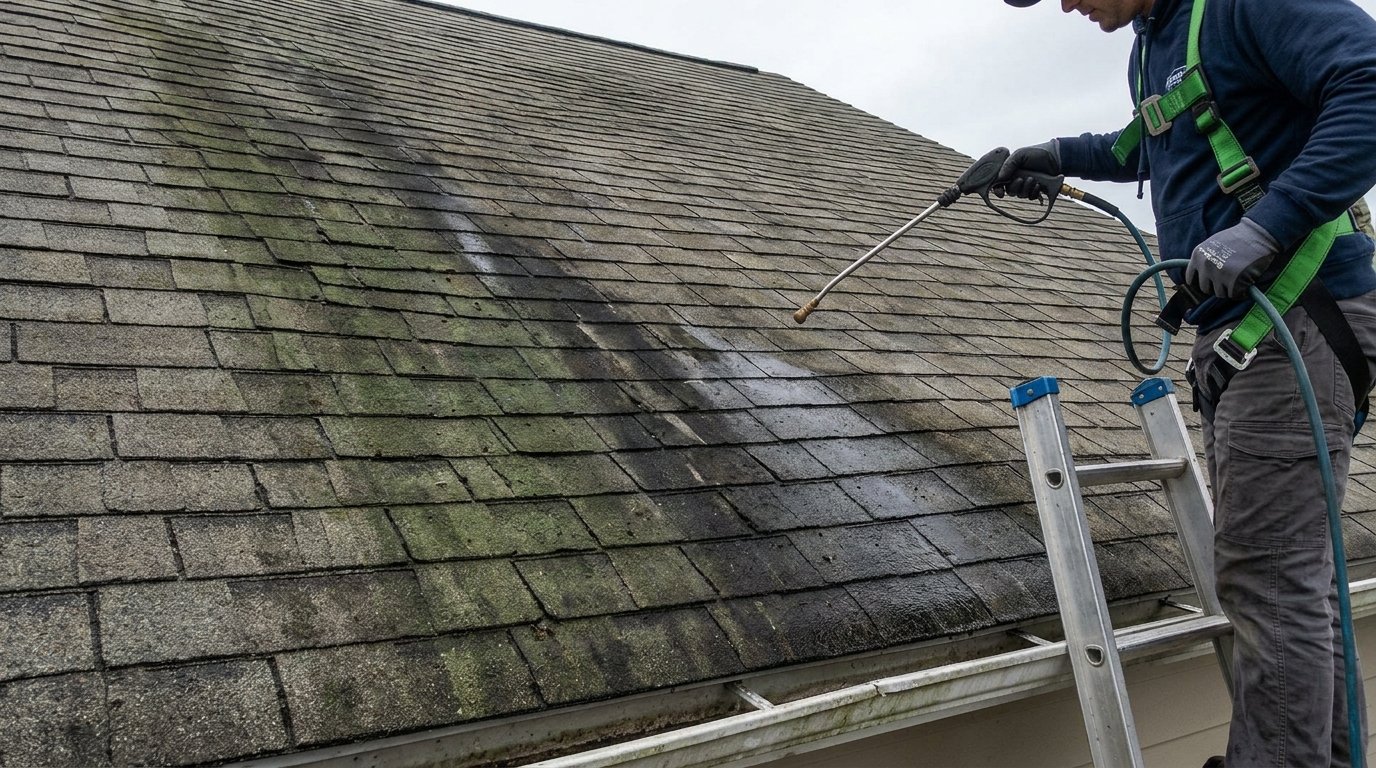

Roof washing is an essential part of home maintenance that many homeowners overlook until visible stains, moss, or algae start damaging the roof’s appearance and structure. Regular cleaning not only improves curb appeal but also extends the lifespan of roofing materials by removing harmful buildup.
This guide explains the methods, benefits, safety measures, and cost considerations involved in roof washing so you can maintain your roof effectively.
What Is Roof Washing?
Roof washing refers to the process of cleaning a roof’s surface to remove dirt, algae, moss, lichen, and other debris that accumulate over time. It is typically done using specialized techniques suited to the roofing material to avoid damage during the cleaning process.
Why Roofs Need Regular Cleaning
Roofs are constantly exposed to weather conditions, tree debris, and organic growth like algae and moss, which can weaken shingles over time if left untreated. Regular roof washing prevents this buildup from causing long-term structural damage.
It also helps maintain the roof’s ability to reflect sunlight and regulate indoor temperatures.
Signs Your Roof Needs Washing
Dark streaks, green patches, or a generally dirty appearance are clear indicators that a roof requires washing. These signs usually result from algae or moss growth, which spreads quickly in humid or shaded areas. Ignoring these signs for too long can lead to more expensive repairs down the line.
Methods Used in Roof Washing
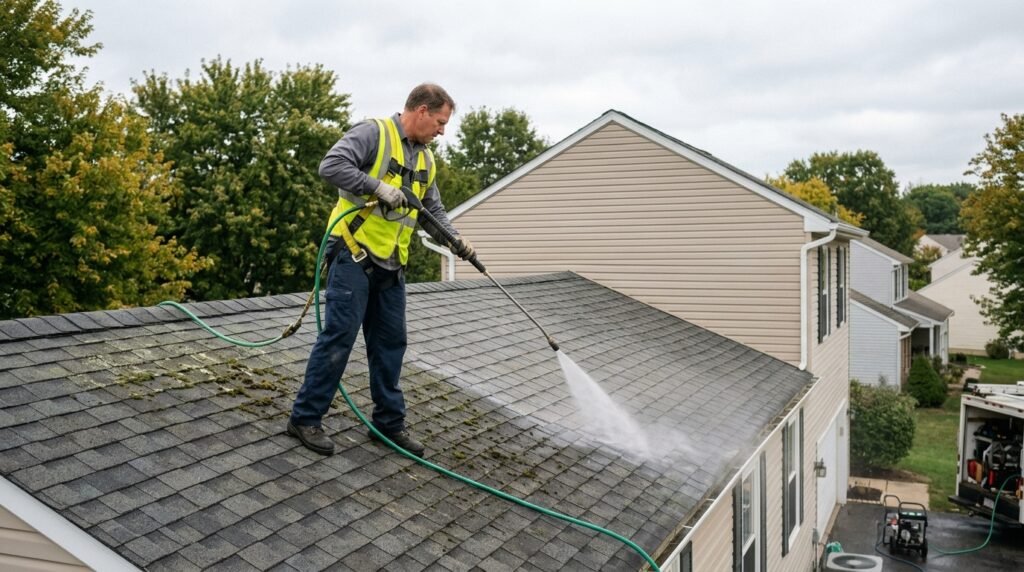
Different roof washing methods are used depending on the roofing material and the severity of dirt or organic growth present.
Soft Washing
Soft washing is a low-pressure cleaning method that uses specialized cleaning solutions to break down algae, moss, and dirt without damaging shingles.
This method is considered the safest option for asphalt shingle roofs since it avoids the risk of pressure-related damage. Soft washing solutions often contain a mix of water, bleach, and surfactants that eliminate organic growth effectively.
Pressure Washing
Pressure washing uses high-powered water streams to remove dirt and grime, but it is generally recommended only for durable roofing materials like metal or tile.
Using pressure washing on asphalt shingles can strip away protective granules and shorten the roof’s lifespan. This method is faster but requires careful handling to avoid structural damage.
Chemical Treatment
Chemical treatments involve applying specific solutions designed to kill algae, moss, and lichen at the root level, preventing regrowth for a longer period. These treatments are often used alongside soft washing for more stubborn stains or heavy organic growth.
Choosing roof-safe chemicals is essential to avoid harming surrounding plants or the roofing material itself.
Benefits of Roof Washing
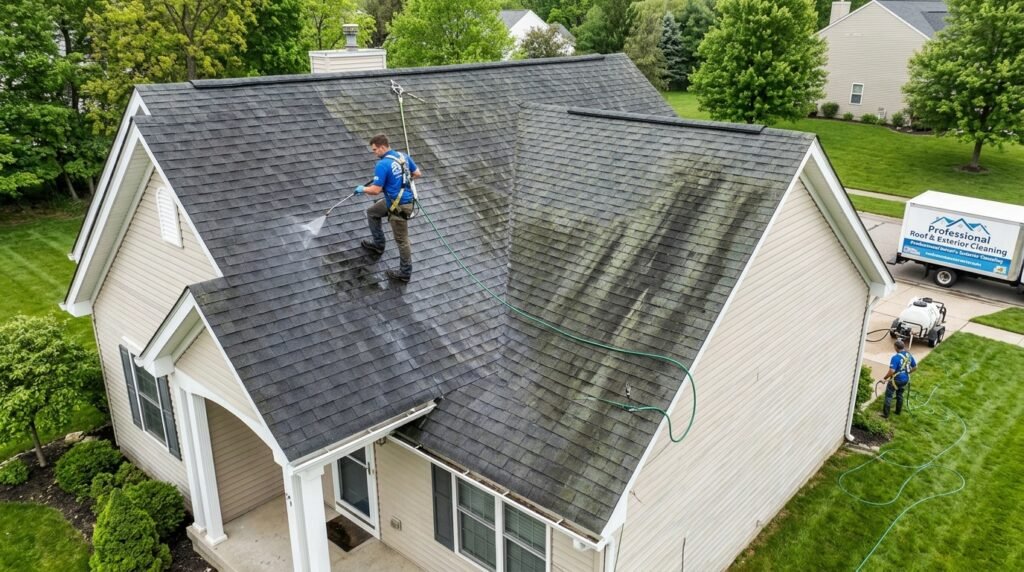
Regular roof washing offers several advantages that go beyond simply improving the appearance of a home.
Extends Roof Lifespan
Removing algae, moss, and debris through roof washing prevents these organisms from breaking down roofing materials over time. Left untreated, moss can trap moisture against the roof surface, leading to rot and structural weakening.
Regular cleaning helps roofs last longer and reduces the need for premature replacement.
Improves Energy Efficiency
A clean roof reflects sunlight more effectively, which can help reduce indoor heat buildup during warmer months. Dark algae stains absorb more heat, potentially increasing cooling costs in the summer. Roof washing indirectly contributes to better energy efficiency by maintaining the roof’s reflective properties.
Enhances Curb Appeal
A clean, stain-free roof significantly improves the overall appearance of a home, which is especially important for those planning to sell their property. Roof washing removes unsightly streaks and patches that can make even a well-maintained home look neglected. This improvement in curb appeal can positively influence property value.
Safety Considerations for Roof Washing
Roof washing involves certain risks that require careful planning and safety precautions, whether done independently or through professional services.
Working at Heights
Roof washing requires working at elevated heights, which poses a fall risk if proper safety equipment like harnesses and stable ladders is not used. Homeowners without experience working on roofs are generally advised to hire professionals for this task. Professional roof washing companies are trained and equipped to handle height-related risks safely.
Choosing the Right Cleaning Solutions
Using harsh or incorrect chemicals during roof washing can damage shingles, harm surrounding vegetation, or pose environmental concerns.
It is important to select cleaning solutions specifically designed for roofing materials and to follow proper dilution guidelines. Professional roof washing services typically have access to safer, more effective commercial-grade solutions.
Cost Factors in Roof Washing
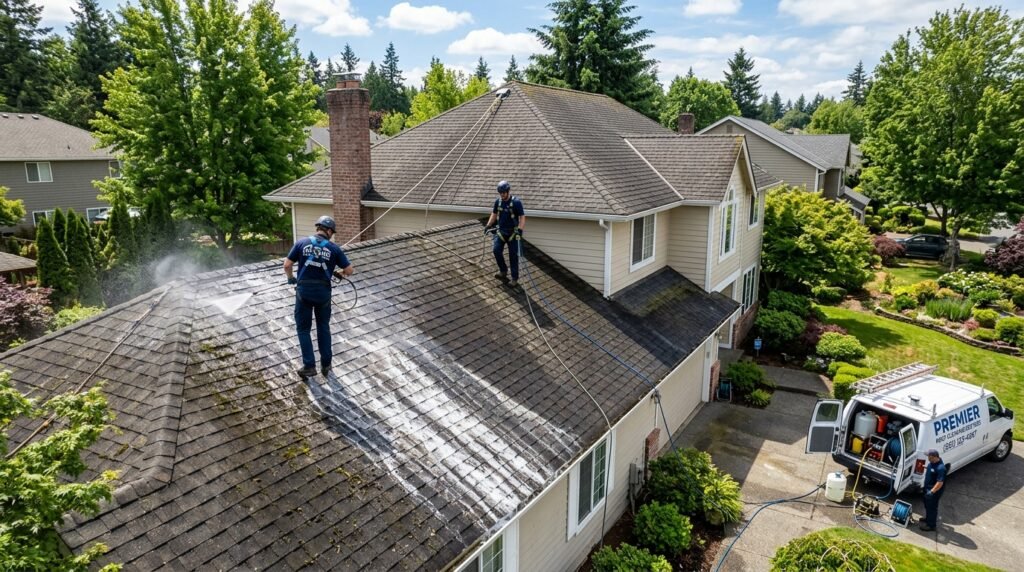
The cost of roof washing varies depending on several factors related to the roof itself and the cleaning method chosen.
Roof Size and Pitch
Larger roofs or those with steep pitches generally require more time, equipment, and labor, which increases the overall cost of roof washing. Steeper roofs also demand additional safety measures, further affecting pricing. Homeowners should expect higher quotes for larger or more complex roof structures.
Method and Severity of Buildup
The chosen washing method and the extent of algae, moss, or dirt buildup also influence the final cost of the service. Heavier organic growth may require multiple treatments or additional chemical applications, raising the total price.
Soft washing services are generally more affordable compared to specialized chemical treatments for severe cases.
Comparison of Roof Washing Methods
| Method | Best For | Risk Level | Cost Range |
| Soft Washing | Asphalt shingles | Low | Moderate |
| Pressure Washing | Metal/tile roofs | Moderate | Moderate to High |
| Chemical Treatment | Heavy algae/moss | Low | Moderate |
Competitor Content Analysis
Most existing articles on roof washing focus only on general benefits without explaining the differences between soft washing, pressure washing, and chemical treatments in detail. Many competitor pages also overlook safety considerations and cost-influencing factors, leaving readers without a complete picture before hiring a service.
This guide fills those gaps by offering method comparisons, safety insights, and cost breakdowns in one comprehensive resource.
Frequently Asked Questions
How often should roof washing be done?
Most experts recommend roof washing once every one to two years, depending on the level of algae or moss growth in your area.
Is pressure washing safe for all roof types?
No, pressure washing is generally unsafe for asphalt shingle roofs and is better suited for durable materials like metal or tile.
Can I perform roof washing myself?
While minor cleaning can be done independently with proper safety gear, hiring professionals is recommended for larger or steeper roofs to avoid injury and damage.
Conclusion
Roof washing is a valuable maintenance task that protects your roof from long-term damage while improving its appearance and energy efficiency.
Choosing the right method based on your roofing material, along with proper safety precautions, ensures effective and lasting results. Whether handled independently or through professional services, regular roof washing is an investment that keeps your home protected and visually appealing for years to come.
Related Articles
How to Clean Cork Flooring: A Complete Guide 2026
Can Gutter Hangers Prevent Gutter Damage from Roof Avalanche?
How Many Bags of Mulch in a Yard Complete guide 2026
18 Inch Deep Base Cabinets: A Smart Storage Solution for Every Kitchen