




An underground water leak can quietly waste thousands of gallons and drive up your water bill before you even notice a problem on the surface.
Knowing how to find a water leak underground early helps you avoid costly foundation damage, soggy yards, and long-term pipe corrosion.
Signs You May Have an Underground Leak
Before searching for the exact leak location, it helps to recognize the warning signs that point to a hidden pipe problem. These clues often show up gradually rather than all at once.
Unexplained Increase in Water Bills
A sudden jump in your water bill without any change in usage habits is one of the clearest signs of a hidden leak. Comparing several months of bills side by side can reveal a pattern that starts right around when the leak likely began.
This is often the first clue that sends homeowners looking for a physical cause.
Wet Spots or Soggy Patches in the Yard
Patches of grass that stay damp or spongy even during dry weather often sit directly above a leaking pipe. These areas may also grow greener or faster than the surrounding lawn because of the extra moisture feeding the roots. Walking the yard after a few dry days makes these unusual wet spots easier to spot.
Low Water Pressure Indoors
When water escapes through a crack before reaching your faucets, the pressure at every tap in the house can drop noticeably. This is especially telling if the low pressure affects the whole home rather than just one fixture.
A whole-house pressure drop combined with a rising water bill is a strong indicator of an underground leak.
Checking Your Water Meter for Confirmation
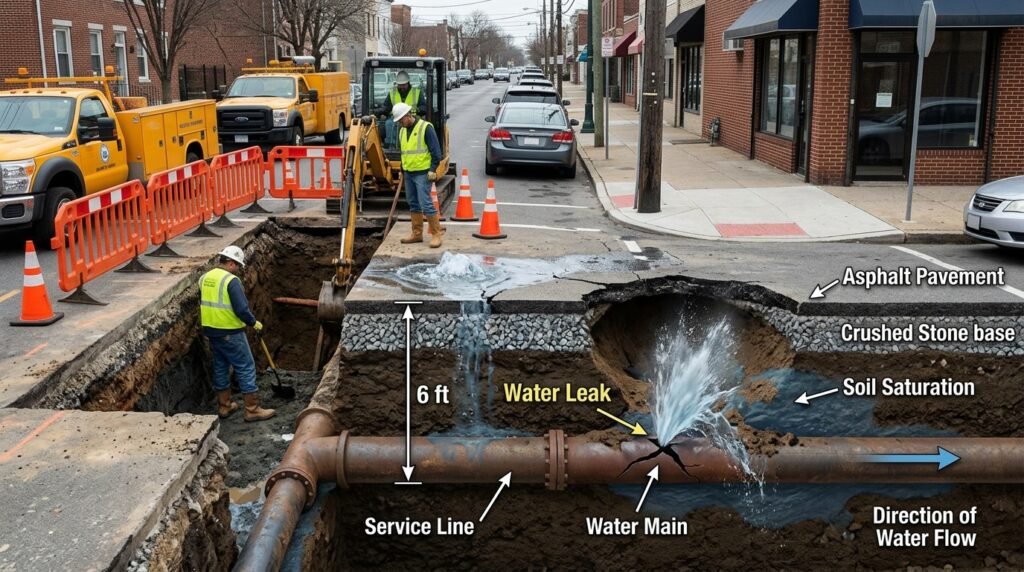
Once you suspect a leak, the water meter offers a simple way to confirm it without any special tools. This step narrows down whether the leak is truly underground before you start digging or calling in help.
Perform a Meter Test
Turn off every faucet, appliance, and irrigation system in the house, then check the water meter’s leak indicator, which is often a small triangular or star-shaped dial.
If that dial is spinning even with everything off, water is moving somewhere in the system. Waiting fifteen minutes and checking the main meter number again for any change also confirms ongoing water loss.
Locate the Leak Zone
If the meter confirms a leak, shutting off the main valve inside the house can help determine whether the leak is between the meter and the home or elsewhere.
If the meter still moves after the indoor valve is closed, the leak is very likely in the underground line between the meter and the house. This narrows the search area significantly before any physical digging begins.
Methods to Pinpoint the Exact Leak Location
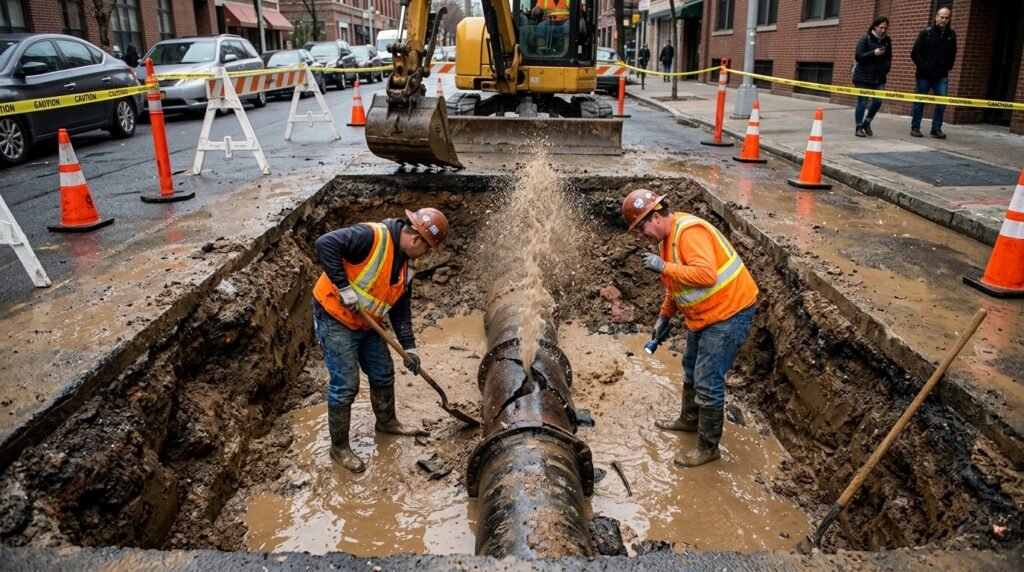
Once you know a leak exists underground, several techniques can help narrow down its precise location before calling a professional or starting repairs.
Each method works better in different situations depending on soil type, pipe material, and leak size.
Listen With a Ground Microphone or Listening Rod
A ground microphone, sometimes called a listening rod, amplifies the sound of water escaping under pressure so you can walk the suspected area and listen for the loudest point.
This sound often resembles a hissing or rushing noise that gets stronger directly above the leak. Professional plumbers use more advanced acoustic equipment, but basic listening devices are available for rent at many hardware stores.
Use a Soil Probe to Check for Softness
Pushing a metal probe or rod into the ground along the suspected pipe path can reveal areas where the soil is unusually soft or saturated compared to the surrounding earth.
This method works especially well combined with visual signs like wet patches or unusual plant growth. It is a low-cost way to narrow the search area before more invasive digging.
Try Dye or Tracer Gas Testing
For leaks that are hard to hear or see, a colored dye can sometimes be introduced into the line to help trace where it resurfaces at the ground level. Tracer gas testing, which involves injecting a harmless gas into the pipe and detecting where it escapes through the soil, is another method professionals use for stubborn leaks.
Both approaches are especially useful when the leak is deep or the pipe material dampens sound.
Table: Common Underground Leak Detection Methods
| Method | Best For | Tools Required |
| Meter test | Confirming a leak exists | Water meter, stopwatch |
| Ground microphone | Locating leaks by sound | Listening rod or acoustic device |
| Soil probe | Checking soil saturation | Metal probe or rod |
| Dye testing | Tracing leak path visually | Non-toxic dye |
| Tracer gas | Deep or quiet leaks | Gas injection kit, detector |
When to Call a Professional Leak Detection Service
Some leaks are straightforward enough to trace on your own, but others require specialized equipment and experience to locate safely and accurately.
Knowing when to bring in a professional saves both time and unnecessary yard damage.
Complex or Deep Pipe Systems
Homes with older plumbing, multiple pipe materials, or leaks located several feet underground often need equipment beyond what most homeowners have access to. Professionals use thermal imaging, correlators, and advanced acoustic sensors that pinpoint leaks within inches rather than general areas.
This precision reduces the amount of digging needed for the actual repair.
Repeated or Unclear Leak Signs
If your water bill keeps rising but you cannot find any wet spots, soft soil, or audible sounds, the leak may be in a location that standard home methods cannot reach.
A licensed leak detection technician can use specialized tools to trace pipes that run under concrete slabs, driveways, or landscaping features. Waiting too long in these cases usually leads to more expensive repairs later.
Before Major Digging or Landscaping Work
Even if you feel confident about the general leak area, having a professional confirm the exact spot before digging prevents accidental damage to other utility lines.
This step is especially important in yards with sprinkler systems, gas lines, or electrical conduits running nearby. A short professional visit before repair work often costs far less than fixing damage caused by digging in the wrong place.
Conclusion
Finding a water leak underground starts with recognizing the early signs, confirming the issue through a simple meter test, and then narrowing down the exact location using listening devices, soil checks, or tracer methods.
Acting quickly once you notice rising bills or wet patches in the yard helps prevent further water loss and structural damage to your property. When the leak proves difficult to locate or reach, calling a professional leak detection service is often the safest and most cost-effective next step.
FAQs
How can I tell if a leak is underground or inside my house?
Turning off the main indoor shutoff valve and checking whether the water meter is still moving helps confirm whether the leak sits in the underground line or inside the home’s plumbing.
Can I find an underground leak without digging?
Yes, tools like ground microphones, soil probes, and tracer gas testing can pinpoint a leak’s location without any digging until the actual repair begins.
How much water can an underground leak waste?
Depending on the pipe size and pressure, a hidden leak can waste hundreds to thousands of gallons per month, which often shows up as a sharp increase in the water bill.
Is it expensive to hire a professional leak detection service?
Costs vary by location and leak complexity, but professional detection is often less expensive overall than repeated failed digging attempts or water damage repairs from an undetected leak.
Related Articles
How to Get Rid of Stucco Ceilings?
Gutters for Metal Roof: Complete Guide
Factors Affecting Door Installation Cost: What You Need to Know
Can Gutter Hangers Prevent Gutter Damage from Roof Avalanche?