

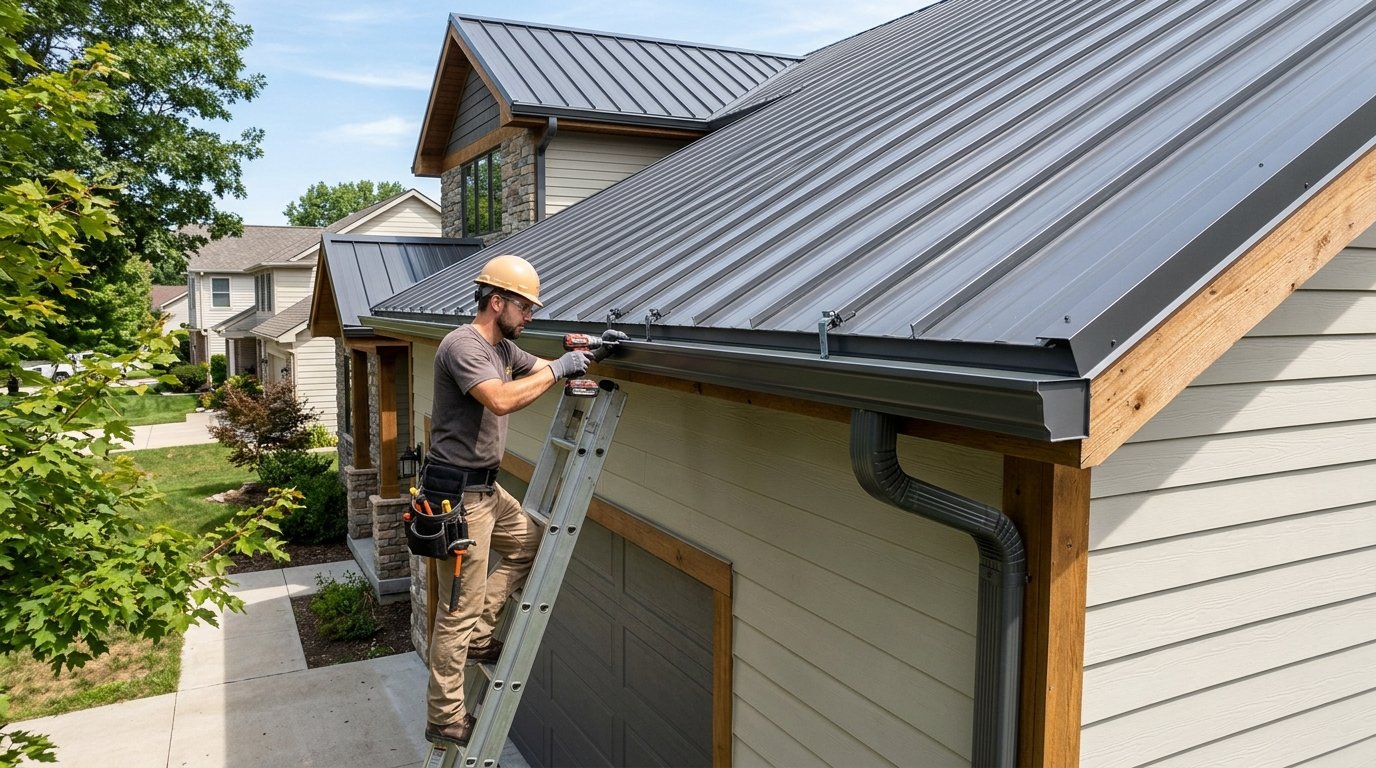

Metal roofing has grown in popularity due to its durability and long lifespan, but pairing it with the right gutter system is essential for proper water management.
Gutters for metal roof structures require specific considerations since metal roofs shed water differently than traditional shingle roofs. This guide covers everything homeowners need to know to make an informed decision.
Why Metal Roofs Need Specialized Gutters
Metal roofs shed water much faster than asphalt shingles, which means standard gutter setups may not always perform as expected. Understanding this difference helps explain why gutter placement and sizing matter more with metal roofing systems.
Faster Water Runoff
Because metal surfaces are smooth and non-porous, rainwater slides off quickly rather than being absorbed or slowed down as it would on a textured shingle surface. This rapid runoff can cause water to overshoot standard gutters if they aren’t positioned or sized correctly.
Snow and Ice Considerations
In colder climates, metal roofs can release large sheets of snow and ice suddenly, which places extra stress on gutters if they aren’t reinforced properly. Choosing gutters designed to handle this kind of impact helps prevent bending or detachment during winter months.
Types of Gutters for Metal Roof Systems
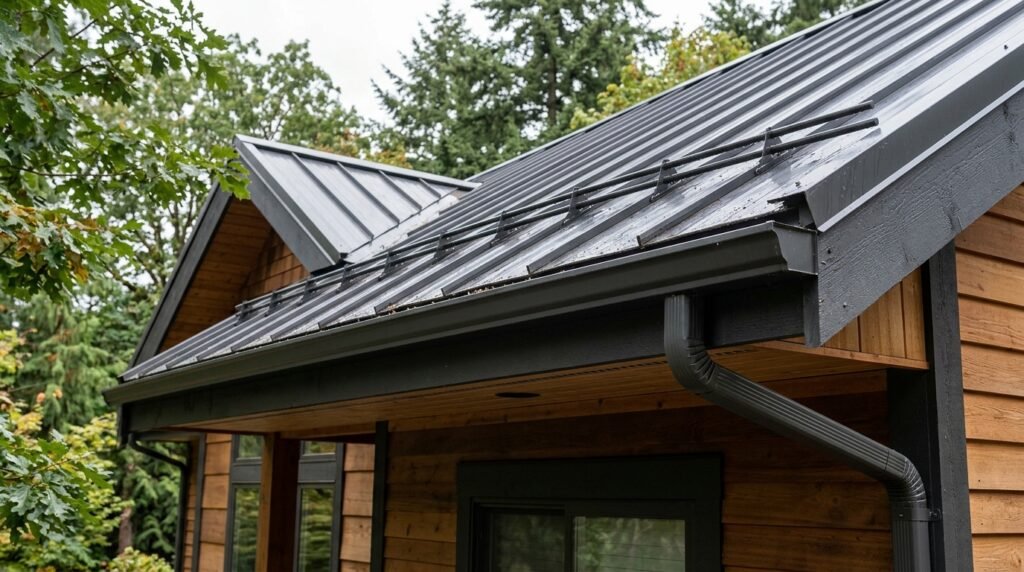
There are several gutter styles suitable for metal roofing, each offering different benefits depending on the home’s design and regional weather patterns. The table below outlines the most common options available.
| Gutter Type | Material Compatibility | Best Use Case |
| K-Style Gutters | Aluminum, steel, copper | Standard residential homes |
| Half-Round Gutters | Copper, aluminum | Historic or classic-style homes |
| Box Gutters | Steel, aluminum | Commercial and large roofs |
| Seamless Gutters | Aluminum, steel | Homes needing leak-free performance |
K-Style Gutters
K-style gutters have a flat back and decorative front profile, making them a versatile choice that fits well with most metal roof designs. Their shape also allows them to hold more water volume compared to rounded alternatives, which is useful during heavy rainfall.
Half-Round Gutters
Half-round gutters have a smooth, curved design that reduces debris buildup and is often chosen for its classic aesthetic appeal. These gutters pair particularly well with standing seam metal roofs on older or historically styled homes.
Seamless Gutters
Seamless gutters are custom-fabricated on-site to match the exact length of the roofline, reducing the number of joints where leaks could develop. This option is increasingly popular for metal roofs since it minimizes maintenance issues over time.
Best Materials for Metal Roof Gutters
Selecting the right gutter material is just as important as choosing the style, since compatibility with metal roofing affects both performance and lifespan. Different materials offer varying levels of durability, cost, and maintenance needs.
Aluminum Gutters
Aluminum is lightweight, resistant to rust, and one of the most commonly used materials for gutters on metal roofs. It’s also relatively affordable while still offering good durability against most weather conditions.
Steel Gutters
Steel gutters, particularly galvanized or galvalume options, offer excellent strength and are well-suited for areas with heavy snowfall or ice buildup. They tend to be heavier than aluminum, which adds durability but also increases installation complexity.
Copper Gutters
Copper gutters are a premium option known for their long lifespan and distinctive appearance that develops a natural patina over time. While more expensive upfront, copper gutters often outlast other materials significantly, making them a long-term investment.
Gutter Placement and Installation for Metal Roofs
Proper placement is critical when installing gutters for metal roof systems, since incorrect positioning can lead to water overshooting or pooling issues. This section explains the key installation considerations to keep in mind.
Positioning Below the Drip Edge
Gutters should be installed slightly lower and further out than standard shingle roof setups to account for the increased speed of water leaving the metal surface. This adjustment helps ensure water lands inside the gutter channel rather than splashing over it.
Using Compatible Brackets and Hangers
Metal roofs often require specific gutter hangers that can withstand the additional weight of snow and ice sliding off the roof surface. Using brackets spaced closer together than typical installations adds extra support and reduces the risk of sagging.
Incorporating Snow Guards
Snow guards are often installed alongside gutters on metal roofs to break up large snow and ice masses before they reach the gutter line. This reduces the impact force on the gutter system and helps prevent damage during winter weather events.
Common Problems with Metal Roof Gutters
Even well-installed gutters can face specific challenges when paired with metal roofing, and understanding these issues helps with early prevention. The following problems are the most frequently reported by homeowners.
Water Overshoot
If gutters are not positioned correctly, fast-moving water from the metal roof can shoot past the gutter entirely, leading to erosion or foundation issues near the home. Adjusting gutter angle and depth typically resolves this problem effectively.
Ice Dam Damage
Sudden ice release from metal roofs can bend or tear gutters that aren’t reinforced or protected with snow guards. Reinforced brackets and proper snow management systems reduce the likelihood of this type of damage.
Debris Accumulation
While metal roofs shed leaves and debris more easily than shingles, gutters themselves can still collect buildup that affects water flow if not cleaned regularly. Installing gutter guards can help minimize this issue over time.
Maintenance Tips for Metal Roof Gutters
Regular maintenance keeps gutters for metal roof systems functioning properly and extends their overall lifespan. These simple practices help avoid costly repairs down the line.
Seasonal Cleaning
Cleaning gutters at least twice a year, especially before heavy rain or snow seasons, prevents clogs and ensures smooth water flow. This is particularly important in areas with nearby trees that shed leaves or branches.
Inspecting for Damage
Regular inspections help identify loose brackets, small dents, or early signs of rust before they turn into larger structural problems. Catching these issues early often means simple repairs rather than full gutter replacement.
Gutter Guard Installation
Adding gutter guards reduces the frequency of manual cleaning while still allowing water to flow freely through the system. This is a practical addition for homeowners looking to reduce long-term maintenance efforts.
Gutters for Metal Roof vs Traditional Shingle Roof Gutters
Comparing gutter needs between metal and shingle roofs highlights why specialized considerations matter for metal roofing systems. The differences primarily come down to water speed, weight distribution, and material compatibility.
Water Flow Differences
Shingle roofs slow down water due to their textured surface, while metal roofs allow water to move quickly, requiring gutters positioned and sized accordingly. This difference is the main reason generic gutter installations sometimes underperform on metal roofs.
Structural Load Considerations
Metal roofs can release snow and ice in larger, heavier sections compared to shingles, meaning gutters need additional reinforcement to handle this extra load. Homeowners switching from shingle to metal roofing should reassess their existing gutter system’s capacity.
Frequently Asked Questions
Do metal roofs require special gutters?
Yes, gutters for metal roof systems often need adjusted placement and reinforced hangers to handle faster water runoff and potential snow load.
What is the best gutter material for metal roofs?
Aluminum and steel are the most common choices, while copper offers a premium, long-lasting alternative for those willing to invest more upfront.
How often should metal roof gutters be cleaned?
Cleaning at least twice a year is recommended, though homes near trees may need more frequent maintenance.
Can standard gutters be used on a metal roof?
Standard gutters can work, but proper positioning and reinforced brackets are necessary to prevent overshoot and damage from snow or ice.
Conclusion
Choosing the right gutters for metal roof systems involves careful consideration of material, placement, and reinforcement to handle the unique water flow and weather challenges metal roofing presents. With proper installation and regular maintenance, these gutters can effectively protect a home for many years compared to poorly matched or generic alternatives.
Related Articles
How Do You Wash Walls Before Painting? (Step-by-Step Guide)
Garage Door Bottom Seal Replacement: Complete Guide for Homeowners
How to Clean and Store Kitchen Tools: The Complete Guide