


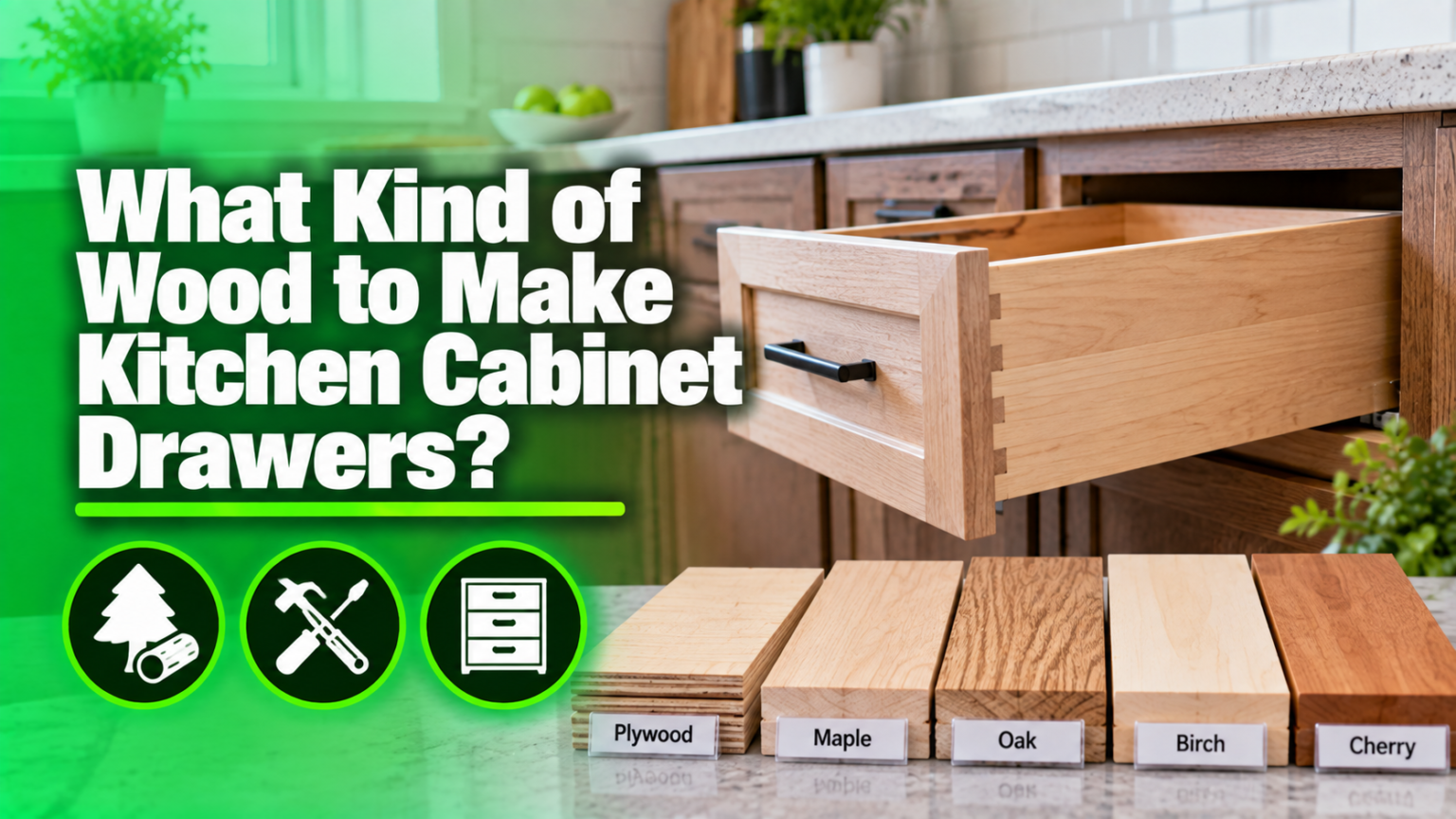

If you have ever pulled open a kitchen drawer and felt it wobble, stick, or sag under the weight of pots and cutlery, you already know that wood choice is not just a small detail. It is one of the most important decisions in a kitchen renovation or a DIY cabinet project.
Many homeowners and even first-time woodworkers get stuck on one simple question: what kind of wood to make kitchen cabinet drawers that will actually hold up for years without warping, cracking, or falling apart?
The truth is, there is no single “perfect” wood that works for every kitchen. The right choice depends on your budget, how much weight the drawers will carry, the humidity levels in your home, and how much of a finished look you want when the drawer is pulled open.
In this guide, we will walk through everything you need to know, from the science of why wood choice matters to a full comparison of the most popular wood types, so you can make a confident decision for your own kitchen.
Why the Right Wood Matters for Kitchen Drawers
Kitchen drawers are not decorative pieces sitting quietly in a corner. They are workhorses. Every single day, they get pulled open, slammed shut, loaded with heavy items, and exposed to steam, spills, and temperature swings. Choosing the wrong material can mean replacing drawers within a few years, while the right one can last for decades.
Daily Wear and Tear
Drawers experience constant friction against their runners and repeated stress on their joints. A soft or weak wood will loosen at the corners over time, causing the classic wobble or the frustrating drag when you try to open a drawer. Hardwoods and stable plywoods resist this kind of damage far better than cheap softwoods.
Moisture and Humidity in Kitchens
Kitchens are one of the most humid rooms in any home, thanks to boiling pots, dishwashers, and general cooking steam. Wood naturally absorbs and releases moisture, which causes it to expand and contract. If the wood is not chosen carefully, this constant movement leads to warped drawer bottoms, sides that no longer sit flush, or joints that pull apart.
Weight-Bearing Needs
Think about what actually goes inside a kitchen drawer: cast iron pans, stacks of plates, cutlery trays, or bulky utensils. This is very different from a bedroom dresser drawer that mostly holds folded clothes. Kitchen drawers need wood that can support real weight without sagging in the middle or splitting at the base.
Key Factors to Consider Before Choosing Wood
Before jumping into specific wood types, it helps to understand the four main factors that should guide your decision.
| Factor | Why It Matters |
|---|---|
| Durability and strength | Determines how well the drawer resists daily use, weight, and wear over the years |
| Budget | Hardwoods like walnut cost significantly more than poplar or pine |
| Aesthetics and finish | Matters if the drawer interior will be visible or if you want a matching wood tone |
| Availability | Some woods are easy to find locally, while others may need special ordering |
Balancing these four factors is really the heart of answering what kind of wood to make kitchen cabinet drawers for your specific situation. A busy family kitchen has different needs than a low-use vacation home kitchen, and your final choice should reflect that.
Best Wood Types for Drawer Boxes
Now let’s get into the actual options. Each of these woods has its own strengths, and cabinetmakers often pick between them based on the balance of cost, appearance, and toughness.
Maple
Maple, whether hard or soft variety, is often called the “gold standard” for kitchen cabinet drawers. It has a light, clean color, a tight grain that resists chipping, and enough hardness to handle years of daily use without denting easily. Maple is also fairly easy to work with, glues well, and takes stain or finish evenly.
If you open a drawer and want it to look intentional rather than like an afterthought, maple sides paired with a light plywood bottom is a combination that consistently shows up in professional cabinetry.
Poplar
Poplar is the budget-conscious choice that still performs admirably. It has straight, uniform grain, is easy to cut and join, and resists warping reasonably well for its price point. The only downside is a slight greenish tint that some poplar boards carry, which usually does not matter much since drawer boxes are rarely left unfinished or highly visible.
For anyone asking what kind of wood to make kitchen cabinet drawers without breaking the bank, poplar is consistently one of the top recommendations from cabinetmakers.
Birch and Baltic Birch Plywood
Birch, especially in its plywood form known as Baltic birch, is prized for its stability. Because plywood is built from thin layers glued in alternating grain directions, it resists warping far better than solid wood boards. Baltic birch plywood is a favorite for drawer bottoms and sides in both budget and mid-range kitchens because it combines strength, a smooth finish, and resistance to humidity swings.
White Oak
White oak, particularly the rift-cut variety, brings a dense, durable structure along with a strikingly straight grain pattern. It is often chosen for upscale kitchens where the drawer interior might actually be seen, such as open shelving or glass-front cabinets.
White oak sits on the higher end of the price spectrum, but its strength and visual appeal make it a popular choice for homeowners who want their cabinetry to feel like a long-term investment.
Walnut
Walnut is the wood most associated with luxury. Its deep, warm brown tone instantly elevates the look of a drawer box, and it is frequently chosen for high-end kitchens or custom furniture pieces. However, walnut is both more expensive and slightly softer than maple, so it is usually reserved for drawers where appearance matters as much as function.
Pine
Pine is a softwood that is inexpensive and widely available, making it tempting for DIY projects on a tight budget. It is easy to cut and shape, but it is also more prone to denting and warping compared to hardwoods like maple or oak. Pine works best for low-use drawers or secondary storage areas rather than the primary kitchen drawers that see daily heavy use.
Solid Wood vs Plywood for Drawers
One of the biggest decisions in drawer construction is whether to use solid wood boards or plywood sheets. Both have loyal supporters among cabinetmakers, and the right answer often comes down to the specific drawer’s purpose.
Solid wood offers a premium look and feel. It can be sanded and refinished many times over its lifespan, and it allows for traditional joinery methods like dovetails, which many people associate with quality craftsmanship. The tradeoff is that solid wood naturally expands and contracts with humidity, so it requires more careful construction to avoid future warping.
Plywood, on the other hand, is inherently more stable because of its cross-layered construction. It resists the swelling and shrinking that solid wood experiences, making it a practical choice for drawer bottoms and sides, especially in humid kitchen environments. The main downside is that plywood edges need to be finished carefully, since the exposed layers do not look as refined as a solid wood edge.
Many professional cabinetmakers actually combine both: solid hardwood for the drawer sides and front, paired with a plywood bottom for stability. This hybrid approach captures the best of both worlds.
Drawer Box Wood vs Drawer Front Wood
It is worth understanding that the wood used for the structural drawer box is often completely different from the wood used for the visible drawer front.
The drawer box, meaning the sides, back, and bottom that you see when the drawer is open, is typically built from a more affordable and functional wood like poplar, maple, or birch plywood. The drawer front, which is the visible face when the drawer is closed, is usually matched to the rest of the kitchen cabinetry and might be made from a more decorative wood like oak, cherry, or walnut.
This distinction is actually a smart design choice. There is no reason to spend money on expensive walnut for a drawer box that nobody will ever see, when that same walnut can be reserved for the front panel where it actually makes a visual impact. Contrasting the drawer box wood with the front wood can even become a stylistic feature, particularly when paired with joinery methods like half-blind dovetails that intentionally show off the two different wood tones.
Cost Comparison of Different Woods
Budget is often the deciding factor for most homeowners, so here is a simple breakdown of where common drawer woods fall on the price spectrum.
| Price Range | Wood Options | Notes |
|---|---|---|
| Budget-friendly | Pine, Poplar | Easy to work with, widely available, best for low to medium use drawers |
| Mid-range | Maple, Birch Plywood | Strong balance of durability, appearance, and cost |
| Premium | White Oak, Walnut, Cherry | Higher cost but superior appearance and long-term durability |
Keep in mind that pricing can shift depending on your region, the supplier, and current lumber market conditions, so it is always worth checking with a local supplier before finalizing a budget.
Joinery Types and Their Wood Compatibility
The way drawer pieces are joined together matters just as much as the wood species itself. Two of the most common joinery methods are dovetail joints and lock-rabbet joints, and each pairs better with certain wood types.
Dovetail joints are the traditional choice for high-quality drawers. They rely on interlocking wedge shapes that resist pulling apart even under heavy weight, and they work best with solid hardwoods like maple, oak, or walnut, since these woods hold the fine details of the joint without crumbling.
Lock-rabbet joints are simpler, faster to produce, and commonly used in mass-manufactured or budget cabinetry. They work well with both solid wood and plywood, including birch plywood and poplar, making them a practical choice for drawers that need to be produced efficiently without sacrificing too much strength.
Maintenance Tips for Wooden Drawers
Choosing the right wood is only half the equation. Proper maintenance ensures your drawers actually reach their full lifespan.
- Keep kitchen humidity as stable as possible by using range hood fans and avoiding excessive steam buildup near cabinetry.
- Avoid overloading drawers beyond their designed weight capacity, especially with heavy cookware.
- Wipe up spills quickly, since standing moisture can seep into wood joints over time.
- Reapply a protective finish every few years if the drawer wood is exposed rather than fully enclosed.
- Check drawer runners and hardware periodically, since a misaligned runner can put uneven stress on the wood itself.
Common Mistakes to Avoid
Even with the best intentions, it is easy to make a few common mistakes when selecting wood for kitchen drawers.
Choosing appearance over durability is one of the most frequent errors. A beautiful wood grain does not matter much if the drawer cannot handle daily use without cracking. Similarly, ignoring humidity levels in your specific kitchen can lead to warped or swollen drawers within just a year or two, especially in homes without proper ventilation.
Finally, some people underestimate how much weight their drawers will actually carry, leading them to choose a softer wood that eventually sags under the load of everyday cookware and utensils.
FAQs
What is the cheapest wood for drawers? Pine and poplar are generally the most affordable options. Poplar tends to offer better durability for the price compared to pine, making it a slightly better long-term value for kitchen drawers specifically.
Is plywood better than solid wood? Neither is universally “better.” Plywood offers superior resistance to warping due to its cross-layered structure, while solid wood offers a more premium appearance and the ability to be refinished over time. Many cabinetmakers use both, choosing plywood for stability-critical parts and solid wood for visible or structural areas.
How long do wooden drawers last? With the right wood choice and proper maintenance, kitchen drawers made from hardwoods like maple or oak can easily last twenty to thirty years or more. Softer woods or lower-quality plywood may need replacement within ten to fifteen years, depending on usage.
Final Thoughts
So, what kind of wood to make kitchen cabinet drawers is the best fit for your home? If you want a reliable, mid-range option that balances cost and durability, maple remains the most recommended choice among professional cabinetmakers.
If budget is your top priority, poplar or birch plywood offer excellent value without sacrificing too much strength. And if you are building a high-end kitchen where the drawer interior might actually be visible, white oak or walnut can add a genuine touch of luxury.
Ultimately, the best decision comes from matching the wood to your specific kitchen’s needs, whether that means heavy daily use, a tight renovation budget, or a desire for a showpiece design. Taking the time to choose thoughtfully now will save you from costly repairs or replacements down the road.
Related Articles
How to Change Kitchen Countertops Without Replacing Them: A Complete Guide
How to Clean Cork Flooring: A Complete Guide 2026
How to Manually Flush a Toilet: Complete guide 2026
What Are Styrofoam Ceiling Tiles? Discover their benefits & tips.




