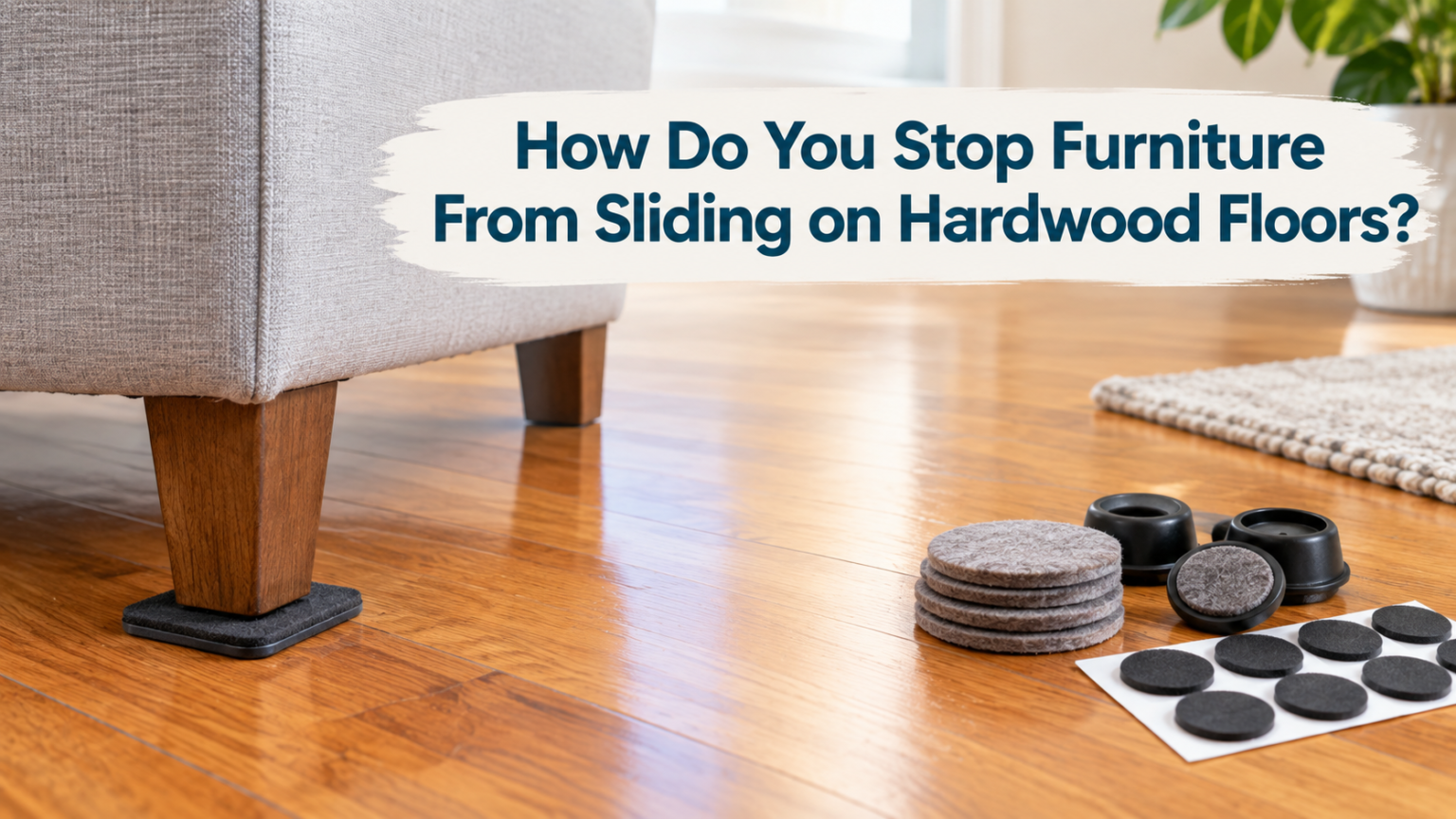

The easiest way to stop furniture from sliding on hardwood floors is to add friction under the legs or base using felt pads, rubber grippers, non-slip rug pads, or furniture anchors. Hardwood is naturally smooth and polished, which means anything placed on it without a grip-enhancing layer will move with even slight pressure.
This sliding is not only annoying but also risky, since it can scratch your flooring, create loud noises, and even cause heavier pieces to tip over. The good news is that fixing this problem does not require expensive tools or professional help.
With a few budget-friendly products and about thirty minutes of your time, you can secure almost every piece of furniture in your home and protect your hardwood floor for years to come.
Why Furniture Slides on Hardwood Floors?
Furniture slides on hardwood mainly because the polished surface offers very little natural friction compared to carpet or tile. Understanding the root cause helps you pick the right fix instead of guessing.
The Smooth Nature of Hardwood Finishes
Hardwood floors are coated with polyurethane, wax, or oil-based finishes that give them a glossy, sealed look. These finishes reduce the natural grain texture of the wood, making the surface extremely slippery for hard furniture legs. The smoother and shinier the finish, the more likely furniture is to slide with minimal force.
Furniture Material and Leg Design
Wooden, metal, and plastic furniture legs all react differently on hardwood. Metal and hard plastic legs slide the most because they offer zero grip, while wooden legs slide slightly less but still move easily under pressure. Thin or pointed legs concentrate weight in a small area, which increases the chances of both sliding and floor scratching.
Weight Distribution and Daily Use
When weight is unevenly spread across a piece of furniture, one side becomes easier to push than the other, causing it to drift over time. Everyday actions like sitting down, standing up, or leaning on a table gradually shift furniture out of place, even if you don’t notice it happening each time.
Best Solutions to Prevent Furniture From Sliding
There are several proven products that solve the sliding problem, each suited to different furniture types and budgets. The right combination usually depends on how heavy the item is and how often it gets moved.
Felt Pads
Felt pads are the most common and affordable fix, and they work by creating a soft cushioned layer between the furniture leg and the floor. They are ideal for chairs, small tables, and light cabinets, and they also protect the floor from scratches. The only downside is that they wear out over time and need replacing every few months on frequently used furniture.
Rubber Grippers and Cups
Rubber grippers or cup-shaped stoppers hold furniture legs firmly in place rather than simply cushioning them. These are best suited for heavier items like sofas, dressers, and bookshelves that need to stay completely stationary. Since rubber has more grip than felt, this option is far more effective for large or frequently sat-on furniture.
Non-Slip Rug or Gripper Mats
Placing a rubberized mesh pad or a small rug section under furniture legs adds a wide, stable grip surface. This method works well for entire furniture groupings, such as a dining set or a living room arrangement, rather than treating each leg separately. It also adds a decorative layer while solving the functional sliding issue.
Silicone Caulk Dots
A small dab of clear silicone caulk applied to the bottom of each leg and left to dry creates a slightly tacky, grippy surface. This DIY method is inexpensive and long-lasting, making it a smart choice for furniture that rarely gets moved. However, it requires careful application since too much silicone can leave marks on the floor.
Furniture Anchors and Wall Straps
For tall or heavy furniture like bookshelves, wardrobes, and dressers, anchors that attach the furniture to the wall are essential for safety, not just sliding prevention. These straps stop the furniture from tipping forward, which is especially important in homes with children or pets. Installation involves screwing a bracket into a wall stud and connecting it to the back of the furniture.
Velcro Strips and Rubber Bands
Velcro strips work best when paired with a rug underneath the furniture, since the hook-and-loop grip needs a soft surface to hold onto rather than bare hardwood. Rubber bands wrapped around the bottom of each leg are a quick, temporary trick that adds instant grip without buying anything new. Both methods are useful for short-term fixes but are not meant as permanent solutions.
Step-by-Step Guide to Applying Anti-Slip Solutions
Applying these fixes correctly makes a noticeable difference in how long they last and how well they perform. Skipping preparation steps is the most common reason people feel these products “don’t work.”
Preparing the Furniture Legs
Before applying any pad or grip solution, wipe down the bottom of each furniture leg to remove dust, dirt, and old adhesive residue. A clean, dry surface allows the adhesive backing to bond properly, which significantly extends the lifespan of the pad. Skipping this step is one of the main reasons pads fall off within days.
Measuring, Cutting, and Fitting
Most felt pads and rubber grippers come in standard sizes, so it’s important to measure your furniture legs and trim the pads to match exactly. A pad that is too small won’t cover the full contact point, while one that’s too large may fold at the edges and reduce grip. Take a few extra minutes here, since a proper fit is what actually stops the sliding.
Testing Stability After Application
Once the pads or grippers are attached, gently push the furniture from different angles to confirm it feels secure. If any wobble or sliding is still noticeable, add an extra pad or switch to a rubber gripper for better hold. Testing immediately after application saves you from discovering the problem later during regular use.
Choosing the Right Solution by Furniture Type
Not every fix works equally well on every piece of furniture, so matching the solution to the item makes a real difference in results.
| Furniture Type | Recommended Solution | Why It Works |
| Dining chairs | Felt pads | Light weight, frequent movement |
| Dining tables | Rubber grippers | Heavier, needs stronger hold |
| Sofas/couches | Rubber grippers + rug pad | Heavy, rarely moved |
| Bookshelves/cabinets | Anchors + felt pads | Tall, tip-over risk |
| Beds | Rubber cups | Very heavy, needs full stability |
| Office chairs (wheels) | Chair mat or rug pad | Constant rolling motion |
Additional Tips for Protecting Hardwood Floors
Beyond individual products, a few habits can further reduce sliding and floor damage across your entire home.
Using Area Rugs Strategically
Placing area rugs under furniture groupings, such as a coffee table and sofa set, naturally reduces friction problems while also protecting large sections of flooring. Rugs with rubber or felt backing offer the best of both worlds, combining decor with functional grip.
Regular Floor Maintenance
Keeping your hardwood floor properly waxed or polished according to the manufacturer’s recommendations helps maintain consistent friction levels across the surface. Neglected finishes can become uneven, causing furniture to slide more in some areas than others.
Safety Considerations
Sliding furniture is not just a cosmetic issue; it can pose real safety risks, especially with taller or heavier pieces. Tall furniture like bookshelves and wardrobes should always be anchored to the wall to prevent tip-over accidents, particularly in households with young children.
Regularly checking that pads, grippers, and anchors are still securely in place ensures long-term protection rather than a one-time fix that weakens over months of use.
Cost Comparison of Sliding-Prevention Methods
Budget plays a big role in which solution people choose, so here’s a quick comparison to help you decide.
| Method | Approximate Cost | Best For |
| Felt pads | Low | Light furniture, quick fix |
| Rubber grippers | Low to medium | Heavy furniture, daily use |
| Rug/gripper mats | Medium | Furniture groupings |
| Silicone caulk dots | Low | Long-term DIY fix |
| Wall anchors | Medium to high | Safety-critical tall furniture |
Frequently Asked Questions
Do felt pads damage hardwood floors? No, felt pads are designed to protect hardwood floors rather than damage them, as long as they are replaced once worn out.
How often should furniture pads be replaced? Most felt pads should be checked every three to six months, especially on furniture that is moved or sat on frequently.
Can rubber grippers be used on all floor types? Yes, rubber grippers work on hardwood, laminate, and tile, though hardwood benefits the most due to its naturally low friction.
What’s the best fix for heavy sofas? A combination of rubber grippers under the legs and a rug pad underneath offers the strongest hold for heavy seating furniture.
Are wall anchors necessary in every home? Anchors are strongly recommended for tall or top-heavy furniture in any home, but they become essential where children or pets are present.
Conclusion
Knowing how do you stop furniture from sliding on hardwood floors comes down to choosing the right grip solution for each piece and applying it correctly. Felt pads and rubber grippers handle most everyday furniture, while rugs and wall anchors add extra stability and safety for larger items.
Compared to other guides that only list products, this article also explains why sliding happens and how to apply fixes properly, giving you a complete, long-term solution rather than a temporary patch.
Related Articles
Why Is My Toilet Bubbling? 7 Real Causes and How to Fix Them
Basement Crawl Space Waterproofing: Complete Guide
Roof Repairs Worcester: Your Complete Local Guide to a Safe and Lasting Roof
Can Drano Unclog a Toilet? Full Guide to Risks & Safer Fixes
How to Level a Concrete Floor: A Complete Step-by-Step Guide