


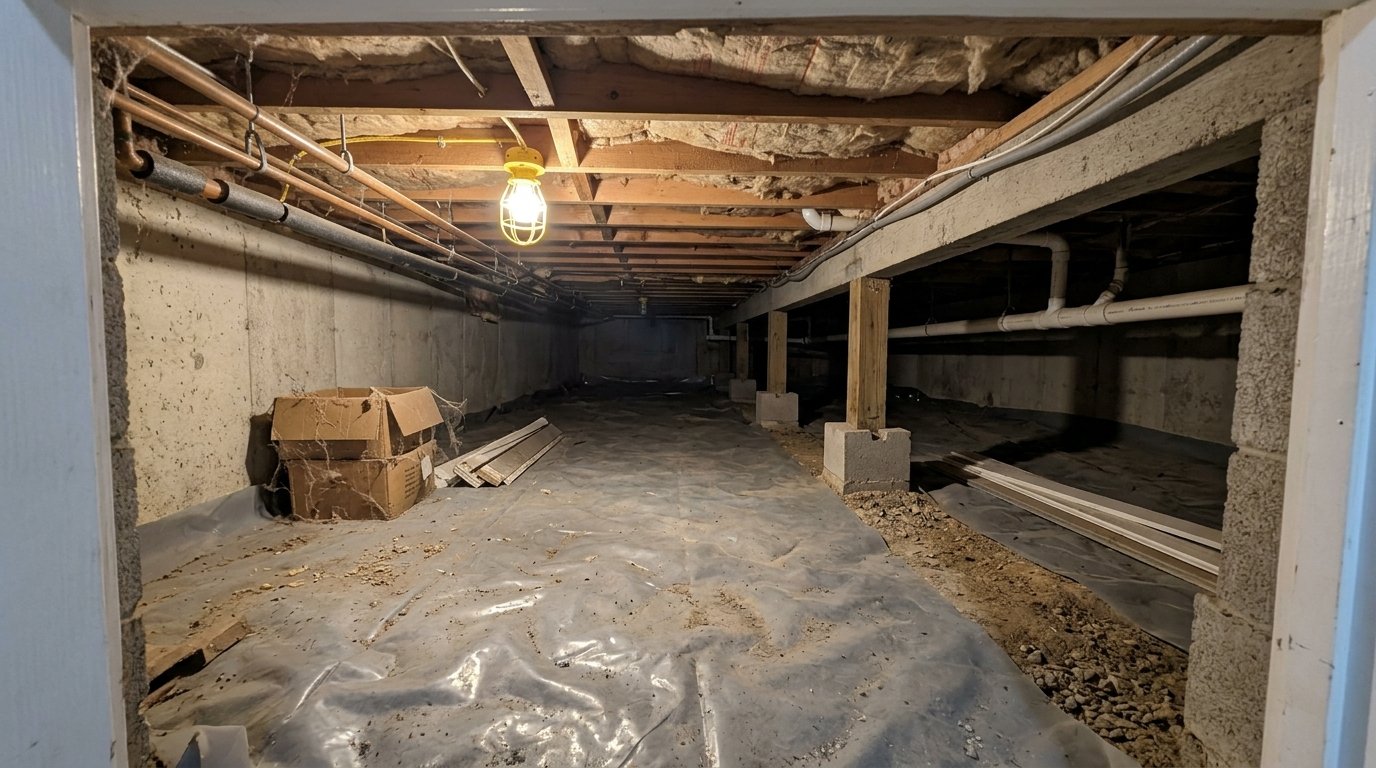

Basements and crawl spaces are naturally prone to moisture problems because they sit below or close to ground level, where water pressure and soil dampness constantly push against the foundation walls.
Basement crawl space waterproofing is the process of protecting these areas from water intrusion, mold growth, and long-term structural damage. Homeowners who understand this process can make better decisions about protecting their property’s foundation and indoor air quality.
Why Basements and Crawl Spaces Get Wet
Water finds its way into basements and crawl spaces through cracks, poor drainage, and natural ground moisture that surrounds the foundation. Basement crawl space waterproofing addresses these entry points before they cause bigger structural problems.
Poor Exterior Drainage
When gutters, downspouts, or grading around a home fail to direct water away from the foundation, it collects near the walls and eventually seeps inside. This is one of the most common causes of basement moisture and is often the first thing addressed during waterproofing work.
Hydrostatic Pressure
Groundwater builds up pressure against foundation walls and floors, especially after heavy rainfall or snowmelt. This pressure pushes water through even the smallest cracks or porous concrete, making it a major reason basement crawl space waterproofing is necessary for long-term protection.
Condensation and Humidity
Crawl spaces often trap warm, moist air that condenses on cooler surfaces like pipes, floor joists, and walls. Over time, this trapped humidity encourages mold growth and wood rot, even without any visible water leaks entering the space.
Signs You Need Basement Crawl Space Waterproofing
Recognizing early warning signs allows homeowners to address moisture problems before they damage the structure or affect indoor air quality throughout the home.
Musty Odors and Mold Growth
A persistent musty smell coming from the basement or crawl space usually indicates hidden moisture and mold growth. This is often one of the first noticeable signs that waterproofing measures are needed to control humidity levels.
Visible Water Stains or Efflorescence
White chalky deposits, known as efflorescence, or visible water stains on foundation walls indicate that water has been seeping through the concrete. These marks are a clear sign that the waterproofing barrier has failed and needs attention.
Sagging or Rotting Floor Joists
In crawl spaces, excess moisture can cause wooden floor joists and support beams to weaken, sag, or rot over time. This structural damage is a serious warning sign that waterproofing should be addressed immediately to prevent further deterioration.
Basement Crawl Space Waterproofing Methods
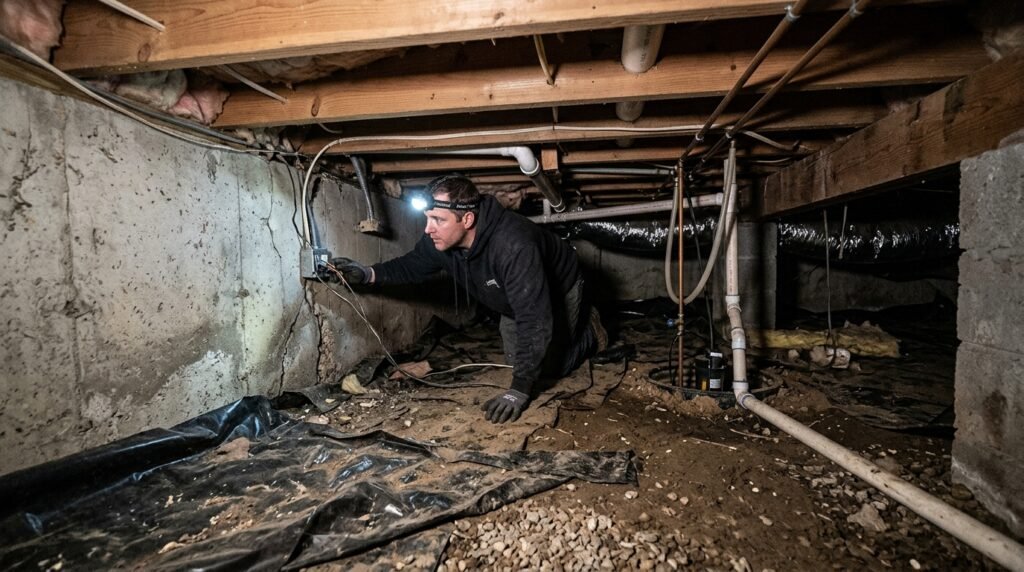
There are several approaches to waterproofing, and the right combination depends on the source of moisture, foundation type, and severity of the problem. Most professional solutions combine more than one method for complete protection.
Interior Sealants and Coatings
Applying waterproof sealants or coatings to interior basement walls helps block minor moisture seepage. This method works best for small, isolated dampness issues rather than serious water intrusion problems caused by external pressure.
Interior Drainage Systems
An interior drainage system, often installed along the base of foundation walls, channels water to a sump pump before it can spread across the basement floor. This method is effective for managing water that has already entered the space.
Exterior Waterproofing Membranes
Exterior waterproofing involves excavating around the foundation and applying a waterproof membrane directly to the outside walls. This method addresses the source of water intrusion directly and is considered one of the most effective long-term solutions available.
Crawl Space Encapsulation
Encapsulation involves sealing the crawl space with a heavy-duty vapor barrier that covers the floor and walls, preventing ground moisture from entering the air. This method is especially useful for controlling humidity and preventing mold growth in enclosed crawl spaces.
Basement Crawl Space Waterproofing Cost Comparison
Costs vary depending on the size of the area, chosen method, and severity of existing damage. The table below gives a general idea of what homeowners can expect.
| Waterproofing Method | Best For | Approximate Cost Range |
| Interior Sealants | Minor dampness | Low cost |
| Interior Drainage System | Recurring water seepage | Moderate cost |
| Exterior Membrane | Severe water intrusion | High cost |
| Crawl Space Encapsulation | Humidity and mold control | Moderate to high cost |
A professional inspection helps determine which method, or combination of methods, will work best for a specific property’s moisture problem.
Maintenance Tips to Prevent Future Moisture Issues
Ongoing maintenance plays a significant role in keeping basements and crawl spaces dry long after waterproofing work is completed.
Regular Gutter and Downspout Cleaning
Keeping gutters and downspouts clear ensures rainwater is directed away from the foundation instead of pooling near the walls. This simple habit reduces the amount of water pressure building up against the basement or crawl space.
Monitoring Humidity Levels
Using a dehumidifier or humidity monitor in the basement or crawl space helps catch moisture problems early, before mold or structural damage develops. Keeping humidity levels controlled protects both the building and indoor air quality.
Periodic Foundation Inspections
Checking foundation walls and crawl space areas at least once or twice a year helps identify new cracks or wear before they turn into major leaks. Early detection keeps waterproofing systems working effectively for a longer period.
Conclusion
Basement crawl space waterproofing protects a home’s foundation, structural integrity, and indoor air quality from the damaging effects of moisture and water intrusion. By understanding the causes of water problems, recognizing early warning signs, and choosing the right combination of waterproofing methods, homeowners can avoid costly repairs and keep their property safe and dry for years to come.
Frequently Asked Questions
How long does basement crawl space waterproofing last?
Most professional waterproofing systems last between ten and twenty five years, depending on the method used and how well the property is maintained afterward.
Is crawl space encapsulation necessary if there are no visible leaks?
Yes, encapsulation helps control humidity and prevents mold growth even in crawl spaces without visible water leaks, protecting the home’s air quality.
Can I waterproof a basement myself?
Minor sealant applications are possible as a DIY project, but larger drainage or exterior waterproofing work usually requires professional equipment and expertise.
Does basement waterproofing increase home value?
Yes, a dry and properly waterproofed basement adds value to a property and is often seen as a strong selling point during real estate transactions.
Related Articles
How to Measure Room for Furniture: Step-by-Step Guide for Perfect Fit
How Much Does It Cost to Waterproof a Basement?
Can You Use Ceiling Paint on Walls? The Surprising Benefits and Drawbacks
Joist Tape for Decking: The Complete Guide to Protecting Your Deck’s Substructure
Pot Lights in Cathedral Ceiling: A Complete Planning and Installation Guide




