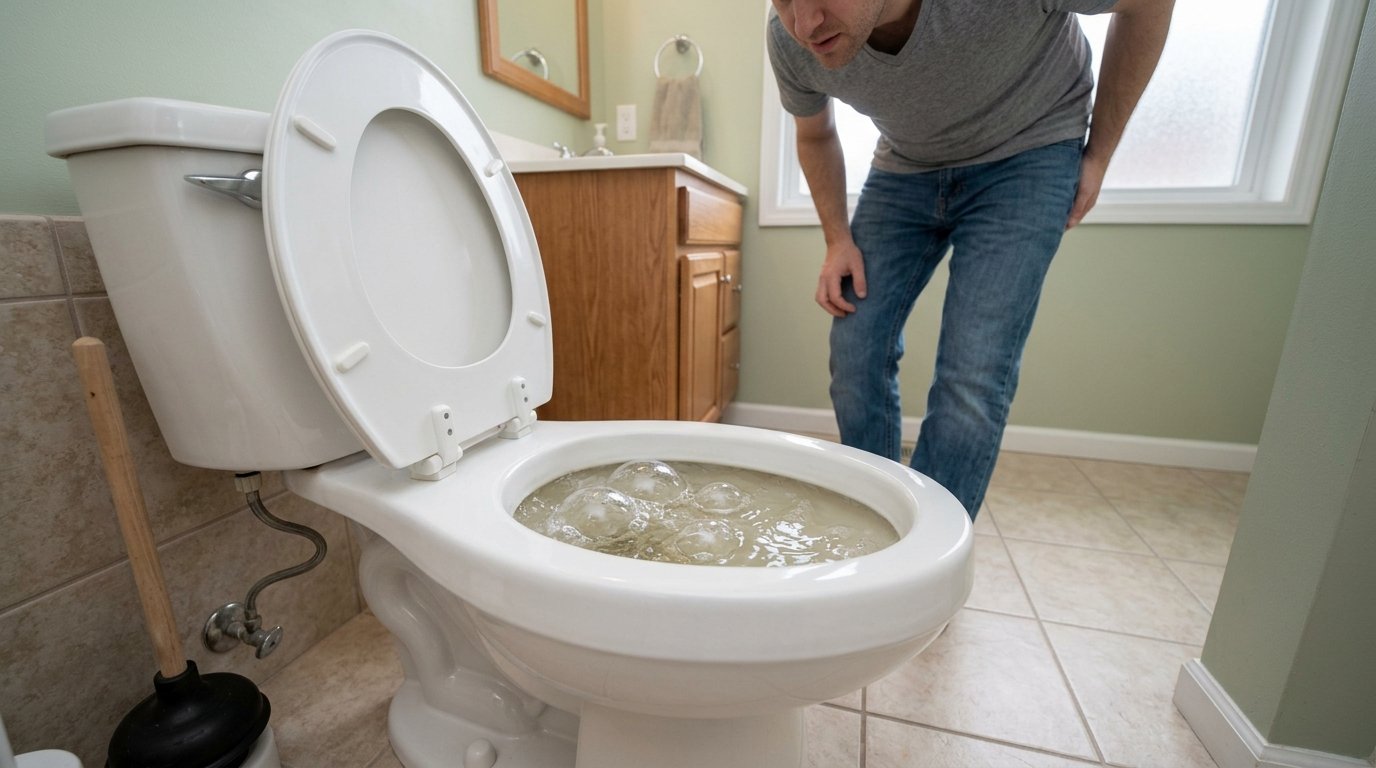

When your toilet bubbles or gurgles, your plumbing system is telling you that air is trapped somewhere it should not be. Under normal conditions, water flows freely through your drain lines and air moves freely through your vent stack. When either of these pathways gets disrupted, compressed air finds the path of least resistance — and that path is usually your toilet bowl. The bubbling sound and visible air escaping through the water are symptoms of a pressure imbalance, not the root problem itself.
Understanding this distinction matters. Treating the bubble without finding the cause is like silencing a smoke alarm without looking for fire.
Why Is My Toilet Bubbling? 7 Causes Explained
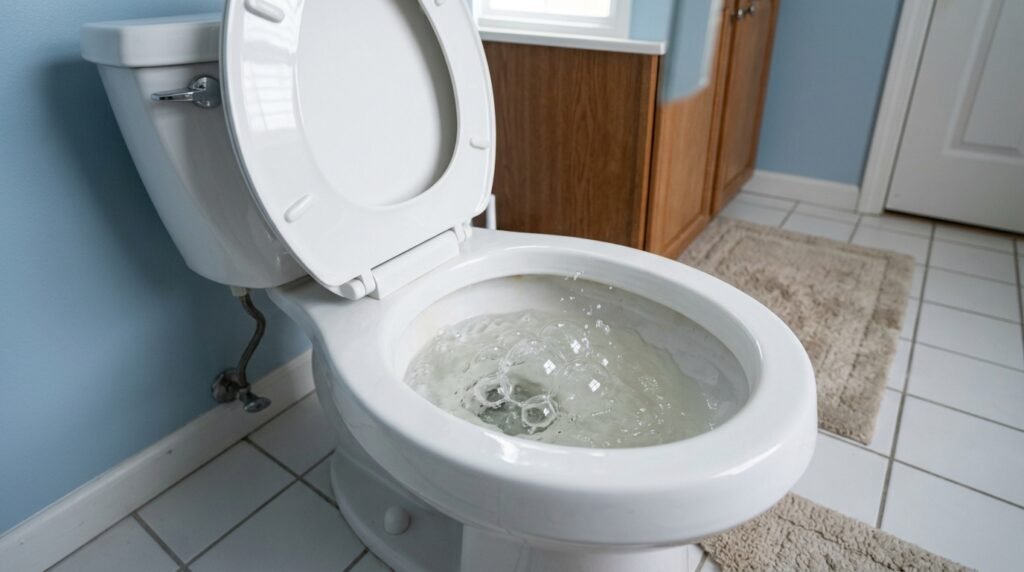
The answer to “why is my toilet bubbling” almost always comes down to one of seven problems. They range from a simple local clog you can clear in ten minutes to a failing septic system that needs immediate professional help. Here they are, from easiest to most serious.
1. A Partial Clog in the Toilet Drain
This is the most common reason for toilet bubbling and thankfully the easiest to address. When something partially blocks the toilet drain — tissue buildup, hygiene products, or accumulated debris — water still passes through but air gets trapped behind the blockage.
Every time you flush, that trapped air is forced upward through the water sitting in the bowl, creating bubbles.
You will usually notice slower-than-normal draining alongside the bubbling. The toilet may seem to “hesitate” before water finally pulls down.
A standard cup plunger with a tight seal, worked in steady push-and-pull strokes for 15 to 30 seconds, is often enough to break up the clog and restore normal airflow. If plunging moves the water but the bubbling returns within a day or two, the blockage is partial and deeper than the plunger can reach.
2. A Blocked Main Sewer Line
The main sewer line carries wastewater from every fixture in your home to the municipal sewer system. When it develops a blockage — from grease accumulation, tree root intrusion, or a collapsed section of pipe — the pressure effects are felt throughout your entire plumbing system.
The key sign here is that your toilet bubbling is not an isolated event. You will notice gurgling from your shower drain, slow-draining sinks, and water backing up in unexpected places.
If flushing one toilet causes another fixture to react, the problem has moved beyond a local clog. A licensed plumber can run a camera inspection through the line to locate the exact obstruction without guessing.
3. A Clogged or Blocked Vent Stack
Your home’s plumbing system cannot function without air. The vent stack is a vertical pipe that runs from your drain system up through the roof, allowing air to enter and maintain balanced pressure throughout the network.
Think of it like a straw — if you block the top of a straw with your finger and try to drain liquid from the bottom, you get resistance. The same principle applies here.
When the vent stack gets blocked by leaves, a bird’s nest, ice buildup, or debris, the entire system loses its ability to breathe properly. Trapped air looks for the nearest escape point, which is typically your toilet.
A plumber can inspect the vent from the roof and clear the obstruction, restoring normal pressure balance to your system.
4. Septic System Backflow or Overflow
For homes connected to a septic tank rather than a municipal sewer, toilet bubbling can signal a much more urgent situation.
When the septic tank reaches capacity or begins to fail, gases and wastewater can push back through your home’s drain system. The toilet, being the most direct connection to the tank, is usually the first fixture to show symptoms.
Alongside the bubbling, you may notice foul odors near the toilet or around your yard, water backing into your bathtub when you flush, or soggy ground near the drain field. None of these signs should be ignored.
A septic system that is backing up needs to be pumped and inspected immediately, and further use of indoor plumbing should be minimized until the issue is resolved.
5. Toilet Bubbles When the Shower or Washer Drains
If you notice your toilet bubbling specifically when you run the shower, drain the bathtub, or complete a washing machine cycle, the problem is almost certainly in a shared drain line. In many home plumbing layouts, multiple fixtures share the same branch drain line before connecting to the main sewer line.
When a large volume of water from the shower or washing machine rushes through that shared line and encounters a partial obstruction, it compresses the air ahead of it. That compressed air travels back up the line and escapes through your toilet bowl.
A washing machine dumps 15 to 30 gallons of water in just a few minutes, which creates especially strong pressure surges. The fix typically involves clearing the shared line with a snake or hydro jetting, and possibly addressing a venting problem as well.
6. Improper Plumbing or DIY Installation Errors
New toilets, drain lines, or bathroom renovations that were not completed by a licensed plumber often skip critical venting requirements.
Every drain in your home needs a vent, and those vents need to be sized and positioned according to plumbing code. When a renovation is done incorrectly, the system may appear to function normally at first but will develop persistent bubbling and gurgling over time.
If your toilet bubbling began after recent plumbing work or a bathroom remodel, this is the likely cause.
A licensed plumber can inspect the layout, identify what was done incorrectly, and correct the venting or pipe angle issues that are causing the problem.
7. Weather Events and Saturated Ground
Heavy rainfall or flooding can temporarily disrupt your plumbing system from the outside. When the ground around buried sewer pipes becomes saturated with water, it increases the pressure on those pipes and slows their ability to drain efficiently.
This can push air back into your plumbing and cause temporary bubbling.
In most cases, if the weather is the cause, the symptoms will resolve within 24 to 48 hours as the ground dries.
However, if the bubbling continues after the weather clears, or if water starts backing up into fixtures, the rain may have revealed an existing weakness in your sewer line that now needs professional attention.
Quick Comparison: Causes at a Glance
| Cause | Other Symptoms | DIY or Pro? |
| Toilet drain clog | Slow flushing, weak flush | DIY — plunge first |
| Main sewer line blockage | Multiple fixtures gurgling | Pro — camera inspection |
| Blocked vent stack | Bubbling with no clog found | Pro — roof inspection |
| Septic system overflow | Odors, soggy yard, backflow | Pro — urgent |
| Shared drain line obstruction | Bubbles when shower or washer runs | DIY or Pro — snake the line |
| Improper installation | Persistent bubbling after renovation | Pro — venting correction |
| Heavy rain / saturated ground | Temporary, resolves in 1-2 days | Wait 48 hrs, then call Pro |
How to Diagnose a Bubbling Toilet at Home
Before calling a plumber, spending five minutes observing your toilet’s behavior can save you time and money. Work through these steps in order.
Step 1 — Watch the flush.
Flush the toilet and observe whether bubbles appear immediately during the flush, after the flush as the bowl refills, or both. Bubbles during the flush point to a local clog. Bubbles as the bowl refills suggest a venting issue.
Step 2 — Run other fixtures.
Turn on the bathroom sink or run the shower. If the toilet reacts to either, the problem is in a shared line or the vent stack, not the toilet itself.
Step 3 — Check the whole house.
Walk through your home and check whether any other drain is slow or gurgling. A single affected fixture suggests a local clog. Multiple affected fixtures point to the main sewer line.
Step 4 — Try plunging.
If symptoms are isolated to the toilet, plunge firmly with a full seal. If this clears the problem, you had a local clog. If symptoms return or plunging has no effect, move to the next step.
Step 5 — Look at the roof vent.
If you can safely access your roof, visually inspect the top of the vent stack for debris, bird activity, or ice. Do not attempt to clear it if you are not comfortable on a ladder.
Step 6 — Call a professional.
If symptoms involve multiple fixtures, you smell sewage, water is backing up, or your DIY efforts have not resolved the issue, it is time for a licensed plumber.
DIY Fixes vs. When to Call a Plumber
Knowing where the line is between a homeowner fix and a professional job prevents the problem from getting worse.
Try these yourself first:
Plunging is always the right first move for a toilet that is bubbling without affecting other fixtures. Use a flange plunger rather than a flat-cup plunger for toilets — the flange creates a much better seal in the bowl opening. Work it steadily for 20 to 30 seconds and repeat two or three times before concluding it is not working.
A toilet auger (also called a closet snake) reaches 3 to 6 feet into the drain and can break up clogs that plunging cannot. It is a worthwhile tool to have for any homeowner.
A homemade drain flush of hot water mixed with baking soda (a 2:1 ratio) poured down sinks and the toilet periodically can prevent scum buildup before it becomes a real clog.
Call a plumber when:
- The bubbling involves more than one fixture
- You can smell sewage anywhere in the home
- Water is backing up into the bathtub or sink when you flush
- The toilet continues to bubble after plunging
- Your home has a septic tank and you suspect it is involved
- Symptoms began immediately after heavy rainfall
How to Prevent Toilet Bubbling in the Future
Prevention is straightforward and mostly comes down to being careful about what goes into your plumbing system.
Only flush human waste and toilet paper. Products labeled “flushable” — including flushable wipes — do not break down the same way toilet paper does and are a leading cause of drain line buildups over time.
Never pour cooking grease down any drain. Grease solidifies inside pipes as it cools and accumulates gradually until it blocks flow. Let it cool in a container and dispose of it in the trash.
Schedule a plumbing inspection every year or two, especially in homes with mature trees near the property. Tree roots are the most common cause of main sewer line blockages, and they grow slowly enough that a minor intrusion can become a complete blockage over a single season without any warning signs.
Maintain your septic tank on a regular pumping schedule — typically every three to five years depending on household size.
Frequently Asked Questions
Why does my toilet bubble when I flush another toilet upstairs?
This means the blockage is in the main sewer line that both toilets share. When the upstairs toilet flushes, water pushes toward the clog and compresses air back toward the lower toilet, which bubbles because it is the easiest escape point for that trapped air.
Is it safe to keep using a bubbling toilet?
Using it occasionally while you investigate is not an immediate health hazard, but it is not safe to ignore. A partial blockage that causes bubbling will worsen over time and can result in sewage backup, which is a genuine health risk.
Can weather really make a toilet bubble?
Yes. Heavy rain can saturate the soil around buried sewer lines, increasing external pressure on the pipes and slowing drainage. This is usually temporary, but if symptoms do not clear within 48 hours after the rain stops, have a plumber assess the situation.
Conclusion
A bubbling toilet is not a problem in itself — it is a signal that your plumbing system is under stress somewhere. Most of the time, the cause is a partial clog either close to the toilet or somewhere along the shared drain and sewer lines. In simpler cases, a plunger or toilet auger is enough.
When multiple fixtures are involved, sewage odors are present, or DIY attempts have not helped, the situation calls for a licensed plumber with camera inspection equipment. The sooner the underlying cause is identified, the smaller and less expensive the repair will be.
Related Articles
Should You Paint the Walls Before Staining Stairs? What Pros Recommend
How to Clean a Shower Curtain? Everything You Need to Know
Roof Leaks in Heavy Rain: Causes, Signs & Fixes
How to Clean Shower Tiles: Step-by-Step Guide for a Spotless Bathroom
Can You Use Ceiling Paint on Walls? The Surprising Benefits and Drawbacks