

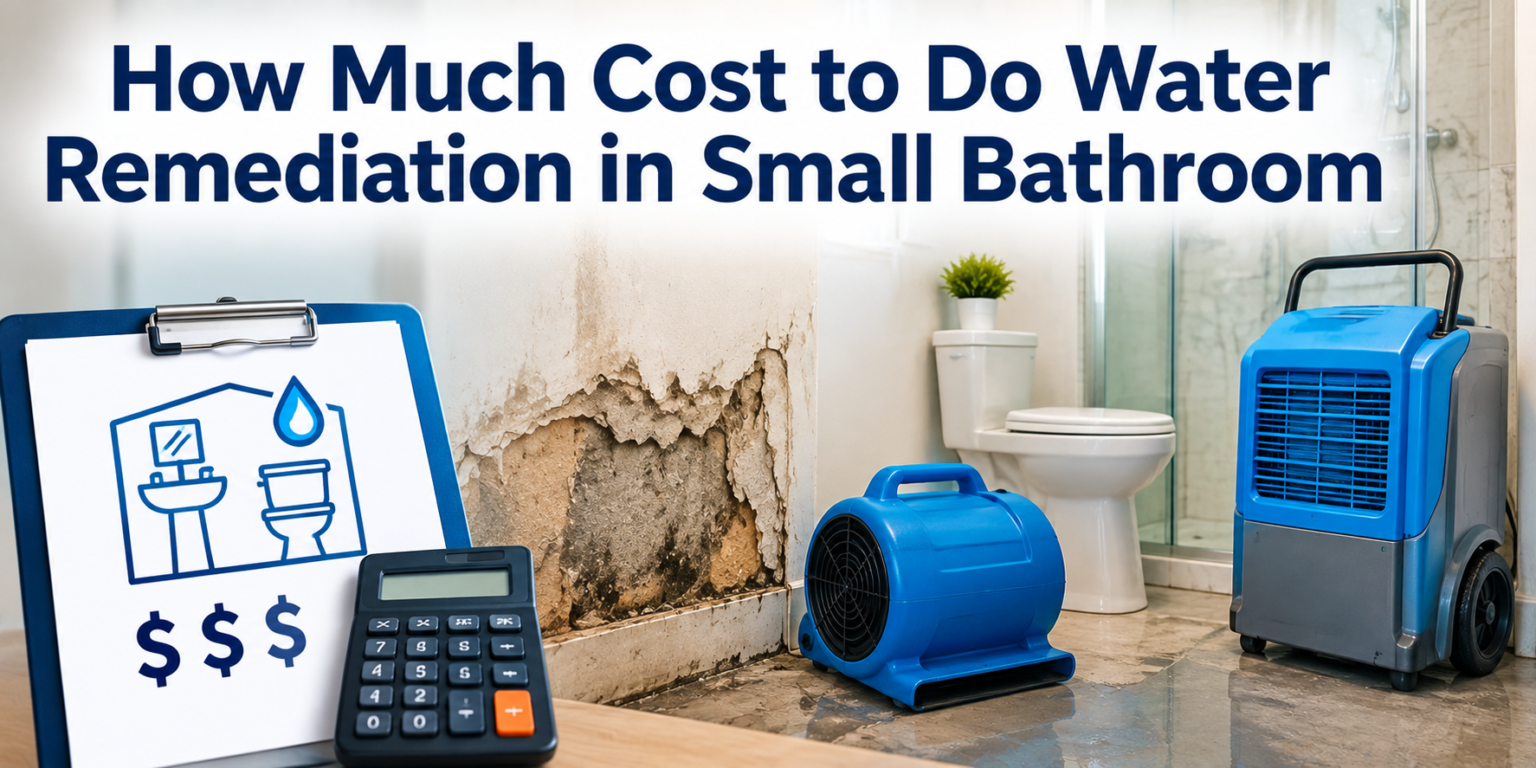

If you are searching how much cost to do water remediation in small bathroom, the honest answer is that most homeowners pay between $500 and $5,000, with an average project landing around $1,500 to $2,500.
The final number depends on how bad the damage is, whether mold has developed, and how much flooring, drywall, or plumbing needs to be replaced.
A small leak caught early costs far less than a hidden leak that has been soaking your walls for weeks. Below, every part of this cost is broken down so you know exactly what you are paying for and why.
Understanding Water Remediation
Water remediation is the process of removing excess water, drying out the affected area, and repairing any damage before mold or structural problems begin. It is different from simple cleanup because it focuses on preventing long-term issues rather than just wiping up a spill.
What Water Remediation Actually Involves?
Water remediation combines inspection, extraction, drying, sanitizing, and repair work into one coordinated process. Professionals use moisture meters and industrial fans to make sure water is not trapped behind tiles or under flooring. This thoroughness is exactly why professional remediation costs more than a simple mop-and-towel cleanup, but it also prevents expensive mold problems later.
Why Are Small Bathrooms Especially Vulnerable?
Small bathrooms have limited airflow and are packed with plumbing fixtures in a tight space, which means leaks often go unnoticed until they cause visible damage. Constant humidity from showers also means materials stay damp longer than in other rooms. This combination makes small bathrooms one of the most common places in a home where water damage quietly builds up.
Categories and Severity Levels of Water Damage
Not all water damage is treated the same way, and professionals classify it before giving you a price. Knowing your category helps you understand why one bathroom repair might cost triple another.
Clean, Grey, and Black Water Categories
Category 1 is clean water from a supply line, Category 2 is grey water from appliances like washing machines, and Category 3 is black water from sewage backups. Each category requires different safety protocols and cleaning chemicals. Black water remediation always costs more because it involves serious health risks and stricter disposal rules.
Class 1 to Class 4 Severity Levels
Beyond the water type, professionals also rate the extent of damage from Class 1, which is minor and affects a small area, up to Class 4, which means water has soaked into materials like concrete or hardwood. Higher classes need specialized drying equipment left running for several days. This directly affects your final bill since equipment rental is often charged daily.
Common Causes of Bathroom Water Damage
Understanding the cause of your water problem is important because remediation companies often need to fix the source before starting repairs. Below is a table of the most frequent culprits in small bathrooms.
| Cause | How It Happens | Typical Repair Range |
| Leaking pipes or fixtures | Worn washers, loose joints, corrosion | $150 – $500 |
| Toilet overflow or seal failure | Clogs, broken wax ring, faulty valve | $200 – $600 |
| Shower or tub leaks | Cracked grout, failed caulking | $250 – $800 |
| Poor ventilation | Trapped humidity, no exhaust fan | $300 – $700 |
| Roof or ceiling leak above bathroom | Damaged roofing, ice dams | $500 – $2,000 |
| Slab leak | Underground pipe corrosion | $1,000 – $4,000 |
Plumbing and Fixture Leaks
Old washers, loose pipe joints, and corroded connections are the most common triggers behind bathroom flooring and cabinet damage. These leaks are often slow, which means they cause damage for weeks before anyone notices water stains. Fixing the plumbing itself is usually inexpensive, but the water damage it causes can add up quickly.
Toilet and Shower Related Leaks
A toilet with a broken wax ring or a shower with failed caulking allows water to seep into subflooring every single time it is used. Over time, this constant moisture rots wood and encourages mold growth under tiles. These are among the most frequent reasons homeowners search for remediation pricing in the first place.
Structural Sources Like Roofs and Slabs
When water enters from above through a damaged roof or from below through a slab leak, the damage tends to be far more serious and expensive. These sources often require a specialist to fix the root cause before bathroom repairs can even begin. Remediation companies typically recommend addressing structural leaks first to avoid repeating the repair.
Average Cost Breakdown by Severity
Since the question “how much cost to do water remediation in small bathroom” depends heavily on severity, the table below breaks the average pricing into three practical tiers most homeowners fall into.
| Severity Level | Description | Estimated Cost |
| Minor | Surface moisture, no mold, quick drying | $500 – $1,200 |
| Moderate | Some drywall or flooring damage, light mold | $1,200 – $2,500 |
| Severe | Heavy mold, subfloor damage, demolition needed | $2,500 – $5,000+ |
Cost Per Square Foot and Regional Differences
Most remediation companies charge between $3 and $8 per square foot for drying and cleanup work, with mold-affected areas costing more. Prices also shift based on where you live, since labor and equipment rental rates vary between cities and states. Homes in areas with higher humidity often see slightly higher quotes because drying takes longer.
DIY Versus Professional Remediation
Handling very minor moisture yourself with fans and dehumidifiers can cost under $100 in equipment rental, but this only works for the smallest, driest cases. Professional remediation becomes necessary once mold appears or water has reached subflooring, since improper drying can trap moisture and cause bigger problems later. Attempting a DIY fix on anything beyond surface dampness often ends up costing more once mold has to be professionally removed afterward.
Detailed Cost Factors That Affect Your Final Bill
Beyond severity, several specific line items make up your total invoice. Knowing these helps you compare quotes accurately instead of just looking at one lump sum number.
Water Extraction and Drying Equipment
Industrial dehumidifiers and air movers are typically rented at $200 to $500 per day, and most jobs need this equipment running for two to four days. This is usually the largest single cost in a moderate remediation job. Faster response time after a leak reduces how many days this equipment is needed.
Mold Testing and Remediation
If mold is suspected, testing alone can cost $200 to $600, while actual mold removal adds another $500 to $1,500 depending on the affected area. Mold behind tiles or under vanities is more expensive to treat because it requires partial demolition to access. This is one of the biggest reasons two similar-looking bathrooms can have very different remediation bills.
Drywall, Flooring, and Subfloor Repair
Replacing damaged drywall generally costs $1.50 to $3.50 per square foot, while flooring and subfloor replacement can add $1,000 to $3,000 depending on materials used. Tile flooring costs more to replace than vinyl due to labor-intensive removal and installation. This category is often where remediation quotes rise the most compared to initial estimates.
Labor, Permits, and Emergency Service Fees
Standard labor rates for remediation technicians range from $50 to $100 per hour, and emergency after-hours calls can add a 50 to 100 percent surcharge. Some regions also require permits for major reconstruction work, adding another $100 to $500 to your total. Choosing a scheduled appointment instead of an emergency visit is one simple way to control costs.
The Step-by-Step Remediation Process
Most professional companies follow a similar sequence regardless of the severity of damage, which helps set clear expectations for how long the project will take.
- Initial inspection using moisture meters to locate all affected areas
- Water extraction using pumps and wet vacuums
- Setting up industrial fans and dehumidifiers for drying
- Testing for and treating any mold growth
- Repairing or replacing damaged drywall, flooring, and fixtures
- Final inspection to confirm moisture levels are back to normal
This process usually takes three to seven days for moderate damage, though severe cases involving major reconstruction can stretch to two or three weeks.
Hidden Costs Homeowners Often Miss
Some expenses only appear once contractors open up walls or flooring, and it is smart to budget extra for these possibilities rather than being caught off guard.
- Mold discovered behind walls or beneath flooring once demolition begins
- Structural damage to wooden joists or subfloor framing
- Electrical wiring damage if water reached outlets or fixtures
- Additional permit or reinspection fees for larger reconstruction work
Insurance Coverage for Bathroom Water Damage
Homeowners insurance often covers sudden and accidental water damage, such as a burst pipe, but it typically excludes damage from gradual leaks or poor maintenance. This distinction matters a lot when filing a claim, since insurers frequently deny claims linked to long-term neglect.
To improve your chances of approval, document the damage with photos immediately, get a written estimate from a licensed remediation company, and report the issue as soon as it is discovered rather than waiting.
How to Reduce Your Remediation Costs?
Acting within the first 24 to 48 hours after noticing water damage significantly lowers your final cost, since it prevents mold growth and limits how much material needs replacing.
Getting at least two or three quotes from licensed companies also helps you avoid overpaying, as pricing can vary substantially between providers for the same job. Simple preventive habits, like fixing small leaks immediately and improving bathroom ventilation, also reduce how often remediation is needed in the first place.
Choosing the Right Remediation Company
Look for companies certified by the IICRC, since this certification confirms proper training in water damage restoration standards. Always ask for a written, itemized estimate before work begins so you can compare it against other quotes. Be cautious of companies that pressure you into signing contracts immediately or refuse to provide a detailed breakdown of costs, as these are common warning signs of overcharging.
Preventing Future Water Damage in Your Bathroom
Regular plumbing inspections, proper exhaust ventilation, and resealing grout or caulking every one to two years are simple habits that significantly reduce the risk of future leaks.
Installing an inexpensive water leak detector near your toilet or under the sink can also alert you to problems before they cause serious damage. These small preventive steps are far cheaper than paying for remediation later.
Frequently Asked Questions
How long does bathroom water remediation usually take? Most moderate cases take three to seven days from initial drying to final repairs, while severe damage with major reconstruction can take two to three weeks.
Can I stay in my home during the remediation process? Yes, in most cases you can stay home since remediation is limited to the bathroom area, though strong drying equipment noise and mild odors are common during the first few days.
Is mold always present after bathroom water damage? No, mold typically only develops if moisture sits for more than 24 to 48 hours, which is why fast response time is so important in limiting costs.
Will my insurance cover mold remediation as well as water damage? This depends on your policy and the cause of the leak, so it is best to confirm mold coverage directly with your insurer before assuming it is included.
Conclusion
So, how much cost to do water remediation in small bathroom really comes down to three factors: how severe the damage is, whether mold has developed, and how quickly you respond after noticing the problem.
Most homeowners can expect to pay between $500 and $5,000, with $1,500 to $2,500 being a realistic average for moderate cases. Acting fast, getting multiple quotes, and hiring a certified professional are the simplest ways to keep this cost as low as possible while making sure the job is done properly.
Related Posts
Roof Leaks in Heavy Rain: Causes, Signs & Fixes
How to Install Roof Vent: Complete Guide 2026
Fisher Wood Stove: The Complete Guide to America’s Most Trusted Wood Burner
Can Drano Unclog a Toilet? Full Guide to Risks & Safer Fixes