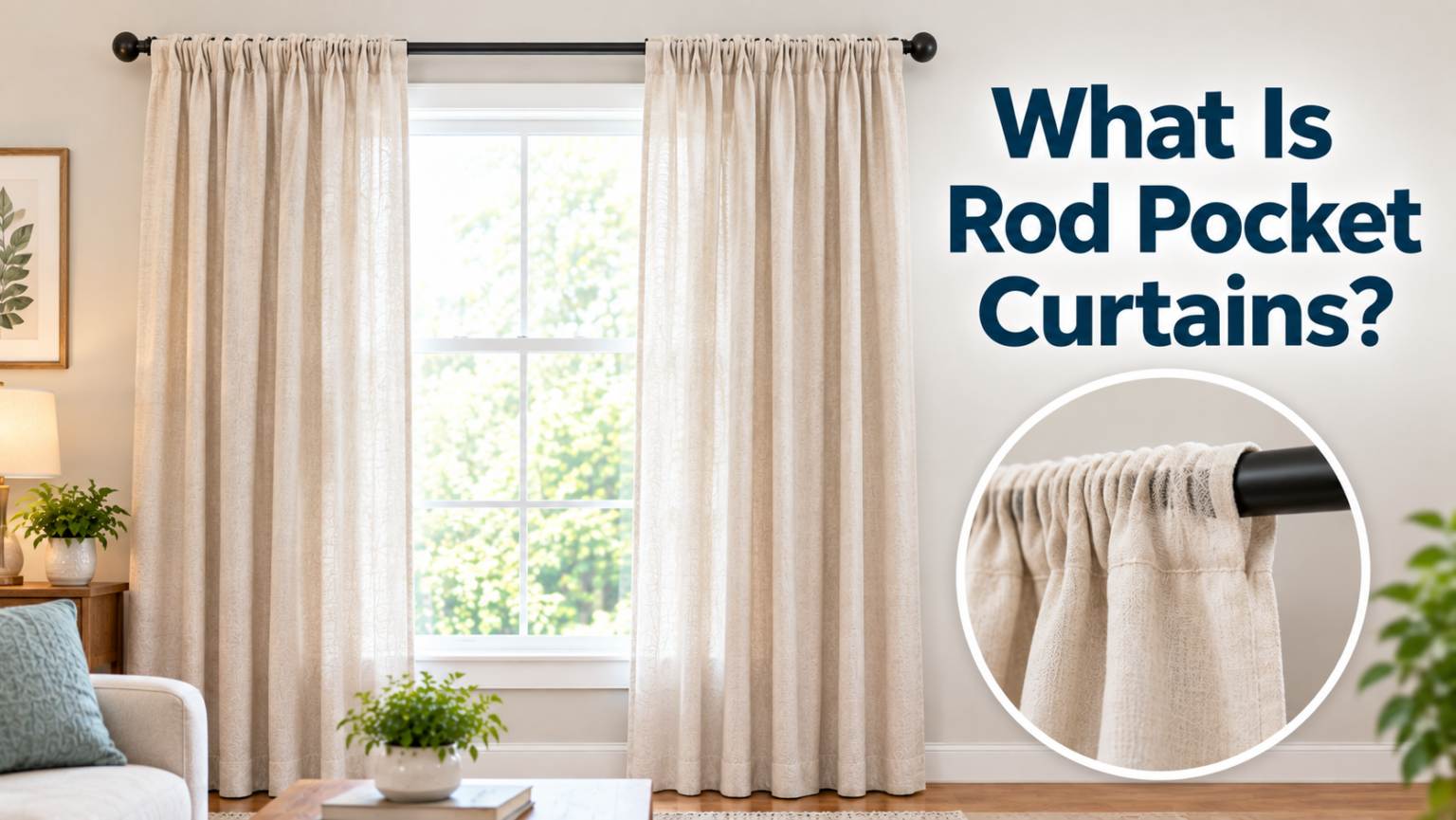

If you have ever asked yourself what is rod pocket curtains while shopping for window treatments, the answer lies in how the fabric is constructed rather than the fabric type itself. It is purely a hanging method, and it can be applied to sheer fabric, cotton, linen, velvet, or blackout material alike.
Because the design has stayed popular for decades, it is available in almost every home decor store and online marketplace. In this guide, we will walk through everything related to this curtain style, including how it works, its advantages and drawbacks, how to measure and hang it correctly, and how it compares with other popular curtain headers.
What Are Rod Pocket Curtains? Detailed Explanation
At its core, a rod pocket curtain is defined by its construction, not its fabric or color. The pocket is a folded and stitched strip of fabric at the top of the panel that forms a tunnel for the rod.
Definition and Construction
The pocket is created by folding over the top edge of the curtain fabric and sewing it down, leaving an open tunnel wide enough for the rod to pass through. The size of this tunnel depends on the rod diameter the curtain is designed for. Once the rod is inserted, the fabric bunches naturally along its length, creating the classic gathered appearance this style is known for.
How It Differs From Other Header Styles?
Unlike grommet or tab top curtains, rod pocket panels have no visible rings, metal eyelets, or fabric loops on the outside. The rod stays completely hidden inside the fabric channel, giving a cleaner, more traditional look. This also means the curtain cannot glide as freely, which sets it apart functionally from other modern header types.
How Rod Pocket Curtains Work?
The mechanism behind rod pocket curtains is straightforward: the rod passes through a stitched tunnel, and the fabric gathers around it automatically. No additional hardware or assembly is required.
Sliding the Rod Through the Pocket
To hang the curtain, one end of the rod is removed from its bracket, then guided through the fabric pocket from one side to the other. Once the rod reaches the far end, the fabric is pushed and spread evenly across it. The rod is then placed back onto its wall or window brackets to complete the setup.
The Gathered Look It Creates
As the fabric sits on the rod, it naturally folds into small, even ripples across the entire width. This gathered texture gives the curtain a soft, traditional appearance that many people associate with classic home interiors. The amount of gathering depends on how much extra fabric width was used compared to the rod length.
Types of Rod Pocket Curtains
Rod pocket curtains are not limited to one design; they come in a few common variations depending on how the top of the panel is finished.
| Type | Description |
| Standard Rod Pocket | A plain pocket with no extra header fabric above it |
| Rod Pocket with Header | Includes a small ruffle of fabric above the pocket for added decoration |
| Rod Pocket with Attached Valance | Combines a separate valance piece sewn above the main pocket |
| Sheer, Blackout, or Lightweight Options | Same construction style applied to different fabric weights and purposes |
Pros of Rod Pocket Curtains
Rod pocket curtains remain a common choice mainly because of their simplicity and classic appeal. The style suits many home settings without requiring specialized installation skills.
- They create a soft, gathered, and traditional look that suits formal or cozy interiors
- They are usually more affordable compared to curtains with rings or pleats
- They are easy to sew at home, making them a favorite for DIY projects
- No visible hardware means the rod and fabric blend together for a clean finish
- They pair nicely with decorative rods, since the fabric itself becomes the main visual feature
Cons and Limitations
While rod pocket curtains have many strong points, they also come with a few practical drawbacks worth knowing before buying them.
- Opening and closing the curtain is harder since fabric rubs directly against the rod
- The fabric tends to bunch unevenly when pushed to one side
- Repeated sliding can cause wear, thinning, or small tears near the pocket over time
- This style is not ideal for windows that are opened and closed frequently during the day
- Removing the curtain for washing means taking the entire rod out of its brackets
Best Uses for Rod Pocket Curtains
This curtain style works best when the panel does not need to be moved often, since its design favors appearance over daily functionality.
- Stationary or purely decorative window panels
- Formal living rooms and bedrooms where a soft look is desired
- Café-style curtains on smaller kitchen windows
- Layered setups where blinds or shades handle the actual light control
How to Measure for Rod Pocket Curtains?
Before buying or sewing rod pocket curtains, accurate measurements ensure the panel fits both the rod and the window properly.
| Measurement | What to Check |
| Rod Pocket Depth | Should be slightly larger than the rod’s diameter for easy sliding |
| Curtain Width | Usually 1.5 to 3 times the rod length for proper gathering |
| Curtain Length | Measured from the top of the rod to the desired floor or sill point |
| Fullness Ratio | Determines how gathered or flat the final look will appear |
How to Hang Rod Pocket Curtains?
Hanging this style is simple once the correct rod and curtain size have been selected. Following the steps below helps avoid uneven gathering or a loose fit.
- Choose a rod that matches the pocket’s diameter and desired length
- Remove one end of the rod from its wall bracket
- Slide the curtain panel onto the rod through the fabric pocket
- Push the fabric gently to distribute the gathers evenly
- Reattach the rod to the brackets and adjust the curtain’s position
Rod Pocket vs Other Curtain Styles
Comparing rod pocket curtains with other common header types helps in deciding which style fits a particular room or lifestyle better.
| Style | Look | Ease of Use | Typical Cost | Best For |
| Rod Pocket | Soft, gathered | Harder to slide | Budget-friendly | Stationary decorative panels |
| Grommet | Structured, even folds | Glides smoothly | Mid-range | Frequently opened windows |
| Tab Top | Casual, loop-based | Moderate glide | Budget-friendly | Relaxed, informal rooms |
| Pinch Pleat | Tailored, formal folds | Smooth with hooks | Higher cost | Formal living spaces |
Fabric and Style Options
Rod pocket curtains are available in a wide range of fabrics, allowing them to fit almost any interior theme. Cotton and linen are common for a relaxed, breathable look, while velvet suits more formal or heavier decor.
Sheer fabric options allow soft light to pass through while maintaining privacy, and blackout versions are chosen for bedrooms or media rooms needing full light control. Color and pattern choices should generally complement existing wall tones and furniture rather than compete with them.
Care and Maintenance Tips
Keeping rod pocket curtains in good condition mainly involves gentle handling around the pocket area, since that section experiences the most friction from the rod. laundry symbols vary by fabric, so checking the care label before cleaning is important.
Ironing or steaming while the curtain is still off the rod helps maintain the gathered look without flattening it. Rotating the fabric position slightly on the rod every few months can also reduce uneven wear in one spot.
DIY Tips for Making Rod Pocket Curtains
Sewing rod pocket curtains at home is a manageable project even for beginners. The basic process involves folding the top edge of the fabric, stitching a straight line to form the tunnel, and leaving enough width for the rod to pass through comfortably.
Calculating fabric needs ahead of time, based on rod length and desired fullness, prevents shortages mid-project. A common mistake is making the pocket too tight, which makes sliding the rod through difficult and can strain the seams over time.
Buying Guide: What to Look for When Purchasing
When purchasing ready-made rod pocket curtains, fabric quality should be checked first, since thin material may wear out quickly near the pocket. The pocket size must also match the rod being used at home, as a mismatch can make installation frustrating. Length and width options should align with the measurements taken earlier, and budget considerations often guide the final fabric choice between economical and premium materials.
Frequently Asked Questions
Can rod pocket curtains be used with curtain rings? Generally no, since the pocket is designed for the rod to pass directly through the fabric channel.
Do rod pocket curtains work with curved rods? They can work, but sliding becomes harder due to the curve, so straight rods are usually recommended.
How much fullness do I need? Most panels look best with fabric width around double the rod length for a balanced gather.
Can I convert rod pocket curtains to another style? Yes, by adding clip rings or tab loops, though this changes the original hidden-rod appearance.
Conclusion
Rod pocket curtains remain a practical and visually pleasing choice for many homes due to their simple construction and affordable pricing.
Compared to grommet or pinch pleat styles, they offer a softer, more traditional look but trade off some ease of daily use. They suit stationary panels and formal rooms best, while frequently used windows may benefit more from smoother-gliding alternatives like grommet curtains.
Related Articles
oes Alcohol Kill Mold? Complete Guide to Removing Mold Safely
How Much to Drywall a Basement? Full Cost Guide
How to Repair a Torn Curtain: A Complete Step-by-Step Guide
How Much Does It Cost to Remove Popcorn Ceiling? Complete Guide 2026
How to Install a Standing Seam Metal Roof: Complete Step-by-Step Guide