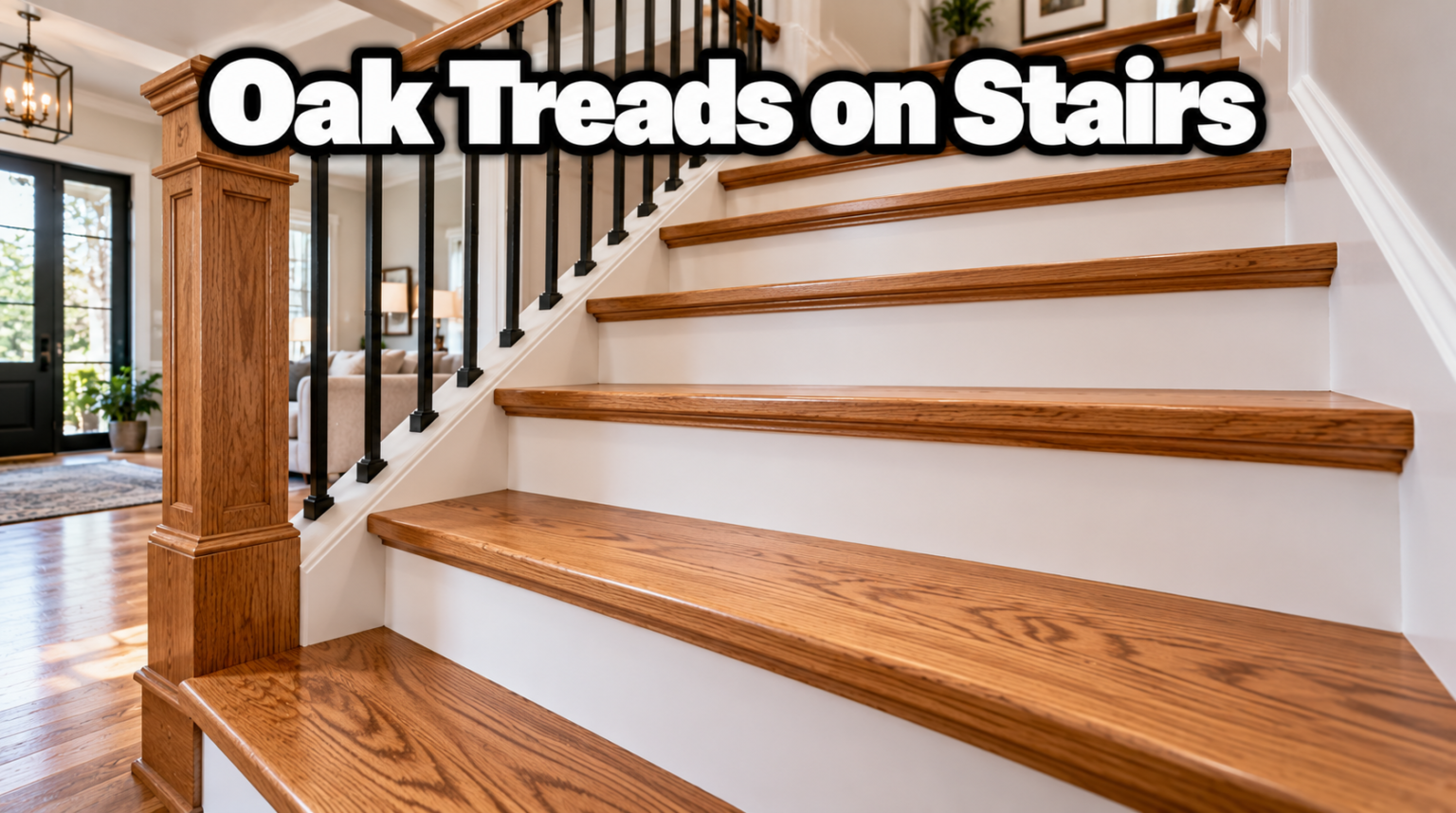

Oak stair treads are the solid oak boards you step on, the flat top of each step. People choose oak because it is hard, it takes a stain well, and it holds up under years of daily foot traffic. A well-fitted oak staircase can be the thing people notice first when they walk into a home, and it will still look good long after a carpeted stair would have worn out. This guide walks through the two main types of oak tread, the difference between red and white oak, the sizes and code rules that matter, how treads are finished and fitted, and what you can expect to pay.
What is a stair tread?
A tread is the horizontal part of a step, the surface your foot lands on. The vertical board behind it is the riser, and the small lip that sticks out past the riser is the nosing. A full oak staircase is simply a run of oak treads sitting on a frame, with risers and nosings to match.
The frame itself is made of stringers, the angled boards that run up each side and hold the steps. A staircase closed on both sides, with walls left and right, uses plain treads cut square. A staircase open on one or both sides needs treads with a return, a finished rounded end that caps the exposed edge so you never see raw end grain.
Oak treads come in two forms. A full tread is a single solid board that becomes the step itself on a new or rebuilt staircase. A retread, sometimes called a false tread or overlay, is a thinner oak cap that fits over a step you already have. The one you need depends on whether you are building fresh or covering what is there.
Why pick oak over other woods?
Oak earns its place on stairs because it is hard enough to take a daily beating and still looks good. Softer woods like pine dent and scuff fast on a busy staircase, so they usually end up painted or carpeted. Oak holds its surface for years and can be sanded back and refinished several times over its life.
Oak is also easy to buy. Treads, risers, and matching nosings are stocked in standard sizes, so you can order a whole flight that fits together without custom milling. Maple and walnut make fine treads too, but maple can be fussy to stain evenly and walnut costs a lot more, which is why oak stays the default for most homes.
Solid oak treads vs retreads (overlays)
Pick a full solid tread for a new staircase or a full rebuild, and a retread when you want oak over an existing stair without tearing it out.
A solid tread is a thick board, usually about one inch, that carries weight on its own and screws or glues down to the stair frame. It is the right call for new construction and for jobs where the old steps are being removed anyway.
A retread is built to sit on top of what you already have. It is common when people pull up old carpet and want wood underneath, or when plywood or softwood steps need a hard-wearing surface. The overlay is milled with a front nosing that wraps the edge, so once it is down and the riser is capped, the step looks like solid oak from top to bottom. Retreads cost less to fit because the structure stays put, and they keep the stairs usable with far less mess.
The one thing to watch with an overlay is height. Each cap adds a little to the top of the step, so the steps stay even with each other but the very top and very bottom risers change slightly against the floor. Measure those two risers before you buy, so the finished stairs still fall within the size limits set by code.
Red oak or white oak: which should you use?
Both red and white oak make excellent treads. White oak is a little harder and more water resistant, while red oak is cheaper and easier to find, so most stock stair parts are red oak.
Red oak has a warm pinkish tone and a bold, open grain with the wavy lines many people picture when they think of oak. It sits around 1290 on the Janka hardness scale, which measures how well a wood resists dents. White oak is a touch denser at about 1360, with a cooler light-brown color and a tighter, straighter grain. That tight grain also makes white oak better at shrugging off moisture, which is why it turns up in barrels and boat decks.
For a normal indoor staircase, red oak is plenty hard and saves money. Choose white oak when you want the calmer modern look, a surface that handles the odd spill or a damp hallway a bit better, or a higher-end feel. European and French oak sold for treads are part of the white oak family and behave the same way.
| Feature | Red oak | White oak |
| Color | Warm, pinkish tone | Cooler, light brown |
| Grain | Bold, open, wavy grain | Tighter, straighter grain |
| Hardness (Janka) | About 1290 | About 1360 |
| Water resistance | Good | Better |
| Cost | Lower, widely stocked | Higher, often made to order |
| Best for | Everyday indoor stairs on a budget | Modern look, damp areas, higher-end jobs |
One practical note on finishing. Red oak drinks stain unevenly across its open pores, so a mid or dark stain can look a little blotchy without a conditioner first. White oak takes stain more evenly and suits the pale, natural and grey tones that are popular right now.
Standard sizes, thickness, and code rules
A standard solid oak tread is about one inch thick and roughly eleven and a half inches deep front to back, in lengths from 36 inches up to around 94 inches so you can cut to the width of your stairs. Open-sided staircases use treads with a return, a finished bullnose end that wraps the exposed side.
The nosing, the rounded lip at the front, usually overhangs the riser by three quarters of an inch to one and a quarter inches. That overhang is not just for looks. It gives your foot a little more landing room on each step.
Size is also a safety matter, and building codes set the limits. In the United States, the International Residential Code asks for a tread depth of at least 10 inches measured front to back, and a riser no taller than 7 and three quarters inches. Keeping every step the same size matters too, since uneven steps are a trip hazard. Check your local rules before you cut, because some areas amend these numbers.
Tip: keep every step the same size. A single step that is even half an inch taller or shallower than the rest is a common cause of trips, and inspectors check for it.
Thickness drives the choice between a full tread and a retread. A one-inch solid board is structural and becomes the step. An overlay retread is usually milled thinner on the body with a full nosing at the front, so it adds height to each step without raising it much. If you add an overlay, remember it lifts the top step closest to the floor above, so measure that last riser to keep it within code.
Oak tread grades: what you are paying for
Oak treads are sold in grades that describe how clean the wood looks, and the grade changes both the price and the style. A clear or select grade is the most uniform, with few knots and even color, and it costs the most. It suits a formal, smooth look.
Character or rustic grade leaves in knots, color streaks, and more dramatic grain. It costs less and gives a warmer, lived-in feel that works well in country or farmhouse rooms. There is no difference in strength between the grades, so if you like the look of knots you can spend less and get a tread that is just as tough.
Finishing: unfinished or prefinished?
You can buy oak treads raw and finish them yourself, or buy them prefinished and ready to walk on. Raw treads give you full control of the stain and sheen and let you match an existing floor exactly. The trade-off is time, dust, and fumes in the house while you sand, stain, and coat each step.
Prefinished treads arrive sanded, stained, and sealed with a tough factory coat that is usually harder than anything you can brush on at home. They go down faster and the stairs are ready to use almost right away. The catch is less control over the exact color and a smaller set of options. If you are tying the stairs into a floor you already have, raw treads finished on site are the safer way to get a seamless match.
How oak treads get installed
Fitting oak treads is a straightforward job if the steps underneath are sound and square. Here is the basic order of work for a solid or overlay tread.
- Measure each step and cut the tread to width, allowing for returns on any open side.
- Dry-fit the tread to check it sits flat with the nosing overhang you want at the front.
- Run a bead of construction adhesive across the step, then set the tread in place.
- Fix it down with screws or finish nails, countersinking screws and plugging the holes with oak.
- Cap the riser, fill any nail holes, and finish or touch up the tread if it is not prefinished.
Work from the bottom step up so you are never standing on fresh glue, and let any adhesive cure fully before heavy use. If the frame underneath is loose, bouncy, or badly out of level, fix that first. No tread will feel solid on a weak stringer.
Staying safe underfoot and keeping treads looking good
Polished oak can be slick, especially in socks or when a glossy finish is new. A satin or matte finish grips better than a high gloss, and it also hides scuffs and dust far better. For stairs that see kids, older adults, or pets, a few low-profile stair treads or a runner down the middle add grip without hiding the wood.
Day to day, oak treads are easy to live with. Sweep or vacuum grit so it does not act like sandpaper underfoot, and wipe spills quickly rather than letting water sit, since standing water is the one thing that will damage any oak over time. Clean with a barely damp mop and a cleaner made for wood floors, not a soaking wet mop or a steam cleaner.
When the finish finally wears through on the most-used steps, oak takes a refinish well. A light sand and a fresh coat or two of floor finish brings tired treads back, and because the wood is solid you can do this several times before the treads are worn out. That ability to refresh rather than replace is a big part of why oak stairs last.
What oak stair treads cost
A single solid oak tread runs from roughly 40 dollars for a short red oak board to around 190 dollars or more for a long or prefinished one with returns. Price climbs with length, with a prefinished factory coat, and with returns for open-sided stairs.
White oak costs more than red oak because the raw timber is pricier and parts are often made to order. Across a full flight of 13 to 15 steps, the tread choice alone can swing the bill by hundreds of dollars, before you add risers, nosings, stain, and labor. Retreads can lower the total on a renovation because they skip the cost of ripping out and rebuilding the stairs. You can see current sizes and prices on a supplier page such as Hurst Hardwoods’ red oak stair treads, and compare the white oak version when you want the harder, lighter-toned option.
Conclusion
Oak treads give you a hard, good-looking stair surface that lasts for decades. Use solid one-inch treads for new or rebuilt stairs and overlay retreads to cap steps you are keeping. Red oak is the affordable workhorse, while white oak buys you a harder, lighter, more water-resistant step. Keep each tread at least 10 inches deep with risers under 7 and three quarters inches, match your finish to your floor, and you will have a staircase that looks right and holds up.
Frequently asked questions
How thick should an oak stair tread be?
A solid oak tread is usually about one inch thick, which is enough to carry weight as the step itself. Overlay retreads that sit on an existing step are milled thinner, with a full nosing at the front edge.
Is red oak or white oak better for stairs?
Both work well. White oak is a little harder and more water resistant and has a cooler, lighter look. Red oak is cheaper and easier to find. For a typical indoor staircase, red oak is strong enough and saves money.
Can I put oak treads over my existing stairs?
Yes. Overlay treads, also called retreads or false treads, are made to cap steps you already have. They are popular for covering old carpet or plywood steps, and they cost less to fit because you keep the existing structure.
How deep does a stair tread need to be by code?
In the United States the International Residential Code asks for a tread depth of at least 10 inches front to back, with risers no taller than 7 and three quarters inches. Local codes can differ, so check before you cut.
Should I buy prefinished or unfinished oak treads?
Prefinished treads are faster to fit and come with a tough factory coat. Unfinished treads let you choose the exact stain and match an existing floor. Pick unfinished when a seamless color match matters, prefinished when speed does.
Related Articles
How to Clean a Shower Curtain? Everything You Need to Know
How Much Does a Plumber Cost? 2026 Complete Pricing Guide
How to Cut a Rain Gutter: A Complete Step-by-Step Guide for Beginners
How Long Does It Take for Bathroom Caulk to Dry? Complete Guide