

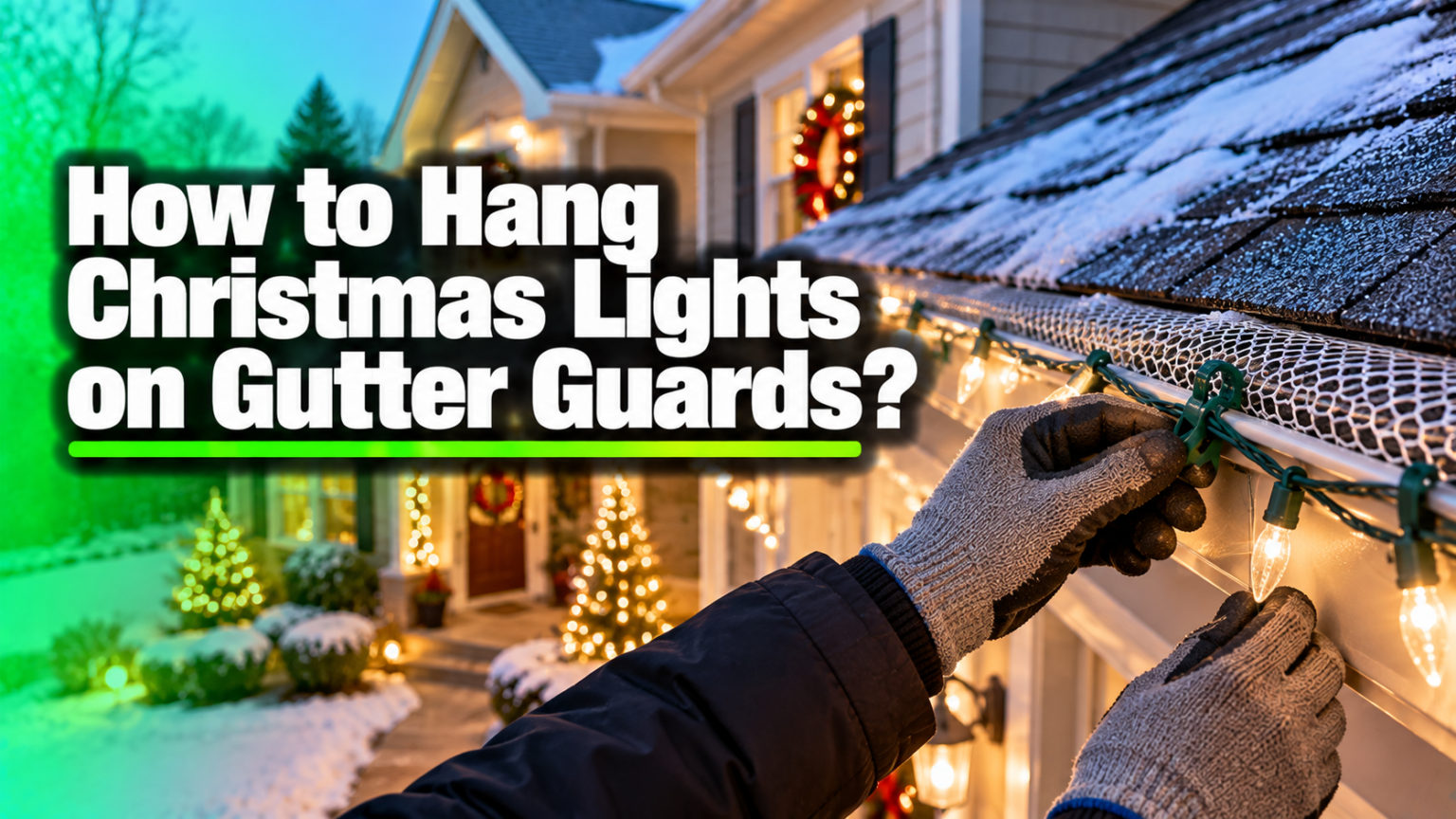

The easiest way to hang Christmas lights over gutter guards is to stop clipping to the gutter and grip the roofline instead. Use all-in-one gutter and shingle clips, under-shingle tabs, or strong adhesive clips, space them about every 6 to 12 inches, and snap the bulbs on before you carry the strand up the ladder. Most gutter guards cover the front lip of the gutter, which is the exact spot old-style gutter clips used to grab. Switch to a clip that hooks the shingle edge and the job goes quickly, with your guards left untouched.
Below is the full method: which clips work, how to put them up step by step, what to skip, and how to keep your warranty and your footing intact.
Why gutter guards change the way you hang lights?
Standard plastic Christmas light clips were built for a bare gutter. They slide over the front lip, and the bulb sits in the little hook that faces the street. Gutter guards get in the way of that. Screen, micro-mesh, and reverse-curve guards all sit on top of the gutter and often wrap over the front edge, so there is no clean lip left to clip onto.
That is the whole problem, and it has a simple fix. Instead of grabbing the gutter, you grab the roof. Clips made for shingles hook under the bottom row of shingles, an inch or two above the gutter, and hold the light strand in almost the same line. Some clips do both jobs, which is why they are the go-to choice for most homes with guards.
The type of guard you have decides how much room you are left with. Reverse-curve and solid-cover guards usually wrap the whole front edge, so the gutter is a no-go and you work off the shingles. Mesh and micro-mesh panels sit flat on top and often leave a thin lip, but the mesh is delicate, so shingle clips are still kinder. Screen guards and foam inserts vary, so look before you climb rather than guess from the ground.
One quick check before you buy anything: look at how your guard attaches. Brush-style inserts that drop down into the trough do not clip to the front of the gutter at all, so ordinary gutter clips still work with them. Guards that snap onto or over the front lip are the ones that force you to move up to the shingles.
The best clips for hanging lights over gutter guards
A few clip types handle gutter guards well. The right one depends on your roof, your gutter, and how permanent you want the display to be. Here is how they compare.
| Clip type | How it holds | Best for |
| All-in-one gutter and shingle clip | Hooks under a shingle or over a gutter edge, and holds C7, C9, and mini bulbs | Most homes with guards; the flexible first pick |
| Under-shingle tab | Slides up under the bottom shingle row and grips there | Roofs where the gutter is fully covered |
| Adhesive clip | Sticks to clean fascia, trim, or brick with weatherproof adhesive | Surfaces with no shingle or lip to grab |
| Magnetic clip | Grabs onto steel or aluminum surfaces | Metal fascia, porch posts, or steel trim |
| Under-gutter clip | Wraps the bottom of the gutter instead of the top | Guards that block the top but leave the underside free |
For most people the all-in-one gutter and shingle clips are the safe bet. One clip fits a covered gutter or a shingle edge, works with the common bulb sizes, and comes off in January without leaving a mark. Adhesive clips are the backup for spots with no shingle and no free lip, like a flat fascia board or a brick parapet. Just clean and dry the surface first, or the clip lets go in the first cold snap.
Corners and downspouts need a little extra thought. Add a clip right at each corner so the strand turns a crisp angle instead of drooping across the gap. If you plan to leave the clips up year round, which many people do, pick a clear UV-resistant clip that will not go brittle and yellow after a summer in the sun. Buy one style and one bulb size for the whole house so every clip fits every run.
How many lights and clips will you need?
Measure before you shop, because guessing almost always leaves you short at the last corner. Add up every roof edge you want lit, in feet, and buy a little extra on top.
Bulb spacing sets the length. C9 and C7 bulbs on a stringer usually sit 12 inches apart, so a 25-foot strand lights about 25 feet of roof. Mini lights are denser and add sparkle rather than big bulbs. For clips, plan on one every 6 to 12 inches, which works out to roughly one clip per foot of roofline, plus a handful of spares for corners. Power matters too: standard incandescent C9 runs are heavy on watts, so check the box for how many strands you can safely link end to end, or switch to LED strands, which sip power and let you connect far more in a single line.
How to hang the lights step by step?
Work in good weather, on a dry day with no wind. Plan on an hour or two for an average roofline. Here is the order that saves the most trips up the ladder.
- Measure your roofline first. Walk the length of each edge you want lit and add it up. Buy a little more light strand and a few more clips than the number you get, so you are not short at the far corner.
- Match the clip to your setup. Check whether your guard leaves any front lip free. If it does not, go with all-in-one or under-shingle clips. If a stretch has no shingle and no lip, keep a pack of adhesive clips for that section.
- Attach the clips to the light strand on the ground. Snap a clip onto the wire every 6 to 12 inches, tighter around corners and downspouts. Doing this at ground level means less fiddling at the top of the ladder.
- Test the strand before it goes up. Plug it in and confirm every bulb lights. Fixing a dead section is far easier now than after the whole run is clipped to the roof.
- Set your ladder and start at the outlet end. Begin near the power source so the plug lands where you need it. Climb with the strand looped over one shoulder or clipped to a tool belt.
- Hook each clip to the shingle edge as you go. Press the clip up under the bottom shingle, or over the gutter edge if yours is free, and keep the wire snug but not stretched tight. A little slack stops the strand from pulling loose in wind.
- Move the ladder, do not lean. Clip as far as you can reach in comfort, then climb down and shift the ladder. Reaching sideways is how most holiday ladder falls happen.
- Connect to power and hide the cord. Use an outdoor-rated extension cord, tuck connections up out of standing water, and plug into a GFCI outlet. A plug-in timer saves you the nightly trip to the switch.
Quick tip: put every clip on the wire before you climb. Ten minutes on the ground beats an hour of one-handed clipping at the top of a ladder, and it keeps both hands free for holding on.
Clips and methods to avoid
The wrong fastener can wreck a guard, a roof, or the lights themselves. Skip these:
- Staple guns. Staples pierce the wire insulation and the shingle, which invites leaks and shorts. They are also miserable to remove.
- Nails and screws. Anything driven into the roof or fascia leaves a hole that can let water in long after the lights come down.
- Hot glue or duct tape. Both fail in the cold, and both leave residue on gutters, guards, and paint.
- Old-style gutter clips on a covered lip. If the clip cannot seat fully on the guard, it pops off in the first gust and takes a length of lights with it.
- Overloaded clips. One clip holding several crossing strands sags and slips. Give each run its own line of clips.
Will hanging lights damage your gutter guards or void the warranty?
Clip-on and adhesive methods do not damage guards, because nothing gets pierced or drilled. The strand rests on the shingle line or sticks to trim, and both come away clean. The risk comes from force: prying a stiff clip onto a delicate micro-mesh panel, or hanging so many strands that the guard bends under the weight.
Warranties are the part worth a two-minute check. Some gutter guard makers spell out what you can and cannot attach, and a few say that clipping directly to the guard voids coverage. Read your paperwork or call the installer before you clip anything to the guard itself. Hanging from the shingles instead sidesteps the question entirely, since you are not touching the guard at all.
Staying safe on the ladder
More people get hurt hanging holiday lights than you would guess, and almost all of it is ladder falls. A few habits remove most of the risk. Set the ladder on firm, level ground, and have someone foot it while you climb. Use an extension ladder that reaches at least 3 feet above the gutter, so you are never standing on the top rungs.
Keep your hips between the ladder rails and move it often rather than stretching for one more clip. Use only lights and cords rated for outdoor use, check each strand for cracked insulation before it goes up, and plug everything into a GFCI-protected outlet. The Electrical Safety Foundation’s outdoor decorating tips are a good primary source if you want the full safety rundown before you start.
Watch the weather and the roof surface too. Ice, frost, and wet leaves turn a shingle edge slick, so wait for a dry, calm day rather than fighting the wind with a strand in one hand. Keep cord connections off the ground and up under an eave where snow and standing water cannot reach them, and run the whole display on a plug-in timer or a smart plug so you are not climbing back up or standing out in the cold to switch it on each night.
Conclusion
Hanging Christmas lights over gutter guards comes down to one move: clip to the shingle line, not the covered gutter. Pick all-in-one or under-shingle clips, add adhesive clips for bare spots, space them every 6 to 12 inches, and attach them to the strand on the ground before you climb. Skip staples, nails, and glue, check your guard warranty, and work off a stable ladder in good weather. Do that and you get a clean, even glow with guards and roof left exactly as they were.
Frequently asked questions
Can you hang Christmas lights if you have gutter guards?
Yes. Gutter guards only block the front lip, so you hang the lights from the shingle edge instead. All-in-one or under-shingle clips hold the strand in almost the same line, with no damage to the guard.
What kind of clips work best with gutter guards?
All-in-one gutter and shingle clips are the top pick, since one clip fits a covered gutter or a shingle edge and holds C7, C9, and mini bulbs. Adhesive clips cover spots with no shingle or free lip.
Will hanging lights damage my gutter guards?
Not if you use clip-on or adhesive methods, which pierce nothing. Damage comes from staples, nails, or forcing stiff clips onto thin mesh. Hanging from the shingles avoids touching the guard at all.
How far apart should I space the clips?
Space clips about 6 to 12 inches apart along the roofline, and closer around corners and downspouts. Tighter spacing keeps the strand straight and stops it sagging or pulling loose in wind.
Do gutter guard warranties cover Christmas light clips?
It depends on the maker. Some warranties stay intact with clip-on lights, while a few say attaching anything to the guard voids coverage. Check your paperwork, or hang from the shingles to stay clear of the issue.
Related Articles
How Tall Is a Standard Door? Complete Height Guide (2026)
Does a Bathroom Remodel Require a Permit?
How to Reset a Garage Door Opener: Full Step-by-Step Guide
Can You Flush a Toilet Without Power? Full Guide for Outages