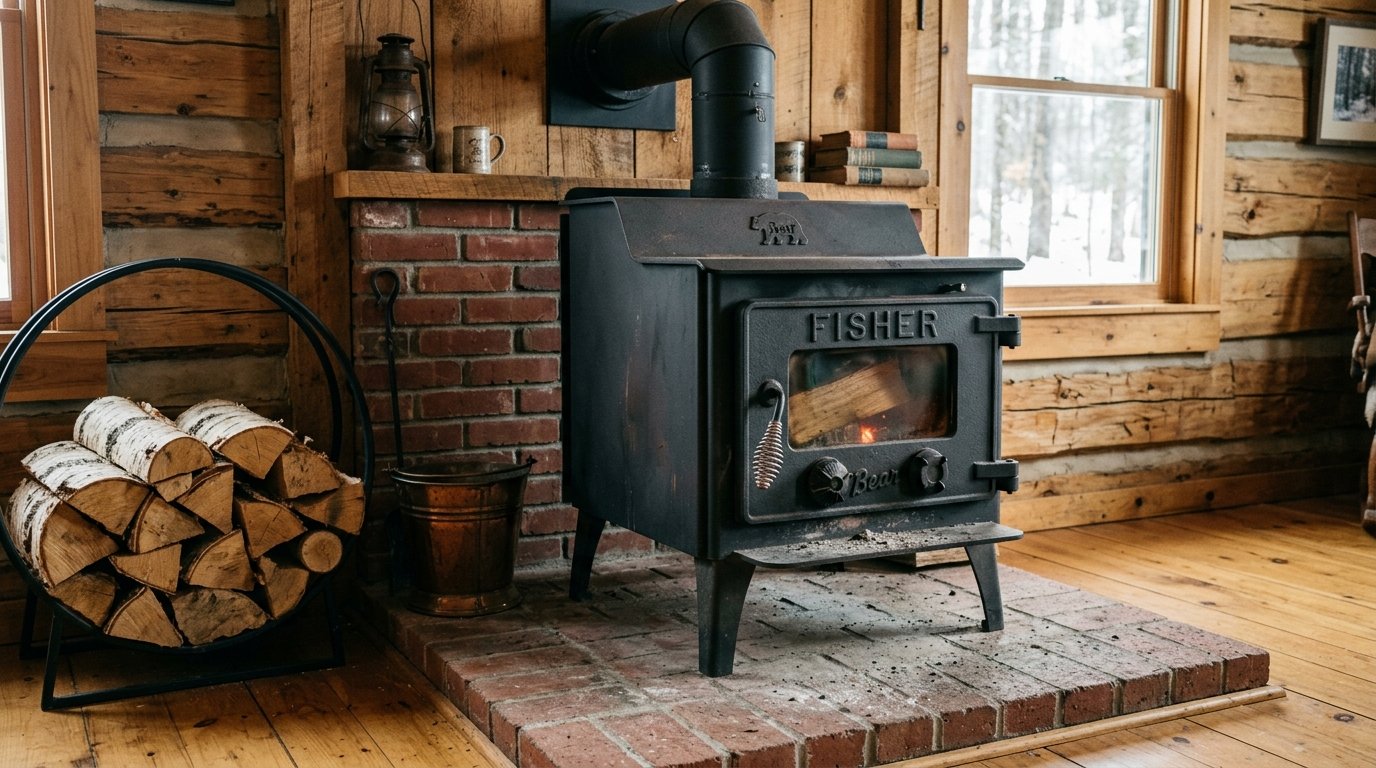

The Fisher wood stove is one of the most iconic and widely recognized cast iron wood-burning stoves ever manufactured in the United States.
Built for durability, efficiency, and long-lasting heat output, it became a household staple across American homes during the 1970s and 1980s. Before diving into each model and feature, it is important to understand why Fisher stoves stood apart from everything else on the market at the time.
The Origin and Brand History
Fisher Stoves, Inc. was founded in Eugene, Oregon, and quickly rose to national prominence during the energy crisis of the 1970s.
Homeowners looking to cut heating costs turned to wood as a reliable and affordable fuel source, and Fisher answered that demand with a line of heavy-gauge cast iron stoves that outperformed most competitors in heat retention and build quality.
The brand became so popular that at its peak, Fisher was producing tens of thousands of units per year across multiple model lines.
Why Fisher Stoves Became a Household Name
What made the Fisher wood stove genuinely different was its thick cast iron construction combined with a simple, reliable firebox design.
These stoves were not built to be discarded after a few seasons — they were engineered to last decades with minimal maintenance.
Many original Fisher stoves purchased in the 1970s are still in active use today, which speaks volumes about their craftsmanship and long-term value.
The End of Production and Lasting Legacy
Fisher ceased manufacturing operations in the mid-1980s due to shifting market conditions and increased competition from newer, EPA-certified stoves. However, the brand’s legacy never faded.
A thriving secondary market emerged around used Fisher stoves, and today these units remain highly sought after by collectors, wood heating enthusiasts, and budget-conscious homeowners alike.
Popular Fisher Wood Stove Models
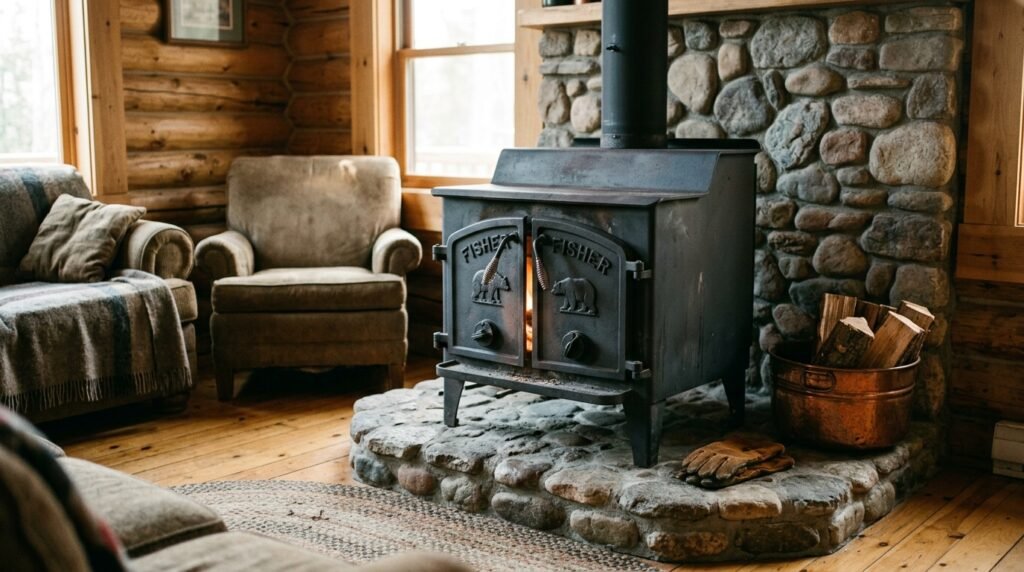
Fisher produced several distinct models over its production years, each designed with a specific heating need in mind. Below is an overview of the most recognized models that defined the brand’s lineup.
| Model Name | Size | Heating Capacity | Notable Feature |
| Fisher Mama Bear | Medium | Up to 1,200 sq ft | Most popular residential model |
| Fisher Papa Bear | Large | Up to 2,000 sq ft | Large firebox, longest burn time |
| Fisher Baby Bear | Small | Up to 800 sq ft | Compact, ideal for small spaces |
| Fisher Grandma Bear | Medium | Up to 1,000 sq ft | Slimmer profile, side loading |
| Fisher Honey Bear | Small-Medium | Up to 900 sq ft | Decorative appeal, cottage style |
Fisher Mama Bear
The Mama Bear is arguably the most recognized Fisher wood stove model ever made. Designed for mid-sized homes, it strikes the right balance between firebox capacity and manageable physical dimensions.
It can hold a substantial load of firewood while delivering consistent, room-filling warmth for hours on a single charge, making it the go-to choice for families who rely on wood heat as their primary source.
Fisher Papa Bear
Built for serious wood burners who heat large homes or open-plan spaces, the Papa Bear lives up to its name. Its oversized firebox can accommodate longer logs and hold a larger volume of wood, which translates directly into extended burn times and reduced need for reloading.
This model was particularly popular in rural areas and larger farmhouses where central heating was either unavailable or simply too costly to run.
Fisher Baby Bear
The Baby Bear was Fisher’s answer for homeowners with smaller living spaces who still wanted the reliability and durability of cast iron construction. Despite its compact footprint, it produces impressive heat output relative to its size. It became a popular choice for cabins, workshops, and supplemental heating zones within larger homes.
How a Fisher Wood Stove Works
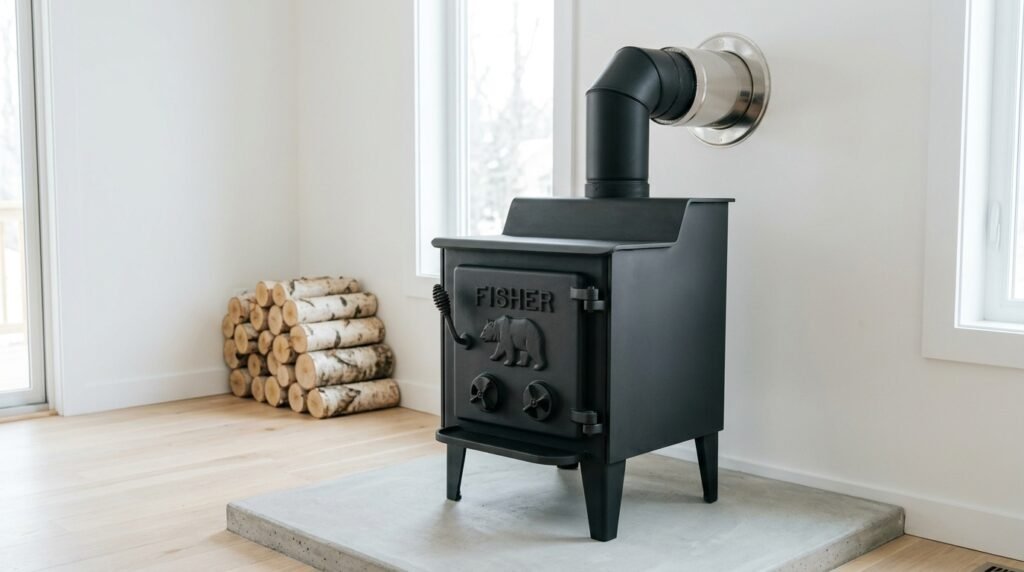
Understanding the mechanics of your Fisher wood stove helps you operate it more efficiently and safely. These stoves use a straightforward combustion design that prioritizes simplicity over complexity, which is partly why they have remained functional for so many decades without major servicing.
Firebox and Heat Retention
The firebox is the heart of any Fisher wood stove. Constructed from thick cast iron panels, it absorbs heat from the burning wood and radiates it steadily into the room long after the fire dies down.
This thermal mass effect is one of the key advantages cast iron has over thinner sheet steel stoves, which heat up quickly but also cool down just as fast.
Air Control and Combustion
Fisher stoves use a primary air control system typically located near the bottom of the firebox door or on a dedicated vent panel.
Opening the air damper allows more oxygen into the firebox, which increases combustion rate and raises heat output quickly. Closing it down slows the burn, reduces fuel consumption, and extends the burn time — a critical technique for overnight heating.
Draft and Chimney Function
Proper draft is essential for any wood stove to function correctly. The chimney creates a natural upward draw that pulls combustion gases out of the firebox and allows fresh air to enter for continued burning.
A well-maintained chimney with the correct flue diameter ensures your Fisher stove operates cleanly and efficiently, minimizing smoke and creosote buildup.
Fisher Wood Stove Parts and Replacement Components
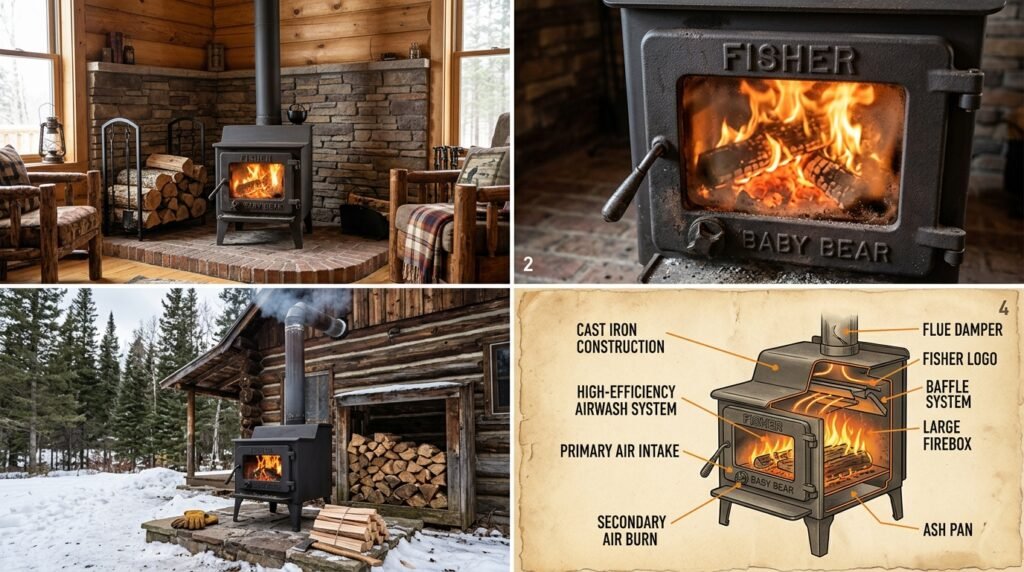
One of the ongoing challenges for Fisher stove owners is sourcing replacement parts, since the company no longer manufactures them. However, a well-developed aftermarket has made it possible to keep these stoves running for years to come.
Common Parts That May Need Replacement
- Firebrick lining — The interior brick panels absorb intense heat and can crack over time with heavy use.
- Door gaskets — Rope gaskets seal the firebox door; worn gaskets allow air leaks that reduce efficiency.
- Door latches and hinges — Cast iron hardware that can wear or break with repeated use.
- Ash pan and grate — The base components that support the fire and allow ash to fall through for collection
- Baffle plates — Internal deflectors that direct heat and gases for improved combustion
Where to Find Fisher Stove Parts
Since original Fisher parts are no longer in production, owners typically source replacements through three channels. First, online marketplaces like eBay and Facebook Marketplace regularly list salvaged parts from decommissioned units.
Second, specialty wood stove retailers carry universal replacement components such as rope gaskets and firebrick that are compatible with Fisher dimensions. Third, local stove repair shops often stock or can source compatible hardware for older cast iron stoves.
How to Use a Fisher Wood Stove Safely and Efficiently
Operating your Fisher wood stove correctly is not just about getting a good fire going — it is about doing so in a way that maximizes heat output, protects your home, and extends the stove’s service life.
Seasoning Your Wood
Always burn properly seasoned firewood with a moisture content below 20 percent. Wet or green wood burns poorly, produces excessive smoke, and generates significantly more creosote in your chimney, a leading cause of chimney fires.
Hardwoods such as oak, hickory, and maple are the preferred choices for Fisher stoves because of their high energy density and long, steady burn characteristics.
Proper Startup Technique
Begin with a small, hot fire using dry kindling and newspaper rather than immediately loading the firebox with large logs. A hot initial burn helps establish a strong chimney draft and warms the flue quickly, which reduces smoke spillback into the room.
Once the fire is established and the stove body is warm, gradually add larger pieces of wood.
Chimney Maintenance Schedule
| Maintenance Task | Recommended Frequency |
| Visual chimney inspection | Every heating season |
| Professional chimney sweep | Annually or every cord burned |
| Door gasket check | Before each season |
| Firebrick inspection | Annually |
| Ash pan cleaning | Weekly during active use |
Fisher Wood Stove vs. Modern Wood Stoves
Many homeowners wonder whether a vintage Fisher wood stove can still hold its own against today’s EPA-certified modern stoves. The comparison is more nuanced than a simple better-or-worse verdict.
Modern stoves are engineered to meet strict EPA emission standards, burning wood more completely with catalytic or secondary combustion systems that reduce particulate output and extract more heat per log.
In terms of environmental compliance and fuel efficiency, newer stoves have a measurable advantage.
However, the Fisher wood stove counters with sheer mass and durability. Its thick cast iron construction provides a level of heat retention that many lighter modern stoves simply cannot match.
For off-grid homesteaders, rural property owners, and those who heat primarily with wood, the Fisher’s simplicity no catalytic combustor to replace, no complex baffling systems to maintain is a genuine operational advantage.
The right choice ultimately depends on your priorities. If environmental compliance and maximum fuel efficiency are paramount, a modern EPA-certified stove is the better option.
If you value longevity, repairability, and the proven reliability of a stove that has already lasted decades, the Fisher remains a compelling choice.
Buying a Used Fisher Wood Stove: What to Check
Purchasing a secondhand Fisher stove requires a careful inspection to ensure you are getting a unit that is safe to operate and worth the investment.
- Check for cracks in the cast iron body — Run your hand along all panel seams and inspect with a flashlight; hairline cracks in cast iron can worsen under heat and are difficult to repair permanently.
- Inspect the door seal — Close the door on a piece of paper and try to pull it out; resistance indicates a good gasket, easy removal means replacement is needed.d
- Examine the firebrick lining — Cracked or missing bricks must be replaced before use to protect the outer cast iron panels from direct flame contact.ct
- Check the flue collar connection — Ensure the collar is intact and that connections are clean without excessive rust or corrosion.
- Look for warping — Extreme overfire events can warp cast iron panels, which compromises the stove’s sealing ability.y
- Request the model name or serial number — This helps confirm specifications and identify the correct replacement parts if needed.
Frequently Asked Questions
Are Fisher wood stoves still made?
No, Fisher Stoves, Inc. stopped production in the mid-1980s. All Fisher stoves available today are used units found through private sales, auctions, or secondhand marketplaces.
Is a Fisher wood stove EPA certified?
Fisher stoves were manufactured before modern EPA wood stove regulations came into effect. They are not EPA Phase 2 certified, which may restrict their legal use in certain states or air quality zones. Always check local regulations before installation.
How long will a Fisher wood stove last?
With proper maintenance and the use of seasoned wood, a well-preserved Fisher stove can last indefinitely. Many original units from the 1970s are still in active service today.
What size flue pipe does a Fisher wood stove use?
Most Fisher models use a 6-inch or 8-inch flue connector, depending on the model. Always verify the specification for your specific model before purchasing chimney components.
Can I cook on a Fisher wood stove?
Some Fisher models have a flat top surface that produces enough surface heat for basic cooking tasks like boiling water or warming food, though they were not specifically designed as cooking stoves.
Conclusion
The Fisher wood stove represents an era of American manufacturing when heating appliances were built not for planned obsolescence but for genuine longevity. Whether you own one passed down through generations, recently purchased one at an estate sale, or are simply researching whether it is worth investing in one, the core message is consistent: these stoves have earned their reputation through decades of real-world performance.
Understanding the model differences, sourcing the right replacement parts, using proper burning techniques, and performing regular maintenance are the four pillars of getting the most from your Fisher stove. For anyone serious about wood heat, it remains one of the most respected names in the category — decades after the last one rolled off the production line.
Related Articles
Shower Door Repair: Complete Guide to Fix Common Shower Door Problems
Rub-on Transfers for Furniture: Transform Your Decor with Ease
Roof Leaks in Heavy Rain: Causes, Signs & Fixes
24 Inch Kitchen Sink Drop In Complete Guide: Types, Benefits, Installation
Mulled Windows vs Non-Mulled Windows: Which Is Right for Your Home