


When homeowners begin planning a window replacement project, most of the focus goes toward frame materials, glass packages, and operating styles. One detail that often gets overlooked is whether to choose mulled or non-mulled windows.
This decision affects how much light enters a room, how the exterior of your home looks, and how flexible your design options will be down the road. Below is a complete breakdown of both options to help you decide which approach fits your home and lifestyle best.
Understanding Mulled Windows
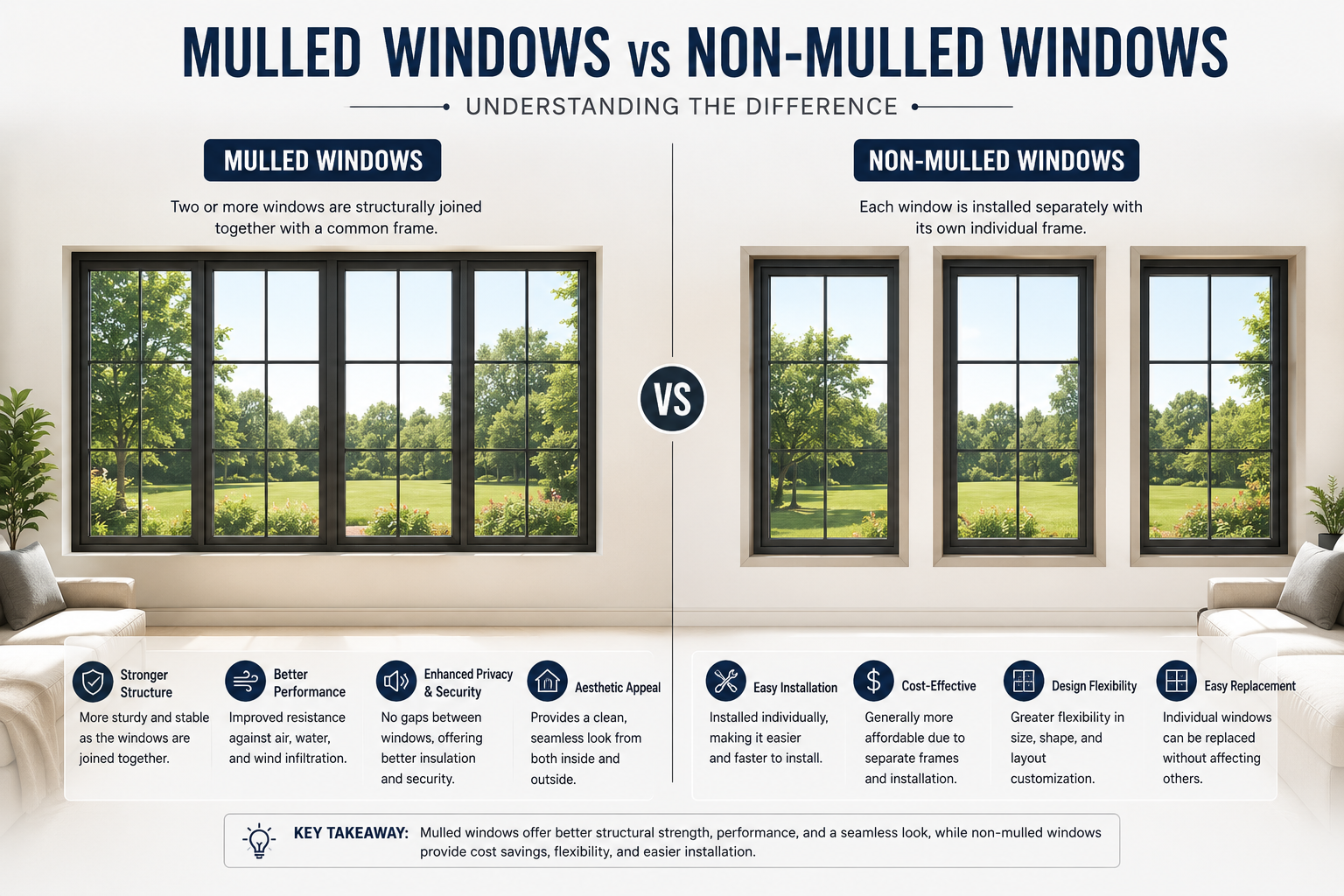
Mulled windows are created when two or more individual window units are structurally joined together to form one larger combined unit within a single opening.
This is achieved through a process called window mulling, which uses reinforcement kits or connectors to lock the frames together securely.
What Makes a Window “Mulled”
A mulled window setup takes separate window units, such as casement, double-hung, or picture windows, and connects them edge to edge so they function and appear as one continuous piece.
The connection is made using specialized mulling hardware that keeps the frames aligned and structurally sound, while sealing the gap between units to prevent air and water infiltration.
Common Examples of Mulled Windows
Bay and bow windows are two of the most recognizable forms of mulled windows found in homes today. A bay window typically combines three units, often featuring a large fixed picture window in the center flanked by angled side windows, while a bow window uses four to six units arranged in a gentle outward curve to create a rounded appearance from both inside and outside the home.
Advantages of Choosing Mulled Windows
Mulled windows offer several practical and visual benefits that make them appealing for certain rooms and architectural styles. Understanding these advantages can help you decide if this option aligns with your goals.
Increased Natural Light and Open Feel
Joining multiple window units together creates a much larger glass surface compared to standard single windows of the same total width.
This expanded glass area allows significantly more natural light to flood into a room, which can make spaces feel brighter, more open, and more connected to the outdoors throughout the day.
Streamlined Appearance and Design Flexibility
Because mulled windows reduce the amount of framing material between units, the overall look becomes cleaner and more unified, with less visual interruption across the wall.
This setup also allows different window styles to be combined within one unit, such as pairing a fixed picture window with operable casement windows on either side, giving homeowners more creative freedom in how a room is designed.
Performance and Suitability for Larger Spaces
When manufactured and installed correctly, mulled windows can maintain strong energy efficiency despite their larger size, helping keep indoor temperatures stable throughout the year.
This makes them particularly well suited for large living rooms, great rooms, or spaces with vaulted ceilings where a wide expanse of glass can dramatically enhance the overall feel of the room.
Understanding Non-Mulled Windows
Non-mulled windows take a more traditional approach, with each window installed as a completely separate and independent unit rather than being joined into a larger combined structure.
What Defines a Non-Mulled Window
In a non-mulled setup, every window has its own dedicated frame, trim, and rough opening within the wall. Rather than sitting flush against another unit as part of a single structure, these windows are positioned individually, often with a section of wall material visible between each one.
How Non-Mulled Windows Are Typically Arranged
Non-mulled windows can be placed side by side, stacked vertically, or spaced apart across a wall, depending on the architectural design of the home.
Because each unit stands on its own, the spacing and arrangement can be adjusted more freely without the structural considerations required when mulling units together.
Advantages of Choosing Non-Mulled Windows
Non-mulled windows come with their own set of benefits, particularly for homeowners focused on traditional aesthetics, easier maintenance, and budget considerations.
Traditional and Architectural Appeal
For homes with a classic or historic design, non-mulled windows often look more authentic and fitting. Each window frame acts as its own distinct architectural feature on the facade, adding texture, rhythm, and definition to the exterior rather than creating one large continuous glass area.
Easier Long-Term Maintenance and Repairs
One of the most practical benefits of non-mulled windows is that each unit operates independently.
If a single window becomes damaged or needs repair, it can typically be addressed or replaced on its own without disturbing the surrounding windows, which can save both time and money over the life of the home.
Cost and Installation Considerations
Non-mulled windows are generally less expensive to install since they do not require the additional reinforcement kits, hardware, or structural modifications that mulled units often need.
They also tend to be more practical in homes with limited access or tighter spaces, since each window is handled and installed as its own self-contained unit rather than as part of a larger assembly.
Comparing Mulled and Non-Mulled Windows Side by Side
To make the differences easier to visualize, the table below summarizes how mulled and non-mulled windows compare across several important factors that homeowners typically consider.
| Factor | Mulled Windows | Non-Mulled Windows |
| Natural Light | Maximizes light with larger combined glass area | Light depends on individual window sizes |
| Appearance | Seamless, modern, continuous look | Traditional, segmented architectural look |
| Repair and Replacement | More involved if one unit needs work | Simple, independent repairs possible |
| Installation Cost | Generally higher due to reinforcement needs | Generally lower, fewer structural requirements |
| Best Suited For | Large open spaces, modern homes | Historic homes, smaller rooms, tighter budgets |
| Design Flexibility | Can combine multiple window styles in one unit | Each window style stands independently |
How to Decide Which Option Fits Your Home
Choosing between mulled and non-mulled windows comes down to a combination of practical needs, personal style preferences, and the specific characteristics of your home.
Assessing Your Space and Architectural Style
Larger rooms with open floor plans, such as living rooms, dining areas, or spaces with high ceilings, often benefit from the expansive feel that mulled windows provide. On the other hand, smaller rooms like bedrooms, bathrooms, or hallways may feel more proportionate and balanced with individual, non-mulled windows that match the scale of the space.
Homes with a modern design tend to pair well with the smooth, continuous look of mulled windows, while traditional or historic homes often look more authentic with the separation and detail that non-mulled windows provide.
Thinking About Maintenance, Budget, and Long-Term Plans
If easy repairs and replacements are a priority, non-mulled windows offer a simpler path since damaged units can be addressed individually. Budget-conscious homeowners may also lean toward non-mulled options due to their typically lower installation costs, while those looking to boost curb appeal and potentially increase home value might find that mulled windows offer a strong return despite the higher upfront investment.
Energy efficiency can be achieved with either option as long as quality materials are used and the installation is handled by an experienced professional.
Working With a Professional for the Final Decision
Structural considerations play a significant role in determining whether mulling is even possible in a given location, since not every wall opening can accommodate a combined unit without modifications.
Consulting with a window professional allows homeowners to get a clear picture of what is structurally feasible, how each option would look in their specific space, and which choice aligns best with both their design goals and their budget.
Real-Life Scenarios to Consider
Thinking through how each option might apply to your own home can make the decision feel less abstract.
A Modern Open-Concept Update
A homeowner looking to refresh their dining room might choose to combine three tall casement windows into a single mulled unit, creating one expansive wall of glass that brings in natural scenery and makes the space feel larger and more connected to the outdoors during gatherings.
Preserving the Character of an Older Home
A couple living in a historic property might instead choose non-mulled double-hung windows to preserve the original architectural charm of their home’s exterior, while still gaining the benefits of improved energy efficiency and modern window technology behind a familiar, traditional appearance.
Frequently Asked Questions
What is the main difference between mulled and non-mulled windows?
Mulled windows are two or more units structurally joined together to form one larger combined unit, while non-mulled windows are installed as completely separate units with their own individual frames.
Are mulled windows more energy efficient than non-mulled windows?
Both options can be energy efficient when high-quality products are used and installation is done correctly, though mulled windows require careful engineering at the connection points to maintain that efficiency.
Which option is better for a historic home?
Non-mulled windows generally complement historic or traditional homes better, since each frame acts as its own architectural detail rather than creating one continuous glass surface.
Is it more expensive to install mulled windows?
Yes, mulled windows typically cost more upfront due to the reinforcement kits and additional structural work required to join multiple units together securely.
Can a single mulled window unit be repaired if one section is damaged?
Repairs to mulled units can be more involved since the windows are structurally connected, whereas non-mulled windows allow individual units to be repaired or replaced independently.
Conclusion
Both mulled and non-mulled windows offer distinct advantages depending on your home’s architecture, your budget, and your long-term maintenance preferences.
Mulled windows create a bright, seamless look ideal for larger modern spaces, while non-mulled windows offer traditional charm, easier repairs, and a more budget-friendly installation.
Taking time to evaluate your space and consulting with a window professional will help ensure you choose the option that best suits your home for years to come.
Related Articles
How to Clean a Shower Curtain? Everything You Need to Know
How Do You Wash Walls Before Painting? (Step-by-Step Guide)
How to Clean and Store Kitchen Tools: The Complete Guide
Garage Door Bottom Seal Replacement: Complete Guide for Homeowners
Shower Door Repair: Complete Guide to Fix Common Shower Door Problems