


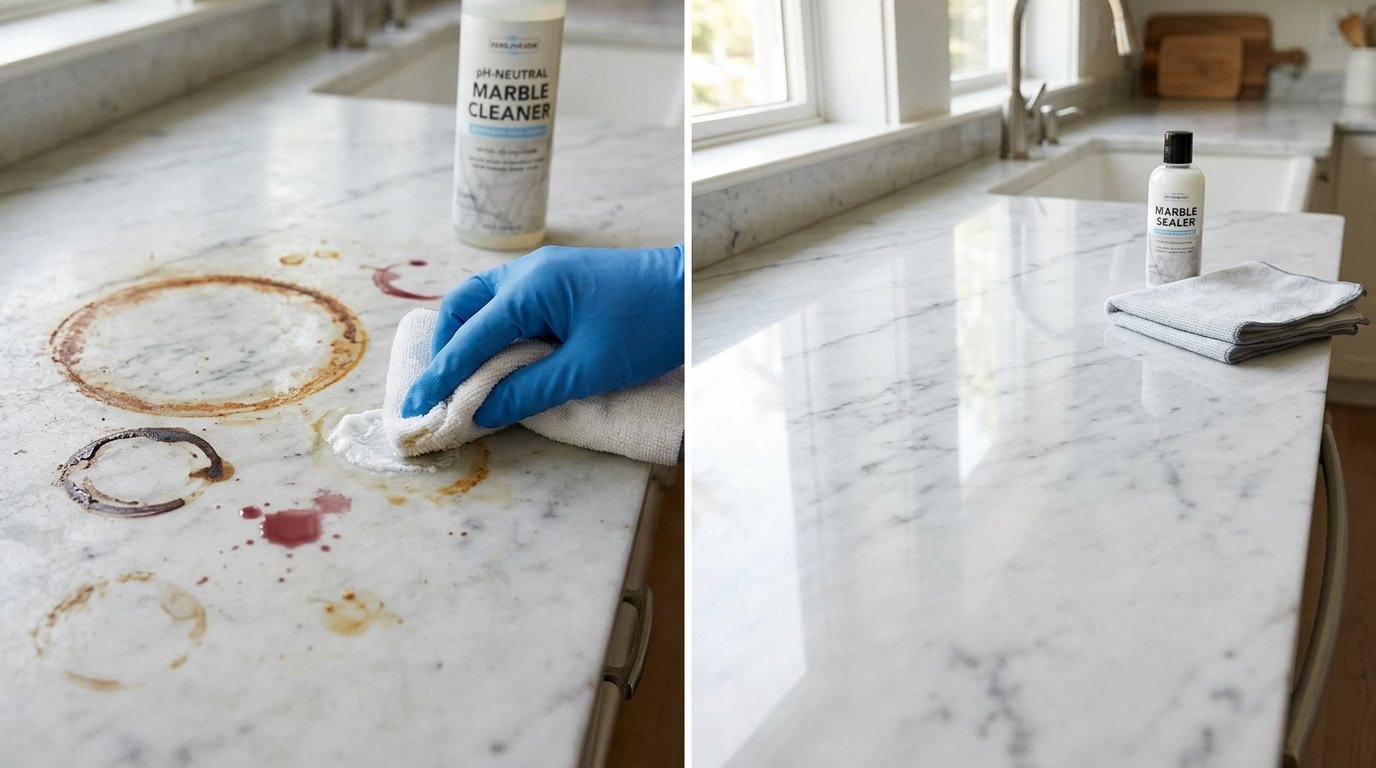

Marble adds timeless elegance to countertops, floors, and furniture, but its porous nature makes it prone to staining from everyday spills. Many homeowners struggle with knowing how to get stains off marble without causing further damage to the delicate surface. This guide walks through safe, effective, and easy-to-follow methods to restore your marble’s natural shine while avoiding common mistakes that worsen staining.
Why Marble Stains So Easily
Marble is a porous natural stone, which means liquids and substances can seep beneath the surface rather than sitting on top. Understanding this property is the first step toward choosing the right stain removal method.
The Porous Nature Of Marble
Unlike sealed surfaces such as granite or quartz, marble has tiny pores that absorb liquids quickly upon contact. This absorption is what causes stains to set in deep rather than staying on the surface where they can be wiped away easily.
Common Causes Of Marble Stains
Everyday items like coffee, wine, cooking oil, and citrus juices are frequent culprits behind marble staining in kitchens and bathrooms. Even water left standing for extended periods can leave behind dull rings or etch marks on unsealed marble surfaces.
Tools And Materials Needed Before Cleaning
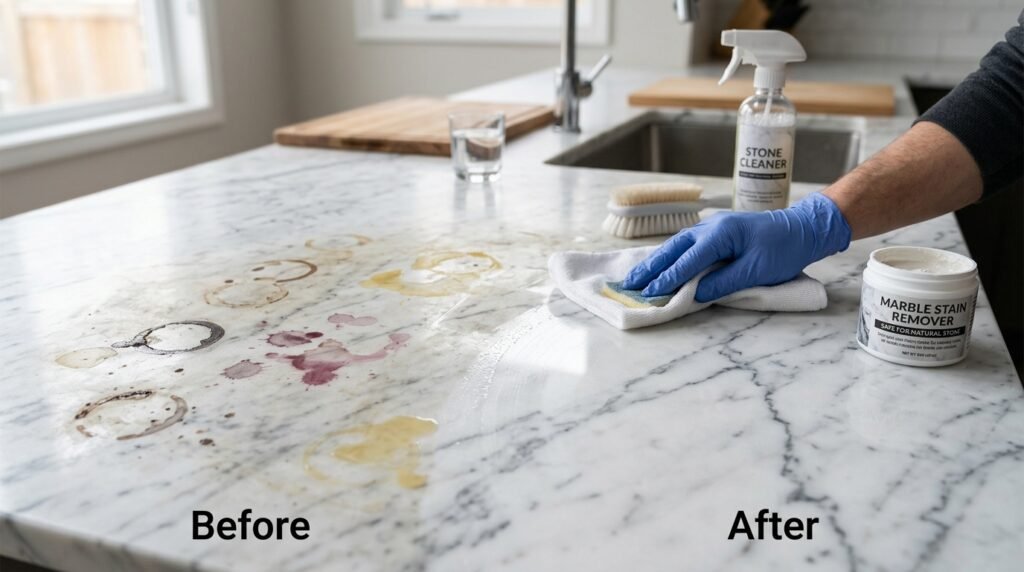
Having the right supplies on hand before starting the stain removal process saves time and prevents further damage to the marble surface.
Basic Cleaning Supplies
A soft microfiber cloth, warm water, and a pH-neutral marble cleaner form the foundation of any safe cleaning routine. Avoid using regular household cleaners, as many contain acidic ingredients that can etch and permanently damage marble.
Specialized Stain Removal Materials
Baking soda, hydrogen peroxide, and plastic wrap are commonly used for creating poultices that draw out deep-set stains. A soft-bristle brush and plastic scraper also come in handy for gently lifting stubborn residue without scratching the stone.
How To Get Stains Off Marble Using A Poultice Method
The poultice method is one of the most effective and widely recommended techniques for how to get stains off marble surfaces. It works by drawing the stain out of the stone rather than just cleaning the surface.
Making A Basic Baking Soda Poultice
Mix baking soda with a small amount of water until it forms a thick paste similar in consistency to peanut butter. Apply this paste generously over the stained area, ensuring it extends slightly beyond the edges of the stain itself.
Applying And Removing The Poultice
Cover the paste with plastic wrap and secure the edges with tape, then leave it undisturbed for twenty-four to forty-eight hours. Once dried, gently scrape off the poultice with a plastic scraper and wipe the area clean with a damp microfiber cloth.
Removing Oil-Based Stains From Marble
Oil-based stains are among the most common issues in kitchens, often appearing as dark, greasy spots that darken the surrounding stone.
Identifying Oil Stains
Oil stains typically appear darker than the surrounding marble and often have a slightly greasy feel when touched. These stains usually come from cooking oils, butter, or salad dressings that were left on the counter for too long.
Treatment For Oil Stains
Apply a baking soda poultice mixed with a few drops of dish soap directly onto the oil stain and let it sit overnight. The dish soap helps break down the grease while the baking soda absorbs the oil from within the stone’s pores.
Removing Organic Stains Like Coffee And Wine
Organic stains from beverages and food items tend to leave pink, brown, or yellowish discoloration on marble surfaces.
Understanding Organic Stains
Coffee, tea, wine, and fruit juices fall under organic stains, which often penetrate quickly due to their acidic nature. These stains can sometimes disappear on their own if the marble is exposed to sunlight and fresh air for a few days.
Hydrogen Peroxide Treatment Method
For stubborn organic stains, mix hydrogen peroxide with a few drops of ammonia and apply it directly to the affected area using a poultice. Leave the mixture on for several hours before rinsing thoroughly with warm water and drying the surface completely.
How To Get Stains Off Marble Caused By Rust
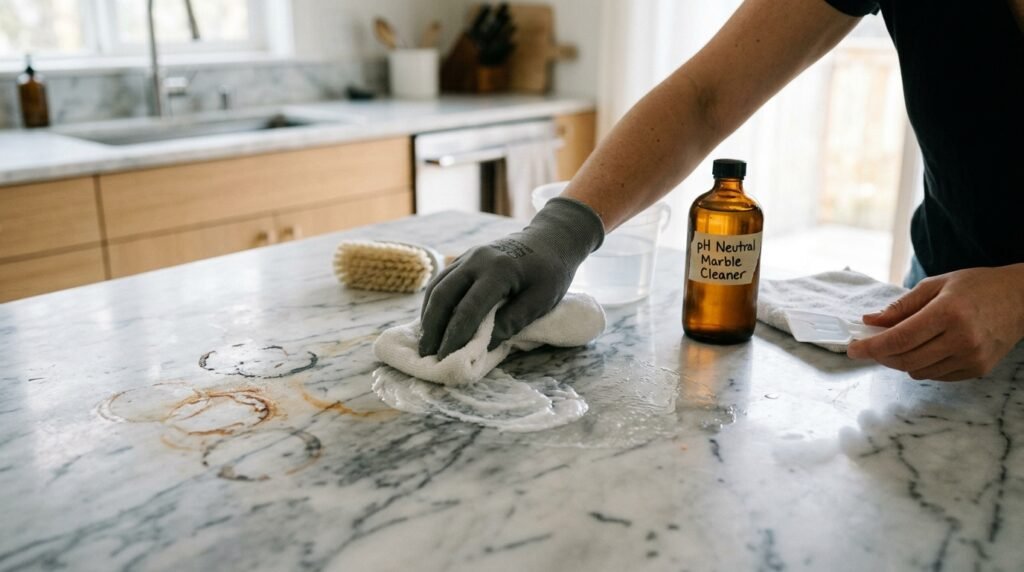
Rust stains are particularly tricky because they require specialized products rather than typical household cleaning solutions.
Why Rust Stains Are Different
Rust stains occur when metal objects like cans or furniture legs sit on marble surfaces for extended periods, especially in humid conditions. Regular cleaning poultices are often ineffective against rust because the discoloration comes from iron oxide rather than organic material.
Using Commercial Rust Removers
Specialized rust-removing poultices designed specifically for natural stone work best for this type of staining issue. Always follow the manufacturer’s instructions carefully, as some rust removers require longer application times than standard poultice treatments.
Water Stains And Etch Marks On Marble
Water stains and etch marks are slightly different from other stains because they often involve surface-level damage rather than deep absorption.
The Difference Between Stains And Etching
Etching occurs when acidic substances react with the calcium carbonate in marble, creating a dull spot rather than a colored stain. Unlike regular stains, etch marks cannot be removed through poultice methods and instead require polishing to restore shine.
Polishing To Remove Etch Marks
A marble polishing powder combined with a soft cloth can help buff out light etching and restore the surface’s natural luster. For deeper etch marks, professional stone restoration services may be necessary to achieve a completely smooth finish.
Preventive Measures To Avoid Future Stains
Prevention plays a major role in maintaining marble’s appearance and reducing the need for frequent stain removal treatments.
Sealing Marble Surfaces Regularly
Applying a quality marble sealer every six to twelve months creates a protective barrier that reduces liquid absorption significantly. Sealed marble gives homeowners more time to wipe up spills before they penetrate the stone’s surface.
Daily Habits That Protect Marble
Using coasters, trivets, and placemats consistently helps prevent direct contact between marble and potentially staining substances. Wiping up spills immediately, rather than letting them sit, remains the simplest and most effective prevention method available.
Common Mistakes To Avoid When Cleaning Marble Stains
Certain cleaning habits can worsen marble stains rather than improve them, making awareness of these mistakes essential.
Using Acidic Or Abrasive Cleaners
Vinegar, lemon juice, and other acidic household cleaners should never be used on marble since they cause permanent etching. Abrasive scrubbing pads can also scratch the surface, creating additional areas where future stains can settle more easily.
Skipping The Testing Step
Always test any cleaning solution or poultice on a small, hidden area of the marble before applying it to the visible stain. This precaution helps avoid unexpected discoloration or damage across the entire surface.
Quick Reference Table For Marble Stain Types
The table below summarizes the most common marble stains and their recommended treatment methods for quick reference.
| Stain Type | Common Cause | Recommended Treatment |
| Oil-based | Cooking oil, butter | Baking soda and dish soap poultice |
| Organic | Coffee, wine, tea | Hydrogen peroxide and ammonia poultice |
| Rust | Metal objects, cans | Commercial rust-removing poultice |
| Water rings | Standing water | Marble polishing powder |
| Etch marks | Acidic substances | Professional polishing or restoration |
Conclusion
Learning how to get stains off marble takes patience and the right technique for each specific type of stain. Whether dealing with oil, organic residue, rust, or water marks, using gentle, pH-neutral methods protects the stone from further damage while restoring its natural beauty. Regular sealing and quick spill cleanup remain the best long-term strategies for keeping marble surfaces stain-free and elegant.
FAQs
Can baking soda damage marble surfaces?
No, baking soda is gentle and safe for marble when mixed properly into a poultice paste.
How long should a poultice stay on a marble stain?
Most poultices need twenty-four to forty-eight hours to fully draw out the stain from the stone.
Is vinegar safe to use on marble stains?
No, vinegar is acidic and can permanently etch marble surfaces, so it should always be avoided.
How often should marble be sealed to prevent stains?
Marble should generally be sealed every six to twelve months depending on usage and exposure to spills.
Related Articles
How Long Does It Take for Bathroom Caulk to Dry? Complete Guide
How to Get Rid of Gnats in Bathroom Fast
Can You Paint Metal Roofing? The Complete Guide for Homeowners & Pros
Kitchen Chopping Block Table: Complete Guide, Types, Benefits, Care & Buying Tips