


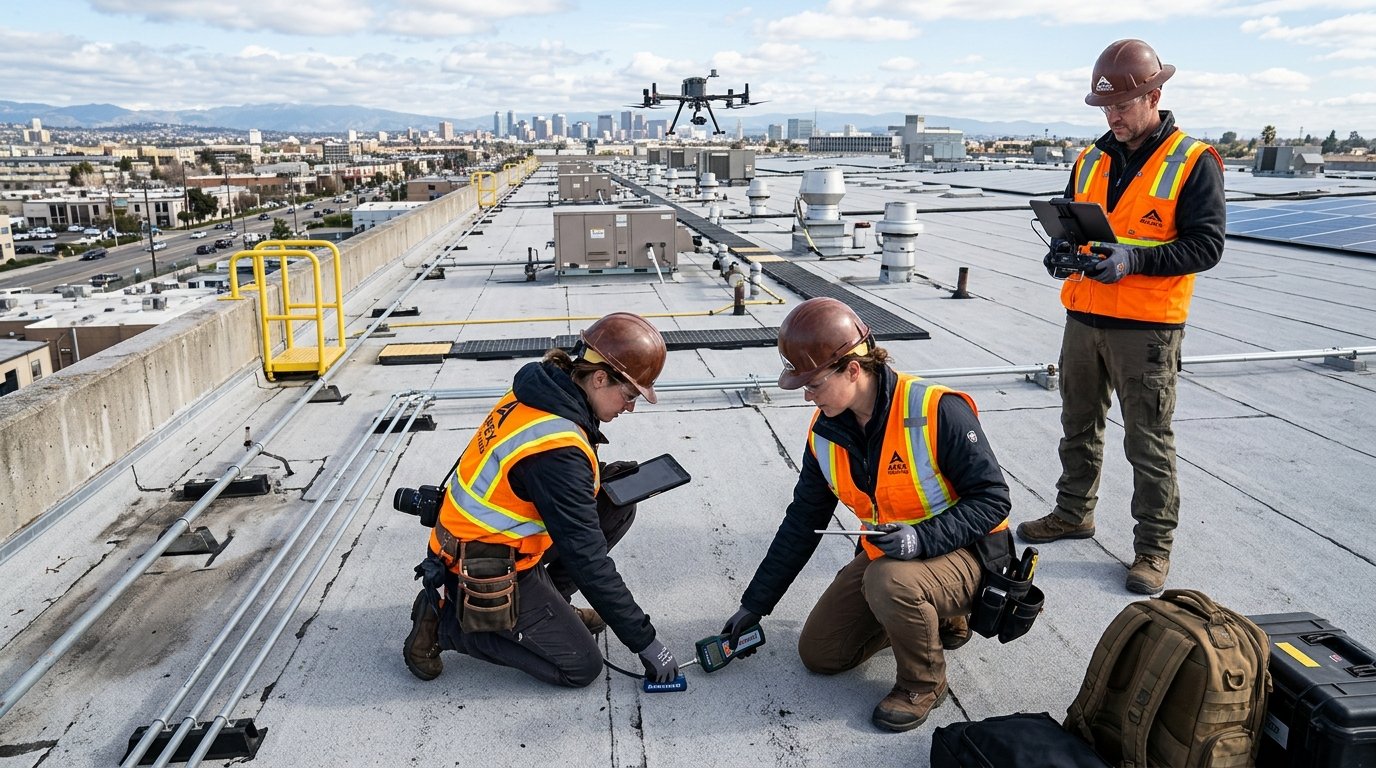

Commercial buildings often have larger and more complex roofing systems than residential properties, which makes commercial roof inspection an important part of regular property maintenance.
Without routine checks, small roofing issues can go unnoticed until they turn into expensive leaks or structural damage. Understanding how commercial roof inspection works helps business owners protect their investment and avoid unplanned repair costs.
Why Commercial Roof Inspection Matters
Commercial roofs cover large surface areas and are exposed to constant weather changes, foot traffic from maintenance work, and equipment installations. Regular commercial roof inspection helps catch problems early before they affect daily business operations.
Protecting Business Assets
A commercial building often stores valuable equipment, inventory, and documents that can be damaged by water leaks or structural failure. Routine inspection ensures the roof stays in good condition, protecting everything under it from unexpected water damage or collapse.
Avoiding Costly Emergency Repairs
Minor roofing issues are far cheaper to fix than emergency repairs caused by sudden leaks or storm damage. A scheduled commercial roof inspection identifies weak spots early, allowing business owners to plan repairs on their own timeline instead of dealing with urgent, high-cost situations.
Meeting Insurance and Safety Requirements
Many insurance policies require proof of regular roof maintenance to keep coverage valid. A documented commercial roof inspection provides this proof and also helps meet local safety codes, reducing liability risks for property owners and tenants.
What a Commercial Roof Inspection Includes
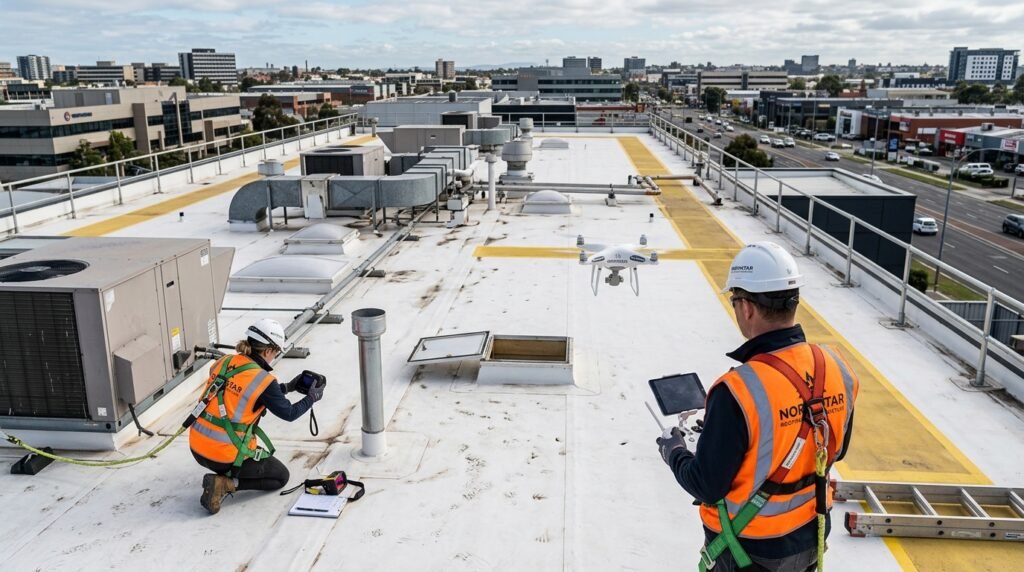
A thorough inspection covers several parts of the roofing system, not just the visible surface. Professionals check both the exterior condition and interior signs of damage during a complete commercial roof inspection.
Exterior Surface Examination
Inspectors check the roofing membrane, seams, flashing, and drainage systems for cracks, punctures, or wear. This part of the inspection focuses on identifying visible damage that could lead to leaks if left unaddressed for too long.
Interior Ceiling and Structural Check
Water stains, mold growth, or sagging ceiling tiles inside the building often indicate roofing problems from above. Inspectors examine these interior signs alongside the exterior check to get a complete picture of the roof’s actual condition.
Drainage and Ventilation Review
Proper drainage prevents water from pooling on the roof surface, while good ventilation reduces moisture buildup inside the structure. Inspectors verify that drains, scuppers, and vents are clear and functioning correctly during every commercial roof inspection.
Types of Commercial Roofing Systems Inspected
Different commercial roofing materials require slightly different inspection approaches, since each material ages and reacts to weather in its own way.
Built-Up Roofing (BUR)
This traditional roofing system uses multiple layers of asphalt and reinforcing fabric. Inspectors look for cracking, blistering, or separation between layers, since these issues are common signs of aging in built-up roofing systems.
Single-Ply Membrane Roofing
Materials like TPO, PVC, and EPDM fall under this category and are widely used on commercial buildings. Inspectors check for seam separation, punctures, and UV damage, as these membranes are thinner and more sensitive to sharp objects or foot traffic.
Metal Roofing Systems
Metal roofs are inspected for rust, loose fasteners, and panel seam issues. Since metal expands and contracts with temperature changes, inspectors pay close attention to seams and fastener points that may loosen over time.
Commercial Roof Inspection Frequency Guide
How often a commercial roof should be inspected depends on the roofing material, building age, and local climate conditions. The table below gives a general guideline for inspection frequency.
| Roof Age | Recommended Inspection Frequency | Additional Notes |
| 0-5 years | Once a year | Focus on installation quality checks |
| 6-15 years | Twice a year | Monitor wear and seam condition |
| 15+ years | Twice a year plus after storms | Watch for major structural concerns |
Buildings in areas with heavy rainfall, snow, or strong winds may need additional inspections after severe weather events, regardless of the roof’s age.
Benefits of Regular Commercial Roof Inspection
Consistent inspection scheduling offers long-term financial and structural advantages for business owners who want to avoid unexpected roofing failures.
Extending Roof Lifespan
Regular commercial roof inspection allows small repairs to be made before they worsen, which helps the entire roofing system last longer. This reduces the need for a full roof replacement well ahead of its expected lifespan.
Improving Energy Efficiency
Damaged roofing materials or poor insulation caused by leaks can increase heating and cooling costs. Inspections help identify these issues early, allowing repairs that keep the building’s energy efficiency at its intended level.
Maintaining Property Value
A well-maintained roof adds to the overall value and appeal of a commercial property. Regular inspection records also provide useful documentation for future property sales or lease negotiations.
Conclusion
Commercial roof inspection is a necessary practice for any business that wants to protect its property, avoid costly emergency repairs, and maintain a safe working environment.
By scheduling regular inspections based on roof age, material type, and local weather conditions, business owners can extend their roof’s lifespan while keeping maintenance costs predictable and manageable.
Frequently Asked Questions
How long does a commercial roof inspection take?
The duration depends on the size and complexity of the roof, but most inspections are completed within a few hours for standard commercial buildings.
Who should perform a commercial roof inspection?
A licensed roofing contractor or certified inspector with experience in commercial roofing systems should carry out the inspection for accurate results.
What happens after a commercial roof inspection?
The inspector provides a detailed report outlining any issues found, along with recommendations for repairs or maintenance based on the roof’s current condition.
Does commercial roof inspection help with insurance claims?
Yes, regular inspection reports serve as documented proof of roof maintenance, which can support insurance claims and help maintain policy coverage.
Related Articles
Pot Lights in Cathedral Ceiling: A Complete Planning and Installation Guide
Basement Drainage: Complete Guide to Systems, Costs & Solutions
Can You Use Ceiling Paint on Walls? The Surprising Benefits and Drawbacks
How to Measure Room for Furniture: Step-by-Step Guide for Perfect Fit