

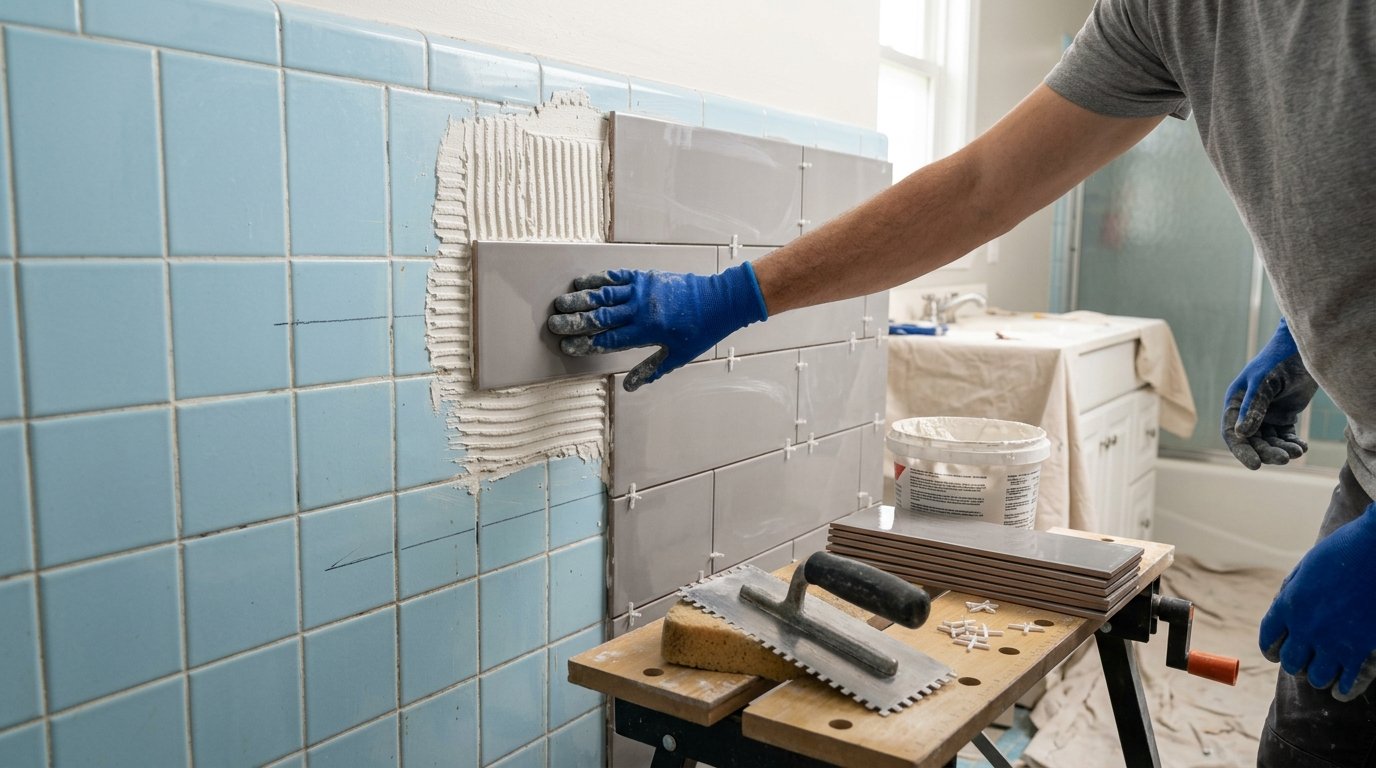

Renovating a bathroom or kitchen often brings up one common question: can you tile over tile instead of ripping out the old surface completely? The answer is yes in many cases, but it depends on several factors like the condition of the existing tile, the type of surface, and how the new layer will be installed. This guide explains everything you need to know before deciding whether tiling over tile is the right choice for your project.
When Tiling Over Tile Works Well
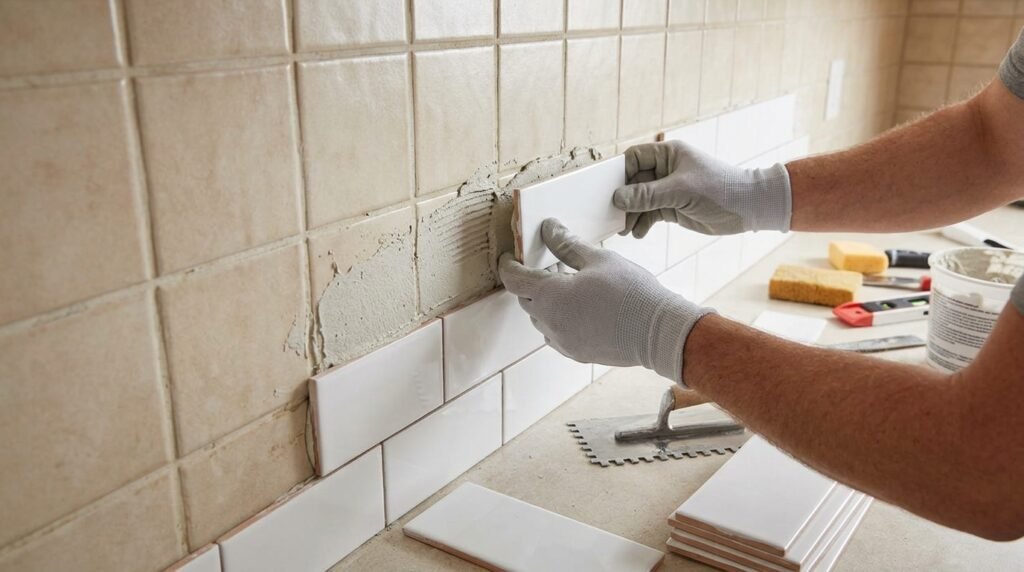
Tiling over existing tile is possible under the right conditions, and it can save significant time and demolition costs. However, certain situations make this method far more reliable than others.
Existing Tile Is Structurally Sound
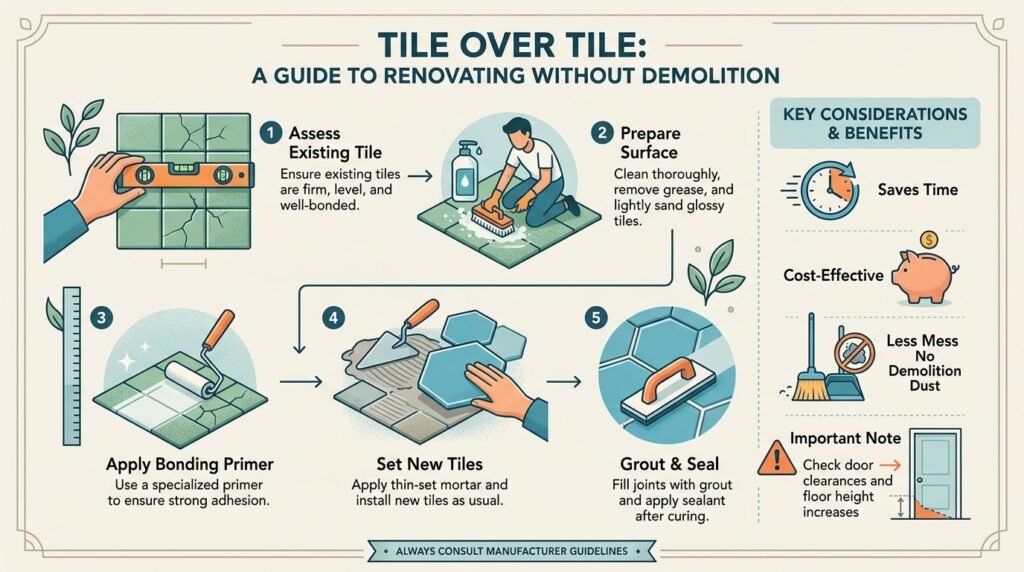
If the old tile is firmly attached with no loose pieces, cracks, or hollow sounds when tapped, it provides a stable base for new tile installation. A solid foundation is the most important requirement for this method to succeed long term. Any weakness in the existing layer will eventually transfer to the new tile above it.
Surface Is Flat and Level
Tiling over tile works best when the existing surface is relatively flat, without significant dips, bumps, or uneven grout lines. An uneven base can cause the new tile to sit awkwardly, leading to visible gaps or an unstable finish. Checking flatness with a level tool beforehand helps confirm whether this approach is realistic.
Height Difference Is Not a Problem
Adding a new tile layer raises the floor or wall height slightly, and this only works well when that height change does not interfere with doors, cabinets, or transitions to other rooms. In bathrooms especially, this can affect how doors swing or how flooring lines up with adjoining spaces. Measuring the available clearance in advance prevents awkward surprises later.
When You Should Avoid Tiling Over Tile
While tiling over tile is convenient in many cases, there are situations where it becomes risky or simply impractical. Recognizing these warning signs helps you avoid future problems.
Loose or Cracked Tiles Present
If any of the existing tiles are loose, cracked, or hollow-sounding, tiling directly over them will likely lead to the same issues resurfacing in the new layer. These weak spots do not disappear just because something is placed on top of them. In such cases, removing the damaged tiles first is a safer long-term solution.
Multiple Layers Already Exist
Some older homes already have more than one layer of tile installed from previous renovations, and adding another layer on top can create excessive weight and height issues. This is particularly risky for floors where structural load becomes a genuine concern. In these situations, full removal is usually the more practical route.
Moisture or Water Damage Is Suspected
If there are signs of water damage, mold, or moisture trapped beneath the existing tile, covering it up with a new layer only hides the problem temporarily. Moisture issues tend to worsen over time and can compromise both layers eventually. Addressing the underlying moisture problem should always come before any new installation.
Tools and Materials Needed
Preparing the right tools and materials in advance makes the tiling-over-tile process much smoother and helps avoid mid-project delays. Below is a breakdown of what is typically required.
Preparation Tools
Before installing new tile, you will need a level, a notched trowel, a grout float, and a tile cutter or wet saw for adjustments. Cleaning supplies such as a degreasing solution are also necessary to remove any residue from the old tile surface. Proper cleaning ensures better adhesion for the new layer.
Bonding Materials
A high-quality tile adhesive designed specifically for tile-on-tile applications is essential, since standard adhesives may not bond well to a glazed surface. Some professionals also recommend using a bonding primer beforehand to improve adhesion further. Below is a simple table showing common materials used in this process.
| Material | Purpose |
| Bonding Primer | Improves adhesion to glazed tile |
| Tile Adhesive | Secures new tile to old surface |
| Grout | Fills joints of new tile layer |
| Tile Spacers | Ensures even spacing between tiles |
Safety Equipment
Working with tile always involves some dust and sharp edges, so safety goggles, gloves, and knee pads for floor work are highly recommended. A dust mask is also useful, especially when cutting tiles to fit specific spaces. These small precautions make the entire project safer from start to finish.
Step-by-Step Process for Tiling Over Tile
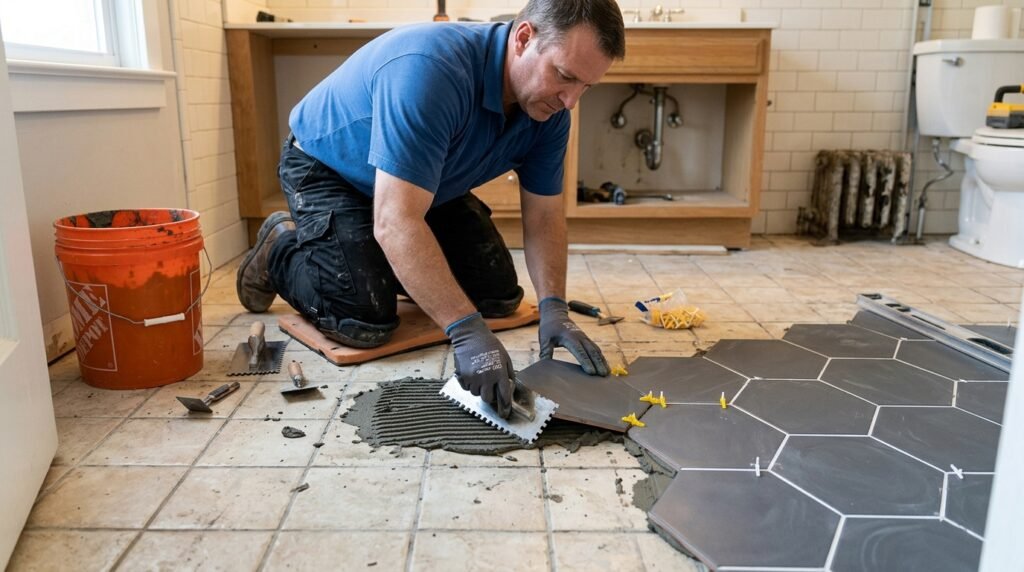
Once you have confirmed that your existing tile is suitable for this method, following a clear step-by-step process ensures a professional-looking result.
Cleaning and Sanding the Old Surface
Start by thoroughly cleaning the existing tile to remove grease, soap residue, or dirt buildup that could weaken adhesion. Lightly sanding the glazed surface afterward helps the new adhesive grip more effectively. Skipping this step is one of the most common reasons new tile fails to bond properly over time.
Applying Bonding Primer
Once the surface is clean and dry, apply a bonding primer evenly across the entire area where new tile will be installed. This step significantly improves how well the adhesive sticks to the smooth, glazed surface of the old tile. Allow the primer to dry completely before moving on to the next stage.
Installing the New Tile Layer
Using a notched trowel, spread tile adhesive evenly and begin placing the new tiles according to your planned layout, using spacers to maintain consistent gaps. Work in small sections at a time to ensure the adhesive does not dry out before tiles are placed. Press each tile firmly to ensure a strong bond with the surface beneath.
Grouting the New Tile
After the adhesive has cured according to the manufacturer’s instructions, apply grout into the joints using a rubber float, working it diagonally across the tile surface. Wipe away excess grout with a damp sponge before it fully hardens for a clean finish. Allow the grout to cure fully before exposing the area to heavy use or moisture.
Pros and Cons of Tiling Over Tile
Weighing the advantages and disadvantages of this method helps homeowners make a more informed decision based on their specific situation.
Advantages
Tiling over tile saves considerable time and labor since there is no need for demolition or disposal of old materials. It also tends to be less messy and disruptive compared to a full tile removal project. For homeowners on a budget, this method often reduces overall renovation costs significantly.
Disadvantages
The main downside is the added height, which can affect door clearance, transitions, and overall room proportions in smaller spaces. There is also a risk that underlying issues with the old tile, if not properly assessed, could shorten the lifespan of the new installation. In some cases, resale value considerations may favor a full tile replacement instead.
Conclusion
So, can you tile over tile? In most cases, yes, as long as the existing tile is structurally sound, flat, and free of moisture problems. This method offers a practical and cost-effective way to refresh a space without the mess of full demolition, provided proper preparation steps like cleaning, priming, and using the right adhesive are followed carefully. For homeowners dealing with damaged or multiple layers of old tile, however, complete removal remains the safer long-term option.
FAQs
Can you tile over tile in a shower?
Yes, as long as the existing tile is solid and free of moisture damage, though extra attention to waterproofing is recommended in wet areas.
Do you need special adhesive to tile over tile?
Yes, a bonding adhesive designed for tile-on-tile applications works better than standard adhesive, since it grips glazed surfaces more effectively.
Will tiling over tile make my floor uneven?
It can slightly raise the floor height, so checking clearance around doors and transitions beforehand is important to avoid uneven leveling.
How long does tiling over tile last?
When done correctly with proper cleaning, priming, and adhesive, tiling over tile can last just as long as a standard tile installation.
Related Articles
Half Round Gutter Installation: Complete Guide
Wet Floor Sign: A Complete Guide 2026
How Do You Wash Walls Before Painting? (Step-by-Step Guide)
Why Is My Toilet Gurgling? Common Causes and Fixes Explained