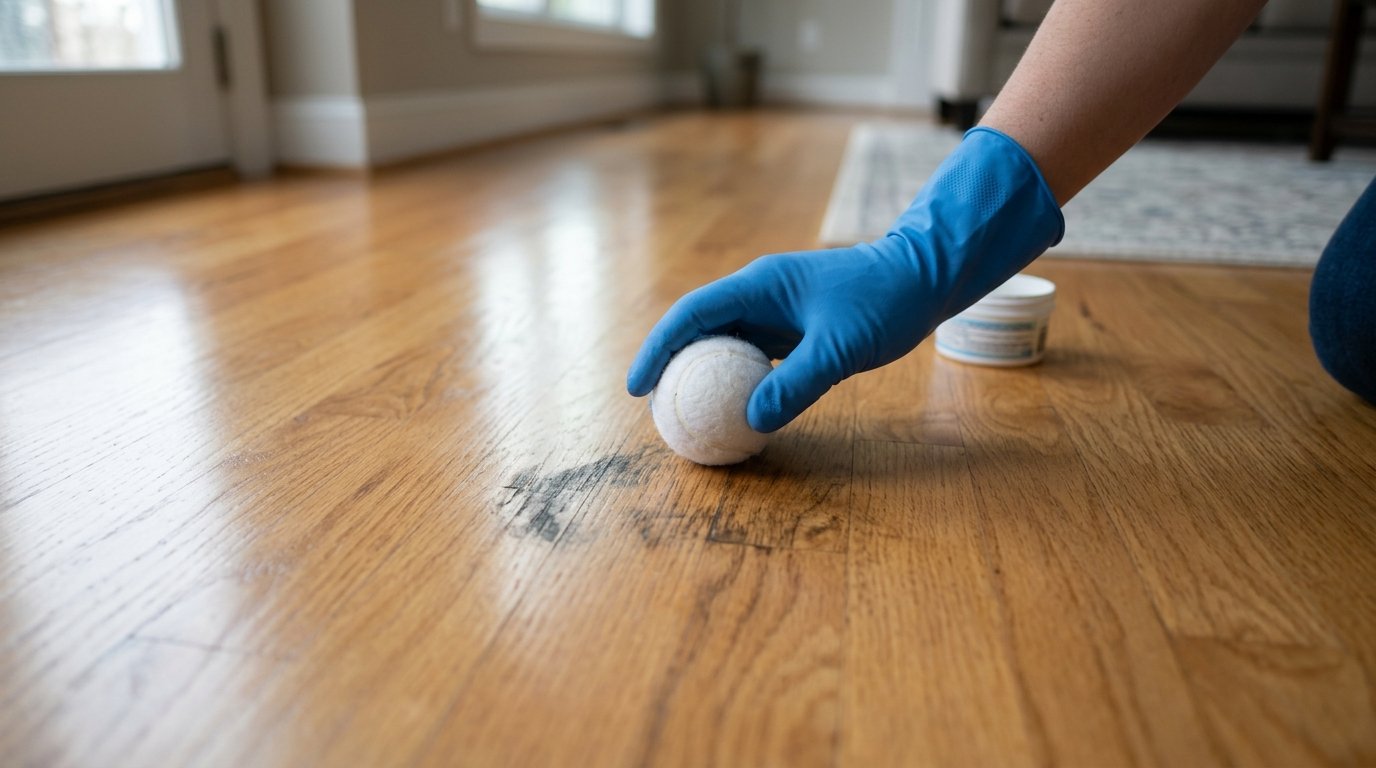

Getting scuff marks off hardwood floors is usually simple using household items like baking soda, tennis balls, or vinegar solutions. The right method depends on how deep the scuff is and what type of finish protects your hardwood.
Why Scuff Marks Appear on Hardwood Floors
Scuff marks form when rubber soles, furniture legs, or dragged objects transfer material onto the wood surface. Knowing the cause helps choose the most effective removal method without damaging the finish.
Rubber Soled Shoes Are a Common Culprit
Shoes with rubber or soft soles leave dark streaks when dragged or twisted across hardwood surfaces. These marks are usually surface-level and sit only on top of the floor’s protective finish. This makes them relatively easy to remove with gentle cleaning methods.
Furniture Movement Causes Deeper Scuffs
Dragging chairs, tables, or heavy furniture across the floor often leaves more stubborn scuff marks behind. These marks can sometimes press slightly into the finish rather than sitting purely on the surface. Felt pads under furniture legs help prevent this problem going forward.
Sports Equipment and Toys Leave Similar Marks
Balls, skateboards, and rolling toys frequently leave rubber residue similar to shoe scuffs on hardwood floors. Children’s play areas often show more of these marks than other parts of the home. The same removal techniques used for shoe scuffs typically work here too.
Household Items That Remove Scuff Marks Safely
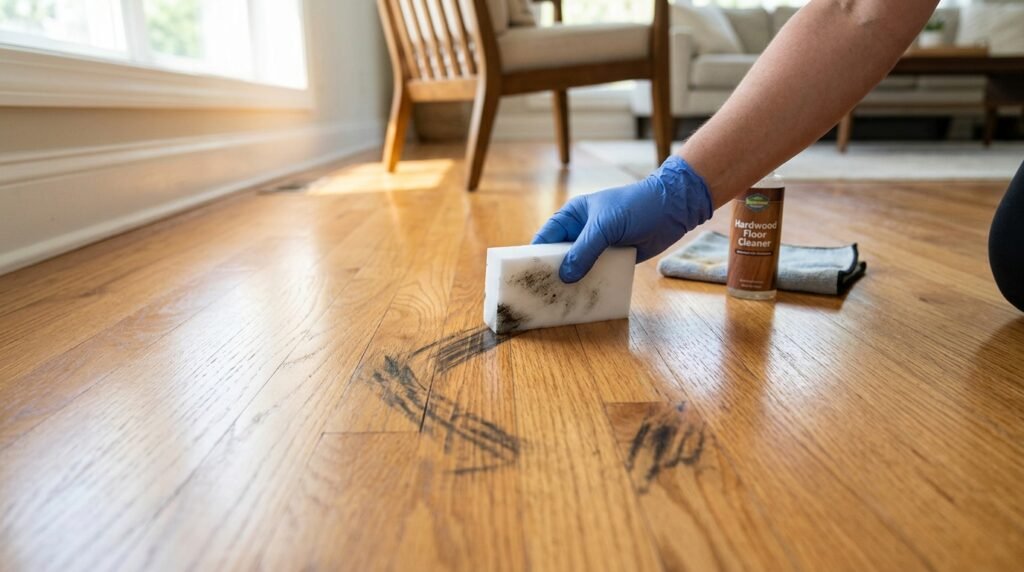
Several everyday household items work surprisingly well for lifting scuff marks without harming the wood finish. These options are affordable, easy to find, and safe for most hardwood floor types.
Baking Soda and Damp Cloth Method
Baking soda acts as a mild abrasive that lifts scuff marks without scratching the finish underneath. A small amount sprinkled onto a damp cloth, then rubbed gently, often removes marks within seconds. This method works particularly well on lighter, surface-level scuffs.
Tennis Ball Rubbing Technique
Rubbing a clean tennis ball directly over a scuff mark creates enough friction to lift the residue away. The rubber surface of the ball grips the mark without being abrasive enough to damage the wood. This trick is especially popular for quick touch-ups in high-traffic areas.
White Vinegar and Water Solution
A mixture of equal parts white vinegar and water works well for slightly tougher, more stubborn scuff marks. Applying it with a soft cloth and wiping in the direction of the wood grain prevents streaking. This solution also helps restore a bit of shine to the surrounding area.
Table: Common Methods and Best Use Cases
| Method | Best For | Effort Level |
| Baking Soda | Light surface scuffs | Low |
| Tennis Ball | Quick daily touch-ups | Very Low |
| Vinegar Solution | Stubborn or older scuffs | Moderate |
Step-by-Step Process for Removing Scuff Marks
Following a consistent process ensures scuff marks are removed effectively without risking damage to the hardwood finish. This approach works across most mild to moderate scuff situations.
Identify the Severity of the Scuff Mark
Light scuffs appear as faint gray or black streaks sitting only on the surface layer of the finish. Deeper marks may feel slightly rough or show more pressed-in discoloration when touched. This assessment determines which cleaning method will work best for the situation.
Start With the Gentlest Method Available
Always begin with baking soda or a tennis ball before moving to stronger cleaning solutions. Gentle methods protect the finish while still handling most common scuff marks successfully. Escalating only when necessary avoids unnecessary wear on the hardwood surface.
Wipe the Area Clean and Dry
After treating the scuff mark, wiping the area with a dry microfiber cloth removes any leftover residue. This step also helps you check whether the mark has fully disappeared or needs further treatment. Leaving moisture on hardwood floors for too long should always be avoided.
Apply Floor Polish if Needed
If the treated area looks duller than the surrounding floor, a small amount of hardwood floor polish helps blend it back in. This step restores consistent shine across the entire floor surface. Polish should only be used on finished hardwood, not on raw or unsealed wood.
Preventing Future Scuff Marks
Prevention often takes less effort than repeated cleaning, especially in busy households with lots of foot traffic. Simple habits can significantly reduce how often scuff marks appear.
Use Furniture Pads Consistently
Attaching felt pads to the bottom of chair and table legs prevents most furniture-related scuff marks entirely. These pads are inexpensive and easy to install across an entire room in a short amount of time. Replacing worn pads periodically keeps this protection effective long term.
Encourage a No Shoes Policy Indoors
Asking family members or guests to remove shoes at the door significantly reduces rubber sole scuff marks. This habit also helps protect hardwood floors from dirt, grit, and moisture tracked in from outside. Providing a shoe rack near the entrance makes this policy easier to follow.
What to Avoid When Removing Scuff Marks
Certain products and techniques can worsen scuff marks or damage the hardwood finish if used incorrectly. Being aware of these mistakes protects your floor investment.
Avoid Abrasive Scouring Pads
Rough scouring pads or steel wool can scratch through the protective finish while attempting to remove a scuff mark. These scratches often look worse than the original mark and are harder to fix. Soft cloths and gentle abrasives like baking soda are always the safer choice.
Skip Harsh Chemical Cleaners
Strong chemical cleaners not designed for hardwood can strip away the finish’s protective layer over time. This leaves the wood more vulnerable to future scuffs, stains, and moisture damage. Sticking to mild, wood-safe solutions protects the floor’s long-term durability.
How This Compares to Other Cleaning Guides
Many existing guides only mention one or two products without explaining when to escalate to stronger methods. This guide breaks down severity levels and matches each one to the gentlest effective solution, giving a clearer path for readers instead of generic, repeated advice.
FAQs
Can scuff marks be removed without any special products?
Yes, items like baking soda and tennis balls, already found in most homes, work well for most scuff marks.
Are scuff marks permanent on hardwood floors?
Most scuff marks sit on the surface finish and can be removed without permanent damage to the wood.
How often should furniture pads be checked or replaced?
Checking felt pads every few months helps ensure they still provide effective scuff protection.
Is vinegar safe for all hardwood floor finishes?
Diluted vinegar is generally safe, but testing a small hidden area first is always recommended.
Conclusion
Getting scuff marks off hardwood floors is usually a quick fix using gentle household items like baking soda, tennis balls, or diluted vinegar. Combining these cleaning methods with simple prevention habits keeps hardwood floors looking clean and scuff-free for the long term.
Related Articles
Can You Tile Over Tile: A Complete Guide 2026
How Much Does It Cost to Waterproof a Basement?
How Many Bags of Mulch in a Yard Complete guide 2026
Shower Door Repair: Complete Guide to Fix Common Shower Door Problems