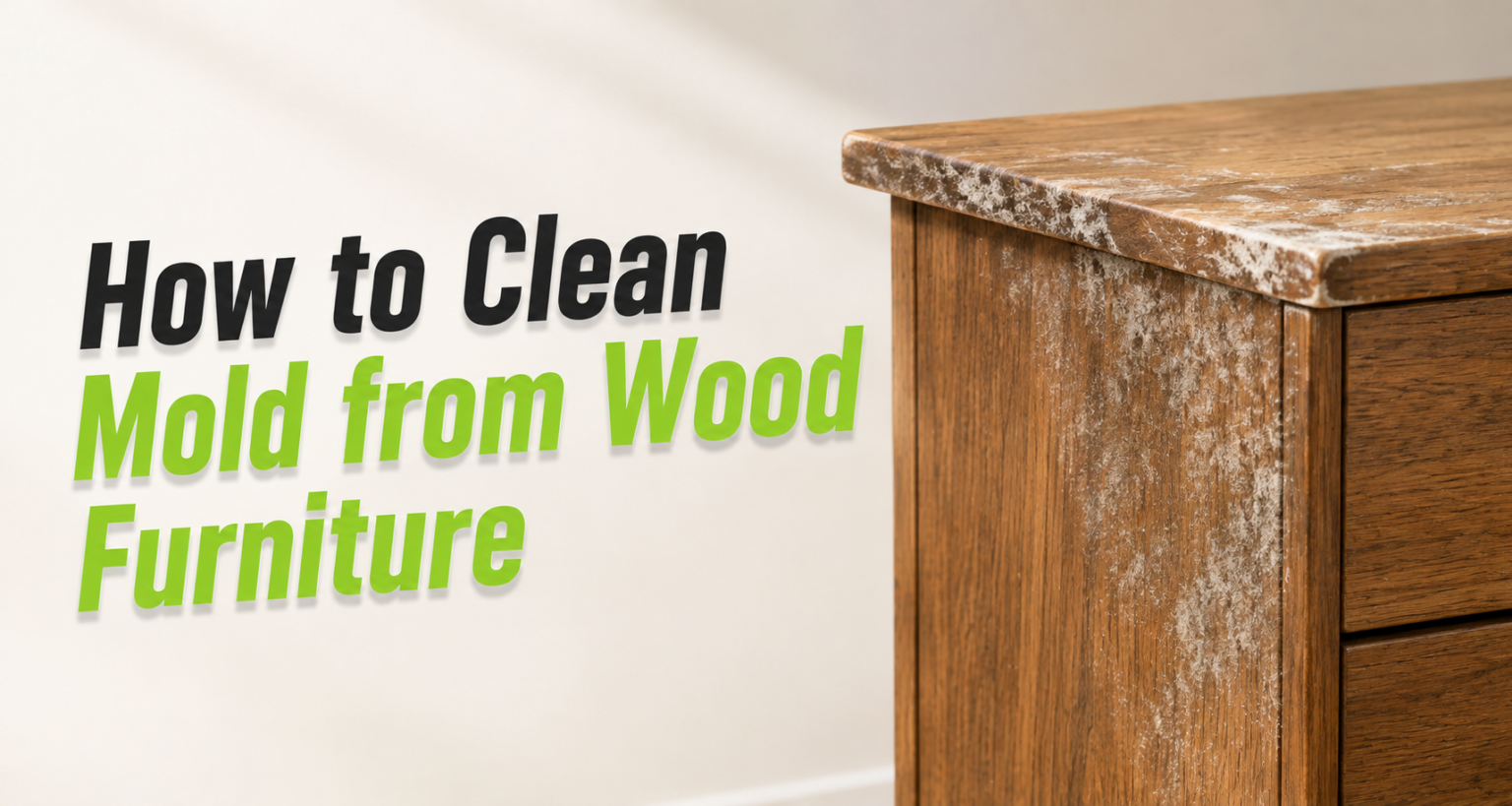

Mold on wood furniture is a common household problem that develops when moisture, warmth, and organic material combine in a closed space. It often appears as fuzzy green, black, or white patches on the surface of chairs, tables, cabinets, or wardrobes, especially in humid climates or poorly ventilated rooms.
If left untreated, mold can eat into the wood grain, weaken the finish, and spread spores into the air, which may affect indoor air quality. Knowing how to clean mold from wood furniture the right way helps you remove the problem safely without damaging the wood or triggering regrowth. This guide walks you through the full process in simple, practical steps.
What Causes Mold Growth on Wood Furniture?
Mold grows on wood furniture when moisture sits on or inside the material for an extended period, giving spores the damp environment they need to multiply. Three main conditions usually work together to create this problem, and understanding them makes it easier to prevent mold from coming back after cleaning.
Moisture and Humidity
Wood is naturally porous, which means it absorbs moisture from the surrounding air over time. In rooms with high humidity, such as basements, bathrooms, or coastal homes, this absorbed moisture creates the damp surface mold spores need to settle and grow. Even small amounts of trapped humidity inside drawers or cabinet backs can be enough to start the process.
Poor Ventilation
When furniture is pushed tightly against a wall or placed in a room with little airflow, moisture has nowhere to escape. Stagnant air traps humidity around the wood surface, which slows drying and gives mold spores extra time to establish themselves before the area ever fully dries out.
Organic Material in Wood
Wood itself contains organic compounds that act as a food source for mold once moisture is present. Dust, old polish residue, and skin cells that settle into cracks or joints add further nutrients, which is why furniture that is rarely cleaned or moved tends to develop mold faster than pieces that are regularly maintained.
Signs You Have Mold vs. Mildew or Dust
Not every discoloration on wood furniture is mold, so it helps to confirm what you are dealing with before choosing a cleaning method. Mold, mildew, and simple dust buildup can look similar at a glance but require different levels of attention.
Visual Differences
Mold typically appears as raised, fuzzy, or slightly textured patches in shades of green, black, blue-green, or white, and it tends to spread outward in an irregular pattern. Mildew, by comparison, usually stays flat and powdery, often appearing gray or white across the surface. Ordinary dust, on the other hand, wipes away easily with a dry cloth and leaves no staining behind once removed.
Smell Test
Mold almost always produces a musty, earthy odor that becomes stronger the closer you get to the affected area, and this smell often lingers even after a light surface wipe. If wiping the furniture removes both the mark and the odor completely, you are likely dealing with dust or a minor mildew film rather than active mold growth.
When to Suspect Structural Damage
If the wood feels soft, spongy, or discolored beneath the surface when pressed, mold may have penetrated deeper than the outer layer. Warping, a persistent musty smell after cleaning, or mold that keeps returning in the same spot within days are all signs the moisture source may be structural, such as a leak or long-term dampness inside the furniture itself.
Safety Precautions Before You Start
Cleaning mold safely protects both your health and the furniture, since mold spores can become airborne during scrubbing and irritate the eyes, skin, or respiratory system if inhaled in large amounts.
Protective Gear
Wear rubber or nitrile gloves to avoid direct skin contact with mold and cleaning solutions, and use an N95 mask or similar respirator to prevent inhaling disturbed spores. Safety glasses are also useful if you plan to scrub firmly, since dislodged mold particles can easily reach eye level during the process.
Ventilation Setup
Open windows and doors before starting, and if possible, move the furniture outdoors or into a garage with good airflow. Cross-ventilation carries loosened spores away from your breathing space and speeds up the drying stage once the cleaning solution has been applied and wiped off.
When to Call a Professional
If mold covers a large surface area, keeps returning despite repeated cleaning, or if anyone in the household has asthma or mold allergies, it is safer to bring in a professional mold remediation service. Deeply embedded mold that has softened the wood structurally is also a sign that DIY methods may not fully resolve the underlying issue.
Step-by-Step Mold Removal Process
Once safety measures are in place, cleaning mold from wood furniture follows a clear sequence designed to remove spores without soaking or damaging the wood’s finish.
Step 1 – Vacuum Loose Spores
Use a vacuum with a soft brush attachment to gently remove loose mold spores from the surface before applying any liquid. This step reduces the amount of mold that gets smeared during wiping and lowers the number of spores released into the air later in the process.
Step 2 – Choose Your Cleaning Solution
For light mold, a mixture of mild dish soap and warm water is usually sufficient and gentle on most finishes. For more established mold, a solution of equal parts white vinegar and water offers stronger antifungal action while still being safe for most sealed wood surfaces.
Step 3 – Wipe and Treat the Surface
Dip a soft cloth into the chosen solution, wring it out well so it is damp rather than wet, and wipe along the direction of the wood grain. Working with the grain, rather than against it, helps lift mold from crevices without pushing spores deeper into the wood’s pores.
Step 4 – Dry Thoroughly
Immediately follow the damp wipe with a dry, clean cloth to remove any remaining moisture from the surface. Since mold thrives on dampness, this step is one of the most important in the entire process and should never be skipped or rushed.
Step 5 – Sun Exposure and Final Check
If possible, place the furniture in direct sunlight for a few hours, since UV rays help kill any remaining spores on the surface. Once fully dry, inspect the wood closely under good lighting to confirm the mold and its musty odor are completely gone before moving the furniture back indoors.
Cleaning Solutions Compared
Choosing the right cleaning solution depends on how established the mold is and how the wood has been finished. The table below compares common options used when learning how to clean mold from wood furniture at home.
| Solution | Best For | Wood Safety | Approximate Cost |
| Dish soap and water | Light surface mold | Safe on most finishes | Very low, common household item |
| White vinegar and water | Moderate to established mold | Safe on sealed wood, avoid on unfinished wood | Very low, common household item |
| Hydrogen peroxide (diluted) | Stubborn stains with mold | Test on a hidden spot first | Low, widely available |
| Commercial mold cleaner | Heavy or recurring mold | Check label for wood compatibility | Moderate, varies by brand |
What to Avoid When Cleaning Moldy Wood?
Certain cleaning habits can make mold problems worse or damage the furniture permanently, so it helps to know what not to do before starting.
Bleach and Wood Finish Damage
Bleach is a common go-to for mold on hard surfaces, but it is not ideal for wood because it can strip or discolor the finish while failing to penetrate deep enough into the wood’s pores to kill embedded spores. This often leads to a furniture piece that looks damaged on the outside while mold still lingers beneath the surface.
Over-Soaking and Warping
Applying too much liquid, or leaving a wet cloth on the wood for an extended period, allows moisture to seep into the grain and cause warping, swelling, or cracking over time. Always use a damp, well-wrung cloth rather than pouring or spraying solution directly onto the furniture.
Sanding Too Aggressively
Light sanding can help with surface staining after mold removal, but sanding too hard or too deep removes protective finish layers and exposes raw wood, which is more vulnerable to future mold growth. Sand gently and only in the specific stained area rather than across the entire surface.
Restoring the Wood After Mold Removal
After the mold is gone and the wood is fully dry, a short restoration step brings back the furniture’s appearance and adds a layer of protection against future growth.
Spot Sanding
If mild staining remains after cleaning, use fine-grit sandpaper to gently smooth the affected area, working in the direction of the wood grain. This helps even out the surface without removing more of the original finish than necessary.
Reapplying Finish or Polish
Once the surface is smooth and completely dry, apply a matching wood polish, oil, or sealant to restore shine and rebuild a protective barrier. A properly sealed surface is more resistant to future moisture absorption, which lowers the chances of mold returning in the same spot.
Preventing Mold From Coming Back
Cleaning mold is only half the solution, since the underlying moisture and airflow conditions that caused it in the first place need to be addressed as well.
Humidity Control
Keeping indoor humidity between 30 and 50 percent significantly reduces the chances of mold returning on wood surfaces. A dehumidifier is especially useful in basements, bathrooms, or rooms with naturally higher moisture levels throughout the year.
Furniture Placement
Leaving a small gap between furniture and walls allows air to circulate freely around all sides of the piece, preventing the trapped, stagnant conditions mold needs to grow. This is particularly important for furniture placed against exterior walls, which tend to stay cooler and collect more condensation.
Routine Maintenance Checks
Regularly dusting and inspecting furniture, especially in hidden areas like drawer backs and under-shelf spaces, helps catch early moisture buildup before it turns into a full mold problem. A quick monthly check in humid seasons goes a long way toward keeping wood furniture mold-free year-round.
FAQs
Can moldy wood furniture be saved? Yes, most moldy wood furniture can be saved if the mold is caught early and the surface hasn’t structurally softened, using the vinegar or dish soap method followed by thorough drying.
Does vinegar kill mold permanently? Vinegar kills a large percentage of common household mold species on contact, but permanent results depend on removing the moisture source that allowed the mold to grow in the first place.
Is mold on furniture dangerous to health? Mold exposure can trigger allergic reactions, respiratory irritation, or worsen asthma symptoms in sensitive individuals, so protective gear and good ventilation are recommended during cleaning.
Can I use bleach on wood furniture? Bleach is generally not recommended for wood since it can damage the finish and fails to penetrate the wood’s pores deeply enough to fully eliminate mold at the root.
How do I know if mold has spread inside the wood? Soft, spongy texture, a musty smell that persists after cleaning, and mold that keeps reappearing in the same spot are signs the mold has spread beneath the surface.
Conclusion
Mold on wood furniture is a manageable problem once you understand what causes it and follow the right removal steps. Cleaning with a mild solution, drying thoroughly, and avoiding harsh chemicals like bleach protects both your health and the wood’s finish. Pairing proper cleaning with long-term humidity control and better airflow around furniture keeps mold from becoming a repeat issue.
Related Articles
How Hard Is It to Install a Ceiling Fan? Full Difficulty Guide (2026)
How Do You Measure A Ceiling Fan: Complete Guide 2026
Can You Flush a Toilet Without Power? Full Guide for Outages