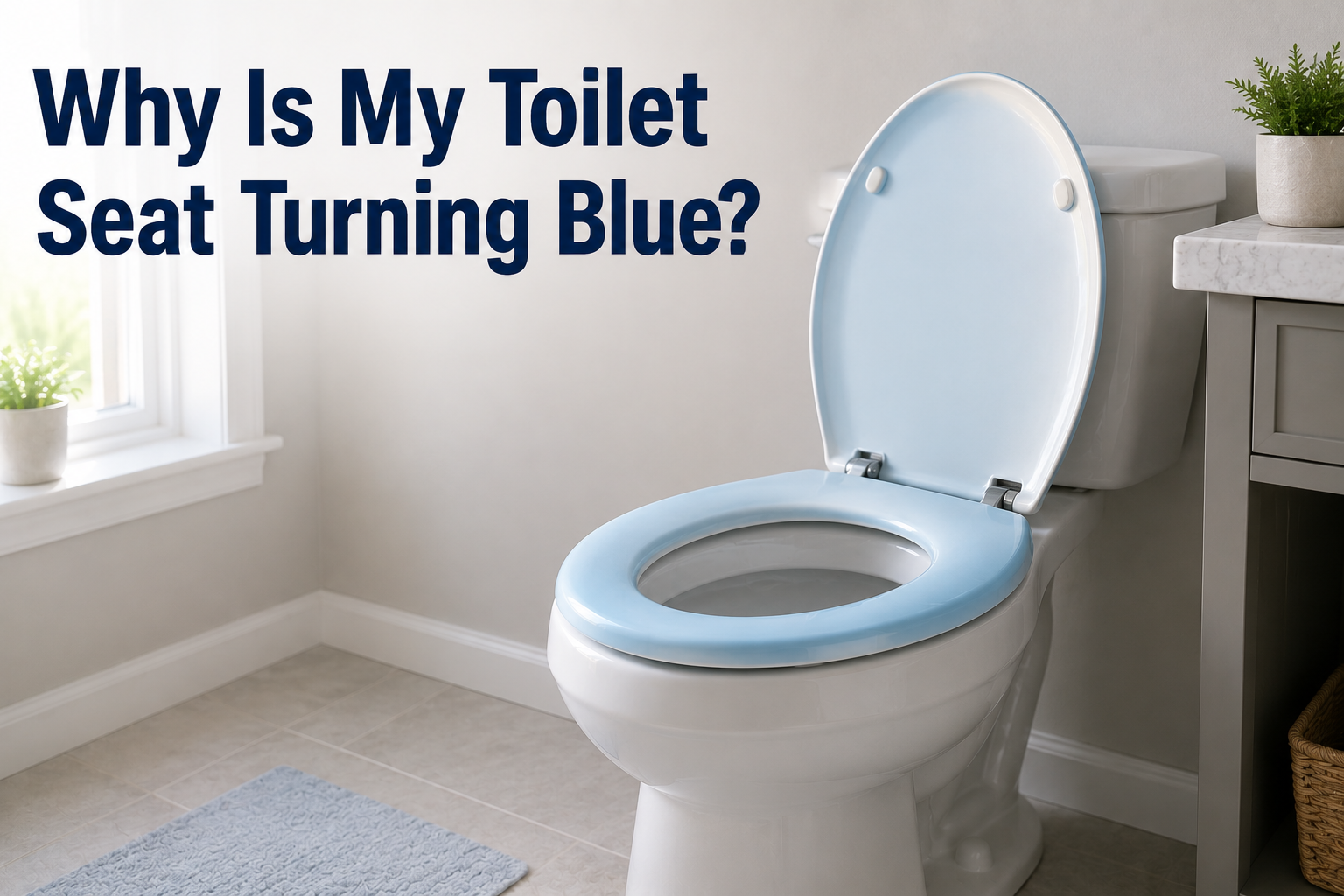

A toilet seat turning blue can feel alarming the first time you notice it, but in most cases it is a simple and harmless reaction rather than a sign of a serious problem. The blue tint usually comes from something external touching the seat repeatedly, such as dye from clothing, chemicals from skincare products, or minerals in your water supply.
Sometimes the cause is even related to your own body chemistry rather than the bathroom itself. Understanding exactly why is my toilet seat turning blue helps you fix the visible stain and stop it from coming back again and again.
Is It Something to Worry About?
In the majority of cases, a blue toilet seat is not dangerous and does not point to any hidden illness or plumbing failure. It is usually cosmetic, caused by a reaction between the seat material and an outside substance like dye, lotion, or hard water minerals.
When You Should Pay Closer Attention?
There are a few situations where the discoloration deserves a second look rather than a quick wipe down. If the blue mark appears only where your skin touches the seat, follows a consistent body outline, and shows up daily regardless of cleaning products used, it may be linked to a skin or sweat-related condition. In that case, tracking when it started and what changed around that time will help you figure out whether the cause is environmental or personal.
Cause #1: Dye Transfer From Clothing
One of the most common and least talked about reasons behind why is my toilet seat turning blue is simple dye transfer from clothing. New jeans, dark towels, or freshly dyed fabric can leave color behind when they rub against a plastic seat repeatedly.
How Denim and Dark Fabrics Cause Staining?
New denim is treated with indigo dye that has not fully set, which means it can rub off onto fabric, skin, and hard surfaces during the first several washes. When you sit down in new jeans, the fabric presses against the seat and slowly transfers pigment, especially if the bathroom is warm or humid. Over repeated visits, this light transfer builds up into a visible blue tint that many people mistake for something more serious.
Why Does Moisture Make the Staining Worse?
Bathrooms are naturally humid spaces, and moisture in the air or on the skin acts almost like a carrier for loose dye particles. Damp skin combined with unset denim dye creates the perfect condition for color to lift off fabric and settle onto plastic. This is why the staining often appears faster in households where the bathroom doubles as a changing area.
How to Test and Prevent This Cause?
A simple way to confirm this cause is to wash new denim or dark clothing several times before wearing it regularly in the bathroom, then watch whether new staining slows down. Using a fabric-safe seat cover or wiping the seat after each use during the first few weeks of a new garment can also prevent buildup before it starts.
Cause #2: Chromhidrosis (Colored Sweat)
A lesser known but medically recognized cause of blue staining is a rare skin condition called chromhidrosis, where sweat itself carries an unusual pigment. This condition directly connects the skin to the surface it touches, including a toilet seat.
What Chromhidrosis Actually Is?
Chromhidrosis happens when apocrine sweat glands, found in areas like the underarms and groin, release sweat containing high levels of a pigment called lipofuscin. Depending on how oxidized this pigment becomes, sweat can appear yellow, green, brown, or blue-black instead of clear. Because these glands are concentrated in areas that contact the toilet seat, repeated sitting can slowly transfer the pigment onto the surface.
Common Triggers and Where It Shows Up
The condition tends to flare with heat, emotional stress, and hot showers or baths, all of which stimulate apocrine gland activity. It is most noticeable on skin with a higher concentration of these glands, which explains why the stain pattern often follows the exact shape of where the body makes contact. People sometimes only discover the condition after noticing unexplained marks on fabric or furniture first.
When to See a Dermatologist?
If staining continues even after switching cleaning products, changing clothing habits, and ruling out water quality, a dermatologist visit is worth considering. A simple skin examination and sweat test can confirm chromhidrosis and rule out other causes, giving peace of mind along with a proper explanation.
Cause #3: Skincare and Acne Products
Certain skincare ingredients are known to react with plastic surfaces, and this is a frequently overlooked answer to why is my toilet seat turning blue in households where acne treatments are used regularly.
How Benzoyl Peroxide Reacts With Plastic?
Benzoyl peroxide, a common ingredient in acne creams and washes, is a strong oxidizing agent that can bleach or discolor fabric and certain plastics on contact. When residue from hands or skin transfers onto a toilet seat, the chemical reaction can leave behind a blue, purple, or faded patch depending on the seat material. This reaction does not require much product, which is why even careful users sometimes notice unexpected marks.
Preventing Transfer From Topical Products
Washing hands thoroughly after applying any acne or medicated skincare product reduces the chance of transfer significantly. Allowing a few minutes for the product to fully absorb into the skin before sitting down also lowers the risk, especially for products applied to areas that make direct contact with the seat.
Cause #4: Cleaning Product Reactions
The cleaning products used in your bathroom can sometimes be the actual source of discoloration rather than the solution to it, making this cause easy to overlook.
Bleach, Acidity, and Chemical Reactions
Many bathroom cleaners rely on bleach or strong acidic formulas to fight bacteria and limescale, but these same ingredients can react with trace metals in tap water or with certain plastic compounds in the seat itself. Over repeated cleanings, this chemical interaction can leave a faint blue or greenish tint that gradually becomes more noticeable. Highly concentrated or undiluted cleaners tend to cause this reaction more quickly than gentler formulas.
Safer Cleaning Alternatives to Try
Switching to a mild, non-abrasive cleaner without strong bleach or high acidity is usually enough to stop this type of staining from progressing. Diluting cleaning products according to label instructions and rinsing the seat thoroughly afterward also helps prevent chemical residue from settling into the plastic surface over time.
Cause #5: Hard Water and Metal Corrosion
Water quality plays a bigger role in bathroom discoloration than most people realize, and it is another practical answer to why is my toilet seat turning blue.
How Copper and Iron Cause Blue-Green Stains?
Hard water containing elevated levels of copper or iron can react with metal hinges, bolts, or fittings connected to the toilet seat, producing oxidation that appears blue or green. This corrosion can slowly spread onto the surrounding plastic surface through repeated contact with water splashes. Homes with older plumbing or well water are more likely to experience this issue.
Identifying a Water Related Cause
If similar blue or green stains also appear around faucets, drains, or other metal fixtures in the same bathroom, hard water is the more likely explanation rather than clothing or skin. A water quality test can confirm mineral content and guide whether a water softener or filter would help reduce future staining.
The Pregnancy Myth Debunked
A popular but inaccurate belief online claims that a blue toilet seat is a sign of pregnancy, largely spread through social media trends and casual conversation. In reality, pregnancy itself does not cause this discoloration directly.
What may be happening instead is that hormonal changes during pregnancy can increase sweating and alter its composition, which occasionally makes an existing chromhidrosis condition more noticeable. The seat is reacting to changed sweat chemistry, not to pregnancy as a biological trigger on its own.
How to Figure Out Your Specific Cause?
Narrowing down the exact reason behind the discoloration becomes much easier when you compare recent changes in your routine against the pattern of staining. The table below summarizes the most useful clues to look for.
| Clue Noticed | Likely Cause |
| New jeans or dark clothing recently worn | Dye transfer |
| Stain matches exact body contact shape daily | Chromhidrosis |
| Acne cream or medicated skincare used regularly | Skincare product reaction |
| Stronger bleach or acidic cleaner used recently | Cleaning product reaction |
| Similar stains near faucets or metal fittings | Hard water or corrosion |
Reviewing this table against your own bathroom habits usually narrows the cause down to one or two likely options within minutes.
How to Remove Blue Stains From a Toilet Seat?
Once the cause is identified, removing the existing stain is usually straightforward with the right approach. Start by mixing a mild dish soap with warm water and gently scrubbing the stained area using a soft cloth or non-abrasive sponge, avoiding harsh scouring pads that can damage the seat’s finish.
For stubborn stains, a paste made from baking soda and water can be applied directly, left for a few minutes, and then wiped away, since baking soda lifts residue without being overly harsh on plastic. If mineral buildup from hard water is the cause, a diluted white vinegar solution works well to dissolve the deposits before rinsing thoroughly. After cleaning, drying the seat completely helps prevent moisture from attracting further staining in the near future.
When to See a Doctor
While most causes of a blue toilet seat are harmless and easy to manage at home, certain signs suggest it is worth consulting a healthcare professional.
Persistent discoloration on the skin itself, unusual odor, irritation, or a stain pattern that keeps returning despite ruling out clothing, skincare, and cleaning products all point toward a possible underlying skin condition. A dermatologist can quickly confirm whether something like chromhidrosis is responsible and offer guidance on managing it comfortably.
FAQs
Does a blue toilet seat mean I am pregnant? No, pregnancy does not directly cause this. Hormonal changes during pregnancy can sometimes intensify sweat-related discoloration in people who already have a tendency toward it.
Can cleaning products alone cause the blue color? Yes, bleach-based or highly acidic cleaners can react with trace metals or plastic compounds, gradually producing a blue or greenish tint over repeated use.
Is chromhidrosis common? No, it is considered a rare condition, but it is well documented in medical literature and easily confirmed through a simple dermatologist examination.
Will the stain go away on its own? Not usually. Most stains need to be actively cleaned, and the underlying cause should be addressed to prevent the discoloration from returning.
Conclusion
A blue toilet seat almost always has a practical explanation, whether it comes from new denim, skincare ingredients, cleaning chemicals, hard water, or a rare sweat condition like chromhidrosis.
Comparing the pattern of staining against recent changes in your routine makes it easier to pinpoint the exact cause and apply the right fix. With the right cleaning method and a few small prevention habits, most households can resolve the issue quickly and keep their bathroom looking spotless going forward.
RELATED ARTICLE’S
Half Round Gutter Installation: Complete Guide
Glow in the Dark Epoxy Floor: The Ultimate Guide for Homeowners & Contractors
How Long Do Garage Door Springs Last? Complete Guide 2026
How Can You Make Saltillo Floors Shine? Complete Guide 2026
18 Inch Deep Base Cabinets: A Smart Storage Solution for Every Kitchen