

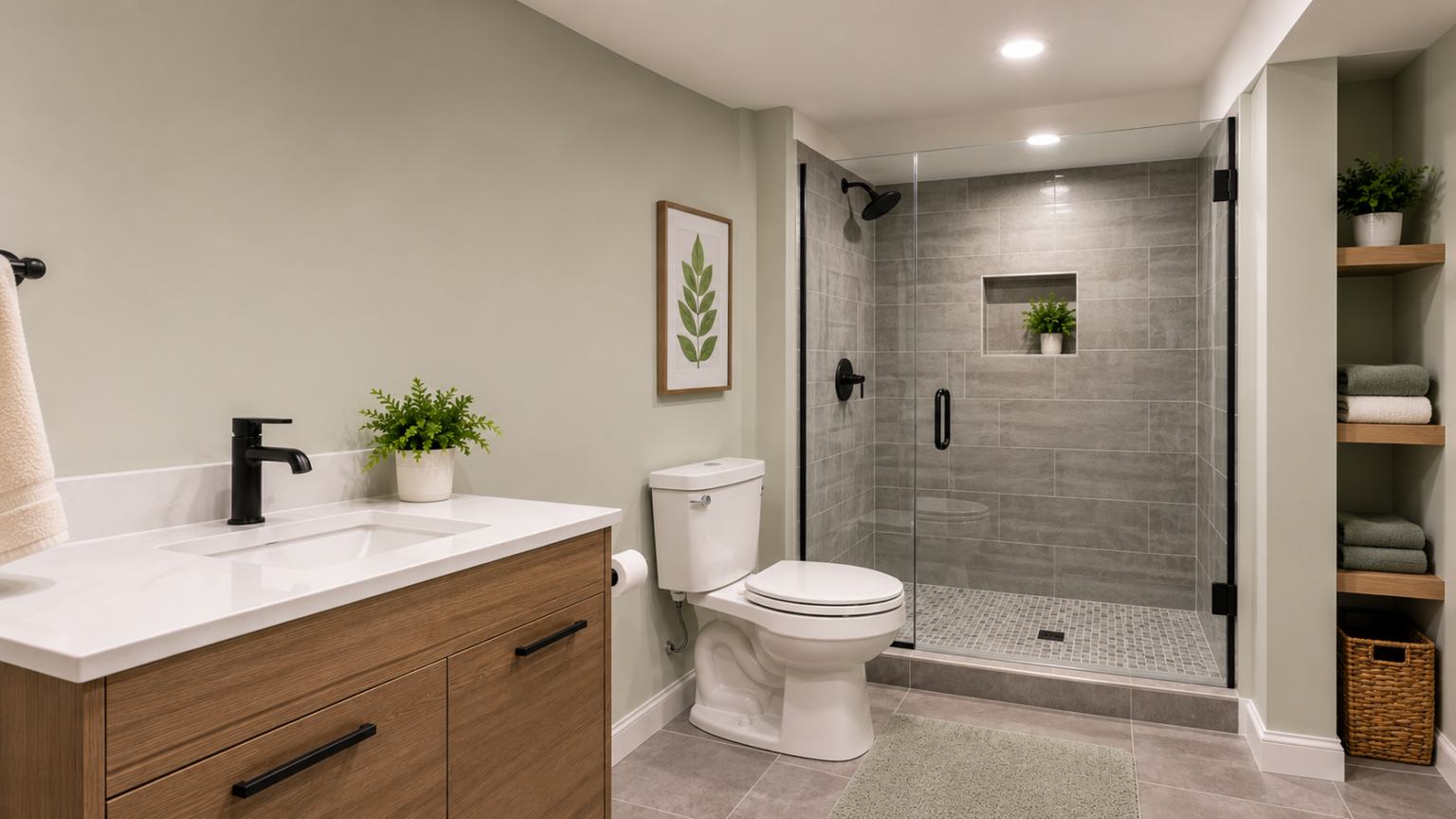

If you’re wondering how much to install a bathroom in a basement, the honest answer is: it depends on what’s already under your slab. Nationally, homeowners typically spend $6,000 to $35,000, with most full basement bathrooms landing between $15,000 and $22,000. The single biggest swing factor isn’t tile or fixtures — it’s whether your basement already has rough-in plumbing, and whether gravity can drain your waste to the main sewer line or you’ll need mechanical help to get it there.
This guide breaks down real costs by bathroom type, walks through every line item a contractor’s quote should include, and covers the permit, plumbing, and code details that most cost guides gloss over — including the one component (an ejector pump or macerating toilet system) that can single-handedly add thousands to your budget if your basement sits below the sewer line.
Average Cost to Install a Bathroom in a Basement (By Bathroom Type)
Cost scales directly with plumbing complexity and fixture count. Here’s what to expect for each configuration:
| Bathroom Type | Fixtures | Typical Cost Range |
|---|---|---|
| Powder room / half bath | Toilet + sink | $6,000 – $12,000 |
| Three-quarter bath | Toilet + sink + stall shower | $12,000 – $20,000 |
| Full bath | Toilet + sink + shower/tub combo | $15,000 – $28,000 |
| Full bath, no existing rough-in | Toilet + sink + shower, slab trenching required | $20,000 – $35,000 |
| High-end / custom | Heated floors, custom tile, glass shower, smart fixtures | $35,000 – $75,000+ |
If your builder already stubbed out rough-in plumbing when the house was built (common in newer construction), you can often save 30–40% versus a basement with no existing pipes, since the most expensive part — breaking and re-trenching the concrete slab — is already done.
What Drives the Cost to Install a Basement Bathroom
Plumbing: The Make-or-Break Cost Factor
Plumbing typically accounts for 40–50% of a basement bathroom budget, and it comes down to one key question: can the new bathroom drain to the main sewer line by gravity?
- Gravity drain available: If your basement floor sits above the level where your home’s drain exits to the street, standard plumbing can be run at a slight downward slope into the existing line. Expect $1,500–$5,000 for rough-in work, or a licensed plumber’s day rate of roughly $450–$900 plus materials for shorter runs.
- Below the drain line (most basements): Many basement floors sit lower than the home’s main sewer line, so waste can’t flow downhill into it. You’ll need one of two systems:
- Sewage ejector pump system: A basin collects wastewater and pumps it up to the main line. Installed cost typically runs $2,000–$4,500, including the pump, basin, check valve, and plumbing labor.
- Macerating (up-flush) toilet system, such as a Saniflo unit: Grinds waste and pumps it through a small-diameter line, which is useful when trenching the slab isn’t practical. Expect $1,200–$3,000 installed for a single-fixture setup, more if you’re adding a shower and sink to the same system.
Skipping this step in your budget is the #1 reason basement bathroom projects go over estimate — get a plumber to physically assess your slab and drain elevation before you price anything else.
Trenching and Slab Work
If there’s no existing rough-in, the concrete slab has to be cut, trenched for new drain and supply lines, and then backfilled and repoured. Budget $1,000–$3,000 for this step alone, depending on how far the new lines have to travel from the existing stack. Backfilling uses pea gravel topped with fresh concrete — straightforward for a contractor, but labor-intensive if you’re pricing this as a DIY task.
Electrical Work
Bathrooms need dedicated circuits for outlets (GFCI-protected, per code), lighting, and an exhaust fan. Budget $800–$2,000 for a licensed electrician to run new circuits from your panel, especially if your basement panel doesn’t already have open slots.
Framing, Drywall, and Waterproofing
- Framing new walls: $1,000–$3,000, depending on layout complexity and ceiling height
- Moisture-resistant drywall (often called “purple board” or “green board”) for general walls: roughly $10–$15 per sheet, installed
- Cement board for wet areas (shower walls, tub surrounds): $40–$60 per sheet, installed
- A dedicated waterproofing membrane behind tile is not optional in a basement — skipping it is the fastest route to a mold problem behind your new shower wall
Ventilation
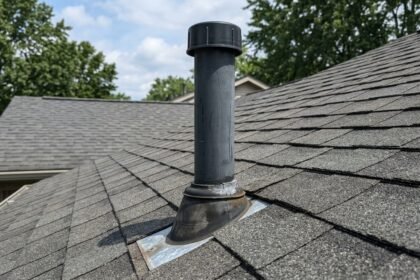
Basement bathrooms almost always lack a window, so mechanical ventilation is required by code in nearly every jurisdiction. A bathroom exhaust fan (or a combination light/fan unit) costs $150–$400 installed, and the ductwork needs to route to the exterior — not just into a joist cavity, which traps moisture and encourages mold growth.
Fixtures and Finishes
- Toilet: $150–$600
- Vanity and sink: $300–$1,500
- Shower/tub unit or tiled shower enclosure: $1,500–$6,000+
- Flooring (waterproof vinyl plank, porcelain tile): $3–$12 per square foot installed
Permits and Inspections
Nearly every U.S. municipality requires permits for plumbing, electrical, and any structural framing changes — even in a basement. Budget $500–$2,000 for permit fees, and factor in that most jurisdictions require an inspection before you close up walls, and another final inspection before the space is legally usable. Skipping permits isn’t just risky; unpermitted bathroom work can complicate a home sale and may not be covered by homeowners insurance if something goes wrong.
Sample Itemized Budget: Mid-Range Full Basement Bathroom (No Existing Rough-In)
| Line Item | Estimated Cost |
|---|---|
| Plumbing rough-in + ejector pump system | $4,500 |
| Slab trenching and backfill | $2,000 |
| Electrical (circuits, outlets, lighting) | $1,500 |
| Framing | $2,000 |
| Drywall (purple board + cement board) | $1,800 |
| Waterproofing membrane | $600 |
| Ventilation fan and ducting | $350 |
| Toilet, vanity, sink | $900 |
| Shower/tub + tile | $3,500 |
| Flooring | $1,200 |
| Permits and inspections | $1,200 |
| Contingency (10%) | $2,000 |
| Total | ~$21,550 |
DIY vs. Hiring a Contractor: Where the Real Savings Are
You can meaningfully cut costs by doing the framing, drywall, and finish work yourself while hiring licensed professionals for plumbing and electrical — work that’s code-regulated and where mistakes are expensive to fix later. Homeowners who take this hybrid approach commonly report total spend in the $4,000–$8,000 range for a modest bathroom, versus $15,000+ for a fully contracted job — but that gap assumes you’re comfortable with tile work, drywall finishing, and basic carpentry, and that your local code allows homeowner-performed work (some municipalities require a licensed contractor for anything beyond cosmetic finishes).
If you go the DIY-hybrid route:
- Always hire a licensed plumber for the rough-in and any ejector pump or macerator installation
- Always hire a licensed electrician for new circuits
- Pull your own permits or confirm your contractor is pulling them — don’t skip this step to save money
- Get at least three written quotes for the plumbing and electrical work specifically, since these are the components most likely to vary widely by contractor
How Long Does It Take to Install a Bathroom in a Basement?
| Bathroom Type | Timeline |
|---|---|
| Half-bath with existing rough-in | 2–3 weeks |
| Full bath with existing rough-in | 4–6 weeks |
| Full bath with slab trenching required | 6–10 weeks |
| Custom/luxury build | 10–16 weeks |
Plumbing rough-in is typically the fastest phase (often 1–2 days once the plumber is on-site) but scheduling inspections between phases — rough-in inspection, then final inspection — is usually what stretches the timeline, not the physical labor.
Does a Basement Bathroom Add Home Value?
Yes. A finished basement bathroom is consistently cited by real estate professionals as one of the higher-ROI basement upgrades, since it turns storage or unused square footage into fully livable space — particularly valuable if the basement includes a bedroom, since many jurisdictions require a bathroom nearby for the space to legally count as a bedroom suite. While exact return varies by market, a well-executed basement bathroom is generally considered to recoup a solid majority of its cost at resale, with the added benefit of daily convenience while you still live there.
How to Get an Accurate Quote
- Get a plumber to physically inspect your slab first, before pricing anything else — the drain elevation determines whether you need a $2,000 gravity hookup or a $4,500 ejector system.
- Ask every contractor for a line-item quote, not a lump sum. You want to see plumbing, electrical, framing, and finishes broken out separately so you can compare bids apples-to-apples.
- Confirm who’s pulling permits and get it in writing.
- Ask about contingency — a reputable contractor should flag that basement work (especially in older homes) can uncover surprises like undersized drain lines or foundation cracks once walls are opened up.
- Get at least three bids, and be wary of any quote significantly below the others — it often means corners will be cut on waterproofing or code compliance.
Frequently Asked Questions
How much does it cost to install a bathroom in a basement with no existing plumbing? Expect to pay $20,000–$35,000 for a full bathroom when there’s no rough-in plumbing already in place, since the concrete slab has to be cut, trenched, and repoured, and you’ll likely need an ejector pump system if the basement sits below your home’s main drain line.
What is the cheapest way to add a bathroom in a basement? A half-bath (toilet and sink only) using existing rough-in plumbing is the most budget-friendly option, often achievable for $6,000–$10,000. Doing your own framing, drywall, and tile work while hiring licensed pros only for plumbing and electrical can push costs even lower.
Do I need a permit to install a bathroom in my basement? Yes, in almost every U.S. jurisdiction. Plumbing, electrical, and any structural framing changes require permits and inspections. Unpermitted work can create problems when you sell your home and may not be covered by homeowners insurance.
What is an ejector pump and why does my basement bathroom need one? An ejector pump collects wastewater in a basin and mechanically pumps it up to your home’s main sewer line — necessary when your basement floor sits below the elevation of that line, which is common in many basements. Without it, gravity alone can’t move waste out of the house. Installed cost typically runs $2,000–$4,500.
How long does it take to install a basement bathroom? A basement bathroom with existing rough-in plumbing usually takes 4–6 weeks from start to finish. If the slab needs to be trenched for new plumbing, plan on 6–10 weeks, largely due to inspection scheduling between phases.
Is it cheaper to install a shower or a bathtub in a basement bathroom? A stall shower is typically cheaper to install than a tub/shower combo, both in materials and in the plumbing needed, and it also uses less floor space — a practical advantage in basements with limited headroom or an irregular layout around support columns and ductwork.
Can I install a basement bathroom myself? You can legally DIY portions of the project — framing, drywall, tiling, and finish work — in most jurisdictions, but plumbing and electrical work almost always require a licensed professional, both for code compliance and safety. Check with your local building department before starting any DIY plumbing or electrical work.
Final Thoughts
The real cost to install a bathroom in a basement isn’t determined by fixtures or finishes — it’s determined by what’s happening below your slab. Before you get quotes on tile or vanities, have a licensed plumber assess your drain elevation and existing rough-in, since that single factor can shift your total budget by $10,000 or more. From there, build your budget line by line — plumbing, electrical, framing, waterproofing, and finishes — rather than relying on a single “average cost” number, and always leave a 10% contingency for what you find once the walls are open.
Ready to get moving? Start by contacting a licensed plumber for an on-site assessment, then collect at least three itemized quotes before you commit — that one step will do more to protect your budget than any amount of online research.
Related Articles
How to Manually Flush a Toilet: Complete guide 2026
How Much Does It Cost to Remove Popcorn Ceiling? Complete Guide 2026
How to Install a Ceiling Medallion: Complete Step-by-Step Guide (2026)
How Hard Is It to Install a Ceiling Fan? Full Difficulty Guide (2026)