


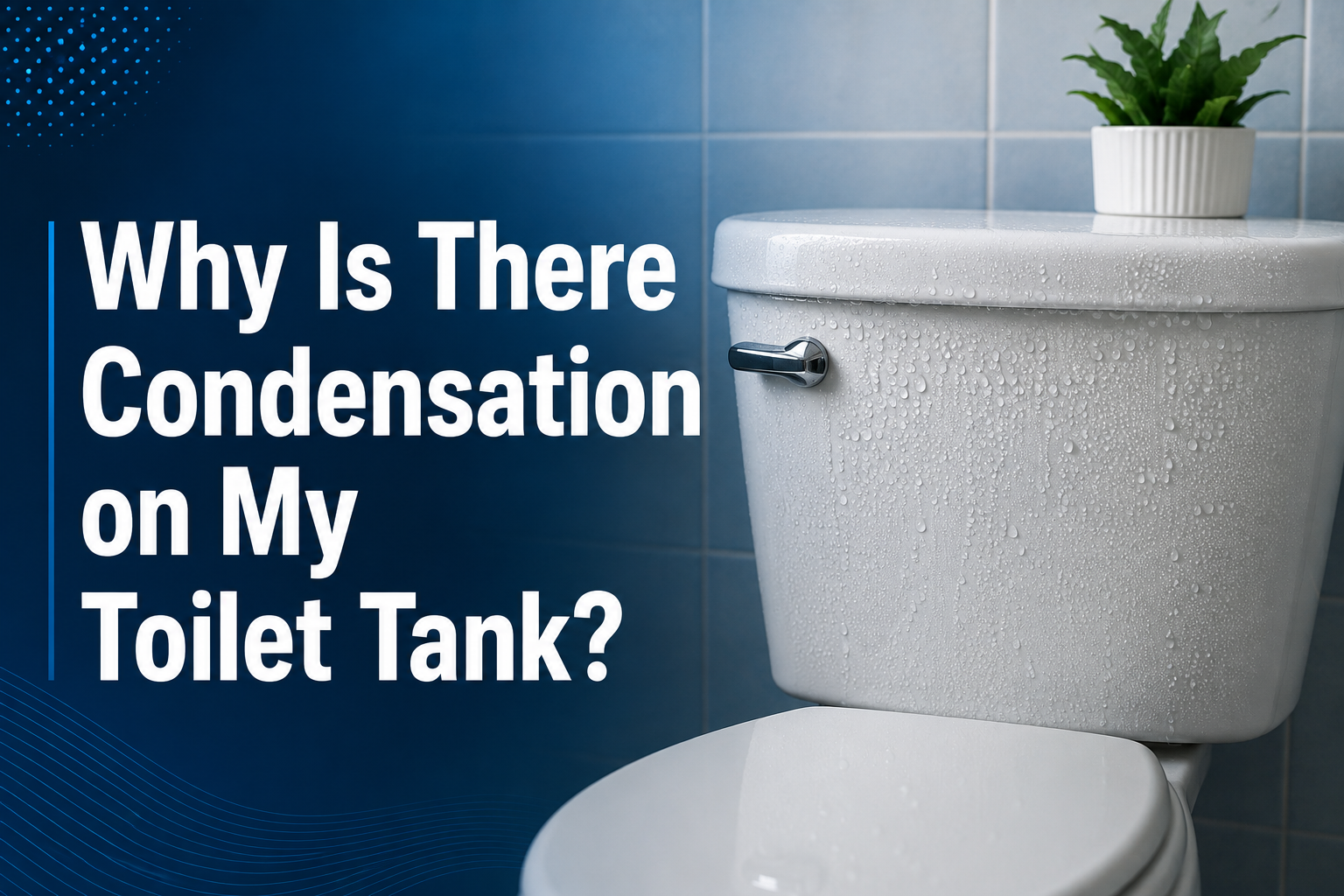

If you’ve noticed water droplets forming on your toilet tank and puddling on the bathroom floor, you’re not imagining a leak — you’re witnessing basic physics at work. Why is there condensation on my toilet tank?
In most cases, it happens because the cold water inside the tank cools the tank’s surface below the surrounding air’s dew point, causing moisture in the air to condense into visible droplets. It’s the same reason a cold glass of iced tea “sweats” on a summer afternoon. The good news is that once you understand what’s driving it, a sweating toilet tank is one of the more fixable nuisances in home plumbing.
This guide breaks down exactly why toilet tanks sweat, how to tell the difference between condensation and an actual leak, the health and structural risks of ignoring it, and seven practical fixes ranked from free and immediate to more involved plumbing upgrades.
What Causes Condensation on a Toilet Tank?
Every toilet tank fills with water straight from your home’s cold water supply line, which typically runs somewhere between 50°F and 70°F depending on your climate and the season. Meanwhile, the air in your bathroom — especially after a hot shower — can be considerably warmer and carries a good amount of water vapor.
Warm air can hold more moisture than cold air. When that warm, humid bathroom air touches the tank’s cooler exterior, the air immediately surrounding the tank cools down too. Since cooler air can’t hold as much moisture, the excess water vapor is forced to condense into liquid droplets on the tank’s surface.
This is governed by a concept called the dew point — the temperature at which air becomes saturated and releases moisture. When your toilet tank’s surface temperature drops below the bathroom’s dew point, sweating is essentially guaranteed.
Why Does It Happen More in Summer?
Toilet sweating is far more common in warm, humid months for a simple reason: the gap between the incoming cold water temperature and the bathroom’s ambient air temperature and humidity is largest in summer.
In winter, tap water and room air are often closer in temperature, so there’s less of a differential to trigger condensation. If your toilet only sweats seasonally, that’s a strong sign the root cause is simple temperature and humidity imbalance rather than a plumbing defect.
Other Contributing Factors
A few conditions make tank sweating worse or more persistent:
- Poor bathroom ventilation — no exhaust fan or window means humid air lingers after every shower
- A running toilet — a worn flapper or fill valve that lets the tank continually refill with fresh cold water keeps the tank perpetually cold, which prevents it from ever warming to room temperature
- Basement or below-grade bathrooms — these tend to have naturally higher ambient humidity and cooler surfaces
- High-efficiency plumbing in humid climates — homes in the Gulf Coast, Southeast, or anywhere with high outdoor humidity see more tank sweating overall
- Metal fill tubes — the metal refill tube inside some tanks conducts cold efficiently and can contribute to condensation on components you can’t see from outside the tank
Is Toilet Tank Condensation the Same as a Leak?
Not necessarily, but it’s worth ruling out a real leak before assuming it’s just condensation. Here’s a quick way to check:
- Dry the tank completely with a towel, including the bottom edge and the supply line connection.
- Wait 20–30 minutes without flushing or running water nearby.
- Inspect the tank. If moisture reappears evenly across the tank’s exterior surface, especially after a shower or on a humid day, that’s condensation. If water is pooling specifically around the base, the supply line connection, or the tank-to-bowl bolts, you likely have an actual leak that needs a different repair.
- Check the flapper. Add a few drops of food coloring to the tank water and wait 15 minutes without flushing. If color appears in the bowl, your flapper is leaking and causing the tank to refill constantly with cold water — a common hidden contributor to chronic sweating.
Why You Shouldn’t Ignore a Sweating Toilet
A sweaty toilet tank might seem cosmetic, but left unaddressed, it can lead to real damage:
- Flooring damage. Water pooling around the base of the toilet repeatedly can warp laminate, swell subfloor wood, and stain tile grout over time.
- Mold and mildew growth. Consistently damp conditions near a toilet — especially in low-airflow bathrooms — create ideal conditions for mold, which can affect indoor air quality.
- Subfloor rot. In severe, long-term cases, moisture can seep into subflooring, leading to soft spots and costly repairs well beyond the cost of any preventive fix.
- Slip hazard. A puddle behind or beside the toilet is a fall risk, particularly in households with young children or older adults.
7 Ways to Stop Condensation on Your Toilet Tank
These solutions are ordered from simplest and cheapest to more involved plumbing upgrades. You don’t need to do all seven — start with the first two or three and add more if sweating persists.
1. Improve Bathroom Ventilation
Reducing ambient humidity is the fastest way to cut down on condensation everywhere in the bathroom, not just the toilet tank.
- Run your exhaust fan during and for at least 20 minutes after every shower
- If you don’t have a fan, consider having one installed — it’s one of the more affordable bathroom upgrades and pays off in moisture control
- Crack the bathroom door after showering to let humid air disperse
- Avoid opening a bathroom window on humid days, since it can introduce more moisture rather than remove it
- Wipe down shower walls and the tub after use to reduce residual evaporation
2. Use a Dehumidifier or Air Conditioning
If your ventilation is already reasonable but the bathroom (or house) stays humid, mechanical drying helps.
- A portable dehumidifier placed near the bathroom can meaningfully cut ambient moisture, especially in basement bathrooms
- Central air conditioning naturally lowers indoor humidity as a byproduct of cooling, so running your AC during humid stretches can reduce tank sweating as a side benefit
- Whole-home dehumidifiers integrated with HVAC systems are worth considering if multiple rooms in your house struggle with humidity, not just the bathroom
3. Insulate the Toilet Tank
Insulation creates a barrier between the cold tank water and the warm bathroom air, which prevents the tank’s outer surface from dropping below the dew point.
How to do it yourself:
- Shut off the water supply valve behind the toilet and flush to empty the tank
- Sponge out remaining water and dry the tank interior completely
- Purchase a toilet tank insulation kit (closed-cell foam liners sized for standard tanks)
- Cut the foam panels to fit the interior walls of the tank, working around the flush valve and fill valve
- Adhere the foam using waterproof adhesive, pressing firmly to eliminate air gaps
- Let the adhesive cure per the manufacturer’s instructions before refilling the tank
This is a weekend project most homeowners can complete in under an hour and typically costs $15–$30 for a kit.
4. Install an Anti-Sweat (Tempering) Valve
An anti-sweat valve — also called a tempering or mixing valve — blends a small amount of hot water into the cold water line feeding your toilet tank. This raises the tank water temperature just enough to keep the tank’s surface above the bathroom’s dew point, without making the water noticeably warm to the touch.
- Best suited for households with persistent, year-round sweating problems
- Requires access to both a hot and cold water line near the toilet, so it’s usually a job for a licensed plumber
- Adjustable valves let you dial in more hot-water mix during humid months and shut it off in winter
- Typically costs $150–$350 installed, depending on line accessibility and local labor rates
5. Fix a Running Toilet or Leaking Flapper
If your flapper valve doesn’t seal properly, the tank continuously cycles in fresh, cold water to replace what’s leaking into the bowl. This keeps the tank chronically cold and guarantees condensation, no matter how good your ventilation is.
- Replace a worn flapper (a $10–$15 part most homeowners can swap in 15 minutes)
- Inspect and adjust the fill valve if water runs longer than it should after each flush
- Listen for a toilet that “runs” intermittently on its own — this is a telltale sign of a leaking flapper
Fixing this issue alone resolves sweating for a surprising number of households, since it removes the constant refill of cold water that keeps the tank chilled.
6. Reduce the Volume of Cold Water in the Tank
Less cold water means less surface area exposed to warm bathroom air, and the tank reaches room temperature faster after each flush.
- Install a low-flow or dual-flush toilet. Modern low-flow models use less water per flush, which reduces the total mass of cold water sitting in the tank at any given time.
- Add a tank displacement device, such as a filled, sealed plastic bottle, to reduce water volume in an older, non-low-flow tank (this is a low-cost, temporary measure rather than a long-term fix).
7. Use a Toilet Tank Drip Tray as a Backstop
If you’ve addressed the root cause but still see occasional sweating during extreme humidity, a drip tray won’t stop condensation from forming, but it will protect your floor while other fixes take effect.
- Tank trays sit beneath the toilet tank and catch drips before they reach the floor
- They require periodic emptying and aren’t a substitute for addressing humidity or insulation
- Use this as a supplementary safeguard, not a primary solution
DIY vs. Calling a Professional Plumber
| Fix | Typical Difficulty | Best For |
|---|---|---|
| Ventilation improvements | Easy DIY | Everyone, as a first step |
| Dehumidifier/AC use | Easy DIY | Humid climates, basement bathrooms |
| Tank insulation kit | Moderate DIY | Persistent sweating, budget-conscious homeowners |
| Flapper/fill valve repair | Easy–moderate DIY | Toilets that run or cycle frequently |
| Low-flow toilet upgrade | Moderate DIY or pro install | Older toilets, water-saving goals |
| Anti-sweat valve | Professional recommended | Chronic, year-round sweating |
| Drip tray | Easy DIY | Temporary protection while diagnosing the cause |
If you’ve tried ventilation, insulation, and a flapper repair and your toilet still sweats heavily, it’s worth having a licensed plumber assess whether an anti-sweat valve or a full toilet replacement makes more sense for your home’s plumbing layout.
Frequently Asked Questions
Is toilet tank condensation dangerous? Not immediately, but ongoing moisture can lead to mold growth, damaged flooring, and subfloor rot if left unaddressed for months or years. It’s also a slip hazard.
Why does my toilet only sweat in summer? Summer brings a bigger gap between cold tap water temperature and warm, humid bathroom air, which is exactly the condition that triggers condensation. Many toilets sweat seasonally and stay dry the rest of the year.
Will a toilet tank insulation kit really work? Yes, when installed correctly. Insulation keeps the tank’s exterior surface closer to room temperature, which prevents it from dropping below the bathroom’s dew point. It’s one of the most effective low-cost fixes available.
Can a running toilet cause condensation? Yes. A leaking flapper or faulty fill valve causes the tank to continually refill with cold water, which keeps the tank chronically cold and makes condensation worse, even with good ventilation.
Do low-flow toilets sweat less than older toilets? Generally, yes. Less water in the tank means less cold mass exposed to warm air, so the tank can reach room temperature more quickly between flushes.
Should I be worried about mold from a sweating toilet? If condensation has been dripping onto the floor regularly for an extended period, it’s worth checking the area around the base of the toilet and the subfloor for soft spots, discoloration, or a musty smell, which can indicate mold growth.
How much does it cost to fix a sweating toilet? DIY fixes like insulation kits or flapper replacements typically cost $10–$30. A professionally installed anti-sweat valve generally runs $150–$350, and a low-flow toilet replacement can range from $150–$600 depending on the model and installation complexity.
Final Thoughts
A sweating toilet tank isn’t a mystery or a defect — it’s simple condensation caused by cold tank water meeting warm, humid bathroom air. Start with the easiest fixes first: improve ventilation, run a dehumidifier or AC during humid stretches, and check for a leaking flapper that’s keeping your tank chronically cold. If the problem persists, a tank insulation kit or a professionally installed anti-sweat valve will address the root cause rather than just managing the symptoms.
Left unchecked, that “harmless” drip can warp flooring, invite mold, and even damage your subfloor over time, so it’s worth tackling sooner rather than later. Try one or two of the fixes above this week, and if your toilet is still sweating after that, reach out to a licensed plumber to evaluate whether an anti-sweat valve or toilet upgrade is the right long-term solution for your bathroom.
Related Articles
How to Arrange Stone Pots on Floor: A Complete Guide 2026
How Much to Install a Bathroom in a Basement: The Complete 2026 Cost Guide