
Weed smell has a way of settling into a home and refusing to leave, even long after the smoke has cleared. It clings to curtains, soaks into carpets, and lingers in the air far longer than most people expect.
This becomes a real problem when guests are coming over, when you share your space with family members, or when you simply want your house to smell clean again. The good news is that getting rid of weed smell in house spaces does not require expensive equipment or professional help in most cases.
With the right combination of ventilation, cleaning, and odor-absorbing techniques, the smell can be reduced significantly within hours and eliminated completely within a day or two. This guide walks through exactly why the smell lingers and what actually works to remove it for good.
Why Weed Smell Lingers in a House?
Before tackling the smell, it helps to understand why it sticks around in the first place. The reasons below explain how smoke interacts with different parts of a home.
Smoke Particles Stick to Fabrics
Smoke from weed contains tiny particles that easily attach themselves to soft materials like couches, curtains, and bedsheets. These fabrics act like sponges, trapping the smell deep within their fibers. Even after the smoke has cleared from the air, the odor continues releasing slowly from these surfaces for days.
Poor Ventilation Traps Odor
Rooms with little to no airflow allow smoke and odor molecules to build up instead of dispersing. Closed windows, sealed doors, and a lack of fresh air circulation mean the smell has nowhere to go. Over time, this trapped odor becomes stronger and harder to remove without intervention.
Porous Surfaces Absorb Smell
Materials like wood, drywall, and unsealed surfaces are naturally porous, meaning they absorb odors rather than letting them sit on top. Once smoke odor seeps into these surfaces, it becomes embedded rather than superficial. This is why simply spraying air freshener often fails to solve the underlying problem.
Quick Fixes for Immediate Smell Removal
When the smell needs to disappear fast, these quick methods offer noticeable results within minutes. They work best as a first response before deeper cleaning begins.
Open Windows and Use Fans
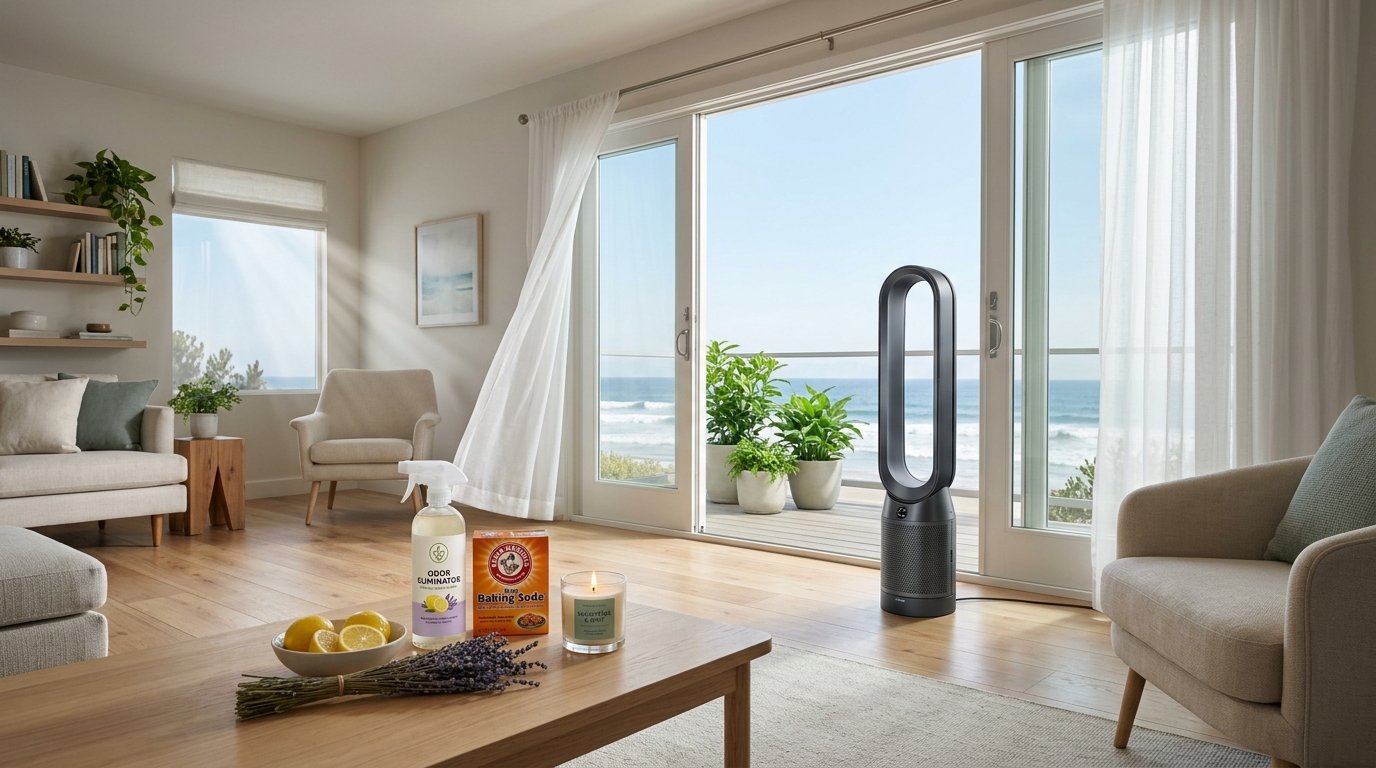
Opening windows creates a cross-breeze that pushes stale, smoky air outside while pulling in fresh air. Placing a fan near the window speeds up this exchange significantly. Running this setup for twenty to thirty minutes can clear a large portion of the smell from the room.
Run an Air Purifier
An air purifier fitted with a HEPA filter and an activated carbon layer is highly effective at capturing smoke particles and odor-causing compounds. Unlike fans, purifiers actively filter the air rather than just moving it around. Running one continuously in the affected room noticeably reduces smell within a few hours.
Light a Candle or Use Odor Neutralizer
A scented candle or a dedicated odor-neutralizing spray helps mask and break down lingering smell in the short term. It is important to choose a neutralizer rather than a simple air freshener, since fresheners often just add another scent on top instead of eliminating the original one. This works well as a temporary solution while deeper cleaning is underway.
Deep Cleaning Methods for Lingering Smell
Quick fixes help temporarily, but true removal requires cleaning the surfaces and fabrics that are holding onto the odor. These methods target the root of the problem rather than just the smell in the air.
Baking Soda on Carpets and Upholstery
Baking soda is a natural odor absorber that works well on carpets, rugs, and upholstered furniture. Sprinkling a generous layer over the affected area and letting it sit for a few hours allows it to draw out trapped odor. Vacuuming it up afterward removes both the baking soda and the smell it has absorbed.
Washing Fabrics, Curtains, and Bedding
Since fabrics absorb smoke odor more than almost anything else in a home, washing them is one of the most effective steps available. Curtains, bedsheets, cushion covers, and clothing should all be laundered using a strong detergent. For items that cannot be machine washed, steaming or airing them outside for several hours also helps.
Wiping Down Hard Surfaces
Smoke residue settles on walls, countertops, tables, and other hard surfaces even though it is not always visible. Wiping these areas with a mixture of water and vinegar, or a mild household cleaner, removes this residue effectively. This step is often skipped but makes a noticeable difference in overall freshness.
Using Activated Charcoal or Coffee Grounds
Both activated charcoal and coffee grounds are known for their strong odor-absorbing properties. Placing small bowls of either around the room, especially near where smoking occurred, helps pull odor molecules out of the air over time. This method works passively and requires little effort beyond placement.
Steam Cleaning Carpets and Curtains
For carpets and curtains that carry heavy or older smoke odor, steam cleaning offers a deeper level of removal than vacuuming alone. The heat and moisture loosen embedded particles that regular cleaning cannot reach. This is especially useful in homes where smoking happens frequently indoors.
Preventing Weed Smell From Spreading
Removing the current smell is only half the solution if smoking continues to happen indoors. These preventive habits reduce how much odor builds up in the first place.
Smoke Near an Open Window or Vent
Positioning yourself near an open window or exhaust vent while smoking allows much of the smoke to escape outside immediately rather than settling into the room. This simple habit significantly reduces how much odor accumulates on furniture and walls. It also cuts down on the time needed for cleanup afterward.
Use a Smoke Filter or Sploof
A sploof, which can be made from household items like a paper towel roll filled with dryer sheets, filters smoke as it is exhaled. This reduces both the visible smoke and the smell released into the room. It is a low-cost, practical tool for anyone smoking indoors regularly.
Clean or Replace HVAC/AC Filters Regularly
Air conditioning and heating systems circulate smoke particles throughout the entire house if their filters become clogged with residue. Cleaning or replacing these filters on a regular basis prevents the system from spreading odor to other rooms. This step is particularly important in homes where indoor smoking is frequent.
Comparison Table: Odor-Removal Methods
The table below compares the most common methods based on how effective they are, how long they take, and how much they typically cost.
| Method | Effectiveness | Time Needed | Cost |
| Ventilation (windows + fans) | Moderate | 20–30 minutes | Free |
| Air purifier | High | Few hours (ongoing) | Moderate |
| Baking soda | High | A few hours | Low |
| Washing fabrics | Very High | 1–2 hours | Low |
| Activated charcoal/coffee grounds | Moderate | Several hours (passive) | Low |
| Steam cleaning | Very High | 1–3 hours | Moderate |
| HVAC filter cleaning | High (long-term) | 15–20 minutes | Low |
FAQs
How long does weed smell usually last in a house? Without any cleaning, weed smell can linger for several days to a week, especially on fabrics and in poorly ventilated rooms.
Does Febreze actually get rid of weed smell? Febreze can mask the smell temporarily, but it does not remove the odor-causing particles, so the smell often returns once the spray fades.
Can weed smell go away on its own? Yes, over time and with regular airflow the smell will fade naturally, but this can take much longer than using active removal methods.
Is it necessary to wash curtains after smoking indoors once? Not always after a single instance, but curtains should be washed if smoking happens indoors on a regular basis.
Conclusion
Weed smell in a house is a common issue, but it is far from permanent. Combining quick fixes like ventilation and air purifiers with deeper cleaning methods such as washing fabrics and steam cleaning addresses both the immediate smell and its underlying source. Preventive habits, like smoking near a window or maintaining HVAC filters, help keep the problem from returning. With consistent effort, any home can smell fresh and clean again within a short period of time.
Related Posts
What Color Carpet With Gray Walls? Complete Guide
What Are Styrofoam Ceiling Tiles? Discover their benefits & tips.
How to Get Rid of Gnats in Bathroom Fast
Average Door Thickness: A Complete Guide to Standard Sizes and Measuring Tips