
Introduction
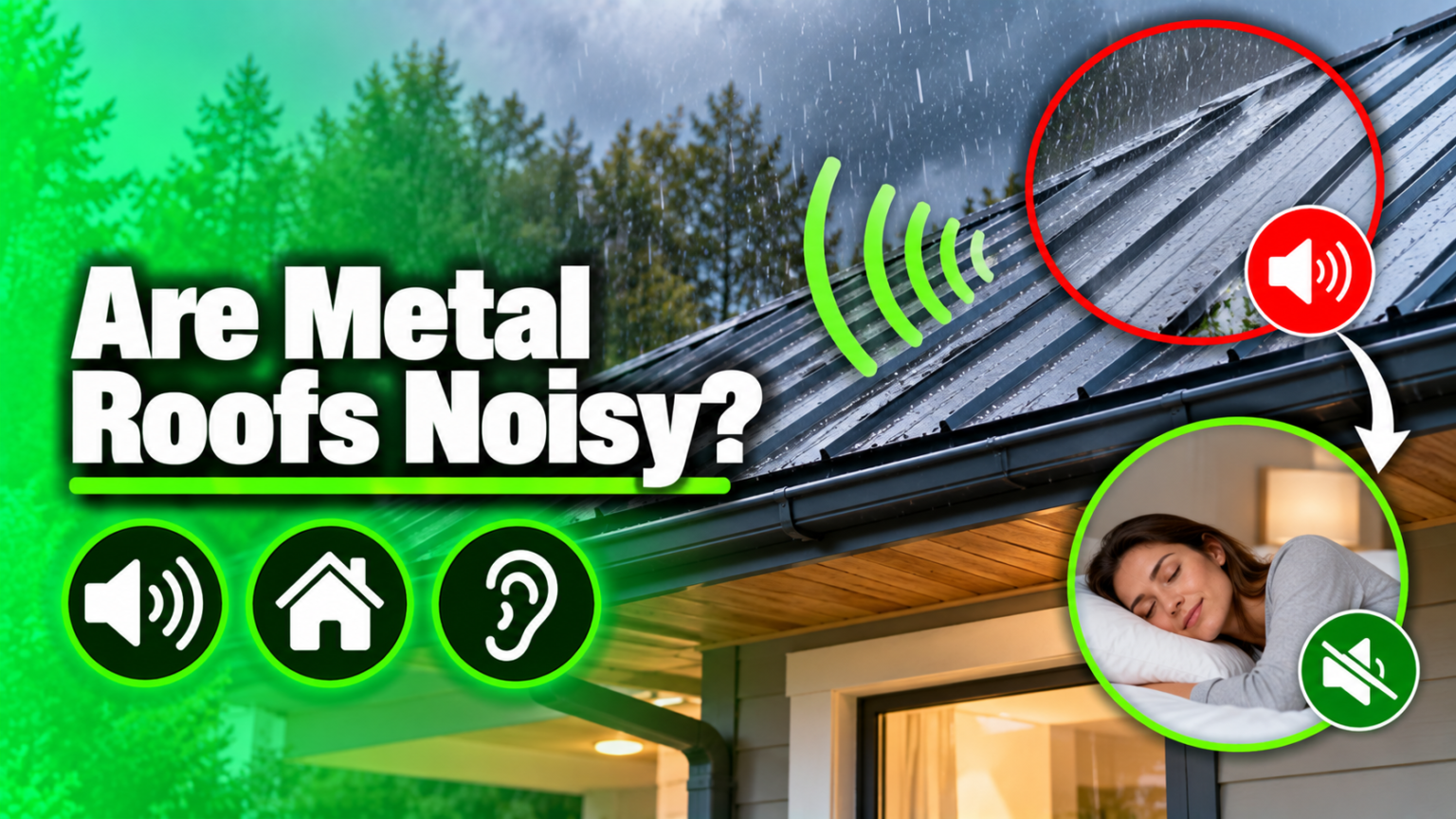
If you’re thinking about installing a metal roof, you’ve probably come across warnings that it will sound like a drum every time it rains. This is one of the most common concerns homeowners have, and it often stops people from choosing metal roofing even though it offers great durability and long-term value. In this article, we’ll break down the real answer to “are metal roofs noisy,” explain what actually causes noise, and show you how to keep your roof quiet no matter what the weather brings.
Are Metal Roofs Noisy? Quick Answer
The short answer is: not usually, if installed correctly. A metal roof that is installed over solid decking, with proper insulation and underlayment, sounds very similar to an asphalt shingle roof during rain. The noisy metal roof reputation mostly comes from older barns, sheds, and carports where metal panels are attached directly to open framing with no insulation underneath at all. So the real question isn’t whether metal itself is loud — it’s how the roof was built.
Why People Think Metal Roofs Are Noisy
The Barn/Shed Roof Myth
Most people’s mental image of a “loud metal roof” comes from farm buildings. These structures usually have thin metal panels screwed straight onto wooden beams, with open air underneath and no insulation layer at all. When rain or hail hits that kind of surface, the sound bounces around freely and gets amplified, which is very different from how a modern residential metal roof is built.
Old Metal Roofing Without Insulation
Older homes that had metal roofs installed decades ago often lacked the underlayment and insulation materials that are standard today. Without anything to absorb vibration, every raindrop or hailstone created a sharp, hollow sound that traveled straight into the living space below.
Movies/Media Perception
Pop culture hasn’t helped either. Films and TV shows often use exaggerated rain-on-tin-roof sound effects for dramatic effect, which reinforces the idea that all metal roofing is inherently loud, even though real-world modern installations behave very differently.
What Actually Affects Metal Roof Noise Levels
Several construction factors determine how much sound a metal roof produces and how much of that sound actually reaches the rooms inside your house.
Type of Decking Used (Solid vs. Open)
Solid decking, usually plywood or OSB boards installed under the metal panels, dramatically reduces sound transfer compared to open-frame construction. Open decking allows sound waves to travel freely, while solid decking acts as a barrier and absorbs vibration.
Insulation and Underlayment
A layer of insulation or synthetic underlayment between the metal panels and the decking cushions impact sound. This is one of the single biggest factors in whether a metal roof feels noisy or peaceful during a storm.
Roof Slope/Pitch
Steeper roofs tend to shed rain and hail faster, which can actually reduce the total contact time between falling debris and the roof surface, slightly lowering perceived noise compared to a very low-slope roof.
Type of Metal Panel (Standing Seam vs. Corrugated)
Standing seam panels are installed with hidden fasteners and interlocking seams, which tends to produce a quieter result than corrugated panels, which have more exposed surface and often use exposed screws.
Fastener Type (Exposed vs. Hidden)
Exposed fasteners can loosen over time, creating small vibrations and rattling sounds. Hidden fastener systems, common in standing seam roofing, avoid this issue almost entirely.
Attic Space and Ventilation
A well-ventilated attic space with adequate insulation acts as a sound buffer between the roof surface and your ceiling, absorbing much of the noise before it ever reaches living areas.
Metal Roof Noise During Rain
When installed properly, rain on a metal roof produces a soft, steady patter that many homeowners describe as pleasant rather than disruptive. It’s a common myth that metal roofs are noisy during rain — in reality, with solid decking and insulation, the sound is muffled significantly before it reaches indoor spaces.
Comparing Rain Noise: Metal vs. Asphalt Shingles vs. Tile
| Roofing Material | Typical Rain Noise Level | Notes |
|---|---|---|
| Metal (with proper insulation) | Low to Moderate | Comparable to shingles when insulated |
| Asphalt Shingles | Low | Naturally absorbs sound due to material density |
| Metal (uninsulated, open frame) | High | Common in barns/sheds, not typical homes |
| Clay/Concrete Tile | Low | Heavy material dampens sound naturally |
| Wood Shakes | Low to Moderate | Absorbs some sound but can amplify wind noise |
Metal Roof Noise During Hail and Storms
Hail Impact Sound Explained
Hail creates a sharper, more percussive sound than rain because of the higher impact force. On an insulated metal roof, this sound is dulled significantly, often sounding similar to hail hitting a shingle roof, just with a slightly different tone.
How Insulation Reduces Hail Noise
Insulation acts like a sound-dampening blanket, absorbing the shock of impact before vibrations can travel through the roof structure and into your attic or ceiling.
Metal Roof Noise vs. Other Roofing Materials
Metal vs. Asphalt Shingles
Asphalt shingles are naturally quieter because of their dense, layered material, but a properly insulated metal roof closes this gap almost completely, making the difference barely noticeable in everyday use.
Metal vs. Clay/Concrete Tile
Tile roofs are heavier and naturally sound-dampening, giving them a slight edge in noise reduction, though the difference is minor once metal roofing is properly insulated.
Metal vs. Wood Shakes
Wood shakes absorb rain sound well but can create more noise in windy conditions due to their layered, uneven surface, compared to a smooth, well-installed metal panel roof.
How to Reduce Noise on a Metal Roof
If you already have a metal roof or are planning one, here are practical ways to keep it quiet:
- Adding Solid Decking: Install plywood or OSB decking underneath the panels instead of leaving open rafters exposed.
- Using Sound-Deadening Insulation: Spray foam or rigid foam insulation between the decking and panels significantly cuts down on impact noise.
- Installing Sound-Absorbing Underlayment: Synthetic or felt underlayment adds an extra buffer layer that muffles vibration.
- Choosing the Right Panel Profile: Standing seam panels with hidden fasteners tend to perform better acoustically than exposed-fastener panels.
- Proper Attic Insulation: A well-insulated attic space blocks sound from traveling down into living areas.
Does Roof Pitch Affect Noise Levels?
Yes, though the effect is modest. Steeper roofs allow rain and hail to slide off faster, reducing the total time sound-producing impacts occur on any single spot. Low-slope or flat metal roofs may experience slightly more pooling and prolonged contact with rain, which can result in a bit more sustained noise during heavy storms.
Common Myths About Metal Roof Noise
Myth: All Metal Roofs Are Loud
This confuses uninsulated agricultural buildings with modern residential installations, which are built completely differently.
Myth: You Can Hear Every Raindrop
With solid decking and insulation, individual raindrop sounds blend into a soft, ambient patter rather than distinct, sharp noises.
Myth: Metal Roofs Amplify Thunder
Thunder is an atmospheric sound, not something a roof material can amplify. This myth likely comes from confusing thunder with hail or heavy rain impact sounds.
Pros and Cons of Metal Roofs (Noise-Related Focus)
Benefits Beyond Noise (Durability, Lifespan, Energy Efficiency)
Metal roofs typically last 40 to 70 years, resist fire and pests, and reflect heat effectively, which can lower cooling costs in warmer climates.
Noise-Related Drawbacks and How to Manage Them
The main drawback is the upfront cost of proper insulation and solid decking, but this investment pays off through better acoustic performance and improved energy efficiency over the roof’s lifespan.
Frequently Asked Questions (FAQs)
Are metal roofs louder than shingle roofs?
Not significantly, when metal roofs are installed with solid decking and insulation. The noise difference becomes minimal in most residential settings.
Do metal roofs make noise when it’s windy?
Properly installed and fastened metal roofs generally don’t creak or rattle in wind. Noise issues usually point to loose fasteners or panels that need maintenance.
Can you soundproof a metal roof?
Yes. Adding insulation, solid decking, and sound-absorbing underlayment can soundproof a metal roof effectively against rain, hail, and wind noise.
Are standing seam metal roofs quieter than corrugated ones?
Generally yes, because standing seam panels use hidden fasteners and interlocking seams, reducing vibration and rattling compared to exposed-fastener corrugated panels.
Does snow make metal roofs noisy?
Snow itself is quiet on any roof material, but sliding snow (common on metal roofs due to their smooth surface) can create a brief sliding or shifting sound as it moves off the roof.
Conclusion
So, are metal roofs noisy? Not inherently — the noise level depends almost entirely on how the roof is installed. With solid decking, quality insulation, and the right panel type, a metal roof can be just as quiet as any traditional roofing material, while offering better durability and a longer lifespan. If noise is a concern, focus on proper installation rather than avoiding metal roofing altogether.
Related Articles
How Tall Is a Regular Door? Standard Sizes Explained
How to Install a New Basement Window: Complete Step-by-Step Guide