


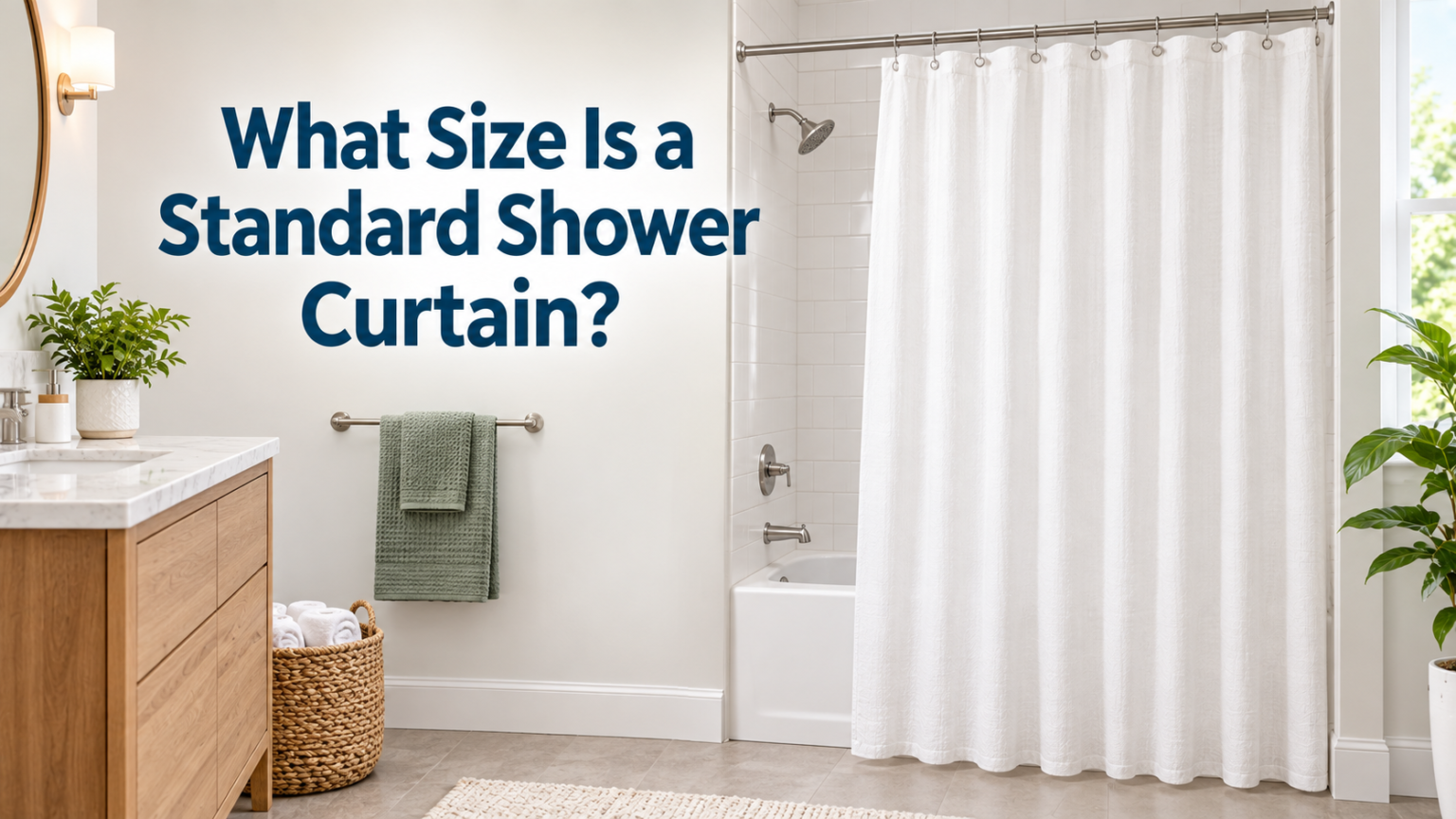

If you’re replacing an old shower curtain or setting up a new bathroom, one of the first questions that comes to mind is what size is a standard shower curtain. Getting the right size matters more than most people realize, because a curtain that is too short lets water splash onto the floor, while one that is too long drags and collects mildew.
The good news is that shower curtain sizing follows a fairly consistent industry standard, which makes shopping much simpler once you know the numbers.
This guide walks through the standard dimensions, the common size variations you’ll find in stores, and how to measure your own shower so you buy the right fit the first time. We’ll also cover liner sizing, since curtains and liners aren’t always identical in size. By the end, you’ll know exactly which size works best for your bathroom setup.
Standard Shower Curtain Size
The standard shower curtain size sold in most stores is 70 inches wide by 72 inches long. This size was designed around the typical dimensions of a standard bathtub or shower stall, which usually measures around 60 inches across. The extra width beyond the tub’s opening allows the curtain to overlap the edges slightly, keeping water inside the shower area instead of spraying onto the bathroom floor. The 72-inch length is tailored to fit a standard shower rod height, which is typically mounted between 72 and 75 inches from the floor, leaving just enough clearance so the curtain doesn’t drag.
This 70×72 size has become the default because it fits the vast majority of homes built with standard bathroom fixtures. Most manufacturers, from budget retailers to premium home brands, produce their basic curtain lines in this exact measurement, which is why it’s labeled “standard” on packaging.
Common Shower Curtain Sizes
While 70×72 inches is the most widely available size, shower curtains actually come in several variations to suit different shower shapes and heights. Knowing these options helps you choose correctly if your bathroom doesn’t match the typical layout.
Standard (70 x 72 Inches)
This is the size most commonly stocked in stores and matches a typical shower rod height and standard tub width. It works for the overwhelming majority of bathroom setups without any adjustment. If you’re unsure which size to buy, this is almost always the safest starting point.
Extra-Long (70 x 84 or 72 x 84 Inches)
Extra-long curtains are made for bathrooms with taller ceilings or shower rods mounted higher than the standard height. They prevent the awkward gap that appears when a standard curtain is hung too high, keeping water properly contained. These are popular in newer homes where ceiling heights tend to be taller than older construction.
Extra-Wide (108 x 72 Inches)
Extra-wide curtains are designed for larger tubs, wraparound rods, or showers with more than one entry point. Because they cover significantly more surface area, they reduce the gaps that a standard-width curtain would leave on wider fixtures. This size is common in walk-in showers that use curved or L-shaped rods.
Small or Stall Size (54 x 78 Inches)
Stall-size curtains are narrower and taller, built specifically for compact corner showers rather than full-length tubs. Their narrower width prevents excess fabric bunching in a smaller space, while the added length suits taller, boxed-in stall enclosures. This size is common in older homes, apartments, and half-bathrooms with limited shower footprints.
Shower Curtain Liner Sizes
A shower curtain liner is a separate, water-resistant layer that hangs inside the decorative outer curtain. Liners are usually sized close to the curtain but with a few practical differences worth understanding.
Standard Liner Size vs. Curtain Size
Most liners are sold in the same 70×72-inch standard size as the outer curtain, allowing both to hang from the same rod using shared rings. This matching size keeps the liner tucked neatly behind the decorative curtain without excess overhang. When buying separately, checking that both pieces share the same width and length keeps installation simple.
Why Liners Are Sometimes Slightly Smaller?
Some liners are cut marginally narrower or shorter than the outer curtain so they sit inside the tub rather than draping over the edge. This slight size difference helps direct water back into the basin instead of letting it wick down the outside of the tub. If your liner feels a touch smaller than your curtain, it’s usually intentional rather than a sizing mistake.
How to Measure Your Shower for the Right Curtain Size?
Standard sizing works for most homes, but measuring your own shower before buying prevents returns and mismatched fits. The process only takes a few minutes with a tape measure.
Measuring Width
Measure the distance between the two points where your shower rod is mounted, wall to wall or along the curved rod if applicable. Add a few extra inches to this number, since curtains are meant to overlap the tub edges rather than sit flush against them. This overlap is what keeps splashing water contained inside the shower.
Measuring Length
Measure from the bottom of the rod down to just above the tub floor or shower base, accounting for where you want the curtain to end. Most curtains look best when they stop an inch or two above the tub surface rather than touching it. This gap prevents the fabric from sitting in standing water and developing mold.
Accounting for Rings and Rod Clearance
Shower curtain rings typically add one to two inches of drop between the rod and the top of the curtain itself. When calculating final length, factor this ring clearance in so the curtain doesn’t end up shorter than expected once hung. Skipping this step is one of the most common reasons a “correctly measured” curtain ends up too short.
Choosing the Right Size for Your Bathroom
The best size ultimately depends on your specific shower or tub setup rather than a single universal answer. Matching the curtain type to your bathroom layout avoids gaps, dragging, or excess fabric.
Standard Tub-and-Shower Combo
For a typical bathtub-shower combination with a standard rod height, the 70×72-inch size works without modification in nearly every case. This is the most common bathroom layout in both older and newer homes. Sticking with the standard size here keeps shopping simple and avoids overpaying for a specialty size you don’t need.
Walk-In or Stall Showers
Compact stall showers without a tub generally call for the narrower 54×78-inch size to avoid excess bunched fabric. The added length compensates for the taller, boxed-in shape common in stall enclosures. Choosing standard-width curtains for these spaces often results in a curtain that overlaps awkwardly at the sides.
High Ceilings or Clawfoot Tubs
Bathrooms with taller ceilings, raised rods, or clawfoot tubs that use ceiling-mounted rings usually need the extra-long 84-inch option. Without this added length, a visible gap appears between the tub edge and the bottom of the curtain. Clawfoot tub setups in particular often require this longer size due to how high their rings are typically mounted.
Extra-Wide or Double Showers
Wide bathtubs, walk-in showers with multiple openings, or curved rods generally perform best with the 108-inch extra-wide option. This wider coverage prevents the water leakage that happens when a standard curtain doesn’t fully span the opening. It’s especially useful in primary bathrooms designed with larger-than-average fixtures.
Comparison Table: Shower Curtain Sizes at a Glance
| Size Type | Dimensions | Best For | Typical Rod Height |
| Standard | 70 x 72 in | Typical tub-shower combo | 72-75 in |
| Extra-Long | 70/72 x 84 in | Tall ceilings, clawfoot tubs | 78 in or higher |
| Extra-Wide | 108 x 72 in | Wide tubs, double showers | 72-75 in |
| Stall / Small | 54 x 78 in | Corner or stall showers | 72-75 in |
Frequently Asked Questions
Is 70×72 inches the only standard size available?
No, 70×72 inches is the most common size, but extra-long, extra-wide, and stall sizes are widely available for different bathroom layouts.
Do the curtain and liner need to be the exact same size?
Not necessarily. Liners are often the same size as the curtain or slightly smaller so they tuck neatly inside the tub while the curtain hangs outside.
What size curtain works best for a clawfoot tub?
Extra-long curtains, typically 84 inches, work best for clawfoot tubs since their rings are usually mounted higher than a standard rod.
Can a shower curtain be cut down to a smaller size?
Yes, curtains can be trimmed to fit smaller spaces, though hemming the cut edge helps prevent fraying over time.
Conclusion
Knowing what size is a standard shower curtain makes shopping for your bathroom far less confusing. The 70×72-inch standard fits most tub-shower combinations, while extra-long, extra-wide, and stall sizes cover the less common bathroom layouts.
Measuring your own shower rod width, length, and ring clearance before buying is the most reliable way to avoid a curtain that’s too short or too wide. Matching your liner size to your curtain, or choosing an intentionally smaller liner, also helps keep water properly contained. With these standard measurements and sizing tips in mind, picking the right shower curtain becomes a quick, straightforward decision rather than a guessing game.
Related Articles
What is a Fortified Roof? Complete Guide to Storm-Resistant Roofing
How to Get Rid of Roof Rats: Complete Guide 2026
How to Clean Gutters With Gutter Guards Safely: Step-by-Step Guide




