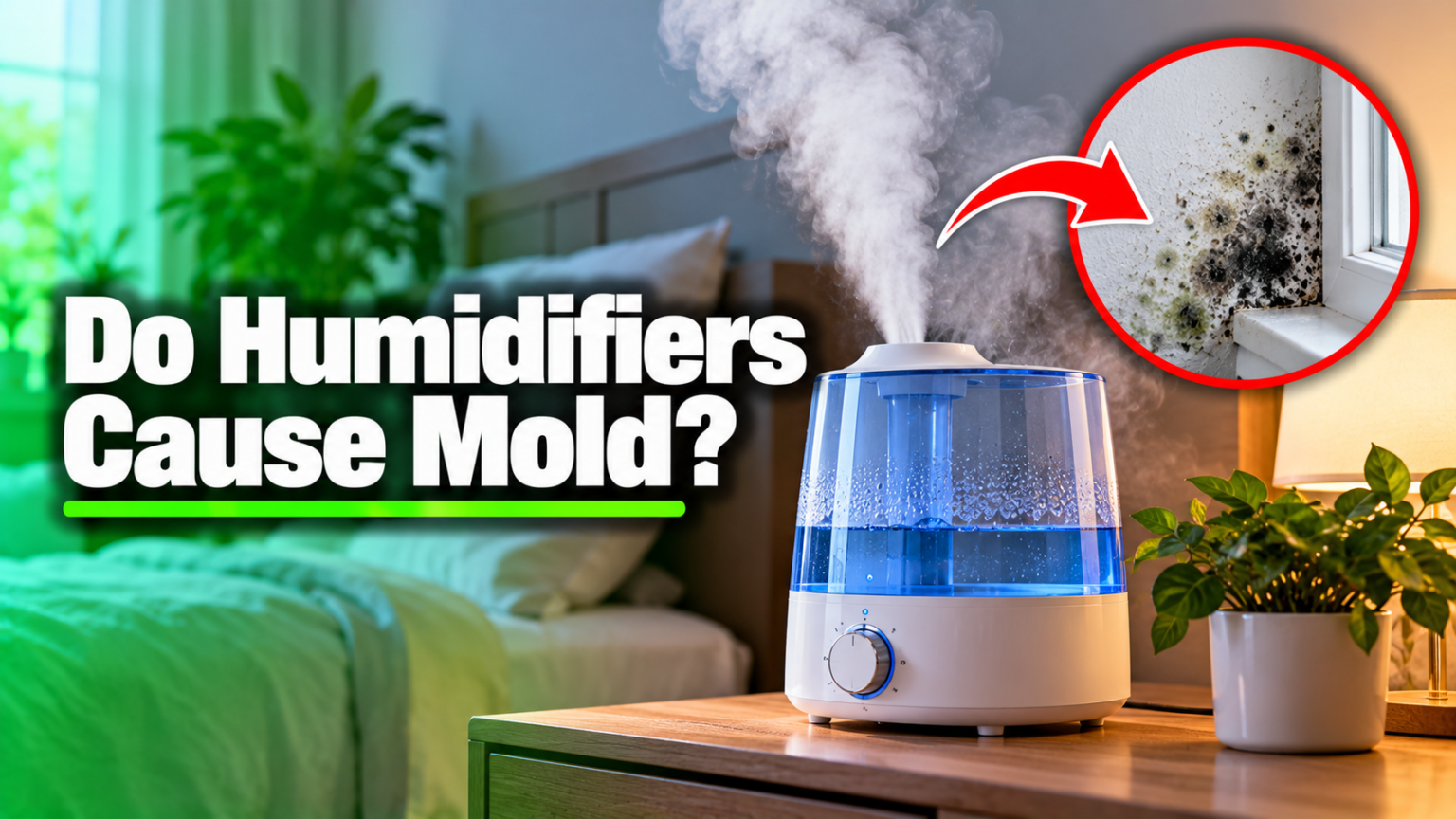

A humidifier does not cause mold by itself. Mold shows up in two situations: when the humidifier pushes the moisture in your room too high, or when the tank gets dirty and sprays spores into the air. Both are easy to control once you know what to watch. Keep the room between 30% and 50% humidity, clean the unit on a schedule, and a humidifier stays a helpful tool instead of a mold problem.
Here is exactly how mold gets started around a humidifier, which types are riskiest, and the simple routine that keeps it from ever happening.
How mold actually starts around a humidifier
Mold needs three things to grow: moisture, a surface to land on, and a little time. A humidifier only touches the first one. It adds water to the air. That water is helpful when your home is dry, but it turns into a problem if there is too much of it or if the machine itself becomes a breeding ground.
So the humidifier is rarely the thing that grows mold. The damp wall behind your curtains, the cold window it fogs up, or the slimy water sitting in the tank does. That is good news, because it means you are managing two clear risks, not fighting the appliance itself.
The takeaway: a humidifier is a moisture source. Mold grows where that moisture collects or sits still. Control both spots and you have no mold.
Cause 1: too much humidity in the room
The first way a humidifier leads to mold is by making the whole room too damp. When you run it high or leave it on all day, the extra moisture settles on cold surfaces like windows, outside walls, and the corners of closets. Those damp spots are where mold quietly takes hold.
Mold starts growing on surfaces once relative humidity climbs above about 50% to 55%. Dust mites, another common trigger for allergies and asthma, thrive above 50% and multiply fast above 60%. So if you are running a humidifier to clear a stuffy nose while the room sits at 65%, you may be feeding the exact problem you are trying to fix.
The warning signs are visible. If you see water beading on the inside of your windows in the morning, or the air feels heavy and sticky, the humidity is too high. Turn the unit down or move it, and the condensation should stop.
Cause 2: a dirty tank that sprays spores
The second cause is the humidifier itself. Any tank that holds standing water becomes a home for microorganisms. A slimy film called biofilm, the pink, gray, or black coating you sometimes see inside a tank, can form in as little as 48 hours. That film harbors mold, yeast, and bacteria.
The trouble is what happens next. When the humidifier runs, it does not filter this out. It sends whatever is growing in the tank straight into the air you breathe. Cool mist units, especially ultrasonic ones, are very good at this because they fling tiny droplets of tank water directly into the room.
Breathing that mist is not harmless. In some people it can inflame the lungs, and a contaminated humidifier is linked to a condition sometimes called humidifier lung. The young, the elderly, and anyone with a lung condition or allergies are the most sensitive. This is why cleaning is not optional maintenance, it is the core of using a humidifier safely.
Which humidifiers are most likely to grow mold?
Not every humidifier carries the same risk. The design decides how much standing water sits around and whether the mist can carry spores. Here is how the common types compare.
| Type | Mold risk | Why | Upkeep |
| Cool mist (ultrasonic / evaporative) | Higher | Standing water at room temperature; ultrasonic units spray whatever is in the tank into the air | Empty and dry daily, clean every 3 days |
| Warm mist (steam) | Lower | Boils water, which kills most microbes before the mist leaves the unit | Still needs regular cleaning for scale |
| Whole-house (furnace-mounted) | Lowest | Connected to the water line with no standing reservoir; moisture is controlled and spread evenly | Change the pad yearly, service with the HVAC system |
If you are shopping and worried about mold, a warm mist or whole-house unit is the safer bet. If you already own a cool mist humidifier, you do not need to replace it. You just need a cleaning habit, which the next section covers.
What is the safe humidity level?
Keep indoor humidity between 30% and 50%. That range is comfortable, it keeps dry skin and stuffy noses away, and it sits below the point where mold and dust mites take off. The EPA’s guidance on home humidifiers points to this same window, and it warns against letting a room climb higher.
Above 60%, moisture starts to condense on walls and windows, and that is where bacteria and mold settle and grow. The gap between 50% and 60% is your buffer, not your target. Aim for the middle of the safe range, around 40% to 45%, and you have room to spare.
You cannot judge humidity by feel alone, so measure it. A digital hygrometer costs about $10 to $20 and is the single most useful tool for this. Put it in the same room as the humidifier and glance at it now and then. If the number creeps toward 50%, turn the unit down. Many humidifiers have a built-in humidistat that does this for you, so use it if yours has one.
How to use a humidifier without growing mold
Preventing mold comes down to two things: keeping the room in range and keeping the tank clean. Follow these steps and you will not have a problem.
- Set a target of 30% to 50% and measure it. Place a hygrometer in the room and turn the humidifier off or down when humidity reaches 50%. Do not run it all day out of habit.
- Empty the tank daily. Standing water is the number-one cause of microbial growth. When you are done for the day, pour out the water, wipe the surfaces dry, and let it air out before the next use.
- Use distilled or demineralized water. Tap water carries minerals that build up as scale, and that rough scale gives mold and bacteria a surface to cling to. Distilled water keeps the inside cleaner and cuts down on the white dust that settles on furniture.
- Deep clean every three days. Scrub the tank with a brush and remove any scale, film, or deposits. In the absence of the manufacturer’s own advice, the EPA suggests cleaning water-contact surfaces with a 3% hydrogen peroxide solution, then rinsing well so no chemicals get into the air. If someone in the home has allergies or asthma, clean this often without fail.
- Mind the placement. Set the unit on a flat, waterproof surface, off the floor, and a few feet away from walls, curtains, and cold windows. Mist that settles on those surfaces is what starts mold, so give it space to disperse.
- Replace filters and pads on schedule. Evaporative units use a wick filter that slowly clogs and holds moisture. Change it as the manufacturer directs, usually every one to three months, and change a whole-house humidifier pad yearly.
If you only remember two numbers, make them these: 30-50% humidity, and a full clean every three days. Those two habits stop nearly every humidifier mold problem before it starts.
Signs your humidifier already has mold
Sometimes the problem has already begun. Catch it early and a deep clean usually fixes it. Watch for these signs:
- A musty or sour smell coming from the unit when it runs.
- A slimy pink, gray, or black film inside the tank or on the parts that touch water.
- Visible dark spots on the filter, the wick, or the tank walls.
- Fog on your windows or a damp feel in the room, which points to humidity that is too high.
If you spot any of these, unplug the unit and give it a full clean with a 3% hydrogen peroxide solution before using it again. The Consumer Product Safety Commission’s humidifier alert makes the same point: a dirty humidifier can spread microorganisms, so regular cleaning matters. If contamination keeps coming back even after a thorough clean, it is time to replace the humidifier.
Conclusion
A humidifier does not cause mold on its own. Mold appears only when the room gets too damp or the tank goes dirty, and both are simple to control. Keep humidity between 30% and 50%, measure it with a cheap hygrometer, empty and dry the tank daily, and deep clean every three days with distilled water in the tank. Do that and you get comfortable, healthy air with no mold to worry about.
Frequently asked questions
Can I leave my humidifier on all night?
Yes, as long as the room stays in the 30% to 50% range. Use the built-in humidistat or a hygrometer so it does not overshoot. If windows fog up by morning, the setting is too high, so turn it down.
Does using distilled water stop mold?
It helps, but it does not replace cleaning. Distilled water cuts scale and mineral dust, which gives mold fewer surfaces to grip. A tank left sitting will still grow slime, so you still need to empty, dry, and clean it regularly.
Are cool mist humidifiers worse for mold than warm mist?
Cool mist units carry more risk because they hold room-temperature standing water and spray it into the air without heating it. Warm mist units boil the water first, which kills most microbes. Either is safe when cleaned on schedule.
What humidity level prevents mold?
Keep it between 30% and 50%. Mold and dust mites take off above 50% to 60%, so staying under that line is the goal. Around 40% to 45% is a comfortable target that leaves you a safety margin.
How often should I really clean my humidifier?
Empty and dry it every day, and do a full scrub every three days. Bump the deep clean up if anyone in the home has allergies or asthma, or if you notice any smell or film sooner.
Related Articles
How to Improve Home Security with Better Locks: The Complete 2026 Guide
How Can You Make Saltillo Floors Shine? Complete Guide 2026