
To get rid of birds on your roof, work in three steps and in this order: take away the food and water that draw them, physically block the spots where they land and nest, then add a deterrent only on the spots you could not block. Skip the first two steps and you are just moving the birds a few feet over. They come back the next morning.
Pigeons, sparrows, and starlings pick roofs because a roof gives them what they need: a safe, high perch, a dry place to nest, and food nearby. Fix those reasons and the roof stops being worth their time. Here is how to do it so they leave and stay gone.
Why birds keep landing on your roof
Birds land on your roof for three simple reasons. It is high and safe, which lets them watch for cats and other threats. It is warm and sheltered, especially under eaves, in gutters, and around a chimney. And there is food close by, which is usually the real pull.
Pigeons and sparrows will nest in gaps under roof tiles, in gutters, in roof vents, and in the gap behind a loose fascia board. Starlings push into roof spaces through small holes and can be loud and messy once they are in. Knowing the reason matters, because the fix is different for a bird that only perches versus one that has already built a nest inside.
The bird also changes the plan. Pigeons are creatures of habit and keep returning to the same ledge, so they respond well to physical blocks like spikes and netting. Sparrows and starlings are small enough to slip through gaps you might not even notice, so for them, sealing holes matters more than any spike. A single bird passing through is not a problem. The time to act is when you see them landing in the same spot each day, carrying twigs, or roosting overnight.
It is worth acting early for another reason. Bird droppings are acidic, and over time they eat into roof tiles, metal flashing, and paintwork. Nests block gutters and downpipes, which backs up water and can rot the timber underneath. Droppings and old nest material also carry germs, so a small bird problem left alone can turn into a repair bill and a health worry.
Step one: take away the food and water
The fastest way to make birds lose interest is to remove the free meal. A roof with nothing to eat nearby is a roof birds stop visiting.
Start with these:
- Move bird feeders well away from the house, or take them down for a few weeks while you deal with the problem.
- Keep bin lids shut tight and clear up any spilled food, pet food, or fallen fruit in the yard.
- Clean your gutters. Standing water and the bugs in rotting leaves are both food and drink for birds.
- Stop feeding them by hand. It feels kind, but it trains birds to treat your roof as a reliable stop.
- Cover vegetable patches and fruit trees with netting during the season, and pick up windfall fruit.
Water counts as much as food. A blocked gutter that holds water, a flat roof that pools after rain, or a pet bowl left out all give birds a reason to stay. Tip out standing water where you can, and fix the drainage that lets it collect.
Rule of thumb: if there is nothing to eat or drink within a short flight of your roof, most of the pressure drops on its own.
Step two: block the spots where they land and nest
Once the food is gone, close off the places birds use. This is the step that makes the fix last, because a blocked ledge or gap cannot be used no matter how much a bird wants to.
Walk the roof line (from a ladder, safely, or with binoculars from the ground) and look for:
- Gaps under tiles or slates, and any hole big enough for a sparrow to squeeze through.
- Open or loose roof vents and soffit vents.
- Spaces behind fascia boards and under the eaves.
- The chimney opening, if it has no cap.
Seal small gaps with wire mesh, a mortar repair, or purpose-made vent covers. Fit a chimney cap or cowl to keep birds out of the flue, a spot pigeons and jackdaws love. Cover larger open areas, like the underside of solar panels where pigeons nest, with mesh or clip-on panels. Blocking access does double duty: it stops this year birds and the next lot that would move into the same empty nest site.
One warning before you seal anything: make sure there is no live nest trapped inside first. More on that below.
Step three: pick a deterrent that actually works
Deterrents are the last step, not the first. Use them on the spots you could not block, like a long open ridge line or a flat parapet. The right one depends on the bird and the surface.
How the main deterrents compare
| Deterrent | How it works | Best for | Watch out for |
| Bird spikes | Blunt wires stop birds landing on a ledge or rail. | Narrow ledges, gutters, rails, the top of a parapet. | No good on wide flat areas; birds just land between runs. |
| Netting | A fine net seals off a whole area so birds cannot reach it. | Under solar panels, over courtyards, large open gaps. | Must be taut and well fixed, or birds get tangled. |
| Bird gel | A sticky, clear gel on a ledge feels unsafe underfoot. | Ledges and pipes where spikes would show. | Needs reapplying; can trap small birds if overused. |
| Reflective and scare items | Flashes of light and fake predators unsettle birds. | A quick, cheap first try while you fit the real fix. | Birds learn these are harmless within days or weeks. |
| Sonic / ultrasonic units | Play distress or predator calls to warn birds off. | Large open roofs and commercial sites. | Birds get used to a fixed pattern; results vary a lot. |
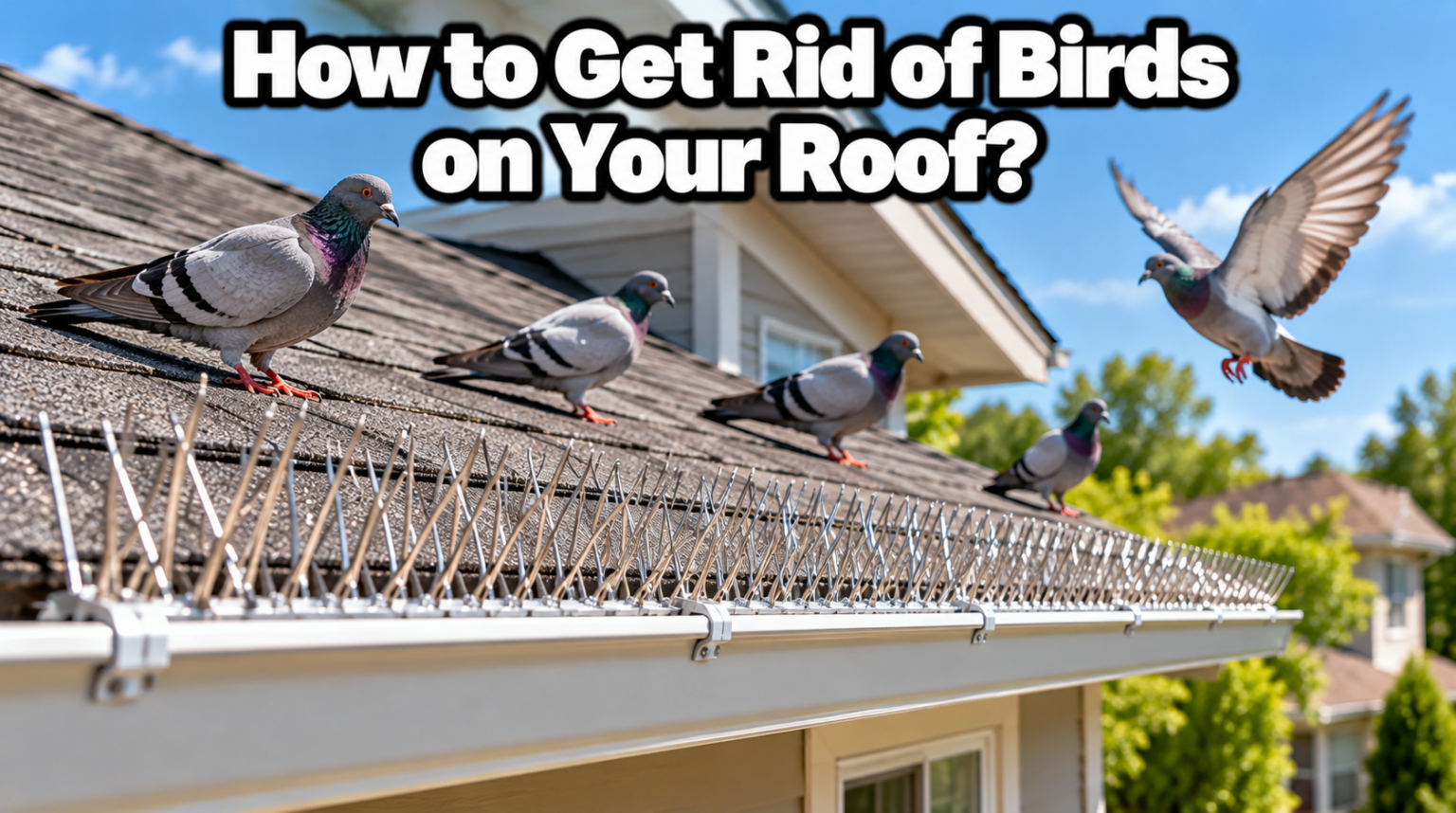
For most homes, spikes and netting do the heavy lifting because they are physical. A bird cannot get used to a spike the way it gets used to a flashing CD. Spikes suit the narrow spots, like gutters and ridge lines, where pigeons line up. Netting suits the bigger open areas, and the gap under solar panels where pigeons love to nest.
Bird gel is a good quiet option for a visible ledge where spikes would look harsh. For how and where it works best, the Rentokil bird gel guide is a useful read. Reflective tape, old CDs, and a plastic hawk can help on day one, but birds work out the trick fast, so treat them as a stopgap, not the answer.
Which method for which spot
Matching the method to the spot saves you money and a lot of wasted effort. Here is the quick map most homes need.
- Gutters and ridge lines: spikes. These are the narrow rails pigeons line up on, and spikes stop them cold.
- Under solar panels: a mesh skirt around the array. This is the single most common pigeon nest site on a modern roof.
- Chimney: a cap or cowl. It blocks nesting in the flue and keeps the chimney drawing properly.
- A visible flat ledge over a door or window: gel, so it stays discreet, or short spikes if looks do not matter.
- A large open flat roof: netting over the whole area, or a sonic unit if netting is not practical.
If you are not comfortable on a ladder, this is a job worth handing to a roofer or a pest controller. They fit spikes and netting cleanly, reach the awkward spots safely, and the work usually comes with a guarantee.
Short version: block first. Reach for a deterrent only on the spots you cannot physically close off, and prefer the physical ones (spikes, netting) over the ones birds can learn to ignore.
What about a nest that is already there?
If birds have already built a nest on or in your roof, stop before you touch it. In many places it is against the law to disturb an active nest, one with eggs or chicks in it, even on your own house.
In the United States, the Migratory Bird Treaty Act protects most wild birds and their active nests, and moving one without a permit can break federal law. The Cornell Lab explains the rules plainly in its guide on whether it is legal to move a nest. In the UK and many other countries, similar laws apply. Pigeons and a few other species are the usual exceptions, but check before you act.
The safe path is simple:
- If the nest is active, wait. Most birds finish and leave within a few weeks once the chicks can fly.
- Once it is empty, remove the nest, clean the spot, and wear a mask and gloves. Droppings and old nests carry germs.
- Then block the site straight away, so the next bird cannot move into the same gap.
If the nest is deep in a roof space, in a vent, or you are not sure of the species, call a licensed pest or wildlife controller. It is cheaper than guessing wrong.
Keep them from coming back
Getting birds off the roof once is easy. Keeping them off is about not letting the roof drift back to being a good spot. A few habits do most of the work.
- Clean gutters twice a year, so no water and food collect.
- Check your spikes, netting, and gel each spring. Fixings loosen and gel dries out.
- Reseal any new gaps as soon as you spot them, before a bird finds them first.
- Keep feeders and food well away from the house.
Do this and the birds move on to an easier roof. The droppings that eat into tiles and block gutters stop, and so does the noise at dawn.
Conclusion
Birds leave a roof for good when you fix the three things that drew them there. Take away food and water first, block every ledge, gap, and vent they use, then add spikes, netting, or gel only where you could not block. Never touch an active nest; wait until it is empty, clean up, then seal the spot. A roof with no food, no safe perch, and no way in simply is not worth their trouble, and they move on.
Frequently asked questions
What is the fastest way to get birds off my roof?
Remove nearby food and water, then put spikes or netting on the spots where they land. Scare items like a plastic hawk work for a day or two, but a physical block is what makes them leave for good.
Do ultrasonic bird repellers really work?
Results are mixed. Birds often get used to a fixed sound within days. They can help on a large open roof as one part of a plan, but they rarely solve the problem on their own.
Is it illegal to remove a bird nest from my roof?
Often yes, if the nest is active with eggs or chicks. In the US the Migratory Bird Treaty Act protects most wild birds. Wait until the nest is empty, or call a licensed controller.
Will bird spikes hurt the birds?
No. Spikes are blunt and only stop birds landing on a ledge. They do not spear or injure birds; they just make the surface an uncomfortable place to sit.
How do I stop pigeons nesting under my solar panels?
Fit a mesh skirt or clip-on panels around the edge of the array so pigeons cannot get underneath. Clear any existing nest first, once it is empty, then seal the gap.
Related Articles
What Is a 1/4 Bathroom? Full Guide + Cost & Layout Tips
How Deep Are Upper Kitchen Cabinets: Complete Guide 2026
Average Door Thickness: A Complete Guide to Standard Sizes and Measuring Tips