

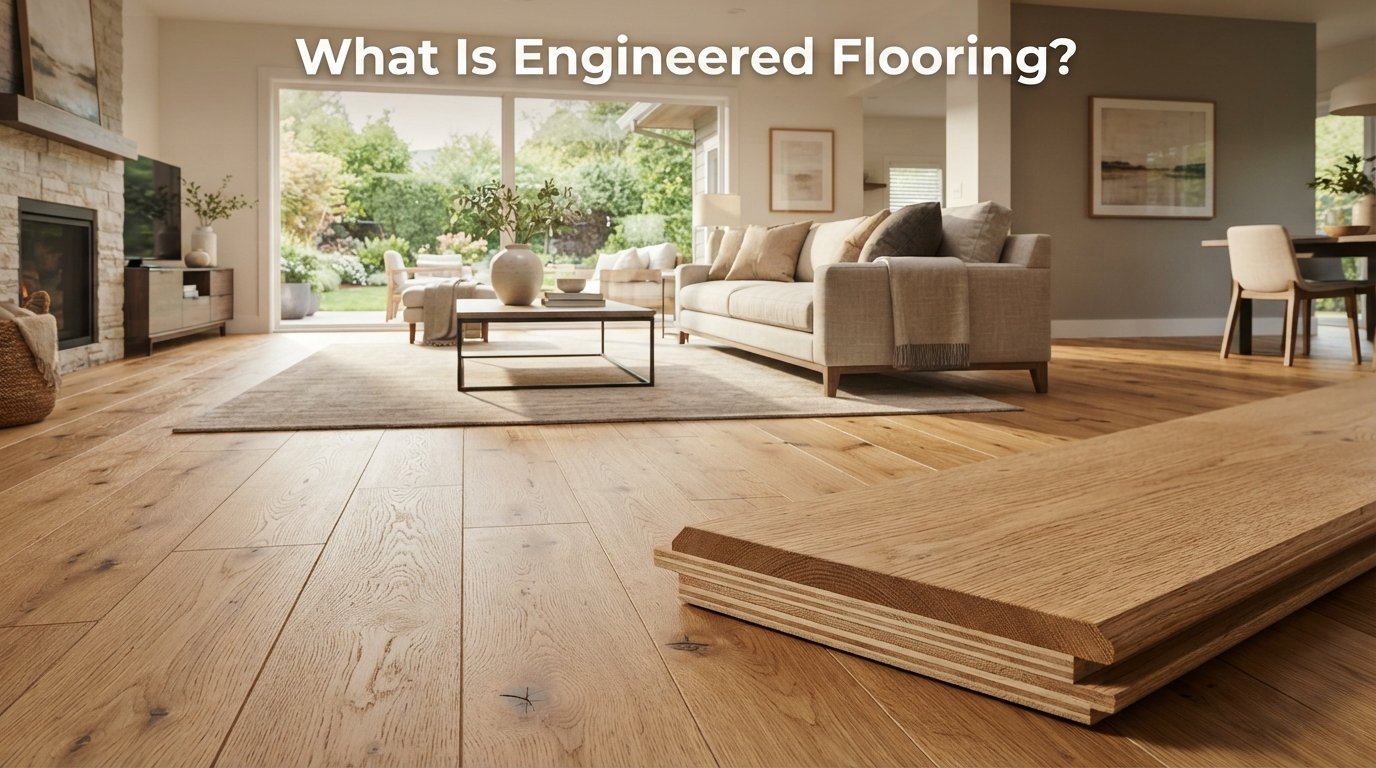

Engineered flooring is a multi-layered wood flooring product built with a real hardwood top layer bonded over several layers of plywood or high-density fiberboard. Unlike solid hardwood, which is one solid piece of timber, engineered flooring is manufactured in cross-layered sheets that resist warping and shrinking.
This construction gives it the natural beauty of real wood while making it more stable in changing temperature and humidity conditions. It works well in kitchens, basements, and homes with underfloor heating where solid wood usually struggles.
Because it costs less than solid hardwood but still looks authentic, it has become a favorite among homeowners renovating on a budget. Below, we break down everything you need to know before choosing it for your home.
Understanding the Structure of Engineered Flooring
Every engineered plank is built in layers, and each layer has a specific job to perform. The top layer gives it looks, while the lower layers give it strength and stability.
The Wear Layer
This is the topmost layer, made of real hardwood veneer such as oak, walnut, or maple. It is what you see and walk on, and its thickness determines how many times the floor can be sanded and refinished in the future.
The Core Layers
Beneath the veneer sit several layers of plywood or high-density fiberboard, arranged in a cross-grain pattern. This cross-layering is what prevents the plank from expanding or contracting unevenly with humidity changes.
The Backing Layer
The bottom layer, usually a thin veneer or balancing layer, keeps the plank flat and balanced. It prevents the board from cupping or bowing once installed on the subfloor.
Engineered Flooring vs. Other Flooring Types
People often confuse engineered flooring with solid wood, laminate, and vinyl. While they may look similar from a distance, their materials and performance differ a lot.
Engineered vs. Solid Hardwood
Solid hardwood is one piece of timber from top to bottom, making it more prone to warping in humid areas. Engineered flooring, on the other hand, is built to resist this movement while still having a genuine wood surface.
Engineered vs. Laminate
Laminate flooring uses a printed image layer to mimic wood, whereas engineered flooring has an actual wood veneer on top. This means engineered flooring feels and ages like real wood, while laminate stays purely synthetic.
Here is a quick comparison to make the differences clearer:
| Feature | Engineered Flooring | Solid Hardwood | Laminate | Vinyl/LVP |
| Top Surface | Real wood veneer | Solid wood | Printed image | Printed/vinyl layer |
| Moisture Resistance | Good | Poor | Moderate | Excellent |
| Refinishing | Limited (1-3 times) | Multiple times | Not possible | Not possible |
| Cost | Moderate | High | Low | Low to moderate |
| Underfloor Heating | Suitable | Usually not suitable | Sometimes suitable | Suitable |
Types of Engineered Flooring
Engineered flooring is not a single product; it comes in different species, finishes, and layer counts, giving buyers plenty of choice to match their interiors.
By Wood Species
Common species used for the top veneer include oak, walnut, maple, and hickory. Each species brings its own grain pattern, hardness level, and color tone, so the choice usually depends on the room’s style and foot traffic.
By Finish Type
Finishes range from matte and glossy to wire-brushed and hand-scraped textures. A matte finish hides scratches better, while a glossy finish gives a more polished, formal appearance.
By Number of Plies
Boards are available in three-ply, five-ply, or multi-ply constructions. More layers generally mean better stability and a longer lifespan, though the price rises accordingly.
Benefits of Engineered Flooring
The biggest reason people choose engineered flooring is the balance it strikes between authenticity and practicality. It offers real wood aesthetics without many of solid wood’s limitations.
Dimensional Stability
Because of its cross-layered core, engineered flooring resists expanding or contracting with seasonal humidity shifts. This makes it far less likely to develop gaps or buckling compared to solid wood.
Moisture and Heat Compatibility
Engineered flooring handles moisture better than solid hardwood, making it usable in kitchens and basements. It is also compatible with radiant underfloor heating systems, which solid wood generally cannot tolerate well.
Easier and Faster Installation
Many engineered floors come with click-lock edges, allowing floating installation without nails or glue. This reduces installation time and labor cost significantly compared to traditional hardwood nailing methods.
Drawbacks of Engineered Flooring
No flooring option is perfect, and engineered flooring has a few limitations worth knowing before purchase.
Limited Refinishing
Since the wear layer is thinner than solid wood, engineered floors can only be sanded and refinished a limited number of times. Once the veneer wears through, the floor generally needs replacement.
Quality Inconsistency
Not all engineered flooring is made equal; cheaper products use thinner veneers and lower-grade cores. Buyers need to check specifications carefully, as budget options may scratch or wear out faster.
Installation Methods
Engineered flooring can be installed using different techniques depending on the subfloor and the product type chosen.
Floating Installation
This click-lock method lets planks interlock without adhesive or nails, resting freely over an underlayment. It is the fastest method and is popular for DIY installation.
Glue-Down Installation
Here, planks are bonded directly onto the subfloor using adhesive, creating a very stable and quiet floor. This method works well over concrete subfloors and in larger rooms.
Nail or Staple-Down Installation
This traditional method secures planks onto a wooden subfloor using nails or staples. It is commonly used for thicker engineered boards in homes with plywood subfloors.
Cost of Engineered Flooring
Pricing varies widely based on wood species, veneer thickness, and brand quality, so it helps to understand the general range before budgeting.
Price by Quality Grade
Entry-level engineered flooring is generally the most affordable, while premium options with thicker veneers and exotic species cost significantly more. Mid-range products offer the best balance of durability and price for most households.
Installation Cost
Floating installation is usually the cheapest since it requires less labor and no adhesive. Glue-down and nail-down methods cost more due to additional materials and installation time.
Maintenance and Care
Keeping engineered flooring in good condition mainly involves simple daily habits rather than heavy upkeep.
Daily Cleaning Tips
Regular sweeping or vacuuming removes dust and grit that can scratch the surface over time. A slightly damp mop, rather than a soaking wet one, is recommended for occasional deeper cleaning.
What to Avoid
Standing water, harsh chemical cleaners, and excessive direct sunlight can all damage the wear layer over time. Furniture pads and rugs in high-traffic areas also help extend the floor’s lifespan.
How to Choose the Right Engineered Flooring
Selecting the best product depends on matching the floor’s specifications to your home’s needs and lifestyle.
Check the Wear Layer Thickness
A thicker veneer allows for more refinishing over the floor’s lifetime, so it is worth paying attention to this specification. Anything above 3mm is generally considered good for long-term durability.
Match the Core Quality
A plywood core is usually considered stronger than an HDF core for humid environments. Checking the core material helps ensure the floor performs well in your specific climate.
Engineered Flooring Brands and Market Comparison
Several established brands compete in the engineered flooring market, each focusing on different price points and finishes. Premium brands typically emphasize thicker wear layers and wider plank options, while budget brands focus on affordability with thinner veneers.
When comparing options, it is worth checking warranty length, veneer thickness, and core material rather than relying on brand name alone, since specifications vary even within the same company’s product lines.
Frequently Asked Questions
How long does engineered flooring last?
With proper care, engineered flooring typically lasts between 20 and 30 years, depending on veneer thickness and usage.
Can it be installed over existing flooring?
Yes, in many cases it can be installed over existing hard flooring as long as the surface is flat and stable.
Is engineered flooring waterproof?
It is water-resistant, not fully waterproof, so standing water should still be avoided.
Does it increase home value?
Yes, since it looks like genuine hardwood, it generally adds similar resale appeal at a lower cost.
Conclusion
So, what is engineered flooring in simple terms? It is a practical, budget-friendly alternative to solid hardwood that combines real wood beauty with better stability and moisture resistance. It suits most modern homes, especially areas where solid wood struggles, making it a smart long-term flooring choice.
Related Articles
How Many Bags of Mulch in a Yard Complete guide 2026
How to Make Drapery Curtains: A Complete Step-by-Step Guide
Can You Refinish Engineered Hardwood Floors? A Complete Guide 2026