


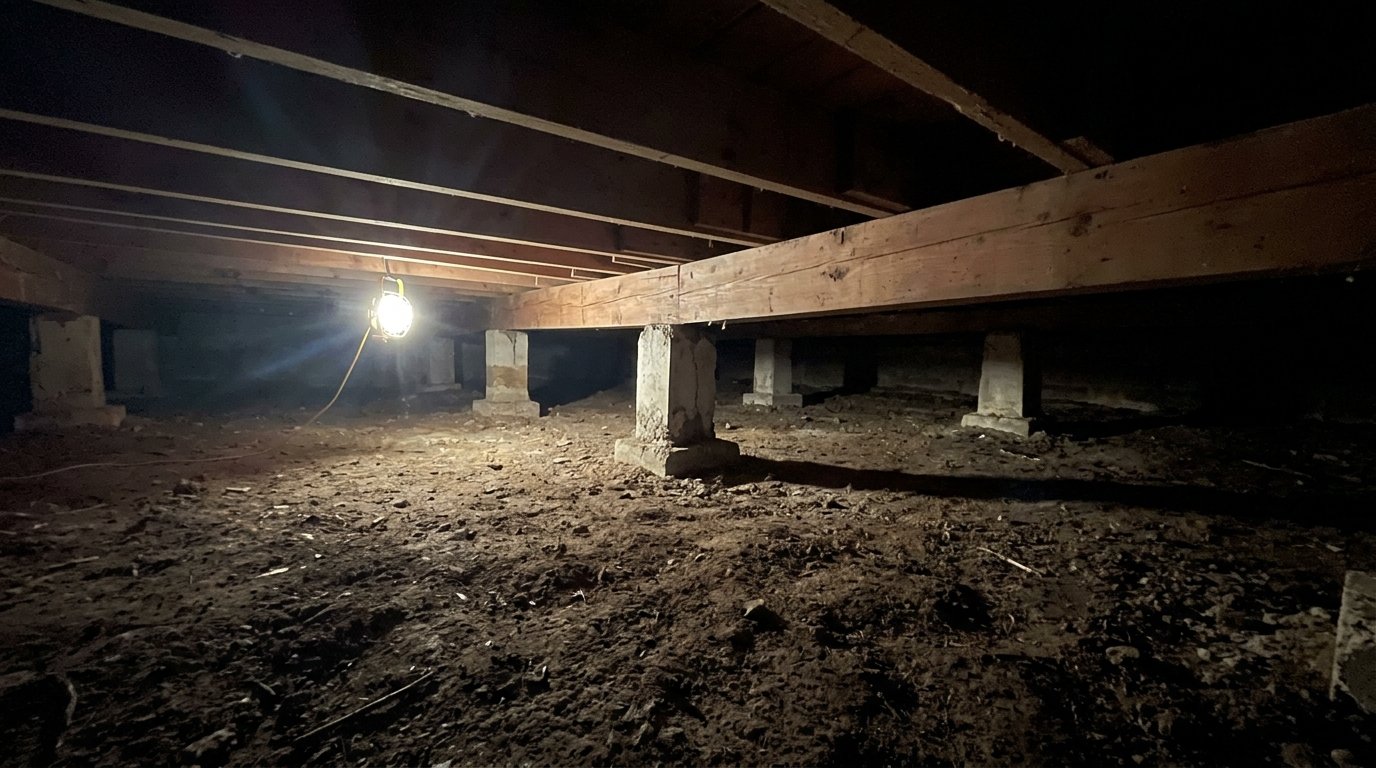

A sagging floor over a crawl space is one of the most common structural complaints homeowners report, and it almost never fixes itself.
Once the framing beneath a room starts to dip, the problem tends to grow worse with every season of moisture, weight, and shifting soil. Learning how to fix a sagging floor crawl space issue starts with understanding what is actually happening underneath the house, not just patching the surface above it.
This guide walks through the real causes, the repair steps professionals rely on, what the work usually costs, and how to keep the problem from coming back.
What Causes a Sagging Floor in a Crawl Space?
A sagging floor is almost always a symptom of something failing underneath it, not a problem with the flooring material itself. The three issues below show up most often during a proper crawl space inspection.
Excess Moisture and Water Damage
Crawl spaces sit close to the ground, so they naturally collect humidity, groundwater, and condensation throughout the year.
This constant dampness softens wood, feeds mold growth, and slowly rots the joists and beams that hold the floor up. Once wood loses strength from prolonged moisture exposure, it can no longer carry the weight above it, and the floor begins to dip.
Weakened or Rotted Floor Joists
Floor joists are the horizontal wood beams that run under the subfloor and carry most of the load in a crawl space. When joists are cut for plumbing or ductwork, undersized for their span, or attacked by rot and insects, they bend under pressure over time.
A joist that has lost a significant portion of its strength will sag in the middle, pulling the flooring above it down along with it.
Failing or Insufficient Support Posts
Most crawl space floors rely on a system of beams and vertical posts spaced out to share the load evenly across the foundation.
Wood posts can rot at the base, concrete piers can crack or shift, and posts that were never spaced closely enough will let the beam bow over the years. When even one support fails, the surrounding floor area loses its lift and starts to sag.
Warning Signs of a Sagging Crawl Space Floor
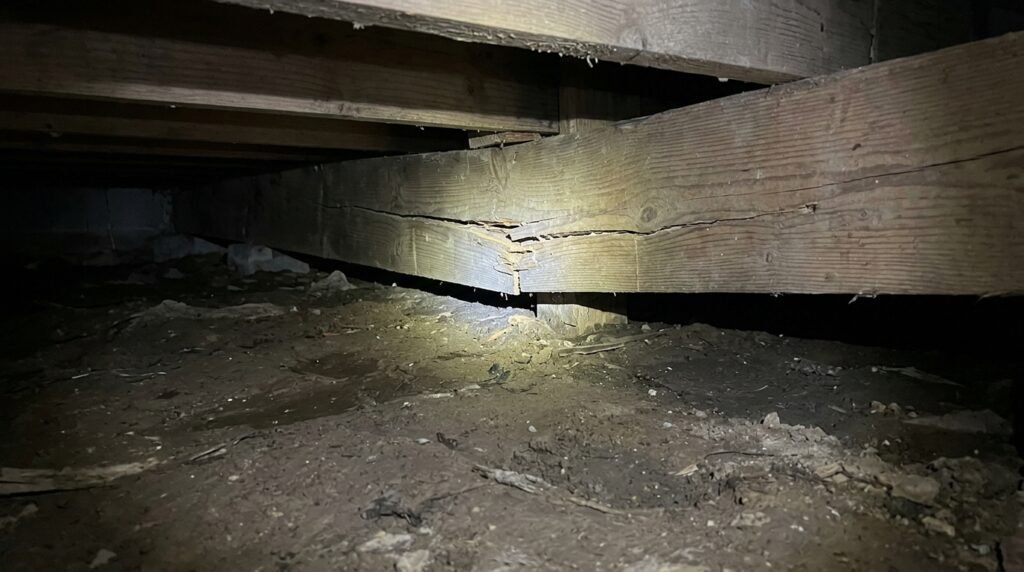
Most sagging floors don’t appear overnight; small warning signs usually show up long before the dip becomes obvious. Catching these signs early makes the eventual repair faster and far less expensive.
Bouncy, Soft, or Uneven Floors
If a floor feels springy or bounces when you walk across it, the joists beneath it are likely flexing more than they should. A soft spot, especially near a kitchen, bathroom, or exterior wall, usually points to rot or an undersized joist in that exact location.
Placing a marble or ball on the floor and watching it roll toward one side is a simple way to confirm an uneven slope.
Cracks in Walls, Tiles, or Ceilings
As a floor system shifts downward, the stress travels upward into the walls and ceiling connected to it. Drywall cracks near corners, grout lines breaking in tile floors, and gaps opening between baseboards and walls are common results.
These cracks tend to follow a diagonal pattern and reappear even after being patched, which is a strong clue that the movement is still ongoing.
Sticking Doors and Windows
When a floor sags, the door and window frames built into that wall shift slightly out of square. Doors that used to close easily may start sticking at the top or bottom, and windows can become harder to open or close smoothly.
This symptom is often dismissed as normal home settling, but paired with a visible dip in the floor, it usually points to a structural cause in the crawl space.
Step-by-Step Guide to Fix a Sagging Floor in a Crawl Space
Once the cause is confirmed, fixing a sagging floor crawl space problem follows a fairly consistent sequence regardless of who performs the work. The four steps below cover what actually happens during a proper repair.
Inspect the Crawl Space Thoroughly
A flashlight inspection of the entire crawl space is the only way to find the real source of the sag rather than guessing from above the floor. Check every joist, beam, and post for soft wood, cracks, water stains, and insect damage, paying close attention to areas near plumbing, exterior walls, and the lowest point of the dip.
Many homeowners bring in a structural inspector at this stage, since misdiagnosing the cause leads to repairs that don’t actually solve the problem.
Install or Replace Support Jacks and Posts
Adjustable steel jack posts are placed under the main support beam at the exact spots where the floor has dropped or where existing posts have failed. Each jack rests on a solid footing, often a precast concrete pad, so the load transfers safely into the soil instead of sitting on rotted wood or loose dirt.
The jacks are turned gradually over several weeks, lifting the floor a small fraction of an inch at a time to avoid cracking drywall or popping nails above.
Repair or Sister Damaged Floor Joists
Joists that are cracked, notched, or rotted but still structurally salvageable are typically repaired by sistering, which means bolting a new, healthy joist alongside the damaged one. Sistering restores the load-carrying capacity without the difficulty of removing a joist that is glued and nailed to the subfloor above it.
In cases where rot has spread too far for sistering to help, full joist replacement becomes necessary, even though it takes more labor and access room.
Add a Moisture Barrier and Drainage
Since moisture is behind most crawl space failures, lifting the floor without controlling the water that caused it only delays the next round of damage. Installing a heavy plastic vapor barrier across the crawl space floor and walls blocks ground moisture from reaching the wood framing above.
In wetter regions, adding a sump pump or interior drainage channel removes standing water before it can soak into the soil beneath the foundation.
Cost Breakdown: DIY vs Professional Repair
The price of fixing a sagging floor swings widely depending on the cause, the size of the affected area, and whether you handle the work yourself or hire a contractor. The two paths below break down what to expect for each option.
DIY Repair Costs
A homeowner comfortable working in tight spaces can buy basic screw jacks for roughly $30 to $50 each, along with lumber for sistering joists, which typically runs a few dollars per linear foot. A simple vapor barrier for moisture control adds another few hundred dollars depending on crawl space size.
DIY repair keeps costs low but works best for minor sagging caused by one or two weak supports rather than widespread structural damage.
Professional Repair Costs
Professional crawl space jack installation generally costs a few hundred dollars per jack once labor, footings, and engineering are included. Joist sistering through a contractor runs roughly $12 to $14 per linear foot, while full joist or beam replacement can climb into the thousands depending on room size.
Full crawl space encapsulation with vapor barriers and drainage typically adds several thousand dollars more but addresses the root moisture problem long term.
| Factor | DIY Repair | Professional Repair |
| Jack posts | $30–$50 per jack | $150–$400 per jack, installed |
| Joist sistering | Material cost only | $12–$14 per linear foot |
| Time required | Several weekends | 1–3 days |
| Warranty | None | Often included |
| Best suited for | Minor, isolated sagging | Widespread or severe damage |
How to Prevent Sagging Floors in the Future
A repaired floor can sag again if the conditions that caused the original problem are never addressed. These three habits keep a crawl space stable for years after the repair is finished.
Schedule Regular Crawl Space Inspections
Checking the crawl space once or twice a year lets you catch a rotting post or a new water stain long before it turns into a sagging floor.
Bring a flashlight and look specifically at joist ends, post bases, and any area near plumbing lines, since these spots tend to fail first. Early detection turns a major structural repair into a small, inexpensive fix.
Control Moisture with Vapor Barriers and Sump Pumps
A properly sealed vapor barrier across the crawl space floor stops ground moisture from evaporating into the air and soaking into the wood framing above. Pairing the barrier with a sump pump or graded drainage keeps water from pooling after heavy rain, which is one of the most common triggers for foundation settlement. Many homeowners also add sealed vents or a dehumidifier for extra humidity control in especially damp climates.
Maintain and Upgrade Support Posts Over Time
Wood posts installed decades ago were rarely built to current load standards and tend to weaken faster than steel alternatives.
Replacing old wood posts with adjustable steel jacks on concrete footings gives the floor permanent, code-compliant support that won’t rot or settle. Checking post tightness every year, especially after the home settles seasonally, prevents small gaps from turning into a noticeable sag.
What Most Guides Leave Out
Most articles on this topic focus only on installing jacks or jump straight to recommending a contractor, without explaining how to recognize the underlying cause first. Few resources mention that lifting the floor without solving the moisture problem behind it usually leads to a repeat repair within a few years.
Tying the diagnosis, the repair steps, and the prevention plan together is what actually makes a fix permanent rather than temporary.
FAQs
Can a sagging floor in a crawl space fix itself over time?
No. Wood does not regain strength once it has rotted or cracked, so the sag will continue to worsen without an actual repair.
How long does it take to fix a sagging floor in a crawl space?
Minor jack and post repairs often take a single day, while joist replacement or full encapsulation can take several days depending on access and room size.
Is it safe to live in the house during the repair?
Yes, in most cases. Floors are lifted gradually over time, and the work stays contained to the crawl space rather than the living areas above.
Will homeowners insurance cover a sagging floor repair?
Usually not, since sagging from age, moisture, or wear is treated as a maintenance issue rather than a sudden covered event, though a burst pipe or storm damage may qualify.
Should I fix a sagging floor before selling my house?
Yes. A home inspection will flag it, and buyers typically request a price reduction far larger than the actual cost of the repair.
Conclusion
A sagging floor in a crawl space is a structural warning, not a cosmetic flaw, and it tends to get worse the longer it’s ignored. Fixing it properly means identifying the real cause, whether that’s moisture, a weak joist, or a failed support post, and matching the repair to that cause instead of just leveling the surface.
Whether you handle a small jack installation yourself or bring in a professional for joist sistering and encapsulation, addressing both the lift and the moisture behind it is what makes the fix permanent.
Related Articles
Roof Leaks in Heavy Rain: Causes, Signs & Fixes
Factors Affecting Door Installation Cost: What You Need to Know
How Do You Wash Walls Before Painting? (Step-by-Step Guide)
How to Get Rid of Stucco Ceilings?
Can You Use Ceiling Paint on Walls? The Surprising Benefits and Drawbacks